SEAT Leon review
Long-running hatchback is a decent all-rounder with value pricing on its side


Our opinion on the SEAT Leon
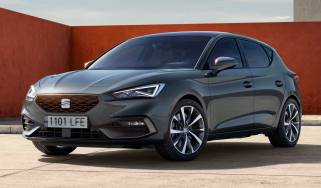
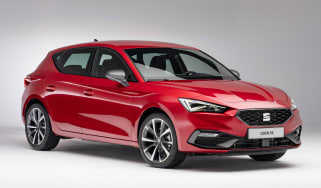
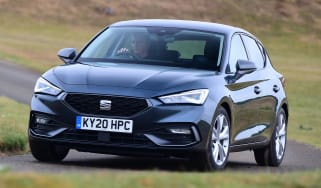
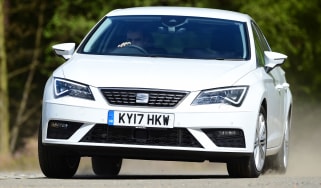
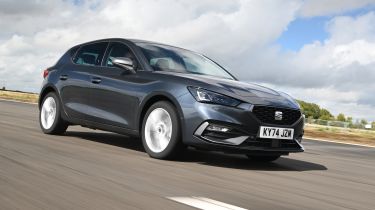
We’ve been fans of the SEAT Leon since it was launched a quarter of a century ago, and while the current fourth generation was launched in 2020, it still has plenty of strong points that keep it near the front of the compact hatch class. It’s a solid all-rounder in terms of performance, ride and handling, while the powertrains deliver a decent mix of performance and economy. However, the one thing that helps it to stand out from the crowd is the value pricing that SEAT has given it. You get similar tech and equipment as a Golf or Octavia, but at a lower price point that boosts the Leon’s appeal greatly.
About the SEAT Leon
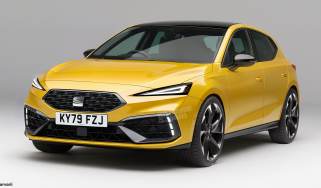
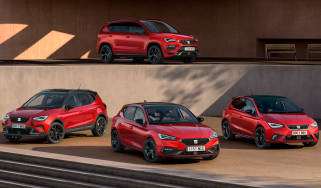
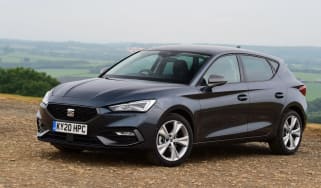
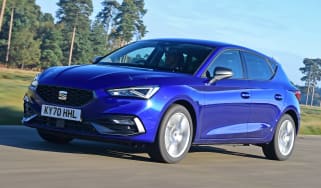
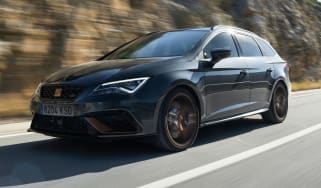
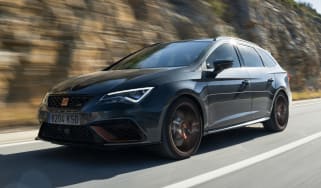
The sharply styled SEAT Leon has traditionally been pitched as the sporty one within the Volkswagen Group’s hatchback portfolio. But the rise of the Cupra brand has seen SEAT move towards a more value-focused position. That hasn’t stopped the Leon from looking as desirable as ever; if anything, the prospect of more tempting prices – especially with the huge discounts available through our Buy a Car service – have made it more appealing than ever before.
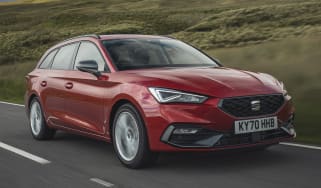
The fourth-generation model was launched in 2020 as a five-door hatchback or estate, while front-wheel drive is standard across the line-up. Power comes from either a 1.5 TSI petrol, a 1.5 e-Hybrid plug-in system or a 2.0 TDI diesel. These engines only come in relatively modest outputs (up to 148bhp for the TSI and TDI units, 201bhp for the e-Hybrid), because Cupra is the brand to choose if you want anything that’s sportier and more driver-focused. Front-wheel drive is standard across the board, while the Leon is becoming a rarity in the new-car market because a manual transmission is available on lower-spec cars – the rest of the line-up is automatic.
Used - available now


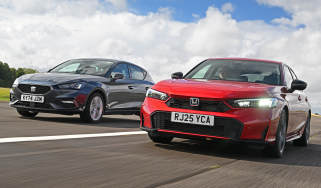
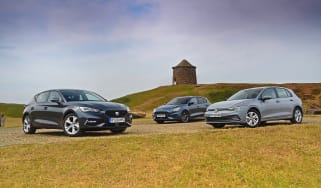
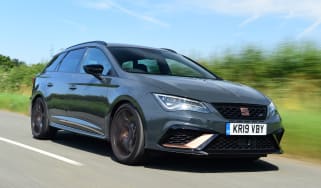
We’ve tested the Leon extensively in both its hatchback and practical ST estate forms. The latest version even beat the facelifted Honda Civic in our twin test because the Leon offered better value for money.
SEAT Leon prices and latest deals
The Leon range starts from around £25,500, and there are SE, SE Dynamic, FR, FR Sport and FR Black Edition trims to choose from. The FR cars make up the majority of sales, and you can get behind the wheel of a Leon from as little as £250 a month if you pick your perfect SEAT Leon car via the Auto Express Buy a Car service.
The Leon Estate adds £1,500 to the list price, while only the very highest spec estates cost more than £40,000, demonstrating the value-driven price position that is now SEAT’s forte.
Performance & driving experience
Pros |
|
Cons |
|
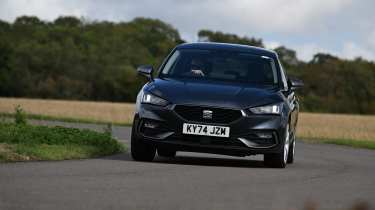
When it comes to overall performance, ride and handling, the Leon is tough to fault. It doesn’t ever quite lead the class in any area, but is strong across the board.
| Model | Power | 0-62mph | Top speed |
| Leon 1.5 eTSI 115 DSG | 114bhp | 10.4 seconds | 122mph |
| Leon 1.5 e-Hybrid 204 DSG | 201bhp | 7.7 seconds | 137mph |
| Leon 2.0 TDI 150 DSG | 148bhp | 8.3 seconds | 124mph |
Performance, 0-60mph acceleration and top speed
If you’re a fan of choice, then few cars in this class offer as much as the SEAT Leon. Petrol, diesel and hybrid (both mild and plug-in) options are available to buyers, and on the whole, it’s a range of strong performers.
The engine line-up starts with the tried-and-tested 1.5-litre turbo petrol unit that is found in a huge number of VW Group vehicles. Here it’s in a very mild state of tune – a modest 113bhp – but the engine is also offered with 148bhp, too. Both outputs come with a choice of a six-speed manual transmission or a seven-speed dual-clutch automatic. The latter integrates mild-hybrid technology, which helps to reduce fuel consumption.
The 1.5-litre engine is used by the plug-in hybrid, too. Here, it combines with a 114bhp electric motor for a total output of 201bhp, and it’s the quickest car in the range. Diesel buyers have a choice of two 2.0-litre units, offering 113bhp or 148bhp outputs.
While the diesel options will be great for high-mileage drivers, our pick of the range is the 148bhp version of the 1.5-litre petrol. The mild-hybrid tech doesn’t just help with efficiency, but the electric motor makes the Leon move off smoothly from a standstill. The auto gearbox that it’s paired with changes ratios quickly, and that contributes to its respectable performance, which is on the money for this class.
The Sporty FR-badged models come with SEAT’s Drive Profile Selection. This allows owners to choose from one of four modes: Eco, Normal, Sport and Individual. Each has a specific setting for the throttle and gearshift responses, although we found Normal to be perfectly fine. Eco slackens things off to the point that the Leon starts to feel lazy.
Town driving, visibility and parking
Light steering and a fairly tight turning circle really help the Leon’s case when driving at low speeds. Comfort is among its strong suits, although some rivals are better at isolating the noise of suspension knocks from the cabin, which is noticeable when you hit a drain cover or a pothole.
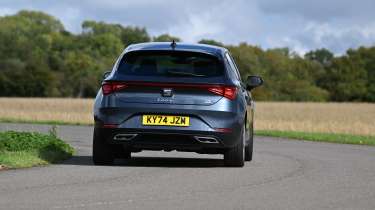
Country road driving and handling
Historically, SEAT models have been pitched as slightly more sporty versions of the Volkswagen models on which they’re based, but in the Leon’s case, it feels very similar to the Golf. Not that we’re complaining, because that means that the Leon strikes a well judged balance between ride comfort and handling.
FR models are a little firmer than standard cars, but even so, the overall result could never be described as uncomfortable. The steering is sharp, and while its lightness limits feedback on the move, it is at least precise, which lets the driver make the most of the Leon’s composure through corners.
Motorway driving and long-distance comfort
Thanks to the German origins of VW Group cars, high-speed stability – something that’s vital on a derestricted autobahn – is generally a quality that can be taken for granted. And that’s very much the case with the Leon. The steering tracks straight and true, needing minimal adjustment to keep the car aligned in the middle of its lane.
“Petrol and diesel versions of the Leon come with a maximum of 148bhp, while the plug-in hybrid is only offered with 201bhp. You can get more powerful versions of all three powerplants elsewhere within the VW Group, but that’s as much as you’ll get in a SEAT Leon.” – Dean Gibson, senior test editor.
MPG & running costs
Pros |
|
Cons |
|
While fuel economy and residual values aren’t outstanding, the Leon compensates with huge new-car discounts, making it among the most appealing options in its class.
SEAT offers buyers a choice of fuel types to cater for a wide range of needs and budgets, though the simplest petrol options are generally the best overall. Officially, the Leon 1.5 eTSI is capable of up to 55.4mpg, and even if that figure is only attainable in the real world in very specific conditions, it’s still a frugal unit overall.
| Model | MPG | CO2 | Insurance group |
| Leon 1.5 eTSI 115 DSG | 55.4mpg | 117g/km | 14 |
| Leon 1.5 e-Hybrid 204 DSG | 235.4mpg | 28g/km | 24 |
| Leon 2.0 TDI 150 DSG | 62.8mpg | 119g/km | 16 |
Electric range, battery life and charge time
The Leon e-Hybrid uses the same 1.5-litre petrol engine as the petrol model, but adds an electric motor and a 25.8kWh battery pack (20kW of which is usable). Fully charged, the e-Hybrid will deliver up to 83 miles of pure-electric range, which could be enough to cover a whole day’s driving if you only do short local trips. Thanks to CO2 emissions of 28g/km, the plug-in hybrid Leon is also cheap to tax as a company car driver, with Benefit-in-Kind (BiK) company car tax rates of as little as six per cent.
While the specs and figures of the Leon e-Hybrid are impressive, the reality is slightly different. At a time when Toyota, BMW and even BYD make really slick PHEVs that are designed with efficiency in mind, the VW Group tech aboard the Leon feels like a cynical CO2 emissions-reduction box-ticker, because once the battery is low, the system switches clumsily between petrol and electric and isn’t very efficient.
SEAT does offer DC charging on the e-Hybrid, with a maximum rate of 50kW available. This can get the battery from 10-80 per cent capacity in 26 minutes. A full charge from flat via a three-phase 11kW AC source will take two and a half hours, or around four hours using a typical 7.4kW home wallbox charger.
| Model | Battery size | Range | Insurance group |
| Leon 1.5 e-Hybrid 204 DSG | 25.8kWh | 83 miles | 24 |
Insurance groups
Depending on engine and trim level, the Leon hatchback’s insurance groups start at 14 and climb to 24 for the e-Hybrid version.
Tax
With the exception of one or two range-topping plug-in hybrids, which, once a few options have been added, will breach the £40,000 mark, the Leon range generally dips comfortably below the new-car Vehicle Excise Duty luxury car tax levy. That means pretty much the entire range will cost £195 a year.
Depreciation
The Leon has been on sale for some time now, and its residual values aren’t as strong as they were when this generation was first launched. They’re a little lower than the class average, just behind the likes of the Volkswagen Golf and Skoda Octavia with which it shares its mechanical make-up, and several percentage points behind the Honda Civic.
Depending on trim level, the cheapest petrol models are expected to hold onto a little under 45 per cent of their original value after three years or 36,000 miles, while diesels and plug-in hybrids are expected to maintain closer to 37-39 per cent of their asking price. However, strong discounts from new will cancel out these figures dramatically.
Interior, design & technology
Pros |
|
Cons |
|
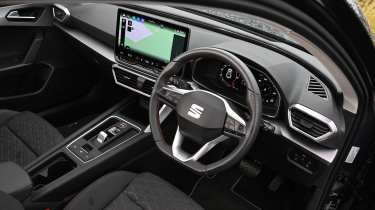
The Leon’s sporty-looking cabin is short on physical controls, but overall quality is decent enough.
Interior and dashboard design
The dashboard gets an angular look, which aims the centre of the dash towards the driver, giving a fairly sporty feel. The layout is dominated by a touchscreen, which measures 10.4-inches in the base SE and grows to 12.9 inches in the rest of the range.
Physical keys are limited, and the main volume control comes in the form of a touch-sensitive slider beneath the main screen that’s fiddlier to use than a traditional rotating knob. Fortunately, physical buttons remain on the steering wheel, and these make it fairly simple to scroll through the modes on the digital driver’s display.
Materials and build quality
While it’s not the most glitzy to look at, the Leon’s cabin feels suitably smart and well screwed together. The top of the dash is finished in a soft plastic, while an artificial leather material covers much of the door panels, although the grab handles are made from a rather hard plastic.
The bit you touch most often, the steering wheel, feels great, though; the rim is trimmed in perforated leather with red stitching, and its thickness feels just right. Unfortunately, the shift paddles mounted behind the wheel feel very cheap.
Infotainment, sat-nav and stereo
We weren’t bowled over by the Leon’s infotainment system when it was first launched. Its glitchy interface, confused location settings and other interface quirks were disappointing. But gradual updates have seen most of these issues ironed out. It’s still not perfect – the panel is still a little laggy in its response to touches – but buyers now get a hi-res, colourful screen with quick loading times, especially when plotting sat-nav routes.
The Leon is equipped with the brand’s Digital Cockpit driver’s display on all but the base SE trim, and it offers a choice of three layouts. One mimics traditional analogue instruments with a pair of large dials for revs and speed; the second shrinks the side of those dials so each rotates around 180 degrees, leaving more space in the middle for trip and infotainment readouts; the final one ditches the dials altogether, leaving just a numerical readout for the speedometer and rev counter. This third option allows for the navigation display to occupy most of the space. We found the information to be presented clearly on the sharp 10.25-inch display in all three modes.
“The Leon’s infotainment technology is better than it used to be, but some odd ergonomic quirks remain. While some controls are hard to find, others are duplicated. Take the windscreen demist and rear window heater, for example. These are available on the touchscreen, which seems redundant when both are also on the separate touch panel to the right of the steering wheel.” – Alex Ingram, chief reviewer.
Boot space & practicality
Pros |
|
Cons |
|
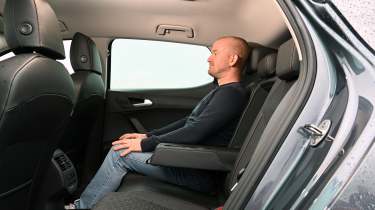
With good room for rear-seat passengers, the Leon is a practical family hatchback, although the luggage capacity could be larger.
Dimensions and size
Since they’re based on the same platform, it will come as no surprise to learn that the Leon and VW Golf are similar in size and shape. The Honda Civic has a more coupe-like profile, while a longer wheelbase boosts interior space.
| Dimensions comparison | |||
| Model | SEAT Leon | Volkswagen Golf | Honda Civic |
| Length | 4,368mm | 4,282mm | 4,560mm |
| Width | 1,800mm | 1,789mm | 1,802mm |
| Height | 1,456mm | 1,483mm | 1,408mm |
| Wheelbase | 2,686mm | 2,620mm | 2,734mm |
| Boot space | 380-1,210 litres | 381-1,237 litres | 415-1,220 litres |
Seats & passenger space
A large range of adjustment for the front seat and steering wheel makes it easy for drivers of various builds to find a fairly comfortable position, while the seats themselves are supportive.
Storage is in fairly generous supply, too. We like the fact that the mobile phone storage shelf is angled forward, which holds a device in place when driving, while behind that sits a pair of cup-holders – one larger than the other – and a deep central storage bin. The door bins are also wide and deep.
Settle into the back seats, and the SEAT offers fairly generous – if not quite class-leading – accommodation. Kneeroom is fine, and headroom is above average in the class, beating the likes of the Honda Civic. Foot space under the front seats is plentiful, while a third rear passenger can make the most of the wide, flat centre seat. The central hump that runs through the floor is quite large, though.
Not only are the ISOFIX mounts in the back easily accessible from within their plastic housings, but there’s a third point on the front passenger seat, too.
Boot space
At 380 litres, the Leon’s boot space is pretty much average for a five-door hatchback. Without a false floor, the base of the load space is quite deep, but a shallow bumper at least makes it a bit easier to lift heavy items over the relatively high load lip. A 60/40 split in the rear seats, plus a load-through hatch, makes it a little easier to stow bulkier or longer items on board. With the rear seats folded, the total volume on offer grows to 1,210 litres.
“Those needing a little extra room can choose the Leon Estate. The extra metal at the back helps to increase the overall capacity to a vast 620 litres – that’s 240 litres more than the hatch. The plug-in hybrid models are best avoided if load capacity is a priority.” – Alex Ingram, chief reviewer.
Reliability & safety
Pros |
|
Cons |
|
Euro NCAP originally tested the current Leon way back in 2020, and while this test did result in a five-star rating, it was a long time ago. Thankfully, Euro NCAP retested SEAT’s hatchback in 2025, and it managed to hold onto its five stars even though the testing criteria has become much tougher over the years.
SEAT finished a so-so 24th overall out of 31 manufacturers in our 2025 Driver Power customer satisfaction survey. But that result does rank it above both Volkswagen (27th) and SEAT’s sporty offshoot, Cupra (28th).
By the standards of many new cars, especially those coming from South Korea and China, a three-year/60,000-mile warranty is now below par. The same goes for the single year of breakdown cover – many rivals now offer a three-year package on new cars.
On the other hand, the Spanish brand’s maintenance plan is very competitively priced, allowing buyers to bag their first two services for a very reasonable £199. This can be paid up front in one lump sum or spread over the cost of 24 monthly payments.
| Euro NCAP safety ratings | |
| Euro NCAP safety rating | Five stars (2020 & 2025) |
| Adult occupant protection |
88% (2025) 92% (2020) |
| Child occupant protection |
86% (2025) 81% (2020) |
| Vulnerable road user protection |
81% (2025) 78% (2020) |
| Safety assist |
77% (2025) 80% (2020) |
Buying and owning
- Best buy: SEAT Leon 1.5 TSI 150 DSG FR
It’s best to keep things simple with the Leon, and the petrol auto offers a decent balance between performance and economy, while FR trim is sporty enough to boost its appeal and adds the larger touchscreen, too.
SEAT Leon alternatives
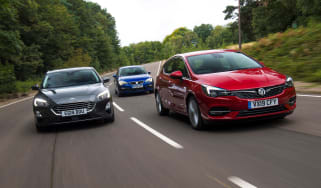
It’s a compact hatchback, so the SEAT Leon competes with the usual suspects, such as the Volkswagen Golf, Honda Civic, Toyota Corolla, Vauxhall Astra and Peugeot 308. Other alternatives include the Mazda 3 and Hyundai i30, while the Ford Focus is still worth seeking out, despite production having come to an end.
Frequently Asked Questions
It certainly offers great value for money. Performance and kit are decent, and you really are getting a car that’s nearly as good as a Golf in most respects, but for considerably less money, especially if you can get a dealer discount.
Deals on the Leon and alternatives
More reviews
Car group tests
Long-term tests
Road tests
Used car tests
Which Is Best