Peugeot Partner Combi 2.0 HDi
Look familiar? The Partner Combi has burst on to the budget-MPV scene, and Auto Express is first behind the wheel. It's based on the virtually identical Citroen Berlingo Multispace, and our 2.0-litre HDi model costs £10,795. Although well equipped, it's expensive compared to the Citroen. So has it got what it takes to steal the limelight from its cut-price cousin?
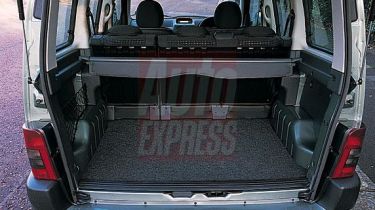
It's a simple formula - make a practical and comfortable MPV on the tightest-possible budget. The Partner Combi and Berlingo Multispace duo are old hands at this, and a restyle plus a more modern cabin bring a welcome improvement. Price is the Peugeot's only stumbling block - it still looks expensive next to rivals.
Look familiar? The Partner Combi has burst on to the budget-MPV scene, and Auto Express is first behind the wheel. It's based on the virtually identical Citroen Berlingo Multispace, and our 2.0-litre HDi model costs £10,795. Although well equipped, it's expensive compared to the Citroen. So has it got what it takes to steal the limelight from its cut-price cousin?
When firms share designs, engineers usually try to make the final products as different as possible. Not here, though. Both have the new nose, which is a great improvement over the bland outgoing car, its chunkier look helping to detract from the awkward high stance.
Substantial cabin modifications make the inside a more pleasant place to be, with a new dash livening things up. And while it's easy to be flippant about the driving experience, it must be considered in context. It's not about fun, but about meeting a brief to a budget. Although the long-throw gearchange and grabby brakes can be tiresome, the 2.0-litre diesel delivers surprisingly strong performance. There is plenty of torque off the line, with 0-60mph dispatched in 13.4 seconds. But at motorway speeds, the shed-like aerodynamics limit the top end to 99mph. Perhaps more importantly for those on a family budget, economy is a frugal 49.6mpg, while Group 5 insurance is competitive for the class.
The only area where the Partner falls down is on the list price. The HDi weighs in at £200 more than the equivalent Citroen. Adding our car's metallic paint, foglamps and cruise control pushes the figure to an unimpressive £11,310, although standard kit does include a CD player, twin airbags, remote central locking and heated door mirrors.
The range also has a 75bhp 1.4-litre petrol engine and a 70bhp 1.9 diesel, but while this HDi model is the most expensive, it's the most capable, too. An off-road SUV-style Escapade version of the Combi is also available, with the option of HDi or 110bhp 1.6-litre petrol power. Whichever variant you choose, practicality comes as standard.