Jaguar XK (2006-2015) review
The Jaguar XK mixes head-turning looks with fun handling and a comfortable ride

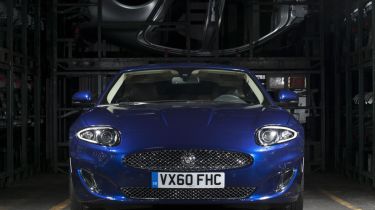

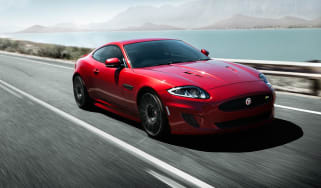
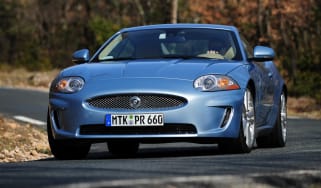
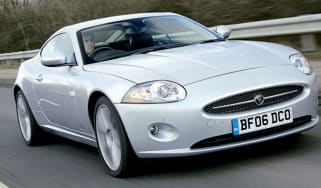
The Jaguar XK Coupe is one of the best-looking cars on the road and makes you feel like a lottery winner from the moment you get behind the wheel. It's not as sporty as a Porsche 911, but it is much more fun to drive than a Mercedes SL and has a cushioned ride, not to mention a fabulous 5.0-litre V8 engine. Miniscule rear seats and exhorbitant running costs are big negatives though.
Engines, performance and drive
Engineers have found a brilliant balance with the Jaguar XK - it rides like a luxury car should, but attacks a twisty road like a sports car. Yes, a Porsche 911 is a better sports car, but that doesn't ride like a Jaguar. Options include active dampers, which are well worth specifying. It has lots of punch too, thanks to a 380bhp 5.0-litre V8 that boasts a great soundtrack and does 0-60mph in just 5.2 seconds. Thanks to active exhausts, the Jaguar XK settles to a quiet cruise on a light throttle, although tyre roar is noticeable at higher speeds.
MPG, CO2 and Running Costs
With a big V8 engine up front and no diesel option like in the BMW 640d, the XK is expensive to run. It struggles to do more than 25mpg and emits 264g/km of CO2, which means it sits in the top road tax band. It is likely to be costly in terms of tyres and servicing, while depreciation will be very steep indeed. A Mercedes SL and a Porsche 911 will hold onto more of their value.
Interior, design and technology
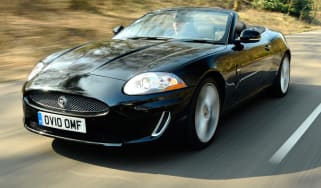
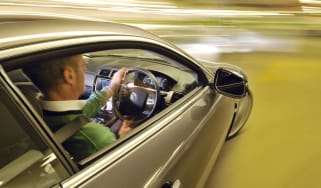
With a low nose, pert tail and dramatic proportions, the XK is every inch the stunning Jaguar sports car. It's far better looking than a Mercedes SL and manages to cause as much of a stir as the significantly more expensive Aston Martin V8 Vantage. Plush is the best way to describe the inside. There's lots of room up front and a great driving position with steering and seats electrically adjustable. Every surface is covered in soft leather, quality wood or tough metal and there's loads of equipment with satellite-navigation, a six-CD in-dash changer, Bluetooth, dual-zone climate control and stability control as standard.
Practicality, comfort and boot space
You didn't expect it to be practical did you? Good, because although the XK has four seats, the rear pair are so tiny and cramped they're better used as extra storage. If you want a V8 supercar that can transport four adults, look at the Maserati GranTurismo. At least with a hatchback, the Jaguar XK Coupe is quite easy to load, and there's about as much boot space as in the average supermini.
Reliability and Safety
There are plenty of airbags on board, and traction and stability control come as standard, while optional extras such as adaptive cruise control help to boost the XK's safety levels. A pop-up bonnet helps reduce pedestrian injuries in the event of a collision. Quality and reliability appear to be much better than the car's predecessor too.