Volvo XC70 SE LUX auto
High-riding estate is the odd 4x4 out

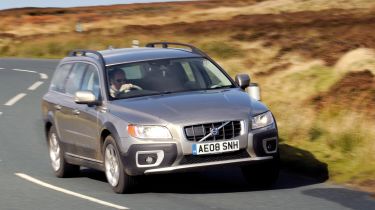
Of all the models in this test, the XC70 is the least likely to be the target of anti-4x4 feeling. That’s down to its pumped-up estate car shape – but is the Volvo as innocent as it looks?
The Swedish model gained entry to this test as its 219g/km CO2 output considerably undercuts the Audi A6 Allroad 2.7 TDI auto’s 230g/km emissions. Between them, the Volvo and Audi have the rough-roading executive estate class covered. However, the equivalent standard V70 emits only 203g/km.
Climb aboard the Volvo, and SUV fans will miss the lofty driving position, but few will find fault with the XC70’s comfort or build quality. Only the luggage area lags behind, with a capacity of 575 litres – that’s 115 litres less than a Mercedes E-Class Estate.
Out on the road, the XC70 builds on both the strengths and weaknesses of the V70.
Its ride is even smoother and refinement is better, yet the numb steering and lacklustre handling of the standard estate are magnified by the XC’s raised suspension.
What’s more, without the benefit of extra visibility the Volvo doesn’t feel particularly at home on narrow country lanes. Its off-road abilities are good, although you don’t have the confidence to head into the wilderness that comes with a proper 4x4. The XC70 is a rural family favourite, but we’re not sure it offers a real benefit over the standard V70 estate.
Details
Price: £35,495
Model tested: Volvo XC70 SE LUX auto
WHY: Estate-bodied XC70 can tackle the rough terrain as well as a conventional 4x4.
Economy
Few Volvo buyers are motivated by making their money go as far as possible. Instead, they are buying into the solid brand image. That’s a good job, as the XC70 isn’t cheap – with options, our model weighed in at £41,830. Servicing is also costly: £1,250 for the first three years’ maintenance. But economy was reasonable on our test at 31.0mpg. Choose a manual model, though, and this figure will improve.
Environment
In diesel auto form, the XC70 managed 31mpg, with minimal gain in versatility over the standard V70.