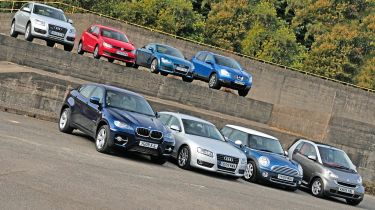
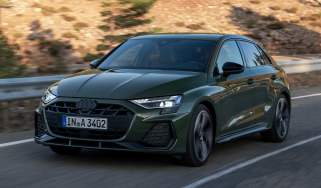
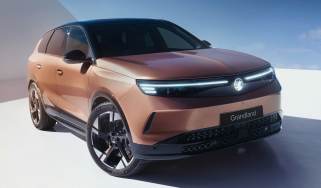
What's your biggest annual motoring expense? Fuel? Insurance? Think again. For the vast majority of new car buyers, there’s a much larger bill that looms over their automotive budget – and all too often it’s treated as an afterthought.
Depreciation is motoring’s biggest stealth cost. Just when you think you’ve found the thriftiest, most fuel-efficient model on the planet, you could be facing a higher annual cost than you ever imagined when you take into account the dreaded ‘D’ word.
The definition of depreciation is simple – it’s the difference between the value of your car when you buy it and what it’s worth by the time you come to sell. Residuals are the likely value of a model after three years and 30,000 miles, represented as a percentage of the original price, and these figures enable us to compare the depreciation suffered by new vehicles.
Second-hand values are predicted by teams of experts, who monitor thousands of transactions every day. So, which new models are the safest places for your money? To lift the lid on the biggest hidden cost in motoring, we’ve uncovered the lowest-depreciating models in eight key classes.
Whether you’re after a new coupé or a tiny city car, we’ll reveal the best investment here. And if the class champion isn’t for you, we name four other depreciation beaters from rival makers in each sector – so you can see the strongest alternatives. Read on to find out which models hold on to their value best.
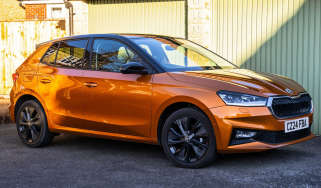
This article is based on the economics of purchase from new. We are oft told that it makes financial sense to purchase second hand, especially with the losses normally incurred during the first 12 months. Would it figure then that these New Buy "champs" are not necessarily still such good year 1 second hand buys as there has not been such a drop in their value? I'd like to see an article on year 1 depreciation bargains.
Also I very much agree with dleith's comments about percentage as a poor measure of true depreciation. It is very clear to see that the higher intial outlay on a car, the more you stand to loose. After paying nearly 20k for my previous 2 cars and loosing nearly half after 2 years on both, I decided to choose a car costing only 13k this time round and will most likely only loose around 5k - 6k as opposed to 10k over the 2 years.
You idiotic morrowns!!! The A5 just went on sale and you can actually dare to say you are able to measure its depriciation? Close the site down and go home...No culture at all.
Everything started as Great Britain and France forced the allied forces to always add a note which read "made in Germany" so that everyone could be aware that what they were about to buy was a German product. It started as a sort of stigmatisation after WWII but it went so well that today everything made in Germany is a synonym of success, nevertheless, I can't hardly believe that almost all cars here, those who are supposedly the best even in depreciation figures, are German. I don't know who gives money to the car magazines in Europe, but this must be a joke... German cars are mostly expensive and the depreciation is in comparisson to Japanese cars, obviously, bigger. Please, do NOT manipulate figures. By the way, what market(s) are we dealing with in this article?
I tend to agree with all the other comments. This sort of article gives out the impression that motoring journalists don't live in the real world. I suppose that if you get a free car out of the German car manufacturers to drive around in for several months at a time, which is then replaced with a new one, you're hardly likely to tell the truth about the hand that feeds you! The simple fact is that, because of the high cost of these cars, they are really high depreciation - but we don't want to upset the big German manufacturers, do we?
Unsurprisingly, most of the cars that are claimed to be "low depreciation" (Audi, BMW, VW) are driven by people who don't own them personally; they are company cars. Doesn't that tell you something about the cost of ownership of these cars?
While I agree with dleith on measuring the cost of depreciation, surely the point is that the percentage depreciation is perfect for comparing similarly priced cars. After all nobody in the real world, in the market for a £10,000 is going to be persuaded to buy a £30,000 car just because the depreciation percentage is lower.
The percentage is one of the few objective consideration in an otherwise very subjective (almost entirely subjective in my case) decision. I'd buy a Golf if it wasn't so boring to look at.
I agree with Tony_s1.
There has always been 2 seperate car markets in the UK - the company car market and the private owner market. It would be interesting to see sales figures broken down into these 2 catagories. People who put their hands into their own pockets have a different attitude to what they want from a car than the corporate owner.
I disagree with dleith. When I buy a new car, I know roughly how much I will spend, and want to choose between, say, BMW, Merc and Audi. Percentage is the most helpful way of measuring depreciation. Incidentally, it's great to see depreciation figures published, but it's hard to treat them as credible while there are such enormous discrepancies between different sources.
the best way to win the depreciation battle is to buy a new car & keep it for ten or more years as that way u get the best value from it unless of course u are one of these people who MUST keep up with the joneses & have the latest model then tough,pay the price,suffer the cost & quit moning.
dleith is absolutely right - most of us earn actual salaries - and surely we dont say i am going to spend x percentage of our salary on a motorcar? Or do we ? As for me I want to know roughly what i am likely to lose in depreciation, in my book percentages are somewhat meaningless as dleith neatly illustrates especially when the percentages quoted turn out to be based on the list price not the discounted price - But yes arguably one good way to save on depreciation money is to keep cars for as long as possible
So now that we are (mostly) all in agreement that percentage depreciation is a useless measure, here is how the table of results should have appeared based upon ACTUAL depreciation. Using the 'champs' from each car type, we get:
1st - Smart FourTwo - you lose £4,955
2nd - Mini Cooper - you lose £5,652
3rd - VW Polo - you lose £6,061
4th - Nissan Qashqai - you lose £7,320
5th - Audi TT - you lose £7,745
6th - Audi A5 - you lose £11,524
7th - Audi Q5 - you lose £12,010
Last - BMW X6 - you lose £18,681
So now that we are (mostly) all in agreement that percentage depreciation is a useless measure, here is how the table of results should have appeared based upon ACTUAL depreciation. Using the 'champs' from each car type, we get:
1st - Smart FourTwo - you lose £4,955
2nd - Mini Cooper - you lose £5,652
3rd - VW Polo - you lose £6,061
4th - Nissan Qashqai - you lose £7,320
5th - Audi TT - you lose £7,745
6th - Audi A5 - you lose £11,524
7th - Audi Q5 - you lose £12,010
Last - BMW X6 - you lose £18,681
miguel117 - could you please give me an example of British popular car? There isn't any! MG-Rover was the last one.
I'd say 50% of cars on British roads are German, 20% are French, 20% Japanese and 10% are British, Italian, Korean and others.
Aren't you measuring the wrong thing ?
Surely using percentage depreciation is a poor measure of how much you lose on car. Absolute depreciation has to be a better measure.
Take these examples:
If I buy a £10,000 car and it drops by 60% then I lose £6,000.
If I buy a £20,000 car and it drops by 40% then I lose £8,000.
If I buy a £30,000 car and it drops by 30% then I lose £9,000.
So I lose most on the car with the lowest depreciation.
So the percentage depreciation on its own tells us little about how much we lose unless we know the price paid initially.
Someone will no doubt argue that, based on the examples above, the £30,000 car still leaves you with a vehicle worth £21,000, compared to the £10,000 car which is ends up worth £4,000. But remember that to purchase the £30,000 car you had to shell out that money first, and therefore there is a loss of interest / opportunity cost on having that money tied up in a depreciating vehicle.
By dleith on 7 November, 2009, 7:51pm