Hyundai i10 (2019-2026) review
The Hyundai i10 is a capable and comfortable city car with surprising practicality and decent tech

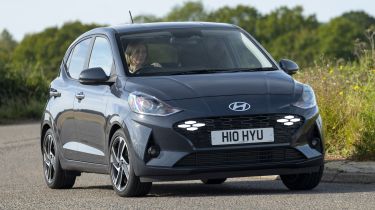

Just so you know, this is an older review of the 2019-2026 Hyundai i10. If you are interested in information about a used Hyundai i10, or news about the latest Hyundai models, please follow the links provided.
Our opinion on the Hyundai i10
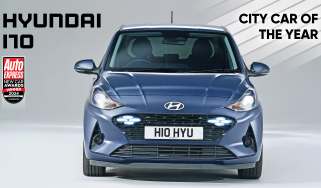
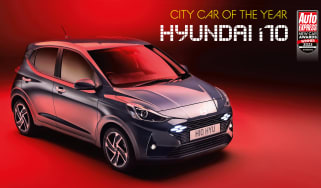
The Hyundai i10 is a strong contender in a shrinking city car market, especially at a time when people are looking for ways to cut down on their running costs. Winner of the Auto Express City Car of the Year in 2023 and 2024, Hyundai’s smallest car is more comfortable and refined than ever, while the diminutive size, tight turning circle and light steering make it an absolute doddle to drive around town.
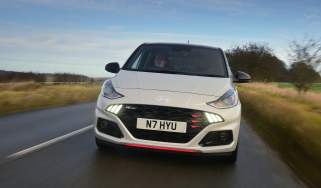
Don’t judge the i10 solely by its dimensions though, because the cabin is surprisingly spacious and features a decent amount of onboard technology, including wireless smartphone connectivity and several safety features. The regular i10’s petrol engines are very frugal too, or if you want something with a little more attitude, then the souped-up i10 N Line has that covered.
About the Hyundai i10
The humble city car is something of a dying breed these days, given that the likes of the Toyota Aygo, Citroen C1, Peugeot 108, Skoda Citigo, Volkswagen up! and Ford Ka have all kicked the bucket. Thankfully the Hyundai i10 is very much alive and well, having received a facelift and boost in equipment levels in 2023.
Used - available now


The i10 range consists of three trim levels - Advance, Premium and N Line - and it’s offered with three petrol engines. There’s no hybrid, diesel or fully electric version available. A 1.0-litre three-cylinder motor is the entry point to i10 ownership, followed by a 1.2-litre four-cylinder. The most potent is a 1.0 turbo three-pot petrol which can only be found in the pumped-up N Line version.
All cars feature a five-speed manual gearbox as standard, and it’s the only option if you get the N Line model. An automated manual transmission is available with Advance and Premium trim, but we would not recommend it for reasons we’ll explain later.
Hyundai i10 prices and latest deals
Prices for the Hyundai i10 now start from nearly £18,000, which is higher than for its sister car, the Kia Picanto, but still makes this one of the cheapest new cars you can buy in the UK. However it’s even cheaper if you order through the Auto Express Buy A Car service, with customers able to save more than £2,000 on a new i10.
- Advance (from £17,700)
- Premium (from £18,700)
- N Line (from £20,300)
If you don’t want to go through the hassle of ordering a factory-fresh Hyundai i10, there are more than 500 new and used models already in stock at dealerships around the UK.
Performance & driving experience
Pros |
|
Cons |
|
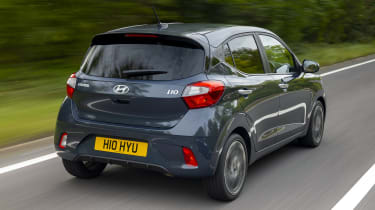
There are some small cars that fall apart when you take them outside of the city limits, but not the Hyundai i10. It feels mature and fairly refined to drive, matching its understated, sensible appearance. Meanwhile the i10 never fails to put a smile on your face.
| Model | Power | 0-62mph | Top speed |
| Hyundai i10 Advance 63PS | 62bhp | 15.6 seconds | 88mph |
| Hyundai i10 Premium 79PS | 78bhp | 13.2 seconds | 98mph |
| Hyundai i10 N Line | 89bhp | 11.4 seconds | 108mph |
Performance, 0-60mph acceleration and top speed
Outright performance won’t be a key consideration for those looking for a city car, and the i10 is much more suited to life in urban traffic. The most basic 1.0-litre three-cylinder petrol offered in the i10 produces just 62bhp and 96Nm of torque. This engine is not happy being revved, which means the i10 doesn’t feel as lively as some of its more dynamic rivals, but reasonable levels of torque mean it’s more flexible in the mid-range.
Equipped with the standard five-speed manual gearbox, the bog-standard i10 is a particularly slow sprinter, taking 15.6 seconds to get from 0-62mph. Customers opting for the automated manual will probably never see the speedo reach 62mph, because it takes a ridiculously lethargic 18.4 seconds to reach the mark from standstill. Our advice is clear: avoid the Hyundai i10 with an automated manual transmission if you value the ability to keep pace with traffic.
So we’d recommend sticking with the five-speed manual, but upgrading to the slightly larger 1.2-litre four-cylinder petrol engine. This produces 83bhp and 118Nm of torque, which is a little more attractive, while also reducing the i10’s 0-62mph time to 12.6 seconds. It ups the top speed to 106mph, too.
Unsurprisingly, the quickest of the bunch is the i10 N Line, which gets an exclusive 1.0-litre turbocharged three-pot engine that pumps out 89bhp and 171Nm of torque. That might not sound like a lot, but it will fling the N Line model from 0-62mph in 11.4 seconds and onto a top speed of 108mph. It’ll also have the front tyres scrabbling for grip when tearing away from a junction and provides a rowdy exhaust note that perfectly complements the car’s boy racer look.
Town driving, visibility and parking
The i10 is an absolute doddle to drive around town, thanks in part to the fact it’s about the size of a shoe box, plus the steering is light, the manual gearbox feels slick and the windscreen pillars aren’t too thick, so visibility is very good all-round. Needless to say, you’ll never struggle to find a parking space that this car can’t slot it into.
Country road driving and handling
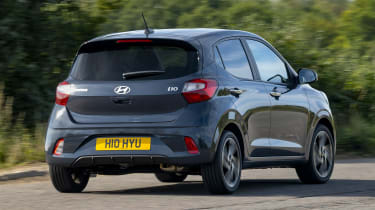
We won’t say the standard i10 is fun to drive, because there’s some body roll when cornering, and the tyres don’t deliver quite as much grip as the ones on the Toyota Aygo X. The sportier i10 N Line offers more driving thrills, thanks to its tuned suspension and steering, plus the more powerful turbocharged engine.
The N Line’s steering has just enough weight to it for you to feel as if you’re muscling the car around corners, but still light enough so low-speed manoeuvres remain easy. Of course the i10’s dinky dimensions allow it to also change direction quickly, making it feel very agile.
The slightly firm ride does make the i10 feel lively if you’re snaking through the countryside on smooth tarmac, but on rougher road surfaces, the ride becomes quite bouncy. Anyone in the back has it worse because they’re positioned directly over the rear axle, and passengers we took for a ride complained they could feel every bump and pothole we hit.
Motorway driving and long-distance comfort
Cruising on the motorway, the ride in the i10 feels smooth, stable and considerably more comfortable than you might expect for a tiny city car. The long fifth gear helps make things more relaxing too, although when we tested the N Line model, we noticed the cabin fills with road noise at higher speeds. That’s likely a side effect of its 16-inch rims, so the entry-level Advance model which gets 15-inch wheels should be quieter.
“The amount of grunt in the i10 N Line is enough to get the front tyres scrabbling for grip when you tear away from a junction, and the turbo three-pot provides a pretty rowdy exhaust note to complete the car’s boy racer attitude.” - Ellis Hyde, news reporter.
MPG & running costs
Pros |
|
Cons |
|
As we mentioned, the Hyundai i10 is still among the cheapest new cars in showrooms. However, the dinky city car is not as cheap as it used to be. Last year, prices started from around £15,000, but today the most basic model will set you back nearly £18,000 – more than the newer and larger Fiat Grande Panda or MG3 superminis.
At least the i10 is still frugal and should be cheap to run, because its small-capacity petrol engines return decent fuel economy and relatively low CO2 emissions.
Hyundai says the base 62bhp 1.0-litre unit can average 55.3mpg and emit 116g/km of CO2, when equipped with the five-speed manual gearbox. The 78bhp 1.2-litre motor offers up to 52.3mpg in Premium trim. Opting for the five-speed automated manual with either engine causes fuel economy to dip slightly to 51.3mpg and CO2 emissions to rise to 125g/km.
When we tested a 1.2-litre i10 with the manual gearbox, we managed to average 53.1mpg, compared with the 51.9mpg we got from the old Toyota Aygo X during the same group test.
Even the sportier N Line version, with its 89bhp turbocharged 1.0-litre petrol engine, promises impressive fuel efficiency of up to 52.3mpg and CO2 emissions of 123g/km. After covering nearly 450 miles in an i10 N Line, we achieved an average of 42.3mpg – exactly 10mpg short of Hyundai’s claimed figure, but still very respectable for a souped-up city car.
| Model | MPG | CO2 | Insurance group |
| Hyundai i10 Advance 63PS | 55.3mpg | 116g/km | 3E |
| Hyundai i10 Premium 79PS | 52.3mpg | 123g/km | 3E |
| Hyundai i10 N Line | 52.3mpg | 123g/km | 10E |
Insurance groups
If you’re worried about how much it’ll cost to insure an i10, you’ll be reassured to learn that the entry-level model sits in insurance group 3 (out of a maximum 50). Even the boy racer-esque N Line version should be relatively inexpensive to cover because it only sits in group 10. In comparison, the Kia Picanto range starts in group 2 and tops out at group 7, while the electric Dacia Spring lands in groups 24 or 25.
Tax
Perhaps unsurprisingly, the i10 is not an ideal company car. The lack of hybrid assistance that would help bring the car’s CO2 emissions down means it attracts up to 32 per cent Benefit-in-Kind (BiK) company car tax. That means it will cost more than £1,200 a year to run, versus the zero-emissions Dacia Spring that falls into the 3 per cent BiK band and will cost just £90 a year to run as a company car.
Depreciation
Our latest expert data suggests that Hyundai’s city car will hold onto an average of 53 per cent of its original list price after three years of ownership and 36,000 miles on the clock come trade-in time. Its sister car, the Kia Picanto, is expected to retain a very similar 53 to 54 per cent of list price after the same period.
To get an accurate valuation on a specific model check out our free car valuation tool...
Interior, design & technology
Pros |
|
Cons |
|
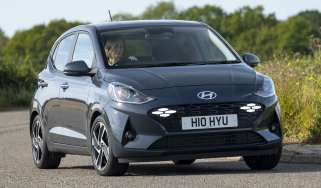
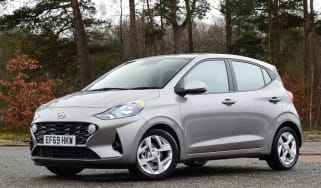
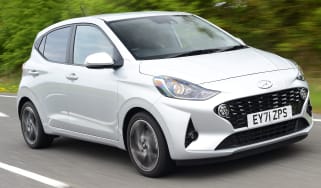
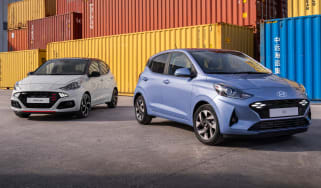
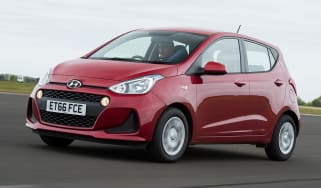
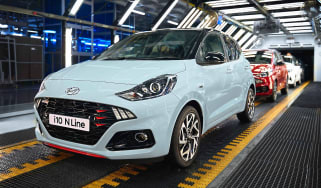
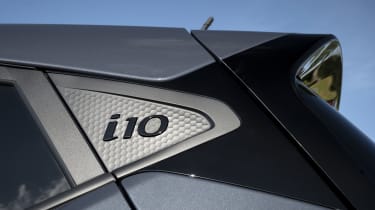
The styling of the i10 is modern, understated yet surprisingly sharp. Hyundai gave its smallest offering a sportier profile thanks in part to a 20mm lowered stance and an increase of 20mm in overall width compared with the previous generation. In 2023, the i10 was given a subtle mid-life facelift with changes including new head and tail-light signatures, redesigned LED daytime running lights, a new grille and new alloy wheel designs.
With entry-level Advance trim, standard equipment includes:
- 15-inch alloy wheels
- 8.0-inch touchscreen
- Wireless Apple CarPlay and Android Auto
- 4.2-inch instrument display
- Leather-wrapped steering wheel
- Keyless entry
- Reversing camera
- Rear parking sensors
The mid-range Premium trim, which is our pick of the range, adds:
- 16-inch alloy wheels
- Heated front seats
- Heated steering wheel
- Wireless smartphone charging pad
- Bi-function headlights
- Blue LED interior lighting
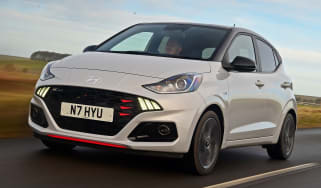
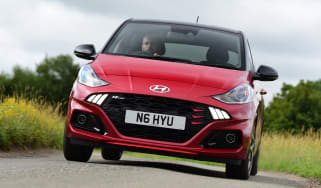
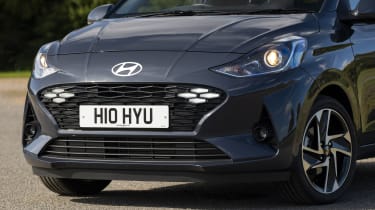
The range-topping i10 N Line gets a boy racer look courtesy of a very aggressive front end with a different grille and daytime running lights, plus a set of model-specific 16-inch alloy wheels and twin exhaust tips. There are plenty of red accents dotted around too, while some nice touches inside include brushed metal pedals, leather-wrapped gear knob, red stitching and bespoke N Line seats.
Interior and dashboard design
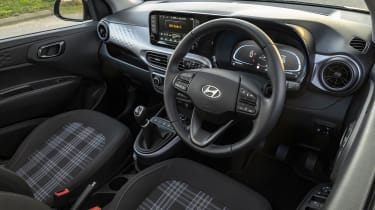
The i10’s interior is very simple, with big physical shortcut buttons surrounding the relatively small central touchscreen and chunky dials for climate control. It’s not the most exciting place to be, especially if you get the base model, but Premium trim livens things up with tartan upholstery and a purple textured dashboard. The i10 N Line goes even further, with bespoke, more bolstered seats, red stitching and accents, and a set of brushed metal pedals.
Materials and build quality
The i10’s leather-wrapped steering wheel has about the only soft-touch material you’ll find inside the car. The rest of the interior is made from hard, scratchy black plastic, which we can accept in such an affordable car, but even so it does make the cabin look and feel quite dull. The tartan or N Line seats liven things up a little, and the overall build quality feels solid.
Sat-nav, stereo and infotainment
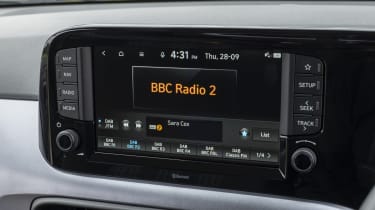
Every i10 features an eight-inch touchscreen that’s relatively sharp and doesn’t take too long to respond to inputs. There’s also a handy bank of physical shortcut buttons on either side, along with a volume dial. The i10’s built-in infotainment system is limited, but wireless Android Auto and Apple CarPlay smartphone connectivity are standard-fit and fill the entirety of the screen nicely.
You can add sat-nav and Bluelink – Hyundai’s online system which gives drivers extra controls and features via a smartphone app – but we’d just save the £800 and stick to using Google Maps through the free smartphone connectivity.
“I wish one of the various buttons in the i10 could turn off the lane-keep assist and some of the other safety systems, rather than burying them within the settings menus on the touchscreen. It seems especially odd when you consider there’s an easily accessible switch for turning off the traction control.” - Ellis Hyde, news reporter.
Boot space & practicality
Pros |
|
Cons |
|
It might measure less than 3.7 metres long, but the Hyundai i10 is a surprisingly spacious little car. When we lived with an i10, we managed to comfortably fit four adults into the car, plus a boot full of luggage. We also appreciate the decent-sized door bins and glovebox, cup-holders in the centre console, physical climate controls and tray for a smartphone, which features a wireless charging pad in all but the base model
Of course, being so small helps make the i10 so easy to thread through crowded city streets and tight multi-storey car parks. Visibility is good, too, and all editions feature height adjustment for the driver’s seat and the steering wheel, but no reach adjustment for the wheel.
Dimensions and size
| Model | Hyundai i10 | Kia Picanto | Toyota Aygo X Hybrid |
| Length | 3,670mm | 3,605mm | 3,667mm |
| Width | 1,680mm | 1,880mm | 1,740mm |
| Height | 1,480mm | 1,485mm | 1,625mm |
| Wheelbase | 2,425mm | 2,400mm | 2,430mm |
| Boot space | 252 litres | 255 litres | 231 litres |
To give you a better perspective about the i10’s dinky dimensions, the commonplace Vauxhall Corsa supermini is nearly 40cm longer and about 10cm wider. The i10 is bigger than its Kia Picanto and Toyota Aygo X rivals in almost every area, but not by much, and all three cars have a very similar wheelbase. The Dacia Spring EV is actually a longer car, but much narrower, which should make it even easier to weave in and out of city traffic.
Seats & passenger space
The i10’s wheelbase grew by 40mm for the third-generation model, which, combined with the boxy, upright shape, means there’s lots of space on offer in the little i10. Up front, both head and legroom are generous, so even six-footers shouldn’t have any issues getting comfortable behind the wheel and there is enough space in the back for adults.
Unlike some other city cars, the i10 can accommodate three people across the rear bench if needed. However, we’d only recommend squeezing five people inside for shorter journeys. There are two sets of Isofix mounting points for child seats in the back of the i10 (one on each of the outer seats).
Boot space
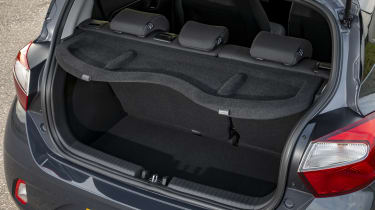
With a total of 252 litres of boot space, the i10 offers good practicality, almost rivalling some superminis. It’s roughly 20 litres up on a Toyota Aygo X and, if you drop the i10’s 60:40-split folding rear seats, you’ll benefit from up to 1,050 litres total load capacity.
Reliability & safety
Pros |
|
Cons |
|
The Hyundai i10 comes with a decent amount of safety kit as standard, including Autonomous Emergency Braking (AEB), driver-attention alert and lane-keeping assist with a lane-departure warning system. The i10 Mk3’s mid-life facelift in 2023 added a few more bits of safety kit, including Forward Collision-Avoidance Assist (FCA) for pedestrian and cyclist detection, rear occupant alert and lane-following assist that helps keep the car in the current lane of travel.
Every i10 also comes with Hyundai’s reassuring five-year unlimited-mileage warranty, which should give great peace of mind. However the Kia Picanto will offer even more with its seven-year/100,000 warranty.
The i10 wasn’t able to achieve more than a three out of five-star rating from safety experts Euro NCAP when they tested the car in 2020. Euro NCAP’s report also highlighted some issues, particularly around driver protection in a side-impact crash, and it’s also worth noting that one of the i10’s main rivals, the Toyota Aygo X, achieved a four-star rating under the same stringent testing regime.
The Hyundai i10 didn’t make it onto our most recent list of the best cars to own, which is based on owners’ feedback from the Driver Power owner satisfaction survey, and neither did the Kia Picanto. Hyundai, as a brand, finished in the middle of the pack in our latest best car manufacturer rankings, taking 20th place out of 31 brands, just behind Kia which finished in 18th place. They beat Volkswagen (27th) and Dacia (29th).
Buying and owning
- Best buy: Hyundai i10 Premium
While the sporty i10 N Line is the most fun version to drive, the mid-range Premium trim with the 1.2-litre petrol engine is our pick of the bunch. The smooth engine offers enough performance for the open road and you get a good amount of kit, including some splashes of colour for the otherwise dull interior, thanks to tartan seat upholstery and purple dashboard.
Alternatives
The city car is something of a dying breed these days, because the likes of the Toyota Aygo, Citroen C1, Peugeot 108, Skoda Citigo, Volkswagen up! and Ford Ka have all kicked the bucket. That said, the Hyundai i10 is not yet in a class of its own.
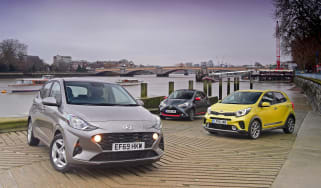
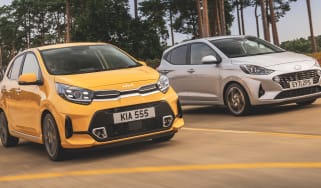
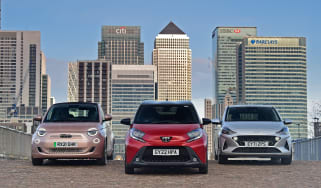
The i10’s key rivals include its own sister car, the Kia Picanto, plus the all-electric Dacia Spring and the new Toyota Aygo X Hybrid. As its name suggests, the Aygo X now features an electrified powertrain to provide more refinement and better fuel economy. The Dacia Sandero and Citroen C3 superminis also pose a threat to the i10 because they’re offered at similar prices and are more spacious.
Hyundai i10 history
Hyundai i10 Mk3: 2019 to present
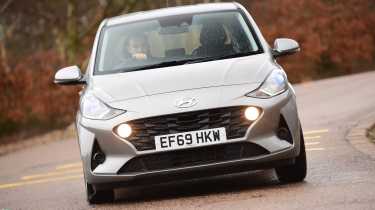
One of our favourite small cars, the third-generation i10 melds sophisticated style with cutting-edge tech and infotainment. It’s also good to drive, with composed handling and the sort of refinement you’d expect from a bigger car. Yet its smooth, small-capacity engines also blend eager performance with penny-pinching running costs.
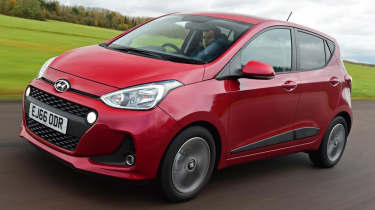
Hyundai i10 Mk2: 2014-2019
Faced with brilliant rivals such as the VW up!, Hyundai's engineers aimed to deliver a small car that was even more grown-up to drive and sit in. Overall, they hit the bullseye, because while the i10 wasn’t as much fun to drive as some, it set the standard for comfort, refinement and practicality. You can read our full Hyundai Mk2 used buyer’s guide here.
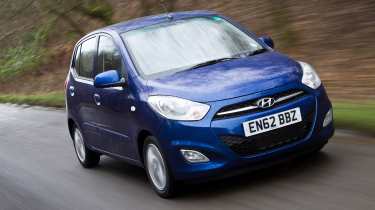
Hyundai i10 Mk1: 2008-2014
Replacing the lacklustre Getz, the i10 was the city car that proved Hyundai meant business. Slightly bland looks aside, it was easy to drive, surprisingly spacious and great value for money. In top-of-the-range form, it even offered enough kit to make an executive saloon driver green with envy. It was a big hit following the UK’s 2009 Scrappage Scheme, with thousands of drivers trading up to the Hyundai from their old bangers.
Frequently Asked Questions
Our 2023 and 2024 City Car of the Year, the Hyundai i10 is a cinch to drive around town, economical and looks smart. Yet despite its size, it’s surprisingly spacious and now comes with plenty of safety features previously reserved for larger, more expensive cars.
More reviews
Car group tests
Road tests
Which Is Best