Ford Ranger (2011-2016) review
Ford Ranger pick-up is tough as nails, boasts punchy diesel engines and lots of load space

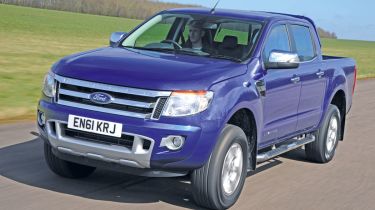

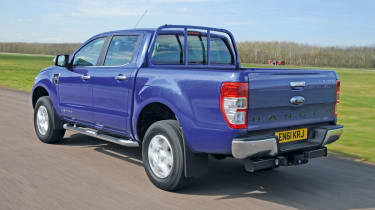
Like most pick-ups, the Ford Ranger has always focused on practicality and usability, but with this current version the flat-bed Ford has ditched its workhorse image and added a new sense of style to the range.
This doesn’t mean it’s lost any of its ruggedness or robust appeal, though. While the top-spec Limited and Wildtrak versions look great and feature plenty of kit, with permanent four-wheel drive the Ranger can cope with serious off-road terrain, and the larger load bay can carry more than one tonne of weight.
Compared to Japanese pick-ups like the Mitsubishi L200, Toyota Hilux and Nissan Navara, the Ford’s design has a brasher, American edge – but given that many buyers choose pick-ups over a van or other commercial vehicles for the blend of practicality and style, this head-turning design is welcome.
It stands out against European rivals like the good-looking Volkswagen Amarok, too, but while the Ranger’s interior is durable and inspired by the Focus family hatchback in terms of design, it’s not as high quality as the VW.
Like most pick-ups, there are a few different bodystyles on offer, including the two-seat Regular Cab Ranger, the slightly larger Super Cab version and the roomy four-seater Double Cab. Prices start from £18,399, £20,864 and £23,014 respectively, and buyers can also choose between covered and uncovered load bays.
Used - available now

2026 BMW
3 Series
10,005 milesAutomaticPetrol2.0L
Cash £27,990
2026 Peugeot
e-208
1 milesAutomaticElectric
Cash £19,495
2026 PEUGEOT
PARTNER
12,803 milesAutomaticElectric
Cash £15,995
2023 Peugeot
408
23,267 milesAutomaticPetrol1.6L
Cash £18,250There’s a range of three engines to choose from, including two 2.2-litre TDCi turbodiesel units producing either 123bhp or 148bhp. Ford’s 197bhp 3.2-litre turbodiesel sits at the top of the line-up.
The Ranger stable consists of four trim variants. The entry-level XL version is sparsely equipped, with electric door mirrors the only real highlight. We’d recommend going for the XLT model at the very least, which adds 16-inch alloys, Bluetooth, cruise control and a heated windscreen.
However, our pick of the range is the Limited model, which boasts larger 17-inch wheels, a heated electric driver’s seat, air conditioning and rear parking sensors on top. If you really want to kit your Ranger out, go for the Wildtrak, adding 18-inch alloys, sat-nav and a rear-view camera.
Our choice: 2.2-litre TDCi 148bhp Double Cab Limited 4WD
Engines, performance and drive
If you think the Ford Ranger will be like an SUV to drive, think again. Like all pick-ups, the ride is very bouncy when the truck is unladen, as the bed is supported by very stiff suspension that’s designed to take heavy loads. However, the Ranger’s steering is light enough and direct – even if it does require lots of input at low speeds – and is reasonably agile on a country road.
On the motorway, the brick-like aerodynamics mean there's quite a lot of wind noise, but the Ranger is sharper than the Mitsubishi L200 and Nissan Navara to drive.
We’d go for the 148hp 2.2-litre four-cylinder turbodiesel rather than the 3.0-litre five-cylinder unit, as it has plenty of punch, pulls smoothly and has lots of low-down torque meaning it’s a great unit if you need to tow a trailer.
Off-road, the Ranger is a strong performer with switchable four-wheel drive, locking differentials and a low-range mode for climbing or descending steep hills, while the 800mm wading depth is the best in the class.
The mechanicals all feel very robust, so even as a working vehicle, the Ford should stand up to some tough punishment both on and off the Tarmac.
MPG, CO2 and Running Costs
As the Ford Ranger is deemed a commercial vehicle, business drivers can claim VAT back and pay less benefit-in-kind tax too. That makes it much cheaper to run than a conventional large executive car.
With solid mechanicals and that durable interior, we wouldn't expect anything other than routine servicing either, but the weight of the Ford Ranger and size means you will be lucky to get over 30mpg in everyday driving. Even the lower-powered two-wheel drive 2.2 TDCi diesel has CO2 emissions of 192g/km, so private buyers will have to pay hefty annual road tax of £265 at best to keep the Ranger on the road.
Interior, design and technology
In the past, the Ford Ranger has had chunky pick-up styling with no real redeeming features, but the latest version is pretty stylish. It's not curvy like a Mitsubishi L200 but has an aggressive, chunky shape and its sheer size means it dwarfs most cars on the road.
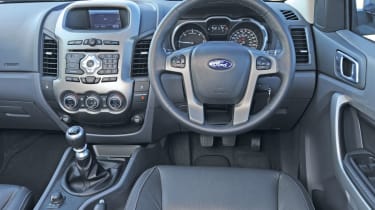
The Ranger has a sturdy dashboard made of strong plastics and simple controls for the air conditioning and stereo. The VW Amarok is still a step ahead though, with a more car-like cabin. However, the Ranger has an advantage over the Toyota Hilux because the steering wheel has reach adjustment, while higher spec models also get electric seat controls so getting comfortable is very easy.
Most buyers will go for the more spacious Double Cab version and these get remote central locking, all-round electric windows and a CD stereo while Limited models get Bluetooth and a USB port – these are incredibly useful as the Ranger’s load bay is vast, meaning it can be difficult to see from the cabin making the car hard to manoeuvre in tight spaces.
Practicality, comfort and boot space
The best thing about the Ranger is its load carrying, not passenger carrying, abilities. There isn't much space inside, even with Double Cab versions, but rear space in the back seats is on a par with its closest rivals, even if the bench is fairly narrow.
All Ranger variants have the same load bed width (1,139mm between the wheelarches) and depth (511mm), but the length does vary. The Single Cab is longest at 2,317mm, the Double Cab the least at 1,549mm. Compared to rivals the Ranger beats the Nissan Navarra on space, and can carry a huge payload of up to 1,340kg or tow closer to three tonnes.
The Limited trim gets a clever sliding rail system with tie-down points to secure heavy loads and stability control that factors in the extra weight of a trailer. Still, parking this enormous car can be a very tricky business – so it might be best to reconsider if you live down a narrow street or crowded suburb without private parking.
Reliability and Safety
If you're driving a big, sturdy pick-up, you'll instantly feel safe, and the Ranger comes with plenty of safety equipment as standard. There are seven airbags, ISOFIX mounting points for child seats and, depending on which model you choose, rear parking sensors for negotiating tight parking spots.
The big story is that the Ranger is the first pick-up truck ever to be awarded the maximum five stars from Euro NCAP. Traction control is included and Limited models get cruise control as well.
Its relative rarity means the Ranger doesn't feature in our Driver Power satisfaction survey, but it has been designed for hard working use and with its durable underpinnings there shouldn't be any major issues as long as you stick to Ford’s recommended maintenance schedule.
More reviews
Car group tests
In-depth reviews
Road tests
Which Is Best