MINI Cooper D
We see if BMW’s Efficient Dynamics package enhances the MINI without diluting its enduring driver appeal...

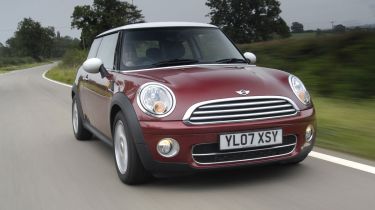
Which of our test cars has the best claimed fuel returns? Here’s a clue: it’s neither the lightweight Citroen, the hi-tech hybrid Toyota nor the economy-minded Volkswagen. Rather, it’s the sporty MINI Cooper D.
Owner BMW has extended its Efficient Dynamics programme to include all new MINI models, and the benefits are remarkable. Fuel efficiency and CO2 emissions have improved by an average of 12 per cent across the range. And the star of the show is undoubtedly the Cooper D, which now has an official combined economy figure of 72.4mpg.
There are three factors that explain this better performance. The first is a regenerative brake function similar to that in the Toyota. While the Cooper is no hybrid, it uses brake energy to recharge a hi-tech battery via the alternator, which results in less drag on the engine. The driver hasn’t been left out, either, as a dashboard display tells you which is the most economical gear to drive in.
Of most benefit, though, is the stop-start function – this helped the Cooper D record the best urban economy figure in this test, at 43.6mpg. Initially, the set-up can be disconcerting; you come to a standstill at a set of traffic lights, for example, select neutral, lift the clutch and the engine dies. Then, you touch the left-hand pedal, and the diesel fires up before you’ve even had a chance to select first.
As you’d expect from an oil-burner, there’s a slight rattle and vibration when this happens, and if you really can’t get on with it, the system can be turned off. But we’d advise you to stick with it – we were amazed how often the engine wasn’t in use during rush hour and, consequently, how much fuel we were saving.
The function was largely redundant on our cross-country section, but the MINI made up for that by having the torquiest and most tractable powerplant of the six cars. This meant the engine never had to be pushed hard, and with the gear indicator telling us to change up when below 2,000rpm, we managed to achieve 66.7mpg – more than 5mpg better than the VW.
Yet that’s not to say the Cooper D is perfect. For starters, its wide, grippy 195/55 R16 run-flat tyres had far more rolling resistance than the rubber on the Bluemotion, so it lost speed on inclines. This was even more noticeable during the motorway section, not least due to the MINI’s greater 0.33Cd drag factor.
The bottom line is that the Cooper D was more economical overall than the Polo. When you consider the Efficient Dynamics technology is standard, and that it hasn’t come at the expense of the MINI’s sporting enthusiasm, this is very impressive indeed.
Details
Price: £14,190
Model tested: MINI Cooper D
Chart position: 2
WHY: Latest oil-burning MINI has brake energy regeneration and stop-start technology as standard.
Economy
Urban: 43.6mpg Cross-country: 66.7mpg Motorway: 58.7mpg Combined: 60.0mpg