Peugeot 307
With new styling, updated engines and revised standard equipment, the Peugeot 307 looks more appealing than ever - but what is it like to drive? Set to hit British roads in time for the 55-plate change in September, Auto Express is the first magazine to get behind the wheel.
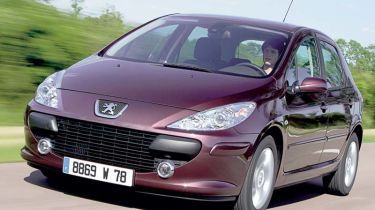
The new look of the facelifted 307 is sure to help it in the battle for compact family car honours. Although the engine range and suspension are virtually untouched, the hatchback rides and drives well enough to remain competitive. The improvements to the interior should boost the 307's credentials even further.
With new styling, updated engines and revised standard equipment, the Peugeot 307 looks more appealing than ever - but what is it like to drive? Set to hit British roads in time for the 55-plate change in September, Auto Express is the first magazine to get behind the wheel.
On first sight, the facelift ensures that the newcomer matches the visual impact of its main challengers. The updated radiator grille gives the 307 the company's new family face.
Our test car, fitted with a 136bhp 2.0-litre HDi diesel engine, is easily identified by its plain grille, while sporty versions get four chrome strips. All models have projector headlamps and new silver-rimmed foglights.
Other changes include updated alloy wheels and a selection of new paint colours. The makeover has not ignored the cabin; it gets updated trim, but the layout and design are largely the same as in the previous model. Two-zone climate control makes an appearance, along with a range of new stereos, although the exact specifications of British-bound 307s have yet to be confirmed.
But while there is a new look and extra kit, the driving experience will be familiar to anyone who has spent time behind the wheel of the current car.
The chassis and suspension are virtually unchanged, but that's not necessarily bad news, as the set-up did help the 307 net the European Car of the Year title in 2002. The ride is smooth and the steering accurate; if anything, the car feels a little more raw than some of its newer, more refined rivals.
There is no doubt the improvements inject fresh appeal to the 307, but are they enough to keep it in touch with the family hatch leaders? The early signs are certainly encouraging, but we will wait to reserve final judgement until the UK-spec models arrive.