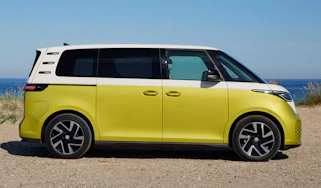
German cars 'among worst for engine failures'

German manufacturers no longer most reliable
18 Jan, 2013 3:05pm Claire Holden Comments

Audi, BMW and VW ranked in the bottom 10 of a study into engine reliability

German-made cars are not as reliable as many believe, according to new research. Warranty Direct has studied its claims data to compile a list of the manufacturers with the most reliable engines - and Audi, BMW and Volkswagen all finished in the bottom 10 out of a total 36 makers.

In fact, the only firm whose cars had a worse engine failure rate than Audi was MG Rover. MINI wasn’t much better, finishing third from bottom, while its parent company BMW came seventh from bottom. And, despite its reputation for rock-solid reliability, Volkswagen came ninth from bottom.

Honda scooped the gold medal – the study found that just one in every 344 Honda engines failed, compared to one in every 27 Audi engines. Despite its recent recall woes, Toyota came second and Mercedes managed to outperform its fellow German brands with a respectable third-place finish.

Duncan McClure, Warranty Direct Managing Director, said that engine failures are the worst for motorists as they’re the repairs that can lead to the highest costs because of the parts and hours of labour required to fix them: “The nuber of failures may be low compared to areas such as axle and suspension damage but engine repairs almost always result in costs reaching the thousands for motorists who aren’t covered by a warranty.”

An engine failure on a Range Rover Vogue recently led to Warranty Direct’s highest ever claim of £13,000.

Top 10 manufacturers

Manufacturer Failure rate (%) Failure rate (1 in x)
1 Honda 0.29% 1 in 344
2 Toyota 0.58% 1 in 171
3 Mercedes 0.84% 1 in 119
4 Volvo 0.90% 1 in 111
5 Jaguar 0.98% 1 in 103

Bottom 10 manufacturers

Manufacturer Failure rate (%) Failure rate (1 in x)
1 MG Rover 7.88% 1 in 13
2 Audi 3.71% 1 in 27
3 MINI 2.51% 1 in 40
4 Saab 2.49% 1 in 40
5 Vauxhall 2.46% 1 in 41

What’s your view? Do you think German manufacturers still deserve their reputation for building the most reliable cars?

Disqus - noscript

German manufacturer NEVER had a reputation for relaibility. Only magazines like Auto Express elavated them to superstar status over the past few years by being impressed with things like "soft-touch dashboard plastics". I have often chuckled at how car hacks confidently recommend a car as a 'Best Buy' on the basis of having spent 2 days with it, and being 'impressed' by its "jet-afterburner shaped air vents", and "how flatly it corners at 100mph"!! For those of us who pay for our cars with our own hard-earned cash and live with our cars for a few years, factors like reliability and comfort matter a whole lot more.

Not a surprise have had at various times from new, Audi A4, Golf Mk3, Mk4, Touran and first generation new Beetle which all suffered with a myriad of faults. These included bits of trim dropping off, indicator stalks snapping, to the engines failing or turbos blowing. This combined with what can only be called legendary useless aftersales has led me finally come to my senses and not even consider anything from the Audi VW group when looking at a new car.

Over what time period are these failure rates based upon? All engines will fail eventually so knowing the time period would be useful.

"Engine failure" is so vague as to mean absolutely nothing. Of course, it's not in Warranty Direct's interests AT ALL to issue a press release pointing out what a supposedly high chance people have of needing thousands of pounds worth of repairs that could be avoided by buying their warranty.

Preiviously had a BMW e46 320d, total ehgine failure, inlet manifold flaps dropped into the engine, a problem BMW have been aware of on 2 litre diesels engines built between 2001-2006. I am aware it is common for nearly new BMWs needing costly engine repairs, luckily for most it will be in warranty period. Currently have a Mercedes C Class, no issues after 3 years of driving.

What complete rubbish, seven BMW's in a row and never so much as a broken lightbulb. One Honda, worst car I ever had the misfortune of owning.

but they did

the length of the warranty so I would say one year mainly, possibly more if customers paid for longer

Rings fairly true for us. Seen engine issues on VW group cars, and also my Peugeot THP, which is a BMW-related engine. But I've also seen several major engine failures on Nissans. Honda, on the other hand, really is bulletproof. Three generations of Honda Civic (petrols), covering well over 100,000 miles in total, and so far we have had to fix one lambda sensor. That's it!

Yes, "quality" is judged very superficially, e.g. fit and finish of interior trim. A quality car is one that provides durable, reliable transport year in year out, which cannot be judged on what the glovebox is like. A fancy finish does not mean that you have a quality car.

Yeah but if the average warranty for a Honda was taken out when the car is 3 years old with 36k miles and the average warranty for a MG Rover was taken out when the car is 9 years old 100k then it is apples and pears

I had a 2011 skoda fabia (built using the same... everything of the polo!) and it was awful.. so many engine faults, rattles etc. Worst car ever.

Where can we find the full list?

It all depends on the way these cars are driven. German cars are driven straight from a stop as if racing cars and thus, inevitably engine failures will occur. Japanese cars cannot be driven like this and as you cannot force a Japanese car into accelerating abruptly, their engines won't fail.

Could not agree more. Vw and audi are rubbish had my fair share!! Its a shame magazines and tv hype them up so much.

Buy Japanese.

Not exactly a surprise

AE are going to find themselves pushed down the priority list for road testing VW Group products for publishing this. Good to see the worm has turned!

Yet in 23 years of driving, I've owned more than 15 Skodas and never ever had a problem.

Yes, and you'll be recalled several times a month!

We need to know what constitutes an engine failure. IS it just the EML coming on, or is it a snapped alternator belt, or is it a piston into the valve train etc?

This article means next to nothing without this information.

The stats are from an extended warranty provider. over and beyond the period covered from new. Therefore if the averge manufactor warranty is say 3 years then the claims are with Warranty direct after the 3 years has passed.. and these are the stats they are calculating.

Unless they provide the year the car was made, the miliage and how many of each they cover then these figures are baseless rubbish. They may cover 10 MG's and 2000 BMWs, you do the math!

funny... everybody I know has a good impression about GM (Opel-Saab) engines... I have 220000 km without a problem with a 1.8 Saab. Everybody I know with a TDi VW-Audi had to change theyr camshaft at 90.000 km... it's like clockwork!!

....really?

that means aknowledging a problem. not something our european constructors know anything about. I have a friend with a 2.0D Bmw X3... 1000 euro's/year into drivetrain and 4x4 system problems... no recall tough....

try one with a DSG and you will never drive another Skoda again. or VW...

Just try google this - Audi A4 Best of All Classes in
DEKRA Used Car Report

Jaguar in top 5??? yee right, thats british report is it???

completely agree. living in Sri Lanka in 'less than ideal' conditions with high humidity, you should see how Audi interiors look like in 5-6 years.. the trim literally melts away on your fingers.. and i've had 5 BMWs which makes you think that BMW lives off your repairs! on the other hand, all the Hondas i've had, had zilch problems... so i guess i can relate to this.

Just a thought, if you don't want to be associated with sh***y journalism, always link the source!! Otherwise you may be making all of this up.

Somehow Toyota and Honda have less safety complaints per car sold (per the US safety agency NHTSA and its database) than others. So what are the others hiding?

I'm sorry, but without data to show how those figures were derived, they're completely meaningless. By careful selection of data it's easy to make statistics say whatever you want.

It's not surprising MGRover's stats are so poor when you consider that in 3 months time they won't have been produced for 8 years.

No vested interest here from tge company that did this survey!

Just a confirmation on what everybody has known for a long time now. One wonders what has prompted Auto Express to publish this only now - payments from VAG & BMW stopped? ;}

Pardon me, I have an overwhelming sense of "schadenfreude".

Dire journalism, Obvious questions

Definition of engine failure? Broken crankshaft or a dodgy sensor leading to an engine warning message?

Age of cars when fault occurred?

Mileage of cars when fault occurred?

Number of cars in sample?

How have the results been analysed to take into account these
factors?

Information as provided is pretty meaningless.

I'd rather they recall and sort the issue than pretend there isn't one....

BMWs might be OK, mine ( a low mileage 120D se bought from a BMW main dealer in Pembrokeshire) broke down on a VERY regular basis - usually but not always new air bags or it just didn't start. The fact the dealer refused to investigate the failure to start as BMW Bracknell wouldn't recompense then as the computer showed no error codes ensured that I'll NEVER EVER buy a BMW again - sold mine back to the dealer after "words"

PS what's the betting that the slating of this article and of AutoExpress comes from BMW owners who don't like their choices being laughed at ;)

ABSOLUTE RUBBISH. I had an audi a6 2.5 tdi, which i run from 10,000 miles to 155,000 miles over 3 years which only needed servicing. I then had a passat 2.0 petrol which i ran to a simular mileage, again not needing anything. I now have the latest mercedes c class which i bought new last year and it has 50,000 miles on the clock, again not needing anything so far. During all this time the rest of my family have had astras, corsa's, focus's, mondeo's, fiat 500's to name but a few, ALL with a few niggles whilst my german cars have ALWAYS been reliable work horses.

PLEASE tell me if this is not reliability at its best then what is???????

I am onto my second Mercedes - no problems on either in almost 80k miles between the two. Had a ford Focus before that, 60k miles in 4 years (petrol, as well) - no problems. My Dad's 1.8 petrol Mondeo did 150k miles from new - no problems... Bloke across the road, has an 08 Civic and gets value for money off his AA membership. Woman at work has an 06 Civic - recently replaced the engine thanks to bust timing belt. And I could tell you the Toyota horror stories... Point is, it takes more than an engine to make a reliable car.

Could not have said it better.

Buy Japanese and end up dead or mamed when you smash it due to it's iffy steering or breaks. Only car I have ever been in and genuinely feared for my life was a Toyota Auris. Dreadful. All over the road on the test-drive both as driver and passenger.

More to the point, Japanese cars are mostly driven conservatively (by, shall I say, older folk) and aren't really used as "working cars" - I can't remember the last time I got in a taxi that was a Japanese make... Mostly Ford, Vauxhall or VW-group. The Ford Focus is the automotive equivalent of a Collie Dog; willing, works hard, plucky and always works if well treat. Try to work a Japanese car as hard and it will fail every bit as much as a European one. All cars fail from time to time, and it depends upon how they're driven and how often and how hard they are worked.

The Civic doesn't have a timing belt.....it has a timing chain!!!

You have obviously never owned Japanese cars 'Neil O' -reading your comments because you are talking c**p, as is 'Toshul' and not making much sense either. This story confirms everthing we have always known about Euro cars!

Bought my Astra 1.6 SXI brand new in 2005, its just clocked over 80k miles and apart from general servicing its been near perfect for the 8 years I've owned it. Could never understand all the hate for Vauxhall's.

foad thx

foad retard

zhduku

German cars are rubbish

I have 3 vws that we have all bought new starting with an 83 rabbit and they have been the best cars ever, we also have a 97 audi a4 with 200,000 miles and has no problems. German cars in my opinion are more reliable when compared to american and japanese cars. plus they just have the feel an touch that other cars dont have.

I've got a 4 year old BMW E90 318d & had from new and covered 98,000 miles with no issues and not even had to top the oil up between services - and I do check it regularly.

what you drive then thats so good? a yaris? matiz? fiesta?

Quite likely that the mentioned £13k bill to repair a Range Rover was because it had a BMW engine in it.

I drove a Yaris. From 16,000 miles to 125,000. Zero glitches. I wonder if there are similar figures for German cars of similar price range.

If you take a look at large-scale reliability studies done over time in a multitude of countries around the world [including the UK e.g. 'JD Power', 'Which?'], you will find that German marques rarely come out as the most reliable...as a general rule, they tend to be mid-table. I am pleased for you that you have had the good fortune of having had 3 very reliable German cars. However, as you can see from the various posts here, mere anecdotal experiences do not become the rule. There are just as many people here reporting problems with their German cars as your glowing praise of yours. To put it simply, your 3 cars may have done you proud, but are not statistically significant. Also, if you want to rely on purely subjective observations, as Arjuna has pointed out, in many developing countries you still see very old Toyotas plying the roads, whereas German cars are far more scarce. Those hard plastic Corolla dashboards survive for far longer in the heat, dust and humidity than the Golf's soft touch, glowing backlit ones. ps. As this report indicates, Mercs are the exception, as evidenced by the number of old Merc taxis globally.

Used to have a Golf - went bang at 60k and drained my bank account in process. Like I say German cars are rubbish

This is a fair point... however in my experience of running a wide variety of cars to high miles... the german cars have always faired better. My 2001 civic needed a new engine at 135,000, the turbo went in my mondeo at 55,000, gearbox in my astra at 75,000 and now my fathers corsa is in the garage as we speak requiring a new engine at 80k!! In contrast to this i have had not a single niggle with my german cars... maybe this is because all the german cars i have owned have been bigger cars, and the reliability is a problem with smaller cars?? All i know is that i would definitely buy german again over any tasteless alternative

Agree a warranty provider putting fear into high end car owners so they might buy their over priced insurance product. Save the money per month for the cost of the insurance and your soon be able to afford a new car!

No need to make it personal.

Driven, yes. But actually owned? No, as they are dreadful. Apart from Mazda. Which are Fords. Japanese cars are five to ten years behind the times.

Oh, yeah, just checked. Common rail diesels... European development. Air bags... Yup, European. Anti-lock brakes? Yeah, Europe again. Rico, it is you who needs to do some reading. Easier to rip off European technology and development than it is to actually innovate and develop something yourself.

Just saying its inferior to European rivals. But then, reliability means a lot when you're in ITU coz your car is less stable than one developed for more demanding European routes, than grid iron Japanese ones....

This is a good point.. different manufacturers design for different markets.

Needed replacing nevertheless. Unlike my dads mondeos timing CHAIN.

Your opinion is based on anecdotes, theirs are based on data.

when my nice mercedes breaks down i'll let you know :)

Suzuki Swift. 2008. 15,000 miles on the clock. Double crankshaft sensor failure, so engine just ran, backfiring, missing, stalling. Had to limp home or would have frozen to death in minus 15C winter. Just out of guarantee. Agent demanded 300 euro for 2 tiny sensors.
I put Suzi Swift at the bottom of my list.

Glad to see this report. I, personally, have always suspected that the oft-heard references to "German engineering" may have been misguided. On the other hand, I have been a big fan of "Swedish engineering" inso far as the three Volvo's I've owned have been proverbially built like tanks. They're definitely the most reliable cars I've ever owned and driven.

Saab's four cylinder 2.0 liter engine has been, and is indeed like a clockwork, but GM doesn't have anything to do with it. They might not have as good gas mileage than most other cars, but it's worth it if you're able to rip an extra 80 - 100 bhp from the engine without having to change any parts, and being able to drive it 400,000 kilometers without a worry. On top of all, with RE85. That's the Saab I love, even though I've got a 9-3 myself, which isn't bad at all either.
As the slogan goes; Born from jets - ruined by idiots.

Neil O: Come to Australia and hop into one of an increasing number of Toyota Prius and Camry hybrid taxis. Stories abound of cabs showing well over 500,000 kms with NO problems at all.

Huh?

The good reputation of German cars like Audi and VW is due to the fact that the fit and finish of interior and exterior is excellent with nice materials, but the technical relaibilty is far less impressive. Secondly the 'objective' autopress always (only) look at the cars fit and finish and the long term quality is not of any importance, sadly enough. The marketing power of VAG is impressive, and advertising income for AutoExpress and its siblings Autobild and Autoweek are to important for the publisher. So they 'plu'every new VAG product in a shamefull way. VAG 'controls' all the motoringpress in Europe, quite impressive how they have established this, to be honest.
Yes, Toyota, Mazda and Honda are the best choice when you want a reliable car, by far the best choice.

Utter crap this statistic, in Europe you see 15-20 year old (and even older) german cars on the roads on a daily basis but not many japanese, french or italian cars since they have by then long disintegrated into dust. Many people I know drive all sorts of german cars with far more than 200K on the clock without any engine problems at all. I myself am the first owner of a 2005 BMW 120d with 203K to date and not only have I not had one breakdown ever, the car did never need any service other than regular maintenance… and besides, go and have your japanese car fixed by a licensed dealer, that's when you realize you are paying premium for a not so premium car.

To all the fools who think it's great to become personal, go ahead and flame me!

My current e92 320d (09 plate) has 45k on the clock and just had to have turbo replaced (within warranty, though). I love the car but dread the cam chain, swirl flap and turbo issues (well, not the turbo issue anymore) - all related to the engine!.

Had the same with a 330d and BMW left me out in the cold when it happened. Even the main dealer didn't warn me about preventative maintenance (so why bother with a high priced main dealer when they don't seem to be very useful in actually maintaining a fairly new BMW????).

What BMW seem not to understand is that when people wont buy the cars out of warranty that the second hand market falls away, thus driving the cost of ownership for the new car buyer far higher. This of course results in lower new car sales. BMW has a very short sighted approach and their service is far beneath the brand proposition they present.

Errr no, I think you need to do some research on facts- Mazda's are not Fords although some are based on shared platforms - the running gear is actually unique to Mazda's and the new skyactive models ie. CX5 and new 6 are nothing whatsoever to do with Ford (not even platform share) Ford now dont own anything of Mazda!!
While were talking facts I ve owned Japanese and actually German and like the majority of stories I m reading here would agree that German and euro cars live up to their reputation in that they are problematic. You need to face up to the statistics which are consistant year in year out from different sources that Japanese cars are superior in terms of reliability!!!

There wont be since a Polo or Fiesta will struggle to reach six figures without failure. VW/Ford etc equals = unreliability.

Mondeo's are rubbish

My 2003 330 IX is the best, most reliable engine I have owned. I don't know about the other German cars except when I was in Germany, the only cars I saw stalled out were non-German.

It seems the more advanced cars become the more there is to go wrong with them and the more expensive they are to fix.I recently purchased a 55 golf,a beautiful car but i've had constant problems caused by a ESP sensor making the car go into 'limp home' mode.A replacement ABS unit is 'only' £1100 plus labour,(wonderful).German cars probably score badly in this respect as many are premium cars with more gadgets and sensors to potentially fail compared to average cars.Still it's no excuse.

well that wrong about jaguar because they don't sell many in Uk. All of them are sitting around dealerships. Had Bmw never had problem.had golf did valve in.I guess it how well can you spot a good car or pick one that problem driven.Most merc engines don't fail in warrenty usally when there out and done 10000miles and timing chain slips or vavle seating on 271 engine.Had more problem with gearboxs

Statistical insignificance is what it is.

German cars now are ridiculous. The difference between a Toyota and VW is VW use a lot of their budgets on "soft touch materials" while Toyota spend more of it on the drivetrain and engine, stuff that matters! And its not as if you can call a Toyota interior tacky or flimsy. All their interiors are built to last and hardwearing. The quality their is Lexus which have both durability and finish. No surprise Honda is the top for reliability however, their quality, as in interior build has been declining some say, but they are still great cars, I jut prefer Toyotas. And its funny there are no French cars in the bottom 5, which supposedly has a bad reputation for reliability. German cars are a never ending list of problems. Want a proper luxury car? Get a Lexus.

German cars now are ridiculous. The difference between a Toyota and VW is VW use a lot of their budgets on "soft touch materials" while Toyota spend more of it on the drivetrain and engine, stuff that matters! And its not as if you can call a Toyota interior tacky or flimsy. All their interiors are built to last and hardwearing. The quality their is Lexus which have both durability and finish. No surprise Honda is the top for reliability however, their quality, as in interior build has been declining some say, but they are still great cars, I jut prefer Toyotas. And its funny there are no French cars in the bottom 5, which supposedly has a bad reputation for reliability. German cars are a never ending list of problems. Want a proper luxury car? Get a Lexus.

Not strange at all about there being no French cars in the bottom 5. Someone has done a highly effective "black propaganda" job on them.

I drive and have driven 20 year old Honda civics for a few years, still only oil service, lightbulb, tyres required. Even in the cold climate -25c they start up like a champ...

Depending upon how they are driven and maintained, etc. Funny what you say about the Mazda-Ford thing - esp as the parts are interchangeable as most of the technology is identical. Next you'll be telling me that the reliable Volvos don't use Ford parts either (Even though Volvo is now Chinese the tech sharing still exists).

Nice name change, btw.

Media will always perpetuate the myth of the "nicest place to be" being the best car. If they were to report on, what we all wish to read, reliability, they would have to test drive vehicles for months if not years. By which time, they would be old marques, and of no interest to us.

One of my comments above highlights that different manufacturers are making cars for different markets.
My family are builders and engineers. All prefer Fords for their high-mileage driving and durability as load-luggers. I loved my Focus, but switched to Mercs coz life has been good to me.
I've owned two high-mileage Fords and two high-mileage Mercs - no
problems on any of them. I know and have owned Japanese cars (all
low-mileage compared to the Fords and the Mercs) that also haven't had
any problems...
I am not exactly knocking Japanese reliability, but am skeptical that their cars are any more reliable than European counterparts if all is equal (e.g. use, maintenance, etc).
I even had my old Focus serviced by a local Mazda dealer because a mate worked there and in his words, the Focus and Mazda 3 were "the same car, really".

Aren't the batteries in need of replacement by then? In UK, cab drivers are sticking to efficiency-tuned diesels.

As said in the report, 1 in 27 Audis will have an engine failure. Did you own more than 27 Audis, to be able to make such statements? (Actually you'd have to own hundreds to make any statistically significant claim)

You've fallen in what can be called a "heuristics trap" by placing personal anecdotes over statistics. It's a very common mistake, almost everybody falls victim to it. Very often found as a variety of "My old man smoked a pack of cigs a day and lived to be 92 years old... therefore smoking cannot possibly impact health"

As a side note... Vauxhalls/Opel fares poorly as well while Merc does great according to the figures above.

Admit it. In Australia Prius is selling like a dog. No-one wants one. I live there too mate.!

Had an '06 Seat Leon with VAG engine obviously and at 2 years / 56k of easy motorway miles it needed new engine turbo and DPF. The great irony is I had been into the dealer 3 times before telling them something wasn't right in the months before hand. It had to be recovered 3 times, the last one being the death of the engine
In comparison - Land rover discovery before that had a dodgy gearbox cable that needed adjusting occasionally but other wise pretty good.
Insignia had no problems in 60k.
Currently got a mondeo but it has only done 22k so not exactly old enough to tell.
Wife has had 2 ford focus from ford direct and they have all been great.

I ran a Golf from new to 170,000 miles for 10 years, before selling it on. It was superbly reliable. In the last year before I sold it, I changed the clutch & gearbox, but I put that mainly down to my hard driving. Nothing ever went wrong with it, other than a couple of electrical problems early on - which I think were caused by a poor garage repair following a bump. I now have another Golf based on how wonderful and reliable my first Golf was. I've had my new Golf for just over two years now, and it drives like new - completely and utterly reliable. :-) With regard to German cars in general, I'd say BMW are the most unreliable based on the experiences of people I know that have them, and I've seen quite a few broken down over the years -although, I should say that did have a new E46 330 coupe which I kept for a year before selling it on, and nothing went wrong with that. The only thing I would say, is that I didn't like the attitude of some of the VW dealerships, and didn't feel as if I was getting good service.

You seem to be contradicting yourself! You say in a comment above that you have driven, but not owned Jap cars because they are 'dreadful' yet you say above that you know and have owned Jap cars. Which is it to be?! Incidently I am also from an engineering background so know what a quality car is!

I don't think there's enough detail in this report. One thing I am aware of since we had this wet year in UK is the number of German cars (BMW/VW group) which had real issues with sucking water into engines. My friends BMW 120 was a write_off and only a year old!
This sort of issue could skew these statistics in terms of "normal failure" though I would still be upset.
However I am told Skoda have positioned some of their air intakes differently and are far less prone to taking in water.
Interesting......

Only German car l ever owned was a VW Golf, the engine caught fire, it put me right off of ever buying German ever again. Glad to say my family got out the car whilst it was going up in flames, but l vowed l would never get taken in by the marketing bull "If only every thing in life was as reliable as a Volkswagen" ever again.

Nice to see Warranty Direct are the biggest company in the business in the UK are now bringing these facts to our attention, as they have to pay out the claims on engines failures.

I agree that MG Rover had a lot of issues towards the end, but IMO the stats hide reality. MG Rover cars are all well over 8 years old,, and the majority even older given how volumes decreased at the manufacturer in the last couple of years, many more may have been put through Warranty Direct when bought used. All these figures do is tell people the rate of failure for cars covered by Warranty Direct and that in itself tells a story. In the same way that Audi, BMW and VW get a bad rap, when people go out and buy a 7 year old car from a backstreet dealer or a private sale, chances are the car has seen a bit of the world, often these cars are only being traded in because they are showing signs of trouble, so I believe that Warranty Direct end up with a higher proportion of 'troublesome' cars than normal. It wasn't too many years ago that Warranty Direct hailed the ancient Rover 45 as THE most reliable used car money could buy - and I didn't buy that story either... So like the AE Driver Power survey, this might make interesting reading and sell magazines but I think I'd take the stats with a pinch of salt. In fact, knowing how many cars from those makers are sold in the used market, this can only serve to sell Warranty Direct a few more policies and I'm sure they are full aware of that marketing opportunity.

Not surprised that Audi iand VW come out with poor engine reliability assume Porche will be alongside them certainly in thefuture I used to do the Accounts for an Audi VW dealership and could not belive the number of engine replacements on cars 2 to 4 yrs old .Agree that the Toyotas will come out well I suppose Nissan should a swell .I have and friends have owned many Merc,Bmw ,Audi and VW cars in the past and certainly have had their share of problems but I like LandRover and Jaguar along with Ford ,Toyota and Hyundai for normal prices the later three are good cars.

Emmm ....Top 10 and Bottom 10 ?

Next time try using both hands to count with.

CAN YOU ALL PLEASE CHECK OU THE NEW GOLF ARTICLE? YOU ARE SIMPLY NOT GOING TO BELIEVE THE 'BLINDNESS' OF VW OWNERS. 4.5 STARS FOR THE 'NEW' (UNPROVEN) GOLF.

http://www.autoexpress.co.uk/v...

AN ABSOLUTE JOKE!!!

Also, please read the comments of 'Albert, Netherlands'. He may be right with his assumptions. Personnaly, I suspect a lot more than what he has elluded to.

Ever wondered why the U.N use a fleet of Landcruiser's and Patrol's in the harshest climes, rather than a crappy Q5 or ML, cause they are the definition of durability and reliability.

Completely agree with your remarks.
You obviously have taste.

You are 1 piece of data. The reliability review does not say EVERY German car has a bad engine.

Article states 'failed.' Does that mean there was a glitch that needed repairing or does it mean the engine blew up? To what extent does the term failure actually mean? Poorly written article appealing to emotions and very light on facts.

The only reason why MG Rover is on this list is HGF on the K-Series. If it wasn't for that, they'd be fine. The Chinese and MG UK sorted it relatively recently though on the TF and now the 6 - so its pretty much a thing of the past.

Anecdote is not the same thing as evidence.

BUT, there is no data over how many km / miles these car been driving in average. That makes a big difference if say the average honda done 5000km / year and average Audi done 30000km / year. Many many leasing cars are german cars. Are all used only for private use? What is the average engine? What are the most common faults and models? The only real and fare test you could do is take cars in the same class, and let them do the same driving under the same conditions, and THEN compare the data. Just my opinion though..

As others have said, it's anecdotal. To demonstrate this I had a passat for a year, oil leak, water leaking into the passenger footwell, new brake calipers, the list goes on. I have had an alfa 156 for the past 5 years, It's done 165,000, original engine, turbo etc, I've only had to replace things which have worn like track rod ends, tyres, wishbones, filters.

I THINK THE GERMAN MANUFACTURERS MAKE THERE CARS UNRELIABLE ON PURPOSE TO MAKE MORE MONEY THROUGH PARTS&LABOUR, EVEN MORE SO ON THE NEWER MODELS WITH STABILITY/TRACTION CONTROL FAILIERS & TURBO FAILIERS ETC, WHY DON'T THEY JUST MAKE NATURALY ASSPPIRATED ENGINES WHICH ARE JUST RELIABLE ? IT MAKES YOU THINK WHY ? MORE & MORE UNESSERSERRY AD-ONS = MORE PROBLEMS HENCE WHY HONDA & TOYOTA ETC HAVE LESS ENGINE FAILIERS & MORE RELIABLE ENGINES OVERALL, PLUS THE OTHER REASON WHICH MAKES ME QUESTION THE GERMAN MAKERS IS THE POOR AFTERSALES CARE, THEY JUST DON'T CARE BUT THEY'LL TAKE YOUR MONEY FOR THE PARTS & REPAIR THOUGH. PLUS POINTS ON CERTAIN GERMAN CARS REFINED, SMOOTH, WELL INSULATED LOW WIND NOISE, NICE METERIALS USED & FIT & FINISH HIGH STANDARDS IN THESE AREAS BUT NOT RELIABILITY OVERALL, YES OBVIOUSLY THERE ARE MANY GERMAN CARS WITH MANY MILES COVERED WITHOUT ANY PROBLEMS BUT OVERALL FAILIERS THERE ARE JUST TO MANY.

Nonsense. I ran a 1983 Fiesta to 174k miles with no issues; and a 2002 Mondeo to 149k before I sold it on. Smaller, cheaper cars will hit "uneconomical repair" territory earlier than a German premium car for *the same fault*.

Not really rubbish mate, our works car park is full of all sorts of cars, the ones generally leaving on trailers to the garage are Audi's and BMW's. We have one Audi A6 3.0TDi here that has had 2 new gearboxes within 30k! By the sounds of it you have been very lucky with your cars but don't expect that to go on. I was look with my Alfa 147, did over 120k in it and never missed a beat just had its service and my old Astra barely had a service and still racked up 50k in just over a year and never did a thing wrong. A friend of mine has also had 2 turbos on a Golf in less than 20k! So they really aren't all that.

seven-speed DSG gearbox...ohh my good..tecnical nightmare that vw did...

You're looking for an excuse for the Germans.

'Failure' is the same for all manufacturers and could range [as you intimated] from a malfunctioned sensor to a serious mechanical failure. The criteria of these findings has been compiled by Warranty Direct who, it must be said, will have absolutely NO alliegencies to any manufacturer whatsoever. Thier data is accumalated using information provided by Franchises, Independant Garages and Breakdown Associations (amongst others).

It clearly [and unequivocally] shows a distinct reliability issue from the named manufacturers.

I agree totally 'istvan'.
Lets get a level playing field and test cars side-by-side. Same [type of] drivers, same roads/conditions, same abuse.

Using your suggestions, we can remove obvious 'private' cars like Hondas and Toyotas (to name just two). These are generally driven by older clientele and would rarely exceed 3000rpm. Lets compare the German marques with another, high-mileage fleet favourite, one which has been lambasted over the years for various reasons?

Lets have a look at FORD. This companys' cars have long been regarded as tools for the Sales Reps trade and are often punished to within an inch of thier Service Booklets. If these produce better reliability than the German marques, then will you consider the possibility that they are MORE reliable than you have been led to believe?

Curious then that Ford finish higher than VW/BMW/Audi.

I'm glad that Ford is NOT as reliable as a Volkswagon :-)

Don't you consider Astras and Corsas to be German cars?

Premium? You realise that's just marketing and you come across as angry that your beliefs are being questioned. Premium? That means free wifi and real coffee in a real cup whilst you're waiting for your car to be repaired as they're too mean to lend you one! Premium ?- all BMWs bits probably come from the same manufacturers as Ford or Opel

Whatever the definition of failure it relates to BMWs and Hondas equally and Honda trounces the Big Mouthed W*****s cars :)

Blimey, around Woking just about every Taxi is Japanese with the exception of REALLY old Mercs built in the days when they were built as solid as a vault

They're churning them out now though to try overtake Toyota as the biggest manufacturer.. Quality is slipping my friend

But the Japanese will use our cash to push whales to extinction...

Just to point out - not a single French or Italian brand in the bottom 5, so to those who have refused to take another look at how their quality has improved - here are the stats!

Also, Jaguar (who of course share most engines with Land Rover) are in the top 5. I think stats like these really shake up prejudices against brands with historically below average reliability. And good on them, for too long German's have relied on 'rock solid' reputations without the levels of intangible quality expected of them.

Some people have mentioned that they see older German cars on the road still, but not older Japanese cars - here is the answer. Because people believe the 'premium' hype, they buy old, cheap German cars (because they cannot afford recent models, and should be buying newer 'mainstream' cars instead within their budget). Once purchased, they keep spending money on the old moneypits to keep them on the road, and as a result, most of the old German cars you see have had almost every part replaced - does anyone remember 'Trigger's broom' from Only Fools & Horses? Same thing...

Ive driven several German cars over some hundred thousand miles and only few and small repairs. My next car will be an Audi or Beemer again.

That's a good point!
Why do the mags only test cars for around 10,000 miles?? Buy a second hand car at 20K and test it for another 20K. THAT I'd be interested in reading.

Couldn't agree more Paul.
It's no secret that Jaguar, Land Rover and Ford use [mainly] Peugeot/Citroen diesels and that Nissan use Renault diesels.
Question: Just HOW corrupt are journalists I wonder?

Mercedes used to publish the money they set aside for warranty claims for their car division alone. It ran into billions and this was when they offered a 1 year warranty. Everyone I know, including myself, who has run a so-called premium German make has had expensive problems. The most reliable car I owned was a Citroen BX which did over 200,000 miles from new with two problems - a Bosch ABS sensor and a Blaupunkt radio - both German products. As someone said to me in VW - ''If you want to buy a relaible VW, buy a Skoda'. Says it all.

I've been saying this for years.

Kudos to you too for realising this is the case!

Ha-ha-ha. Calm down 'tschotsch', you'll be giving yourself a hernia!

Two things;
1. In order to state that this is "Utter crap", you must have contradictory evidence - please post a link. I am genuinely interested in the truth.

2. Are you REALLY claiming that Warranty Direct would falsify thier findings? To what gain?

Also, check out the Driver Power findings (using bona-fide VW owners) and compare the results with the two competing manufacturers. If the owners are reporting problems, doesn't that make you wonder . . . . . . just a little?

Here's the link:
http://www.autoexpress.co.uk/t...

If you go to the Warranty Direct website they have figures for the least reliable cars. You will notice that the premium German marques feature prominently and it seems inversely to the cost of buying the thing in the first place. The bottom 10 cars are ALL German. I include the Range Rover because, until recently, that was a BMW.

Engine coil problems anyone?

You cannot force a Japanese car to accelerate abuptly? Blimey, so they have gone from accelerating of their own accord to now ignoring the driver who may be trying to get out of a dangerous situation. Is there no end to the marvels that are Japanese electronic glitches?

Which is why Toyota have had a torrid few years in which they have admitted to/been exposed over some fairly serious faults and design flaws that were otherwise always brushed under the carpet. Not to mention the multi-million $ payouts in the US for breaches of safety and class action law suits. Yes, Toyota have done marvellously well conjouring up a false image of reliability. Or have you slept through the last few years that unveiled Toyotas to be really quite poorly conceived machines? As for fit, finish and interior quality....that's a whole other thread.

So from your 'engineering background' which is rather arrogant and somewhat broad statement to make, what exactly constitutes a 'quality' car?

Have you looked at the servicing intervals of these cars? Typically the French and Italians are at the bottom, right? They tend to have the longest servicing intervals... I've seen up to 35000 km. The Germans are around 25-30000 km, also not reliable. The Japanese force you to come every 15000, maybe 20000, and lo and behold, they are the most reliable. Heck, in SE Asia you'll have to service your Honda every 5000 km. Might as well drive around with your mechanic on the rear seat...
The way I see it defects and problems are noticed much earlier with such a short interval, so the cars are always kept in good condition, defective or soon to be defective parts that will cause a lot of trouble in future are replaced before they can cause problems.

And drive a piece of automotive history. A brand new oldtimer...

In some markets Toyotas highest end D segment car has 2 or 4 airbags, no stability control, and a 4 (high spec 6) speed gearbox. Yes, obviously it is going to be reliable. This tech has been around for the past 20-30 years! Might as well drive a Dacia. Old, proven tech.

Since its owned by GM, no.

New or used ? With a used car you never know how it was driven before.

So how do you suggest testing "long term reliability" within two days to a week of testing time ?

I am interested. People always mope around but offer no solutions.

Hahaha, sure thing. Can you show me the newspaper article ? As i am sure such a story would be a big deal for them.

Typical British anti German sentiments. Take a look at the German DEKRA REPORTS on reliability over a span of 150000km for a balanced view on the reliability of various cars. Note that the jaguar is really an Indian German reinvention of what was to say the least, a bad joke.

No, not anti German but merely a welcome corrective to some of the excessive adulation

Reliability is all about how you drive, maintain and look after your car. A bad owner can spoil a Honda within months, a good owner can have 500,000 in a Fiat. Have seen both. Also you cant compare brands thats wrong, you have to compare models and reliability will differ from country to country as driving conditions are different. So I only believe in statistics made worldwide over a million users. Small statistics are waste of time, no point arguing guys. Also you have to compare models spec for spec, no point comparing a 7 series with millions of gadgets to a Hilux in that doesnot have even electric windows. Take an S-class and a Lexus LS to moldova, and i guarantee you thats S class will beat the lexus everyday in those road and wheather conditions. The fact that lexus has fantastic dealerships does not make the more reliable, but improves customer satisfaction and that is reflected on the surveys they fill. So statistics are waste of time unless they are on a massive scale collected in 200 countries (full stop)

Different here in Australia from my perspective as an ex mechanic at a VW dealer, had loads of customers who took care of their cars from day one and I mean really pampered their cars from a mechanical point of view, wasn't uncommon to see cars with 50-60000KMs coming in with cracked heads, cracked cylinders etc. Not sure about in the UK but anyone who needs to rely on their cars as a source of income buy Toyota- look at airport shuttle bus companys. We have a 2006 Toyota Hiace commuter 2.5L D4Diesel with the that we service= bullet proof, only standard by the book services and 1.2 Million KM on original drivetrain and gearbox and this thing gets smashed 24/7- 12 Passengers + trailer and luggage! Smashed by drivers who don't care about the car either.

Your comments are fair enough. Two questions though:

1. Where can I get such a report?
2. Why are German brands revered so much when evidence suggests otherwise.

Mercedes have had many historically unreliable periods in the past (remember the E-class issues of circa 2000?) yet you firmly 'believe' that the Merc would beat a Lexus in Moldova. I'm not saying that it would or wouldn't, just asking where you've obtained your belief?

I fear that you, my friend like so many others, have been 'Marketed'.

In the words of Lt. Caffey, "I WANT THE TRUTH". Problem is, there are too many owners who 'can't handle the truth'.
Nothing else matters. Is there someone out there with the balls to compile such a report?

Couldn't agree more Paul :-)

That probably has more to do with an idiot owner who didn't know how to service his own car.

Hahaha! Funniest comment yet! 15 Skodas in 23 years!

Someone told that that in Germany BMW and Audi's are just considered to be our British equivalent of Ford/Vauxhall rep cars. Somehow they have managed to get labelled "Premium" in UK (great maerketing) when in reality they are not, Premium means Mercedes, Lexus, Jaguar or Range Rover. Don't forget buying British-Made cars helps the UK economy -not a bad thing for all of us to start doing in this recession, maybe.

Ha-ha-ha-ha. Nice one Cyclops, like it!
He even had Skoda's when they weren't owned by VW and were the most unreliable cars on the road - and never had a problem! I believe him :-)

Two or three cars in that time would back him up. 15 clearly means it's a brand to avoid. He doesn't get it, does he?

I just read the AE long term review for the 208.

Being French, they criticised it's reliability:

- A hose came loose

- Preventative service item check

- The sat nav once lost satellites

I wondered if it was an A1/Polo/MINI review, would they focus on the negatives, or write about the handling and the plastic on the dashboard?

There are all sorts of things going on here. The life of an engine is often more about how it is used and how it is serviced than any other factor.
I have a Mini Cooper (an original Rover Mini) with over 120,000 miles on the clock. I did every one of them so I know the mileage is genuine. Original engine never stripped down only removed the cylinder head to gas flow it. All original. Was I lucky yes but it has ben looked after, other than the occasional rally.
My last two cars have been Alfa Romeos no engine problems in over 60,000 miles. Again I did the miles and there is the key. Many cars, often German, are made from some pretty top end materials and stand high mileages well cosmetically. This makes them easy meat for clockers. Just how many second hand cars have mega mileages yet are sold with below average on the clock. Suprise suprise they then prove unreliable.

True values or just mascaraed number to promote some manufacturers and give bad image to others.... I like to know the real condition of these test...

There are always cars who are monday cars but there are manufacturers that built more of them than others!! Some of us have luck ithers don't.

I have a BMW 540i e39 range model, with about 170000 miles on it now. It has only had a few gimmicks like a snapped alternator belt and a rusty fan, but this all due to the way the car was handled. The previous owner of this car mustn't had serviced my car well, which is why this has happened. It all depends on the owner, if he services it right, it will last as long as he/she would like it to. Just because a car has longed well for you it doesn't mean that it has turned out like this for others. Think before you say.

absolutely correct. It's all about reliability. What's the point of quality dasboard if the car a good part of its life at the workshop.

I bought a new 2008 BMW 335i twin turbo, Well just into 8K miles the fuel pump went bad.It did it again at 26 K miles. I took it to the dealer at the normal maint intervals. This car has been a nightmare. Right now Im just glad I got rid of it. I sure miss my 2001 Honda Accord that had 126K on it.I only had to change brake pads, tires and oil in seven years. Dont buy a BMW with turbo charger it will fail and leave you stranded.

This is just an example of people not understanding research. All that is being observed here is confounding variables. The type of people who own audis vs Hondas into such high mileage, the way they drive and the servicing. What this research needed was to show you further numbers for each group- eg no of owners, service history, average age of current owner (and the standard deviation)

For example, the type of people who buy a Honda Jazz. Elderly couple who keep it in immaculate condition until 800000 when they buy another new. Audi a3- James a sales reps new company car who thrashes it and gets a new one at 40000. Then some 28 year old buys it as the top end of his budget takes it to bobs rust garage then it will jave 3 other owners and no real service or timing belts until someone buys it as the 4th owner at 120000

Couldn't agree more!!!

Auto Express Issue 1,268
For more breaking car news and reviews, subscribe to Auto Express - available as a weekly magazine and on your iPad. We'll give you 6 issues for £1 and a free gift!