Fiat Bravo
Fiat's new Bravo Sport piles on the punch and kit
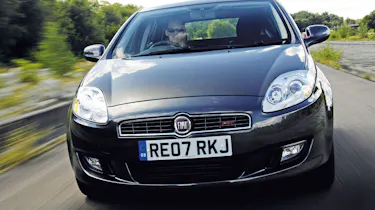

The Fiat Bravo is a serious family car contender, and the 1.4-litre T-Jet engine a welcome addition to the line-up. Frugal and punchy in equal measure, this model feels every bit as quick as the figures suggest. In flagship Sport trim, it’s also loaded with kit – so the Fiat combines stylish looks, a neat cabin and attractive price to take a well aimed swipe at rivals.
Turbocharged family cars are nothing unusual these days, but the latest addition to the Fiat Bravo family is something a little bit special.
While the 1.4-litre engine offers 150bhp, this is no fire-breathing hot hatch. In fact, the latest model in the Bravo range is supposed to combine the economy of a small engine with the performance of a bigger one. So, does it live up to those claims?
In top Sport spec, you’ll be hard pressed to spot the Bravo’s modest intentions, as its smart two-tone alloy wheels, body-coloured side skirts and rear spoiler give real road presence. Chrome exhausts and red brake calipers are also fitted as standard.
But on the road, the turbo is more like a normally aspirated 1.8 or 2.0-litre, with lots of low-down torque and a gruff exhaust note. A 120bhp model is on the way, although it won’t get the Sport button of our 150bhp variant.
Used - available now

2025 Ford
Focus
13,794 milesManualPetrol1.0L
Cash £15,476
2025 Audi
A4
26,842 milesAutomaticPetrol2.0L
Cash £21,697Pressing this reduces the level of assistance through the electric power-steering, sharpens throttle response and provides an overboost facility for the turbo – cutting the 0-62mph time from 8.5 seconds to 8.2 seconds.
But even with this mode engaged, the precise steering is short on feel, and the sports suspension allows too much body roll. The stiff set-up also struggles to absorb small bumps, compromising ride comfort. Yet the lively T-Jet unit makes the car fun to drive, and with fuel returns of 39.8mpg, it shouldn’t be expensive to run. In town, you’re better turning off Sport mode; progress is smoother with the lighter steering and less snappy throttle.
Inside, the cabin gets smart upholstery, a leather steering wheel and alloy pedals. Standard kit includes the clever Blue&Me USB MP3 player connector and cruise control. However, our car’s dual-zone climate system is a £275 option, while rear legroom is tight.
If you want the clever T-Jet engine without the bodykit, the base Active starts at £12,895, and has six airbags and air-con. Dynamic trim adds alloys, cruise control and a leather steering wheel for £13,995. It does without the Sport’s firm suspension, but gets the Blue&Me interface and dual-zone air-con – and so is arguably the best buy.
Rival: Renault Megane 2.0 vvt
The Renault was revised recently, but its normally aspirated engine lacks the T-Jet Bravo’s power, pace and economy. Also, the Mégane can’t match the Fiat’s standard kit.