Toyota Corolla
Apparently one of the signs of getting old is that the years seem to flash past quicker. However, don't let the arrival of a new Toyota Corolla Verso fool you into thinking time has been flying by. Launched in 2002 - with the rest of the revamped Corolla range - the Verso has just been replaced despite being only two years old.
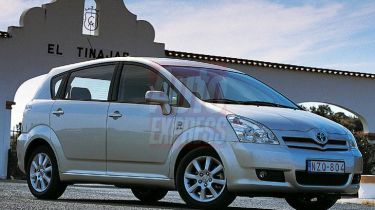
With so many new and innovative mini-MPVs arriving on the scene in the past year, the last-generation Corolla Verso didn't stand a chance. But by taking the unprecedented move of redesigning the car after only two years, Toyota is now able to offer a model which is genuinely interesting and inventive. Unlike rivals, the Easy Flat-7 system means you don't have to struggle with removing and then storing seats, and yet the Verso is still as usable and roomy inside as its mini-MPV competition. Practicality isn't its only attraction, either. Its smart styling also impresses, and it features technology which hasn't even been seen on luxury cars yet. A well mannered driving experience, good standard safety spec and an excellent diesel make the Verso a viable rival to established models.
Apparently one of the signs of getting old is that the years seem to flash past quicker. However, don't let the arrival of a new Toyota Corolla Verso fool you into thinking time has been flying by. Launched in 2002 - with the rest of the revamped Corolla range - the Verso has just been replaced despite being only two years old.
With the current car strictly a five-seater, and the arrival of seven-seat competition such as the Volkswagen Touran and Renault Grand Scenic reshaping the class, Toyota wanted to get a piece of the action. Since it couldn't redesign its existing model to accommodate more seats, it scrapped the whole car and started again.
Toyota hopes cabin practicality will be the new Verso's selling point. Its Easy Flat-7 layout allows a completely flat load area by folding the seats down, rather than having to remove them - the only car in the class with this capability. However, with the middle row in place, the two rearmost ones are strictly for children only, as head and legroom are very tight. They do fold with impressive ease, though, as simply pulling a latch flips both the base and back down in one action.
Up front, the Verso impresses with great visibility, plus reach and rake-adjustable steering. The cabin also has a quality appearance, with a metal-effect centre console, futuristic instruments and even the engine start button from the Prius hybrid. That car's modern approach is reflected in the styling, too, with large headlights, prominent wheelarches, a high shoulder line and a sloping rear roof that gives a less frumpy look than most MPVs. At the rear, there are funky jewel-like tail-lights.
In contrast to the borrowed looks, the chassis is unique to the Verso. The ride is firm but the handling good, with great body control and reasonable steering feel. The engine range is carried over and includes 1.6 and 1.8-litre petrol units and the 2.0 D-4D diesel. Set to be the most popular choice, this 114bhp motor isn't the punchiest oil-burner around, but it provides smooth delivery from 2,000rpm. And the five-speed box shifts slickly via the dash lever. However, the lack of tax-friendly Euro IV compliance might deter company buyers.
Three spec levels are available, all with nine airbags - including one for the driver's knees - while the flagship T Spirit has headrest-mounted DVD screens. There's even the £2,300 option to add full-map sat-nav, a colour reversing camera and a cornering-assist monitor using a prism camera in the grille. With technology such as that, it's no wonder we're all starting to feel old.