Honda FR-V
We've already been impressed by the Honda FR-V in 2.0-litre form. With its excellent combination of value for money, great packaging and decent driving dynamics, it's one of the best cars in the compact MPV class.
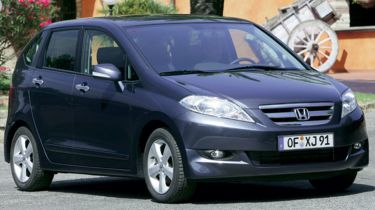
The FR-V is a quality package that will have broad appeal. However, the 1.7 model is not as refined as the 2.0-litre at speed, so whether it's the one for you depends on the driving you do. If school runs and shopping trips are your priority, then the 1.7 will be fine, but the 2.0-litre model is a better bet for motorway work.
We've already been impressed by the Honda FR-V in 2.0-litre form. With its excellent combination of value for money, great packaging and decent driving dynamics, it's one of the best cars in the compact MPV class.
And now we've driven the £14,750 1.7 SE, which despite being the entry-level model, comes with a healthy list of standard equipment. On paper, it's a tempting choice. Pick the cheaper model and you save £950 over the bigger-engined car.
The CO2 emissions rating is also down by 20g/km, which will please fleet users, as will the improved fuel economy figures. Insurance costs are lower, too, as the 1.7-litre falls into group 9, compared to the 2.0 model's group 11 rating.
The smaller-capacity model isn't short of power, either, developing an impressive 125bhp. That's enough to provide some sparkling performance. The engine is smooth and willing, happily revving all the way through to the near-7,000rpm red line, giving the FR-V some real spirit. But it's not all good news. In typical Honda fashion, the unit is reliant on high revs to deliver decent pace, and in fifth gear - the cheaper model does without the 2.0's six-speed box - there's minimal torque to cope with motorway work, with downchanges often necessary to keep up with the flow of traffic.
Honda has tried to address this by lowering the gearing, so that in top the engine is turning over at 3,500rpm at 70mph. But with maximum torque at a high 4,800rpm, it's an unhappy mix.
The high-revving nature of the engine affects refinement at speed, while at the same time the car is not at its most responsive. This was always going to be an engine that works best if you drive it hard - and to compound matters it gets a bit boomy when you do.
So from a driver's perspective, the 2.0 is worth the extra money. It's more expensive than some rivals, but it will hold its value better than most. It also benefits from a £330-per month finance, insurance, warranty and service package giving five years of worry-free motoring.