Peugeot 1007
Peculiar doors and challenging styling mean there is lots that's new about Peugeot's 1007 - not least the name. This is the 'one thousand and seven', not the 'one double O seven' - and according to Peugeot, it is out to change the way we think about mini-MPVs.
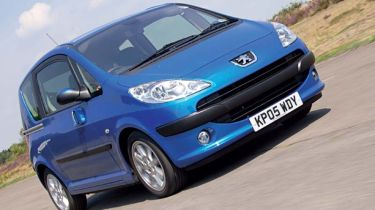
In its sliding doors the 1007 has a unique selling point. But how many buyers will be willing to pay the premium over a conventional hatchback to enjoy them remains to be seen. Peugeot de-serves credit for being bold enough to put a car such as the 1007 into production, but it has limited appeal in such a competitive sector.
Peculiar doors and challenging styling mean there is lots that's new about Peugeot's 1007 - not least the name. This is the 'one thousand and seven', not the 'one double O seven' - and according to Peugeot, it is out to change the way we think about mini-MPVs.
It is certainly off to a good start. On UK roads, it looks unique - even though it wears the firm's now familiar gaping grille with pride. The sharply styled rear is probably the prettiest view; in profile the metal runners for the sliding doors, small wheels and bulky door handles are less appealing.
At 3.73m long, the 1007 is 10cm shorter than a 206, but there is lots of space inside thanks to its height. There is a host of cubbies, but it is disappointing that the 1007 is strictly a four-seater with a pair of removable MPV-style folding chairs in the back.
Up front, the changeable Cam�l�o trim cannot disguise the cheap plastics. The view ahead is excellent, but those big doors mean it is a long reach back to grab the seatbelt and over-the-shoulder visibility is compromised.
We drove the entry-level 1.4-litre, fitted with a five-speed manual gearbox. This is expected to be the biggest selling model. There is also a 2-Tronic version - essentially an automated manual with shift paddles. It is optional on the 1.4 and is the sole choice on the larger 1.6-litre petrol. The 1.4 HDi gets only the conventional manual. From behind the wheel, the tall-riding 1007 drives as you would expect. The 1.4-litre model is slow, while enthusiastic cornering results in excessive body roll. Motorway speeds see the engine struggle to overcome the bluff aerodynamics.
Equipment wise, air-con, six airbags and ESP are all standard, but metallic paint and alloys cost £325 and £400 respectively. There is also a five-star Euro NCAP crash test rating to consider.
In terms of value, you can buy Fiat's Idea mini-MPV from only £9,995 and for the £12,600 price of a 1007 Sport, you could opt for a much more practical 206 SW. While the clever doors improve access, we have major doubts about the limited number of seats, high list price and unusual styling.