Peugeot 208 review
The Peugeot 208 offers stylish looks, a quality interior and low running costs to rival the Ford Fiesta
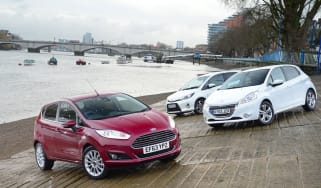
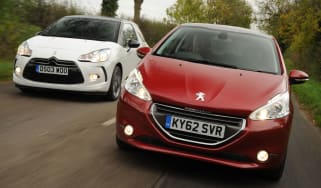
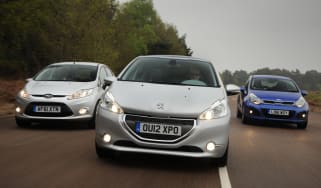
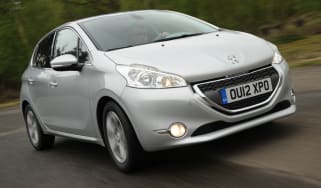
Following in the footsteps of the hugely popular 205, 206 and 207, the Peugeot 208 managed to knock the Ford Fiesta off its perch at the top of the supermini class when it arrived in the summer of 2012. Although Ford has since facelifted the Fiesta to make it better looking and more efficient, the 208 is still a good alternative. The stylish design and high-quality cabin strike a good balance between sportiness and style, while competitive prices and good levels of kit go in its favour. There's a wide range of efficient engines and plenty of choice when it comes to trim levels, too, ranging from the basic Access right up to the Feline and Ice Velvet range toppers. However, its biggest problem is that it doesn't drive as well as rivals like the Fiesta and VW Polo, mainly because underneath the skin lies a heavily updated version of the 207. A hot-hatch GTi version with 197bhp, firmer suspension and wider tracks is a riot to drive fast, though, and does justice to its legendary ancestors, including the 205 GTi.
Our choice: 208 1.2 VTi Active 5dr
Styling
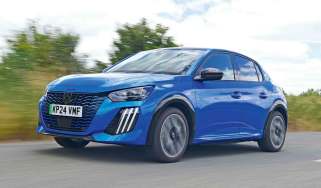
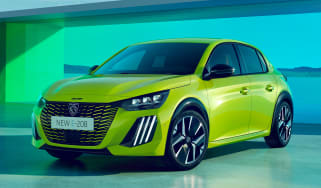
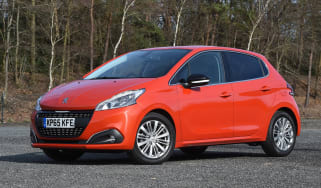
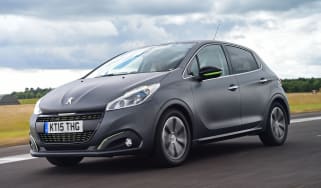
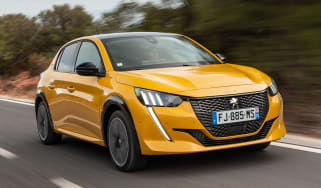
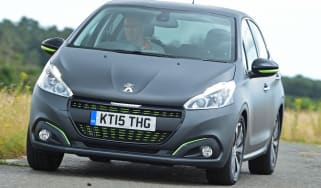
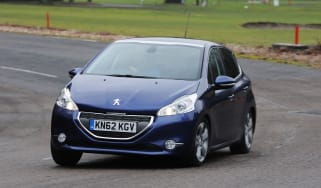
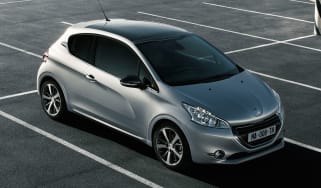
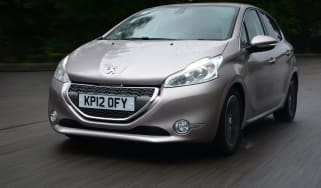
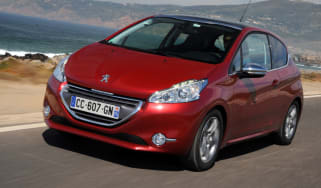
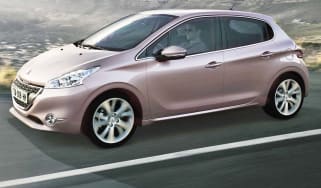
Peugeot has always made good-looking superminis and the Peugeot 208 continues that trend. It's influenced by the sporty SR1 concept car, and this can be clearly seen in the bold nose – you can even get a striking SR1-style floating radiator grille on Allure and Feline spec – and dramatic slashes in the bodywork. Top-spec models come with LED daytime running lights and 16 or 17-inch alloy wheels, while the GTi model features a three-dimensional chequerboard grille, twin exhausts a roof spoiler, extended sills and wheel arches, and figure-hugging sports seats as standard. A luxurious XY offers the same styling upgrades as the GTi model, but with regular suspension settings and the standard range of lower-powered engines. Inside, the new 208 gets raised dashboard dials and a much smaller steering wheel than before, while mid-spec Active cars have a seven-inch touchscreen on the centre console. The layout is certainly a talking point, even if it's not that practical for some drivers who will have their view of the dials obscured by the wheel rim.
Driving
We really like the 92bhp 1.6-litre diesel and the new 82bhp 1.2 VTi three-cylinder petrol which has decent low-end power and sounds good. The 120bhp 1.6 VTi is a bit on the noisy side and needs revving hard, but the 155bhp turbocharged 1.6 is fast and gets a six-speed gearbox. Sadly all the other petrols get a wobbly and vague five-speed manual carried over from the 207, and its lack of a sixth gear means that it can be noisy on a motorway. As for handling, the 208 feels much more agile than before thanks to a dramatic weight loss – most cars weigh at least 100kg less than before - and the ride is generally good, although big bumps can send a crash through the cabin. But the lifeless and over-assisted steering means that the 208 just doesn't feel as fun to drive as a Ford Fiesta or the new Renault Clio. The GTi model doesn't quite have the character of the iconic 205 GTi, but it does have a punchy turbocharged engine, bags of grip and an agile chassis.
Reliability
Euro NCAP gave the Peugeot 208 a full five-star crash test rating, with 88 per cent for adult occupant protection. ESP and ABS are fitted as standard across the range, along with six airbags, seatbelt reminders for the driver and front passenger and a Thatcham-approved Category 2 immobiliser. However, reliability was never the 207's strong point and it finished a disappointing 76th in the 2012 Driver Power customer satisfaction survey, while Peugeot came 28th out of 30 as a brand overall. More recent Peugeot models have shown better quality and the 208 uses many parts that have already been tried and tested, so we'd like to think it will prove more reliable. That said, some owners have reported issues with the engine electrics and touchscreen already.
Practicality
Despite being slightly smaller than the 207, the 208 actually offers more space inside thanks to slimmer seats. The boot is 15 litres larger at 285 litres – about the same as a Ford Fiesta. Five-door versions by their very nature are easier to get in and out of, and have enough room in the back for two average-sized adults. The three-door version is no better or worse than its rivals in terms of how easy it is to get in the back – and once inside, the rear seats are as spacious as the five-door's but headroom is tight. However, one of the biggest problems is with the driving position. Because of the new instrument layout, some drivers can find the steering wheel obscures the dials unless you drop it down into your lap. You also sit too high and the pedals are very close together, while on right-hand-drive versions, the glovebox is so small that it can't even hold the owner's manual.
Running Costs
The 208 is extremely cheap to run. All of the diesels return at least 74mpg and they all dip under the magic 100g/km mark, making them free from road tax. The 1.0 VTi petrol also claims road-tax free status and has an official fuel consumption figure of 65mpg. However, the 1.2 VTi is our pick of the range as it's faster, still does 62.7mpg and emits only 104g/km. Even the 197bhp GTi version returns a respectable 47.9mph and 139g/km. Servicing, general maintenance and insurance costs should be very affordable indeed – although if the 208 is anything like the 206 and 207, you can expect the bills to mount up with age. Small Peugeots don't have a great reputation when it comes to longevity, and some of the interior trim and electrics could prove suspect once the miles start to add up.
For an alternative review of the latest Peugeot 208 Hatchback visit our sister site carbuyer.co.uk


Disqus - noscript
Was the choice of a 'naked' actor who looks like a young Keith Chegwin - ex TV prgramme 'Naked Jungle' deliberate for the advertisement?
The reviewers do not mention this, but all Peugeots feature a non adjustable ECO mode. This has nothing to do with fuel economy but is designed to prevent you accidently flattening your battery. Sounds good, but what it does is to cut off all but essential power after 30 minutes of using your radio with the engine switched off. It is a very frustrating facility.
The Peugeot claim of a sub 100 g/km CO2 figure with a combined economy figure of 65 mpg is questionable. You need to achieve 66 mpg for a petrol car or 74 mpg for a diesel to match the sub 100 g CO2 emissions claim.
How is the feature frustrating? the car is to be driven and not a lounge, who sits in their car for an hour just listening to music? It's an excellent feature or you'd prefer the option of a flat battery instead?