Tyre Test (run-flat)
They’ll get you home after a puncture, but do run-flat tyres perform well the rest of the time? We test the best

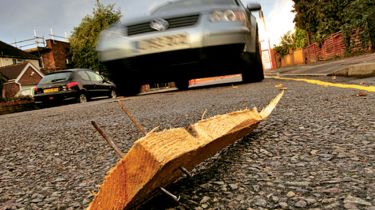
There’s a safety revolution going on under today’s cars – and it’s all down to run-flat tyres. As well as being safer when you get a blow-out, they mean you don’t have to risk changing a wheel on the hard shoulder or even miss that flight or meeting.
It’s the future, but punctures are relatively rare – one in six of us can expect to get one each year, with high-speed failures even less likely. So how do run-flats perform the rest of the time? Auto Express conducted the first magazine test to find the best for daily driving.
BMW has pioneered the use of run-flat rubber, making it standard on its 1, 3 and 5-Series models. So the firm’s 320i was the obvious car for our test.
There may be 750,000 run-flats on UK roads, but in tyre terms that’s a tiny proportion – which means only a few companies offer them. For our 3-Series, we tried Bridgestone, Continental and Michelin sets. Goodyear, Dunlop and Pirelli also make run-flats, while Kumho has just entered the replacement market.
We conducted this trial along similar lines to our annual tyre test. Performance was assessed on wet and dry roads, while noise, fuel economy and price were also factors.
Wet roads
When the heavens open, the rubber to have is Bridgestone, although you’ll also fare well with Continental.
In our aquaplaning test – rating when the tyre rides over the water, rather than cutting through it – Bridgestone’s Turanza was on top. It had a healthy lead over the Michelin Primacy and Continental PremiumContact SSR during our straight line assessment, while on the curve test, the SSR pushed it harder. The Primacy struggled to shift water, as the grooves in the rubber distorted. Our wet handling assessment involved lapping a soaking circuit, and here the Conti SSR defeated the Bridgestone, with Michelin close behind. The German tyre was also the best under braking in the wet.
Dry roads
Continental is king here, particularly when braking. Our BMW came to a halt from 62mph in a little over 36 metres – significantly better than when it was fitted with the rival tyres. The Michelin just scraped in under 38 metres, while the Bridgestone needed 39.4 metres to stop our BMW from the same speed – and three metres can make all the difference in an emergency.
The German tyre backed its braking victory with another in the dry handling test. There was only a fraction of a second between it and the Turanza, but the Conti felt sharper, with the front less prone to understeer. The Michelin trailed in third, less than a second behind the top two, but it seemed to be struggling for grip over the lap.
How much?
With fuel such a major factor in the cost of motoring, rolling resistance – the power needed to turn the wheel and tyre – is becoming more crucial. A six per cent difference in rolling resistance is roughly similar to a one per cent change in fuel economy. Our test was carried out on a purpose-built machine to industry standards at varying speeds. The worst performer was the Continental – a massive 20 per cent behind its rivals. And even though the Michelin brand is positioned as energy efficient, its Primacy HP ZP was narrowly beaten by the Bridgestone.
We called on the services of an industry price watcher to find our value for money winner. He surveyed a dozen outlets to work out an average per tyre. There’s minimal difference between the Bridgestone and Continental, with the ER300 at £117 and the SSR on £115, fitted and balanced. The Michelin is a little more costly, at around £122.
How noisy?
Early run-flats earned a reputation for being noisy and uncomfortable, thanks to their stiff sidewalls – the technology behind the rubber is explained in our panel. But constant development has reduced this drastically, and all three brands have made similar progress. There was nothing between the Bridgestone and Michelin, with the Conti a fraction behind in terms of noise.
And those who believe run-flats are excessively loud should think again. The BMW run-flat package was significantly quieter than the Volkswagen Golfs we tested on regular rubber at the same time. The quietest tyres on the VWs registered 70 decibels (dB), while the BMW was around 67dB. And remember, a drop of 3dB is around half the noise.
How we got a winner
We added the percentage scores from each discipline, but weighted them to ensure a win in a category where the performance gap was wide counted the same as when it was small. In our results table, the overall winner is given a 100 per cent score in each test, with the other rubber presented as a comparative percentage.
| Bridgestone | Continental | Michelin | |
| Wet braking | 100.0 | 103.8 | 102.7 |
| Straight aquaplaning | 100.0 | 89.6 | 90.5 |
| Curved aquaplaning | 100.0 | 96.7 | 85.9 |
| Wet cornering | 100.0 | 99.6 | 98.3 |
| Wet handling | 100.0 | 100.5 | 98.2 |
| Dry braking | 100.0 | 107.3 | 101.9 |
| Dry handling | 100.0 | 100.1 | 98.9 |
| Interior noise | 67.9dB | 67.3dB | 67.7dB |
| Rolling resistance | 100.0 | 80.1 | 89.9 |
| Price | £115 | £117 | £122 |
| Final score | 100.0 | 99.9 | 98.0 |
Verdict
It’s no surprise to find three tyres developed for a specific car deliver similar performance. There wasn’t much between the Bridgestone and Continental, but the former wins by 0.1 per cent.
It was the best performer in the wet, and matched its rivals elsewhere. Continental will rue its rolling resistance score – but for that, it would have won.
Michelin had its moments, particularly under braking, but the Primacy HP ZP lacked consistency. The French firm’s emphasis on low wear counts against it in this assessment, which focuses on wet weather performance.