Old Cat C and Cat D insurance write-off categories explained
A new write-off category system was introduced in 2017, but plenty of Cat C and Cat D cars are still on the used market. We explain what these categories mean.
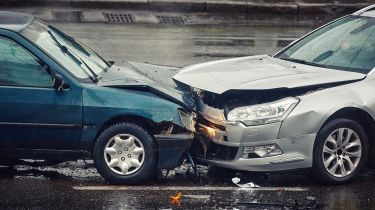
Up until October 2017, if a car was declared an insurance write-off but could be safely repaired and returned to the road, it would be classed as a Category C or Category D insurance write-off.
Following an update to car insurance write-off categories means that Cat C and Cat D have been replaced by Cat N or Cat S, but if you take a look at the used car classifieds, you'll find there are still plenty of old Cat C or Cat D cars listed for sale.

But what exactly do these older write-off categories mean, and what are the potential pitfalls of buying a Cat C or Cat D car? Read on as we explain all you need to know.
What is a Cat C or Cat D write-off?
Car insurance write-off categories are used to determine the severity of damage and overall ease and cost of repair following a collision, or when damage is caused by a flood, fire, act of vandalism or during a vehicle theft.
The final outcome will be that the insurer will pay an agreed amount to the vehicle's owner, then the insurance company keeps the car to dispose of as they see fit.
Prior to October 2017, a written-off car that could be safely and legally repaired and returned to the road would be given either a Category C or Category D designation, depending on the extent of the damage and resulting cost of repair.
Category C write-off
While the car can legally be returned to the road, the insurance company has deemed that the cost of repair exceeds the car’s value.
A third-party seller may still purchase these written-off vehicles to repair and sell on. Cat C cars must be re-registered with the Driver and Vehicle Licencing Agency (DVLA) before they can be resold.
Category D write-off
Cat D cars were less seriously damaged and could be put back on the road for a cost that’s less than the car’s pre-accident value, making them theoretically economical to repair.
However, the insurers’ additional costs — such as administration and transport — meant that the overall cost of the claim wasn’t worth their while.
Cat D was usually applied to cars that have received milder cosmetic damage, as anything more serious — particularly structural damage — is likely to incur more significant repair costs. Cat D cars do not need to be re-registered with the DVLA before being sold on.
In October 2017, the newer Cat N and Cat S categories replaced Cat C and Cat D, and these have been in use ever since. Rather than focusing purely on the cost of repair, these newer groups highlight the extent of the damage. Cat N is applied to cosmetic damage, while Cat S indicates structural damage. We have a dedicated guide to Cat N and Cat S cars…
What are Cat A and Cat B cars?
There are also two insurance write-off categories that didn’t change in 2017: Cat A and Cat B.
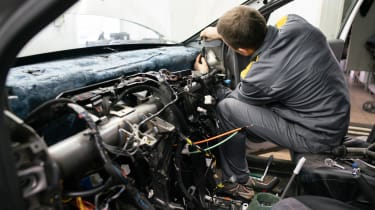
These cars have been so badly damaged that they can never be repaired or returned to the road, and attempting to sell one is illegal.
Category A write-offs
The car is so badly damaged that it can never be put back on the road safely, and it must be completely destroyed.
Cat A cars are typically crushed, and parts that might be salvageable must also be destroyed.
Category B write-offs
The car is still too badly damaged to ever return to the road, but while the bodyshell must never be used again, some salvageable parts may be removed and sold on. This includes wheels, seats and some mechanical components such as the engine.
Regardless of a car’s category, it is a legal requirement that its written-off status is permanently shown on both the V5C registration document — this will be marked with an ‘S’ to show that the car has been salvaged — and on any history checks.
Should you buy a Cat C or Cat D car?
While there are plenty of Cat C and Cat D cars for sale, we’d advise you to be very cautious about buying one..
The nature of these write-offs means that Cat C and D cars can be made safe and returned to the road, you’d need to be absolutely certain that all the necessary repairs have been carried out to a very high standard.
There are bargains to be had, though. As an example, a Cat D write-off could involve a dent on a ten-year-old car worth £1,000. The car’s insurers would be duty-bound to go through official repair channels, sourcing a new door, respraying it and so on, and the total bill could be around £800. After admin and other costs are taken into account, the insurer is likely to decide it is uneconomical to carry out the repair, and write the car off.
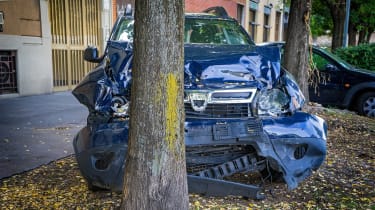
A private buyer, on the other hand, could salvage a door from a scrap yard for, say, £50, and fit it themselves. The car can then be kept or sold on, although a Cat D write-off will need to have its insurance status declared on the V5C logbook for anybody to see.
The journey a Cat C car would take is similar, although the costs involved would be different. As an example, if a car is worth £1,000 and the repair would cost the insurer £1,200, it would be classified as Cat C. A private buyer may well be able to organise repairs for less, though. Once these repairs were carried out, they would then have to apply for a new V5C document from the DVLA after putting a Cat C car back on the road.
It’s very important to note that re-registering a Cat C car doesn’t involve any checks to confirm that it has been repaired properly. If you are looking to buy a written-off car, we’d strongly advise you to bring along a professional to thoroughly check it over and find out more about its history, especially the circumstances of it being written off.
If there’s any doubt whatsoever, don’t be afraid to walk away. A badly-repaired write-off could come at a huge cost to both your finances and safety.
What are the risks of buying a Cat C or Cat D car?
The biggest risk when buying a write-off is poor-quality or overlooked repairs. A previously damaged car could be outright dangerous if the necessary work hasn’t been carried out to a high standard, and the cost of putting things right yourself could also be incredibly high.
If you’re looking at a potential purchase, it's important not to focus only on obvious or visible damage when looking at Cat C and Cat D cars. As with any used car, there could be any number of faults requiring expensive fixes, totally unrelated to the write-off incident.

Make sure you are aware of the general health of the vehicle before driving it, and get a professional to check it over for you before you buy. Just because you're buying a written off car doesn't mean you have to settle for poor quality, and you should make the same engine, chassis, bodywork and interior checks that you would when buying any used car.
Another issue concerns value. Because the write-off category is recorded in a car’s logbook, Cat C and Cat D cars will always be worth less than their undamaged counterparts, regardless of their outward condition. This should, of course, be reflected in their price if you're considering buying a write-off.
If you do decide to purchase a Cat C or Cat D car, there’s also the matter of insurance. Some insurers simply won't cover a write-off, but while this can typically be solved by hunting around for a company that will, insurance costs for Cat C and D cars tend to be higher than they are for an equivalent car that hasn’t been written off.
Get even more from Auto Express, follow our channels...
• Google
• Reddit
• Whatsapp