Saab 9-5 review (2010-2011)
The Saab 9-5 saloon offers distinctive styling and plenty of kit

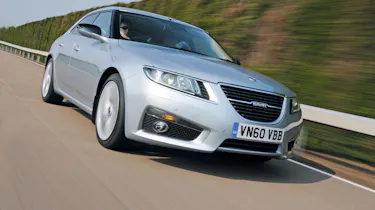

If you’re looking for one of the most distinctive executive saloons available, then the Saab 9-5 should be near the top of your list. As big as a BMW 7 Series but at less than the price of a 5 Series, it offers great value. All engines are turbocharged, and the 9-5 can be specified with a 1.6-litre or punchy 2.0-litre petrol. Those more concerned with economy can choose from two 2.0-litre diesels, one with twin turbos. Front-wheel drive has been a mainstay of the Saab range, but these models can be found with the Saab XWD four-wheel-drive system, and six speed manual or auto gearboxes.
Engines, performance and drive
The diesels in the Saab 9-5 are the weak spots in the range, and although the twin-turbo TTiD model has plenty of punch, it remains as gruff as the entry-level model. Petrols fare better, and even the 1.6-litre engine can move the heavy 9-5 convincingly. There’s a confusing array of suspension systems though, and adaptive damping is only available on certain models. It’s the 2.0-litre four-cylinder turbo that stays closest to the Saab ethos, and proves the highlight of the range – especially when mated to the sophisticated XWD four-wheel drive and DriveSense adaptive damping system.
MPG, CO2 and Running Costs
It’s the lower powered diesel that scores the headlines here, managing to emit only 139g/km and return 53.3mpg. But the petrols struggle, with the 2.8-litre V6 Turbo managing just 26.6mpg while chucking out 244g/km of CO2. Servicing is reasonable considering Saab is a premium brand, and road tax ranges from £115 to £445. If you opt for a top-spec Aero model you benefit from more standard equipment than rivals too. But the biggest problem for the Saab 9-5 Saloon is the car’s depreciation, meaning that owners are likely to lose between £16,500 and £26,000 after three years and 60,000 miles depending on model.
Interior, design and technology
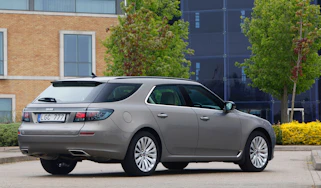
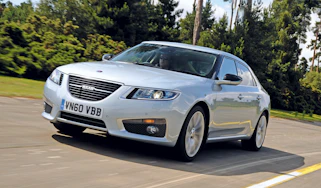
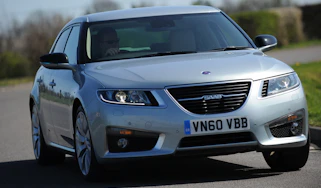
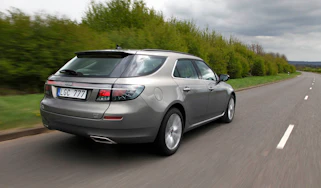
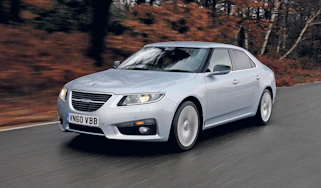
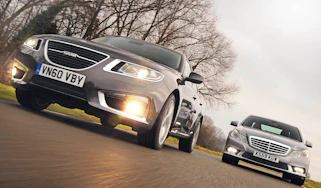
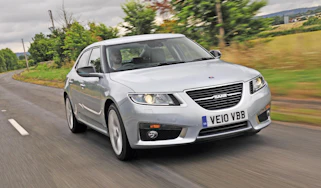
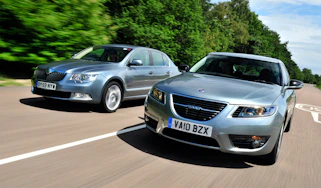
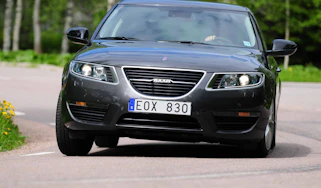
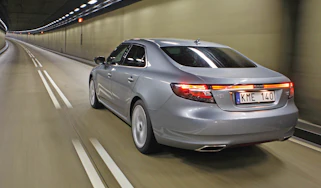
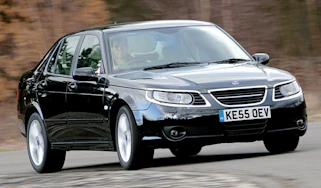
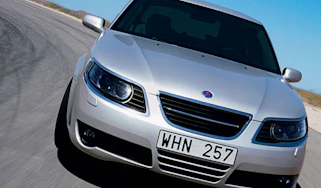
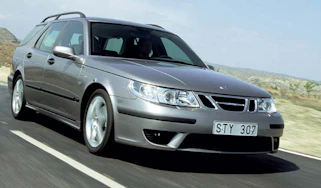
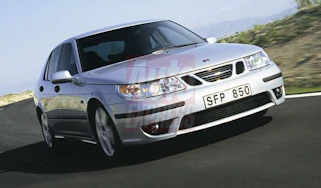
There’s no doubt the Saab 9-5 is more eye-catching than a BMW 5 Series, Mercedes E-Class or Audi A6. The oversized three-aperture Saab grille, ice-block lights, wraparound windscreen and hockey stick window line mark it out unmistakably as a Saab. At over five-metres long it is the largest car in its class, with massive levels of interior space – especially in the rear where passengers benefit from the longer wheelbase. Cabin quality isn’t quite at Audi levels and there's a few GM parts to be found, but it’s well-built and packed with standard kit.
Practicality, comfort and boot space
Fans still lament the lack of hatchback option, but this is still a fairly practical choice. With the seats in place the boot holds 513 litres and there’s various storage compartments and a 12V power socket. There’s the option of a clever U-rail cargo system, and the rear seats fold down flat to boost space. Those sat in the rear seat benefit from the platform’s extended wheelbase, giving lots of legroom and there’s even the option for rear-seat entertainment with 8-inch screens built into the back of the headrests.
Reliability and Safety
Like Volvo, Saab has always focused on safety and the 9-5 is no exception. It has a five-star Euro NCAP rating, and all models come with electronic stability control and six airbags as standard. Although the Saab 9-5 uses many GM-based parts, it feels solidly constructed and built to last.