Range Rover Sport SDV6
Sportiest model in Range Rover line-up is refreshed for 2012

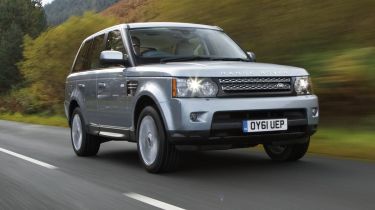

There’s no doubt that the Range Rover Sport is a talented machine. On-road performance and handling are good enough to match rivals such as the Porsche Cayenne and BMW X5, but it’ll leave both for dead in the rough stuff. The efficient new V6 diesels make it more appealing, and the cabin is a comfortable and refined place to spend time. However, if you want more space, the cheaper Discovery is an even better choice.
It's easy to overlook the Range Rover Sport. In terms of prestige it falls under the shadow of the larger Range Rover, and if you want practicality, then you'd go for the cheaper Land Rover Discovery 4 instead.
And then there's the Range Rover Sport's image. It's a popular choice for footballers and their WAGs, but you shouldn't really hold that against it, and Land Rover has seen fit to give it a freshen up for 2012. We tried a flagship Autobiography model.
Under the bonnet is a revised 3.0-litre V6 twin-turbodiesel, which is available in two power outputs with a new eight-speed auto. These units have lower emissions combined with greater performance, although if you're after ultimate straight-line acceleration, the 5.0-litre supercharged V8 with six-speed auto is still offered.
Used - available now

2022 Land Rover
Range Rover Sport
33,352 milesAutomaticPetrol2.0L
Cash £35,643
2022 Land Rover
Range Rover Sport
44,974 milesAutomaticDiesel3.0L
Cash £33,838
2022 Land Rover
Range Rover Sport
52,131 milesAutomaticDiesel3.0L
Cash £30,981
2022 Land Rover
Range Rover Sport
48,786 milesAutomaticPetrol2.0L
Cash £30,500A number of subtle styling tweaks have been made to the exterior, too, with a black grille surround and new headlights, as well as colour-coded doorhandles giving a cleaner look. Inside, the firm’s Dual View sat-nav and DVD screen is available for the first time, while the screen's graphics have been given a makeover. At the rear, there’s a new aluminium tailgate, which is power operated.
Inside, the Range Rover Sport is similar to the Discovery, but instead of a square, upright look to the dash, it has a more rakish appearance. But there’s no getting away from the fact that if you want to carry passengers in spacious comfort, the Discovery is still the car to choose.
It’s on the road where the biggest differences between the two arise. While the Discovery is a relaxing drive and prefers to cruise, the stiffer air-suspension fitted to the Range Rover Sport encourages you to corner that little bit faster. It’s no sports car, but you can easily take bends at speed where you’d brake first in the Discovery.
However, the price you pay for that added cornering poise is a harsher ride on bumpy roads, as the Sport sends thumps and vibrations into the cabin. Our car was fitted with 19-inch alloy wheels, and you can expect the sensation to be even more pronounced on cars with 20-inch wheels.
One thing that really impresses is the fact that the Range Rover Sport is as accomplished as a Discovery off the beaten track. It uses the same Terrain Response system, which means it can tackle equally rough conditions as its Land Rover brother. It’s just a shame that most Range Rover Sport buyers will probably barely scratch the surface of this car's talents.