Jaguar XJ
Winner: Jaguar XJ, commended Audi A8 and Mercedes CLS

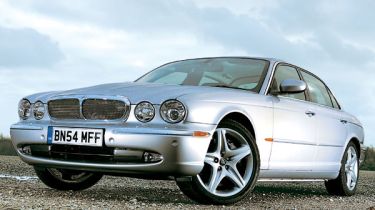
“Second-hand luxury models offer the greatest savings around. The heavy depreciation makes two to three-year-old cars incredible value, and the big cat is no exception.” Jeff Paterson
Contrary to popular belief, German brands don’t always have a monopoly on prestige and luxury. And the XJ proves it. While BMW took top honours in both the compact exec and executive categories, our judges couldn’t look beyond Coventry’s finest in the large car sector.
That makes it two in a row for the big cat, which continues to offer supreme comfort, class and quality. Better still, the firm’s first XJ diesel is more common than ever on used forecourts after joining the line-up in 2005. Anyone who experienced an ownership nightmare with the current car’s predecessor needn’t worry, either, because the latest all-aluminium model is much improved. Usual Jaguar styling cues such as the twin headlamps and long bootlid continue to cut a dash, too, despite the fresh-faced look of the new XK coupé, and prices now start from £15,000.
That will secure you a 3.0-litre V6 model, while the classic 4.2 V8 goes for around £3,000 extra. The 2.7-litre oil- burner is still rare, though, and it starts from around £29,000. Its economy and refinement make it the ultimate XJ, but for value, older models are the best choice – as Auto Express’s price guru, Jeff Paterson, explained: “If you buy an early example now, someone else has borne the brunt of the car’s heavy initial depreciation. You’ll pay Ford Mondeo prices for a top-drawer luxury saloon.”
However, it’s worth noting that running costs don’t diminish as a car gets older. Buyers should be aware that everything from insurance and maintenance to petrol and tyres will be expensive.
Commended: Audi A8
2003 to present
With superb road presence, the big Audi combines excellent engines, a spacious interior and one of the classiest cabins around. Only the wooden handling lets the car down, although prices are high. The 5.2-litre V10 S8 can hit 0-62mph in 5.1 seconds, but it costs more than £70,000 new, and you’ll need at least £55,000 to get one second-hand.
Commended: Mercedes CLS
2005 to present
If you’re looking for a nearly new large exec, depreciation is a fact of life – but the hottest properties suffer the least, and there’s nothing to touch the CLS at the moment. Its coupé-inspired design breaks the mould. With the old S-Class looking dated and its replacement still expensive and rare, the CLS holds more used appeal than the Mercedes flagship, which is why it’s on our Commended list.