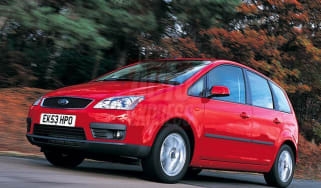
Ford C-MAX (2011-2019) review
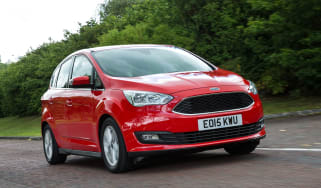
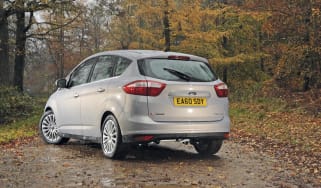
The Ford C-MAX is a five-seat MPV that feels like a hatch to drive and has decent diesel engines

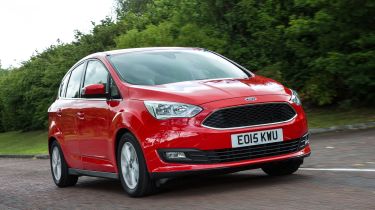

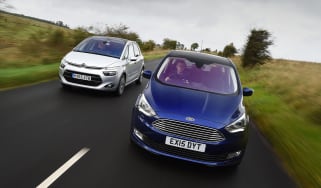
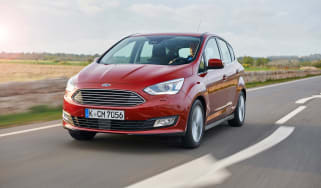
Ford has a strong history when it comes to producing MPVs which offer value for money along with a rewarding drive, and the C-MAX maintains that tradition. It's not as stylish as a Citroen C4 Picasso, or as spacious, but it is one of the best MPV's to drive. That won't be important to some, but being able to transport a family of five and still have some fun behind the wheel is a real bonus.
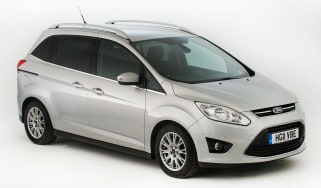
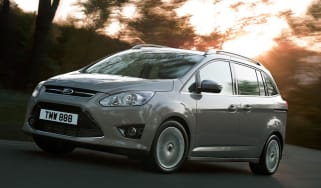
Elsewhere, the C-MAX is affordable to run and offers enough space inside for any growing family, although i lacks some of the practical touches that help its rivals to pull ahead. And if you need something bigger, you can always turn to the seven-seat Grand C-MAX instead. It's just a shame that in a world obsessed by SUVs that the C-MAX no longer has the desirability to make it attractive to buyers wanting practical family transport.
The Ford C-MAX (and 7 seater Grand C-MAX) sits in the middle of the Ford MPV range for sale in the UK. The smaller B-MAX is Fiesta-based, while the larger S-MAX and Galaxy are both Mondeo-based, so logically the C-MAX is based on the Focus. However, with the popularity of SUVs, sales in the MPV sector aren't what they used to be, and when this generation C-MAX reaches the end of production, it's unlikely to be replaced.
Used - available now

2026 BMW
3 Series
10,005 milesAutomaticPetrol2.0L
Cash £27,990
2026 Peugeot
e-208
1 milesAutomaticElectric
Cash £19,495
2026 PEUGEOT
PARTNER
12,803 milesAutomaticElectric
Cash £15,995
2023 Peugeot
408
23,267 milesAutomaticPetrol1.6L
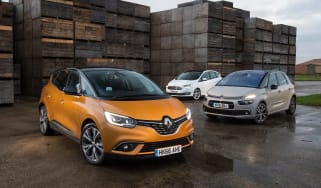
Cash £18,250That's a shame, because the C-MAX is one of the better cars in the class. It's good to drive, has plenty of useable space, and if you chose a Titanium model, there's a well equipped interior, too. These plus points help it hold ground against five-seat MPVs such as the Citroen C4 SpaceTourer, BMW 2 Series Active Tourer and Renault Scenic. The Grand C-MAX has rear seats that are better suited to occasional use, which mean it's more of a rival for the likes of the Kia Carens and VW Touran, rather than the larger Grand versions of the Citroen and Renault.
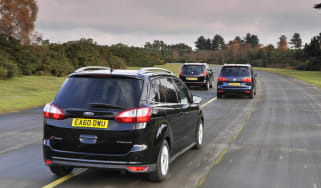
Choosing between standard and Grand versions of the C-MAX is more than just asking yourself if you need 7 seats, because the Grand model also comes with sliding rear doors, which improve access to the rear seats in tight spaces. Either way, you're looking at a premium of around £1,600 for the Grand C-MAX over the standard model.
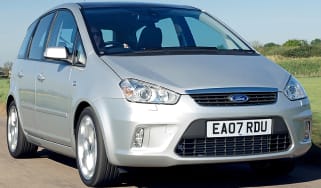
Ford has offered 1.6 petrol and 1.6 TDCi and 2.0 TDCi diesels in the C-MAX in the past, but later versions feature either 1.0 or 1.5 EcoBoost petrols or Ford's 1.5 TDCi diesel. The 1.0 EcoBoost is Ford's three-cylinder turbo unit, which comes in 100PS and 125PS forms, but while these engines are torquier than the older 1.6 TiVCT petrol, they might struggle when there's a full complement of passengers and luggage on board. Both engines come with a six-speed manual to make the most of the power available.
The 1.5 EcoBoost four cylinder comes as a 150PS unit that has 148bhp, and this comes with a six-speed PowerShift auto as standard. It delivers good performance, but it's not that economical. Instead, we'd go for the 1.5 TDCi 120PS diesel. This has 118bhp and either a six-speed manual or six-speed auto. It has good mid-range performance and more agreeable fuel economy figures than the more powerful petrol 1.5. All cars are front-wheel drive.
A straightforward trim line-up is offered, with Zetec, Titanium and Titanium X variants offered. Every version comes with touchscreen infotainment, heated mirrors and a Quickclear heated windscreen. Keyless starting and cruise control are included on Titanium cars, while part-leather electric seats, panoramic glass and xenon lights are fitted to Titanium X cars. If you want more kit, then Ford offers option packs that bundle desirable extras together to give better value than selecting them individually.
Unfortunately, the decline in popularity of MPVs when compared to SUVs mean that car makers are channeling their expertise in the direction of 4x4s. As a result, Ford has already dropped the B-MAX, while the C-MAX is ending production in 2019, with no direct replacement. If you want a family Ford that's bigger than a Focus, then the Kuga is your next option. And if you want a seven-seat Ford MPV, then the van-based Tourneo Connect might have to fit the brief instead.
Engines, performance and drive
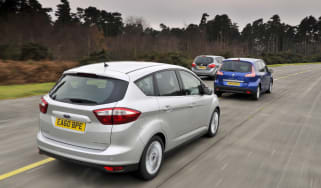
If you’re looking for a family car that handles as well as most sporty models from other manufacturers, then the Ford C-MAX could be the car for you. The electrically assisted steering is as sharp as in any other Ford, which makes it surprisingly engaging. The damping also feels plush and controlled, softening potholes well but still giving lots of support and control in corners. Yet despite the firmer suspension set-up, it’s actually marginally more comfortable than a Renault Scenic or Citroen C4 Picasso, mainly because big bumps don’t thump through the suspension as much and upset the body.
The accurate steering is light enough around town, yet it’s sharp and precise at higher speeds, whether you’re cruising on the motorway or tackling winding country roads. The suspension blends the perfect compromise: it's pliant enough to soften big potholes, but delivers surprisingly engaging handling.
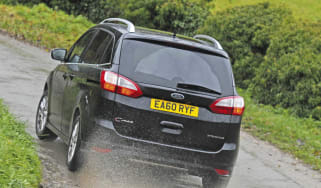
The grippy front-wheel-drive system and intelligent torque vectoring technology – which sends power to the wheel with most grip – provide tonnes of confidence on the road. The only downside is the firm ride – it’s firmer than a Renault Scenic but it’s not unreasonably harsh over bumps.
The two 1.0 EcoBoost models provide plenty of shove, but if you regularly carry a full set of passengers, then the more powerful 1.5 petrol and diesel engines might be a better option for you.
Our pick of the range is the entry-level 118bhp 1.5 TDCi diesel, offering a decent amount of power but with the prospect of more than 67mpg. If speed is key, though, Ford did offer a more powerful 2.0 TDCi that offers a decent slug of torque, and feels much more capable with five people on board. The six-speed manual gearbox is fast and precise, while a twin-clutch Powershift automatic gearbox is also available.
Whichever model you choose, Ford also added thicker glass as part of the facelift, as well as more sound deadening and revised engine mounts to tune out unwanted vibration and noise. As a result, the C-MAX is more refined than the newer Renault Scenic.
Engines
If you're only going to be making shorter journeys the small 1.0-litre EcoBoost petrol engine will be ideal. It packs a decent punch for such a small capacity engine and best of all it will return over 50mpg as long as you don't have a heavy foot.
We'd recommend avoiding older cars with the 1.6-litre petrol engine. It's slow, noisy and because it isn't turbocharged it has to be worked a lot harder to make any progress. As a result, fuel economy won't be great.
Much better is Ford's more recent 1.5 EcoBoost 150, which has 148bhp and a six-speed PowerShift auto as standard. It delivers excellent pulling power, although it's not the most efficient engine and gearbox combination around.
MPG, CO2 and Running Costs
Prices for the C-MAX start from around £23,000, with the 7-seater Grand C-MAX costing around £1,600 extra. This bags you a Zetec model, while Titanium trim is an upgrade of around £1,700 over Zetec, and Titanium X is around £2,000 extra (although it's not available with the least powerful 1.0 EcoBoost 100PS).
With its range of efficient engines, running a C-MAX should prove fairly painless. The most efficient C-MAX in the range is the 118bhp 1.5 TDCi diesel manual with WLTP-rated fuel consumption of up to 48.7mpg. Add the auto gearbox, and this reduces to a best-possible 46.3mpg, which isn't too harsh a penalty. Go for a Grand C-MAX, and fuel economy is up to 45.6mpg for the manual and 44.1mpg for the auto.
The tiny 1.0 EcoBoost model returns 42.2mpg whether you choose the 100PS or 125PS version and emits 127g/km of CO2 with the 100PS version on 16-inch wheels. Add larger wheels and this rises slightly to 130g/km, while the 125PS model emits 129g/km or 131g/km on bigger 17 or 18-inch wheels.
The 1.5 EcoBoost manages emissions as low as 174g/km, while the best fuel economy under WLTP testing is 33.6mpg. Again, the Grand C-MAX is poorer, at 32.1mpg.
Standard equipment is good, so it’s worth steering clear of the options list. It’s long and packed full of desirable kit, but opting for some of it will quickly push the price of your C-MAX sky high. Every C-MAX comes with a three-year, 60,000-mile warranty.
Depreciation
The most expensive C-MAX in the range costs nearly £29,000, which means you do get quite a lot of car for your money, but don't expect very much back for it when you sell it on. Across the C-MAX line-up, after three years of ownership and 36,000 miles, the car retain from 28-34 per cent of its value, which reflects the low desirability of these models. It's worth noting that the 7 seater Grand C-MAX has slightly better residual values, but still in the 30 per cent bracket.
In comparison, the Ford Kuga - also Focus-based but arguably not as practical a family car as the C-MAX - has retained percentages in the mid-forties.
To get an accurate valuation on a specific model check out our free car valuation tool...
Insurance groups
As the units in the C-MAX's engine range have a modest power output, the MPV isn't going to attract high insurance premiums. Insurance groups start from 10 and rise to 22 for the range-topping 148bhp 2.0-litre diesel model.
Interior, design and technology
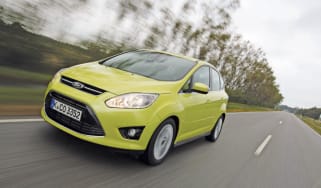
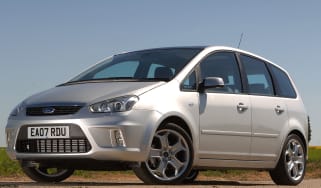
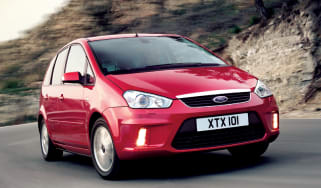
The C-MAX disguises its MPV proportions well, with a design taking inspiration from the Iosis MAX concept from the 2009 Geneva Motor Show. A 2015 facelift helped smooth lines and bring the people carrier up to date, adding a lightly revised front end and new rear lights.
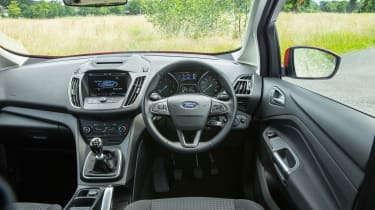
Following tweaks to the Focus in 2014, the C-MAX has inherited its sibling’s more modern interior, with the same piano-black centre console, smart dials and high-quality materials. Titanium models and above now get the handy SYNC3 touchscreen with voice control – although it’s worth noting that sat-nav will cost you extra.
Entry-level Zetec cars come with 16-inch alloy wheels, front fog lights, heated door mirrors, air-con and a DAB radio. Titanium cars get 17-inch alloys, automatic lights and wipers, climate control, a start button and cruise control, while range-topping Titanium X cars add luxuries like xenon headlights, a panoramic sunroof, part-leather seats, heated front seats and a new design of 17-inch alloy wheels.
Options include a Driver Assistance Pack with active city stop, lane departure warning and traffic sign recognition, as well as auto headlights and wipers. There’s also a Convenience Pack with parking aids and powerfold mirrors – but both will set you back more than £500 each.
Sat-nav, stereo and infotainment
The C-MAX now comes with Ford’s latest SYNC 3 infotainment system. This unit has abandoned the four-way home screen of SYNC 2 in favour of a main screen for the optional sat-nav (around £300) overlaid by large shortcut keys for the phone and stereo. Other functions can easily be accessed via a menu bar that runs along the bottom of the screen.
SYNC 3 addresses many of the criticisms of the older unit; it’s now far less laggy and responds faster and more intuitively to your inputs. It also features larger ‘virtual’ buttons that are easier to hit on the move, and gets smartphone-style pinch and swipe functionality that allows you to quickly zoom in on sat-nav maps, for instance. Another worthwhile addition is the brand’s AppLink, which essentially gives you quick and easy access to Apple CarPlay and Android Auto.
Practicality, comfort and boot space
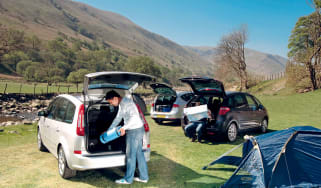
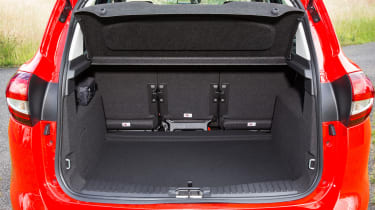
Despite its relatively compact dimensions, the C-MAX is a very practical car. It has 471 litres of boot space – slightly more than the Renault Scenic’s 437 litres, but way down on the Citroen C4 Picasso's 537 litres. With the seats down, load space increases to 1,851 litres.
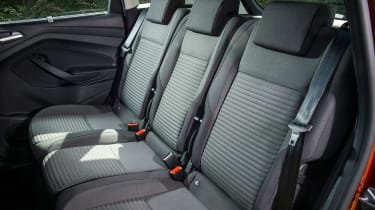
The C-MAX can also be ordered with a clever rear bench that splits 40/20/40, which allows you to fold the centre seat and slide the outer seats backwards and inwards to create a more spacious 2+2 layout.
The downsides are that, in three-seat mode, shoulder room is tight in the middle, and although the seats tumble easily, they’re very heavy when you need to remove them. It’s also worth noting that as of 2015, every C-MAX comes with a space saver spare wheel.
Storage is good, thanks to the versatile centre console, with its deep cubby, plus the glovebox is a nice shape. The deep door bins are also useful, as is the 12V socket in the rear, while you get a fold-out observation mirror below the rear-view mirror.
Other notable options are the manufacturer’s Active Park Assist, which automatically parallel parks the car, and a Family Pack, which comes with a powered tailgate and rear sunblinds. The elevated driving position means visibility is excellent, while reach and rake steering makes getting comfy behind the wheel very easy.
Dimensions and size
At 4,380mm long and 1,828mm wide, the C-MAX is smaller than the Citroen C4 Picasso, which also has a larger boot.
The larger Grand C-MAX measures in at 4,520mm long and 1,828mm wide, around the same size as its main rival, the Renault Grand Scenic (4,573mm long and 1,845mm wide).
Leg room, head room & passenger space
Thanks to the high roofline and generous amounts of knee room, the C-MAX offers comfortable family transport. It can be a bit of a squeeze with three adults in the rear but the two outer rear seats slide backwards independently to create more shoulder room.
Boot space
The C-MAX has a decent sized boot at 471 litres. That's about average for the class but if you need even more space, Ford also offers the Grand C-MAX with seven seats and a larger load area when all the seats are folded flat.
Towing
The Ford C-MAX is never going to set the towing scene alight, as its maximum braked towing capacity ranges from a tiny 400kg to a reasonable 1,500kg. If 400kg sounds too little, then avoid the 104bhp 1.5 TDCi unit. However, if you will be towing loads up to 1,500kg, then you will need to go for one of the Ford’s larger diesels.
Reliability and Safety
The C-MAX was awarded a five-star Euro NCAP rating, but it was tested back in 2010, so it can't be directly compared to newer models because the test has been made harder in the ensuing years. Six airbags, ESP and a tyre pressure monitor come as standard, while active city braking, lane keep assist and departure warning, traffic sign recognition and auto high-beam lights are all offered as an option in a number of driver assistance packs. Adaptive cruise control is a further extra.
Every C-MAX also gets driver, front passenger, side and curtain airbags, as well as Isofix child seat fixings. The C-MAX has occasionally made an appearance in teh Driver Power survey simply because it's one of the better selling MPVs for sale. It has never finished in the top 50, but of course practicality has been one of its strong points. However, if you want an MPV that will be good to own, it's worth noting that the Citroen C4 Picasso/SpaceTourer has consistently scored higher ratings than the C-MAX.
As a manufacturer, Ford only has a middling reputation, whether you're talking about its cars or its dealers. Still, Ford usually places higher than arch rival Vauxhall in this regard, so its 700+ franchises must be doing something right, although neither manufacturer rises out of the bottom half of the Driver Power survey that often.
Warranty
The C-MAX comes with a standard three-year/60,000 mile warranty like the majority of new cars on sale today. However, during the first year mileage is unlimited and only once the second year of ownership commences does the 60,000 mile limit come into effect.
Servicing
Ford offers a two-year servicing pack on the C-MAX for around £340, which can be upgraded to five years for an extra £230. For total peace of mind, the £840 three-year Service Plan Plus scheme covers a wider array of maintenance items, such as dampers, brake pads, bulbs, wiper blades and the exhaust.