Car tax 2026: how much VED road tax will I pay?
Confused by VED road tax? Our comprehensive guide explains how much you'll pay in 2026
Vehicle Excise Duty (VED) goes by many names: ‘road tax’, ‘car tax’, ‘road fund licence’, ‘a necessary evil’ (we made up that last one). Whatever you call it, VED is a UK-wide tax that permits motorists to legally drive or park a car on the public road.
VED road tax was initially introduced all the way back in the early 20th century, but numerous changes over the years mean it’s now rather confusing to say the least.

Don’t worry, though, because we’re here to help. Below, we’ll guide you through everything you need to know about the different VED car tax bands, who needs to pay road tax and how much it will cost in 2026.
We’ve even covered how to pay your road tax and what you need to do about road tax if you sell your car or take it off the road.
Who needs to pay road tax?
If you own a car, or are buying a new or used car, chances are you’ll need to pay VED road tax on it. There are, however, some exceptions to this rule. You do not need to pay road tax for:
- Historic vehicles and classic cars registered before 1 January 1986.
- Cars used by a disabled person.
- Cars or vehicles used by organisations for the transportation of disabled people.
All other vehicles, including electric cars and other zero-emission vehicles need to pay road tax.
How much is my road tax?
How much you pay for your VED road tax depends on which tax system applies to your car. This is determined by when your car was first registered.
With the exception of inflationary increases, changes to the road tax system are not retrospectively applied. So regardless of whether or not a new road tax system is introduced, the system that was in place when a new car was first purchased will continue to apply for as long as that car is on the road.
How is car tax calculated?
We’ve got the latest road tax costs from the DVLA below, but it’s worth highlighting how different factors affect how VED car tax is calculated.
The first year of road tax is included in a car’s on-the-road (OTR) price and is based on its carbon dioxide emissions. It ranges from £10 for zero-emission cars to £5,690 for models that emit 255g/km or more.
Formerly, nearly all new diesel cars occupied one emissions band higher for the first year rate because the Treasury decided to increase the first-year rate for diesels not meeting “the latest emission standards” – technically known as RDE2. It became a legal requirement for new diesel cars to meet RDE2 requirements in January 2021, so this is no longer an issue.
Regardless of this, sitting in a higher first-year tax band is no great hardship: many buyers will only be subject to a one-off extra cost, which will be absorbed into the car’s on-the-road price. For example, as you'll see in the table below, cars emitting 111g/km to 130g/km of CO2 incur a first year rate of £445.
After the first year, all new petrol, diesel and alternative fuel cars incur a flat rate of VED road tax of £200.
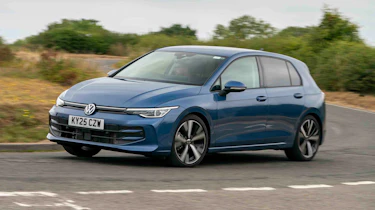
Tax bands for cars registered after April 2017
If you're buying a new car today, you will pay road tax based on the current tax band system that was introduced on 1 April 2017, and has been regularly adjusted for inflation. This also goes for electric vans and motorcycles with their respective standard tax rates.
UK VED tax bands are no longer calculated solely based on a car's CO2 output and are split into two parts: first-year VED rates and second-year onwards.
All cars registered after 1 April 2017 have to pay the first-year tax rate based on emissions.
From the second year onwards, all cars irrespective of fuel type or powertrain are now expected to pay the standard rate of £200 before any additional charges, such as the Expensive Car Supplement.
Expensive Car Supplement
If a petrol, diesel or hybrid car costs more than £40,000 when new it will be subject to the Expensive Car Supplement, also known as the ‘luxury car tax’.
EVs and zero-emission vehicles are also subject to the luxury car tax but the threshold is slightly higher at £50,000.
Any vehicle which attracts the Expensive Car Supplement will need to pay an additional £440 per year on top of the £200 per year standard rate. This is for a maximum of five years from the second year to the sixth year after first registration.
As with the other road tax charges these amounts are subject to inflationary increases.
VED road tax for cars registered since 01 April 2017
| CO2 emissions (g/km) | Standard petrol/diesel rate | First year tax rate (on/after 1 April 2026) |
| 0 | £200 | £10 |
| 1 to 50 | £200 | £115 |
| 51 to 75 | £200 | £135 |
| 76 to 90 | £200 | £280 |
| 91 to 100 | £200 | £365 |
| 101 to 110 | £200 | £405 |
| 111 to 130 | £200 | £455 |
| 131 to 150 | £200 | £560 |
| 151 to 170 | £200 | £1,410 |
| 171 to 190 | £200 | £2,270 |
| 191 to 225 | £200 | £3,420 |
| 226 to 255 | £200 | £4,850 |
| Over 255 | £200 | £5,690 |
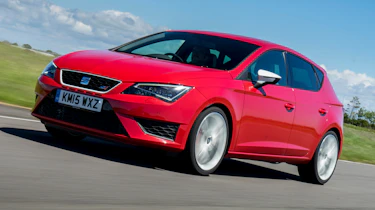
Road tax for cars first registered from 1 March 2001 to 31 March 2017
If you own or are buying a used car that was registered before April 2017, then the tax rate you pay will be based on the old VED system that applied at the time of first registration.

The Government first introduced emissions-based vehicle taxation in 2001, when it created tax bands, with the amount charged increasing in line with the emissions produced by the car.
When the most recent changes to the road tax format took place on 1 April 2017, all cars registered under the previous VED system had their tax rates frozen, although they are also subject to inflationary increases.
VED road tax for cars registered between 01 April 2001 to 31 March 2017
| VED Band | CO2 Emissions | Annual rate |
| A | Up to 100 g/km | £20 |
| B | 101-110 g/km | £20 |
| C | 111-120 g/km | £35 |
| D | 121-130 g/km | £170 |
| E | 131-140 g/km | £200 |
| F | 141-150 g/km | £225 |
| G | 151-165 g/km | £275 |
| H | 166-175 g/km | £325 |
| I | 176-185 g/km | £360 |
| J | 186-200 g/km | £410 |
| K** | 201-225 g/km | £445 |
| L | 226-255 g/km | £760 |
| M | Over 255 g/km | £790 |
**The Band K rate also applies to cars that were registered before 23 March 2006 and have an emissions figure over 225g/km.
How to pay your car tax
Nobody likes paying tax but the process of paying VED is fairly straightforward.
Pay online
The easiest way to pay your car tax is on the Gov.uk website. Here there’s a page entitled ‘Tax your vehicle’.
Simply follow the on-screen step-by-step instructions and make sure you’ve got the reference number from a V11 reminder letter to hand.
Pay at the post office
If you prefer to pay your car tax in person, you can do so at most Post Offices. Simply head down to a branch which deals with vehicle tax, taking your V5C registration document or V11 reminder letter with you.
Pay by phone
If you want to pay your car tax by phone, you can call the DVLA's 24-hour vehicle tax service on 0300 123 4321.
Regardless of your chosen method, you can pay for six or twelve months of VED road tax at a time, or set up a monthly direct debit to pay on a monthly basis.
Just remember that paying via direct debit will cost a little more as it incurs a small surcharge, so paying for 12 months at a time will work out cheaper in most cases.
How is car tax monitored?
Car tax is monitored by the police and DVLA through a network of automatic number plate-recognition cameras used in conjunction with the DVLA database, although this system is still relatively new.
The system for collecting and enforcing road tax was overhauled in 2014, when the Government abolished the tax disc. After 93 years, it was decided that a small circle of paper in your windscreen was no longer necessary, and its abolition made the whole system cheaper to run. There is a catch, however, as you’ll find out below.
The current road tax set-up makes it tougher for those seeking to avoid paying road tax. Rather than the visual check that the tax disc made possible, the authorities now rely on number-plate recognition cameras to determine that a vehicle has been taxed.
Although it’s no longer a requirement to display a tax disc in your windscreen, this doesn’t mean you don’t have to pay. The DVLA will send you a reminder when your road tax is up for renewal in the time-honoured fashion, and you can continue to pay your road tax online, over the phone or at the Post Office.

The existing options of paying for 12 or 6 months’ tax up front are still on offer (for most tax levels), but there’s also the option of paying your car tax monthly. This monthly option arrives in tandem with the facility to pay your road tax by Direct Debit, although when paying by Direct Debit you will pay slightly more, because a five per cent surcharge is added on to the monthly amount. One-off annual payments come with no extra charges.
The key advantage of paying your car tax by Direct Debit is that the DVLA will continue taking the payments until you tell them to stop. It means that you’ll no longer need to remember to pay your road tax once a year, although of course you still need to ensure that your car has valid insurance cover and an MoT certificate if it's over three years old.
How to qualify for a road tax exemption
Technically speaking, every single car on the UK’s roads must be registered annually with the DVLA for road tax. But as mentioned above, there are a few exceptions to this rule.
Disability VED exemption for new vehicles
If you have a DVLA-qualifying disability or need to transport passengers with one, you can apply for VED exemption.
If the car is new and hasn’t yet been registered, simply take a qualifying document or certificate of entitlement to the dealership with you.
For example, a certificate of entitlement could be in the form of Disability Living Allowance (DLA), Personal Independence Payment (PIP) or Child Disability Payment (CDP).
There are a wide range of qualifying certificates and you can find a full list on the Gov.uk website.
Disability VED exception for used vehicles
To apply for VED tax exemption on a used car, you will need to go to a Post Office which deals with vehicle tax as you will need to change the vehicle's tax class.
You will need to take the following documents with you:
- A V5C registration certificate (logbook) or the green new keeper slip and a filled-in ‘Application for a vehicle registration certificate’ (V62).
- A certificate of entitlement to a DVLA-qualifying disability. More information can be found on the gov.uk website. Once you have your certificate of entitlement, write the registration number of the vehicle in the top right hand corner.
- Proof of a valid MoT or Goods Vehicle Test certificate
Once the tax class of the vehicle is shown as disabled, you will have to tax the vehicle as normal but there will be nothing to pay. Failing to do so could result in a fine.
Historic vehicles and classic cars
If you own a car originally registered before 1 January 1986, you will need to apply for road tax exemption at a Post Office that deals with vehicle tax.
You’ll need to take:
- The V5C log book in your name.
- Your V11 vehicle tax reminder letter from the DVLA if you have one.
- Evidence of a current MoT if your vehicle needs one, this can be in the form of an MoT certificate.
- And evidence if your vehicle’s exempt from an MoT (V112).
Taking your car off the road (SORN)
If you are not going to use your car for a long period (anything longer than six months) you can use a Statutory Off Road Notification (SORN) to avoid paying road tax while you're not using it.
However, ‘off the road’ means off the road. You can’t declare a car SORN unless you have off-street parking, a garage or some other kind of storage that’s away from and off the public highway.

Even if a car is parked in the road for a long period, it needs to have road tax to be left there – meaning it also has to have a valid MoT certificate and insurance to get tax in the first place.
You can make a SORN declaration at any time if you have the V5C registration document, or the more common way is to declare SORN when the vehicle’s road tax reminder comes through the post from the DVLA.
Simply use the 16-digit renewal code to declare SORN. Once you have done this, you'll get written confirmation in the post, but you won't get any annual reminders about the vehicle's status.
If you declare SORN while there’s time left on the current road tax, you can reclaim the outstanding amount and get it refunded, although it will only be for a full month’s tax, so from the first of the month after you declare a SORN.
When you want to put your vehicle back on the road, simply tax the vehicle and your SORN is cancelled automatically. The only time you can drive a vehicle that has been SORNed is if you’re going to a pre-booked MoT appointment or other vehicle test. Drive it on the road for any other reason, and you could face a fine of up to £2,500.
If you’re making a SORN declaration for a vehicle that isn’t yours (if the owner has passed away, for example), then you need to apply for SORN by post using form V890 and filling out the relevant information, along with the information needed from the vehicle’s V5C registration document.
What happens to road tax when you sell your car?
Under the current system, any remaining road tax you have when you sell your car will not transfer to the new owner with the vehicle. Instead, the seller can get a refund on any tax remaining on the vehicle, while the buyer has to pay to re-tax the car.
The tax refund on a sold car will be sent automatically when the DVLA receives notification that the car has been sold, scrapped, exported or taken off the road with a Statutory Off Road Notification (SORN).
Sellers are expected to inform the DVLA of any change of ownership straight away or face a £1,000 fine. If they don’t, they could also still be liable for speeding or parking fines incurred by the new owner.
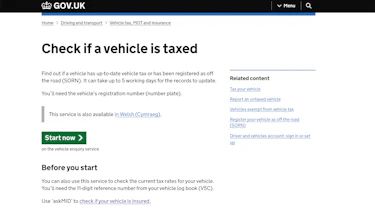
Information on whether or not a car is taxed is available online via the Government website. All you need is the make and model of the car plus the registration number.
How much money is raised by VED and what is done with the money?
The Office for Budget Responsibility estimates that £10 billion will be raised by Vehicle Excise Duty by 2027/28 – up from the £8.4 billion collected for the 2024-25 tax year, and £5.8 billion in the year prior to the VED changes in 2017.
Despite popular misconceptions, the revenue from ‘road tax’ isn’t specifically to be used for the upkeep or creation of public highways. The cash was only ring-fenced until 1937, thereafter going into the central pot to be spent on whatever the Government and Treasury desires.
The future of VED
Revenue has remained on an upward trajectory since the nineties, increasing rapidly in recent years, but the emissions-based system is likely to see revenue fall in the long term as more people transition to EVs.
To combat the decline in revenue, the Government announced a new pay-per-mile Electric Vehicle Excise Duty (eVED) for electrified cars.
What is eVED pay-per-mile tax?
In 2025, the Government announced that it is planning to introduce a pay-per-mile tax, also known as ‘road pricing’ for electrified vehicles from April 2028.
Designed to fill the increasing financial gap left by fewer people paying for petrol or diesel at the pumps, the Electric Vehicle Excise Duty (eVED) system will work by charging some drivers a fixed rate for every mile they drive.
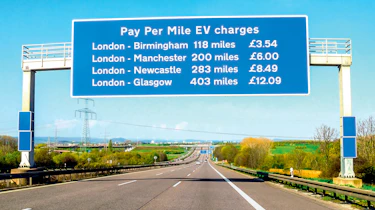
EV drivers will be charged 3 pence per mile, while plug-in hybrid drivers will be charged a reduced rate of 1.5 pence per mile.
To put that into perspective, a 200-mile journey from London to Manchester would cost EV drivers a total of £6.00 in eVED tax, or £3.00 for plug-in hybrids. It is estimated that the average EV driver would have to pay £200-£300 per year in eVED.
Pay-per-mile tax will increase over time in-line with the Consumer Price Index and also be charged on top of regular VED road tax. According to the Office for Budget Responsibility, this new tax is expected to raise in the region of £1.4 billion per year by 2029/30.
How will pay-per-mile tax work?
We have an in-depth page dedicated to the incoming eVED pay-per-mile road tax, but all we know so far is that a consultation is currently underway.
Initial ideas include that car dealers ‘prepackage’ the cost of eVED at the point of purchase in order to incentivise the uptake of new vehicles. Other suggestions include motorists estimating their mileage, prepaying for this distance and being subject to an annual mileage check.
If, at the annual mileage check (or yearly MoT for cars over three years old), the distance travelled is under the estimate you’ll receive a tax rebate. There’ll be a bill if you have travelled further.
How much is your car worth? Find out with our free car valuation tool...