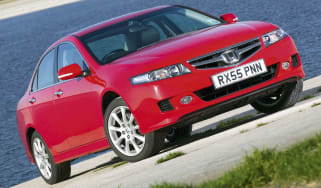
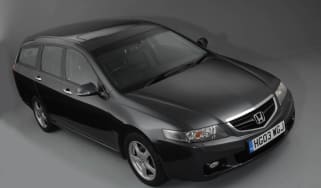
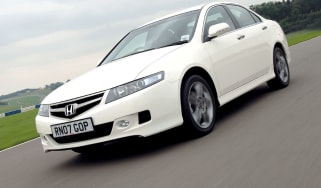
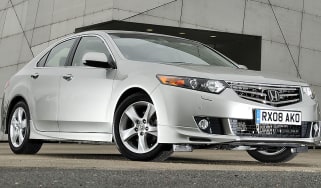
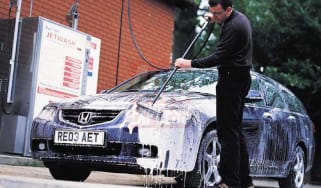
Honda Accord (2008-2015) review
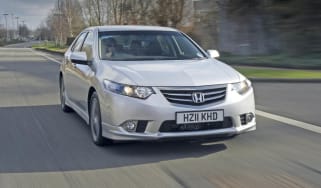
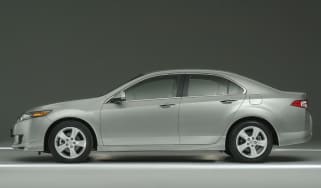
The Honda Accord is a premium alternative to mainstream saloons. It's not the largest car in its class, but it's luxurious and well equipped

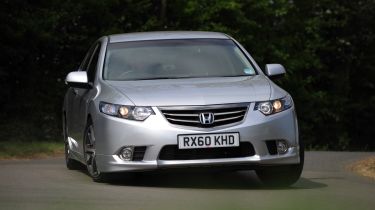

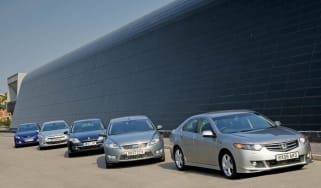
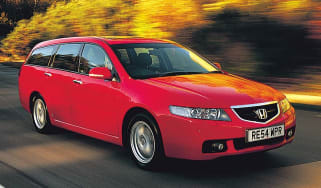
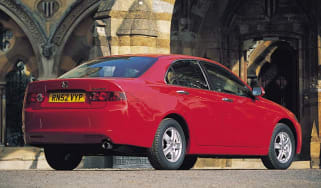
Once upon a time, the Honda Accord was a viable alternative to family saloons like the Ford Mondeo, but with the same appeal to match premium brands like the BMW 3 Series and Mercedes C-Class. Superb build quality, handsome styling and a great interior kept it aloft for years, but as its rivals moved on, the Honda Accord has stood still and suffered in terms of efficiency and driver appeal.
As the Accord drops back, it's now much more in tune with mainstream rivals like the Mondeo, Vauxhall Insignia and Volkswagen Passat - but it's been surpassed by them in several key areas, too. Practicality is a particular concern - the Accord isn't available as a hatchback and the boot and rear cabin space doesn't tally up with competitors.
The Honda Accord is available in four different trim levels - entry-level ES, ES GT, EX and top-of-the-range Type S. The Honda Accord isn't necessarily a high-achiever but it's definitely a decent all-rounder with tonnes of safety features and equipment. It offers lots of accessories and a strong driving experience too.
Our choice: Accord 2.2 i-DTEC ES 4dr
Engines, performance and drive
The Honda Accord gets two petrol engines and one diesel unit in its range, and they all have pretty decent performance. The entry-level 2.0-litre i-VTEC petrol comes with 154bhp and is generally quite smooth, while 198bhp 2.4-litre i-VTEC is the quickest in the line-up thanks to a 0-62mph of 8.1 seconds.
Used - available now

2020 Ford
Ka+ Active
49,446 milesManualPetrol1.2L
Cash £7,849
2021 Ford
Fiesta
45,061 milesManualPetrol1.0L
Cash £9,000
2019 Ford
Kuga
66,948 milesManualDiesel2.0L
Cash £10,010
2020 Ford
Fiesta
46,575 milesManualPetrol1.0L
Cash £9,823The sole diesel unit, a 2.2-litre diesel, has 148bhp and it manages to reach 62mph in 9.4 seconds.
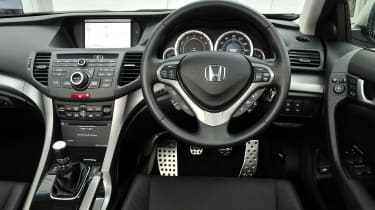
Overall, despite its 'cockpit' inspired cabin and snug driving position, the Honda Accord isn't as exciting to drive as the Ford Mondeo, but it does offer precise steering and minimal body roll.
MPG, CO2 and Running Costs
The Honda Accord seems off the pace in terms of economy and emissions when compared to the Ford Mondeo and Volkswagen Passat, which get ECOnetic and BlueMotion technology respectively as a way of reducing running costs.
Across the Honda Accord range, stop/start technology isn't available on any model, and both petrol versions offer poor fuel consumption at 40.9 mpg and 38.7mpg on their respective combined cycles. Their emissions are also high with 159/km for the 2.0-litre engine (this increases to 168g/km when it comes with the five-speed automatic gearbox), and 199g/km for the 2.4-litre. In automatic guise, the 2.4-litre model’s emissions drop slightly to 195g/km.
The 148bhp 2.2-litre i-DTEC diesel engine is our pick of the Honda Accord range. It's impressively refined, smooth and manages 53.3mpg (46.3mpg for the automatic) on its combined cycle, plus 138g/km of CO2 (159g/km for the auto).
In short, Honda definitely has a lot of catching up to do in this department, with most rivals offering stop-start or turbo petrol engine technology to boost their efficiency numbers.
Interior, design and technology
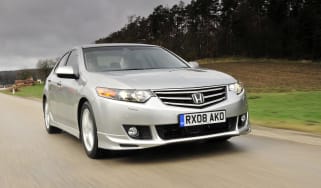
The Honda Accord is starting to feel a bit long in the tooth when compared to some of its rivals. The design even comes off second best in comparison to other cars in the Honda range such as the latest Civic. Inside, though, the Honda Accord boasts superb build quality with lots of soft-touch plastics and solid-feeling switchgear.
The Honda Accord's interior is definitely more upmarket than that found in the Ford Mondeo or Vauxhall Insignia, so it's a shame the Accord lacks the badge appeal of a BMW, Audi or Mercedes.
The Honda Accord comes well specced irrespective of trim level, and it gets alloy wheels and cruise control as standard. However, if you want larger wheels and features such as Active Cornering Lights and a leather interior, you'll have to opt for top-spec Type S models, which are considerably more expensive than the entry level Honda Accord ES. On the plus side, though, the Honda Accord ES does get smart touches such as a leather steering wheel and gear knob, plus USB connectivity and cruise control.
Practicality, comfort and boot space
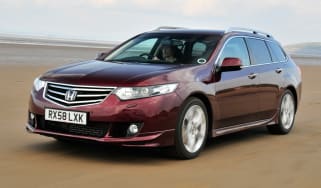
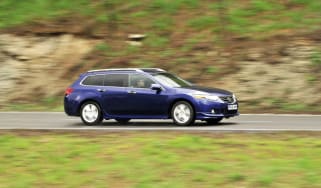
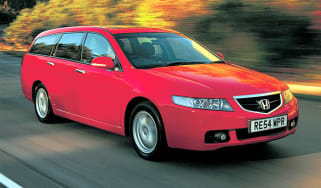
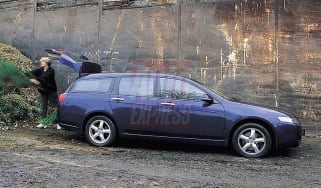
The Honda Accord may look big, but step inside, and its size is deceptive. The saloon model gets a narrow boot and only has 497-litres of total boot space. Once again, this leaves the Honda Accord trailing most of its rivals. Those seeking more practicality might do well to consider the Honda Accord Tourer estate, which offers a maximum boot space of 1,183 litres.
All Honda Accord models come with 60:40 split/fold rear seats as standard, but passengers won't find as much rear legroom as you would in a Skoda Superb. One thing also lacking in the Honda Accord range is a hatchback alternative.
Reliability and Safety
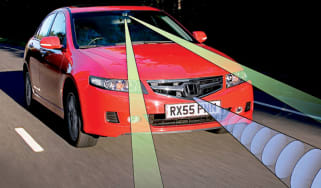
In terms of safety, the Honda Accord is one of the safest cars in its class thanks to a top score of five-stars in the Euro NCAP crash safety tests. All models in the Honda Accord range get lots of safety equipment, including electronic stability control (ESP), six airbags and anti-whiplash front headrests all as standard. Meanwhile, optional extras include lane keep assist and adaptive cruise control.
The Honda Accord finished 31st in our 2014 Driver Power survey, which is impressive for a car that's definitely starting to feel a little outdated. Overall, owners praised the Honda Accord for its in-car tech, build quality and reliability.