Jaguar XJ (2010-2019) review
With elegant styling and superb performance, the Jaguar XJ confidently rivals German luxury models

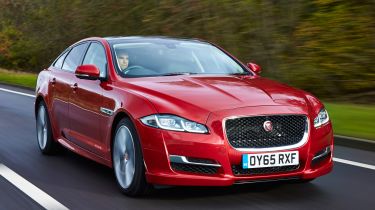

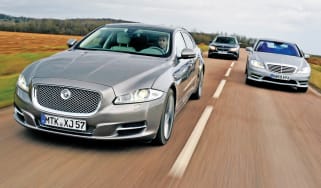
The Jaguar XJ is a worthy rival to the German luxury car trio of the Mercedes S-Class, BMW 7 Series and Audi A8 thanks to its dramatic styling, composed driving dynamics and high-class cabin.
The old Jaguar XJ was considered one of the most conservative looking luxury cars, but the current car has shaken off the Gentleman's Club image thanks to its classy looks and superb driving experience.
The speed of the Jaguar XJ, combined with its low driving position, wraparound cockpit, and sharp handling mean it's the best driver's car in its class. It creates the impression that you're driving a sports car, until you look behind and see how much space there is.
However, the nimble handling of the Jaguar is one thing, for passengers in the back, some comfort is sacrificed: even in the long wheelbase models rear headroom isn't as good as that found in the Mercedes or Audi.
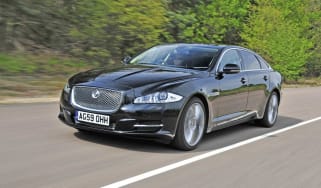
When the current Jaguar XJ (code X351) arrived in 2010, the retro looks that we were used to with the old XJ were consigned to history. The car was the first one for sale that showcased Jaguar's latest design direction, and after almost a decade on sale, it still stands out in the limousine sector.
Used - available now

2022 BMW
3 Series Touring
40,356 milesAutomaticPetrol2.0L
Cash £29,990
2019 MITSUBISHI
L200
65,000 milesAutomaticDiesel2.4L
Cash £15,250
2021 Citroen
Grand C4 SpaceTourer
66,000 milesAutomaticDiesel1.5L
Cash £11,995
2015 Volkswagen
Golf Cabriolet
93,022 milesManualPetrol1.4L
Cash £3,095It needed to be up to date to help it compete with its luxury car rivals. Chief among these is the Mercedes S-Class, closely followed by the Audi A8 and BMW 7 Series, while the Lexus LS is also worth considering. As the XJ offers decent driver involvement, then you might also want to consider the Porsche Panamera, which has a longer wheelbase in Executive spec, plus there's the Maserati Quattroporte while luxury SUVs like the Range Rover offer something different.
Revisions in 2018 saw the range trimmed back, with the biggest casualty being the supercharged Jaguar XJR performance model. The 5.0-litre V8-powered car is no longer part of the range, and in fact no current XJ is petrol powered. Instead, Jaguar's 3.0-litre V6 diesel is used, and it just comes in 296bhp guise, while all cars get an 8-speed auto gearbox and rear-wheel drive.
Short and long wheelbase variants are offered, with the latter commanding a premium of around £3,000 over the standard car. This gets you an extra 12.5 centimetres between the axles and an extra 12 centimetres of legroom, while most versions of the XJ can be had in SWB and LWB guises. The range currently comprises Luxury, Premium Luxury and Portfolio models which can be had in both lengths, while the R-Sport is SWB only and the plush Autobiography is LWB only.
All cars feature a panoramic glass roof, LED headlamps, 14-way heated seats and four zone climate control, while more expensive models ramp up the kit count. Go for an Autobiography, and you can add rear tables and twin 10-inch JD screens, a 1,300 Watt audio system, massaging rear seats and a surround camera system with park assist, among other items. You do pay for it, although the XJ isn't quite as pricey as some rivals. You'll find the entry point to the range starts from around £63,000, but even the top-spec Autobiography is less than £85,000, and it comes with all of the kit you could ever want.
Engines, performance and drive
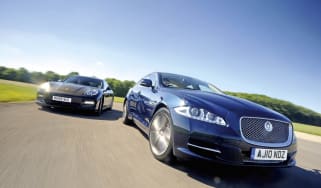
There's no luxury car that handles quite like the Jaguar XJ. Aluminium construction - similar to that of the Audi A8 - helps here, so it feels nimble on the move, turns into corners swiftly and, thanks to adaptive dampers, stays taut and adjustable even when cornering hard. If you want a luxury car that you'll want to drive as much as be driven in, then nothing short of a Porsche Panamera can provide driving fun like an XJ.
It's still a heavy car, though, weighing in at around 2.4 tonnes. But that's a margin less than the A8 or S-Class, which come in at around 2.7 tonnes. The BMW 7 Series is a similar weight, thanks to carbon fibre in its construction.
The steering on the Jaguar XJ is light and precise, and it helps to create a car that seems to shrink around you in a way its rivals can't. However, the pay-off can be a jittery ride over poor surfaces and the rear visibility is poor because of the steeply raked rear window.
Engines
For most Jaguar XJ buyers in the UK, the fact that you can now only get the 296bhp 3.0-litre V6 diesel is no hardship, as it's the pick of the bunch for its mix of performance and economy. There's a 0-60mph time of 5.9 seconds for all models, both long and short wheelbase, and there's an electronically limited top speed of 155mph. However fast you're going, the engine is a smooth performer that hardly makes its presence felt unless you're accelerating hard. Together with hushed road noise, it means the XJ dispenses with long distances with ease.
Of the engines that have been available in the past, the 335bhp 3.0-litre supercharged V6 petrol is from the F-Type, and it's rapid and makes a great noise, but fuel economy takes a hit.
The 567bhp supercharged V8 in the XJR 575 makes it the most powerful production XJ ever, helping it yield supercar performance and creating an opulent guilty pleasure. The XJR 575 also benefits from 30 per cent stiffer spring rates and optimised adaptive damping, while its SWB-only layout shows that it's more about driving than being driven in.
MPG, CO2 and Running Costs
Being a large luxury car, the Jaguar XJ is far from easy on the bank account. With the switch from NEDC to WLTP fuel economy testing, Jaguar dropped all the petrol engines from the XJ range, so your sole option is the 296bhp 3.0 TDV6 diesel if you're buying a new XJ. The standard stop/start system helps it to return up to 37.9mpg on the WLTP test cycle, down from 49.6mpg before.
However, it's worth noting that these figures only show the difference between the two test cycles, and actually means you're more likely to achieve the WLTP figure in real-world driving. All cars get a 77-litre fuel tank, so if you do get close, then you can expect a driving range of around 640 miles.
Emissions are rated from 184g/km, which aren't great and will impact Benefit In Kind costs for company car users. It's also worth noting that choosing the long wheelbase impacts economy and emissions, and so will switching from 19 to 20-inch wheels on the options list.
Given these figures, it's no surprise that the petrol XJs fell off the price lists. As an example, the extreme Jaguar XJR 575 delivered figures of 25.5mpg and 264g/km on the older NEDC test cycle, and that favours extremely light use of the throttle.
Material quality in the XJ is first class, and the detailing is exquisite – just check out those huge metal air vents on the fascia. The equipment levels inside the Jaguar XJ is generous, with leather-trimmed, electrically adjustable front seats, dual-zone climate control and twin glass sunroofs all as standard.
Options include a powerful Meridian stereo, massage seats and a rear-seat multimedia package with eight-inch LCD screens and wireless headphones.
Insurance groups
The XJ sits in just one insurance band – group 50 – regardless of engine size or trim level. It's broadly the same as its rivals like the Mercedes S-Class, though.
Depreciation
Unfortunately, while the XJ is desirable when new, it's a different story on the used market. Our experts have calculated that the XJ holds on to between 32-35 per cent of its value after three years/36,000 miles. To put that into context, the Mercedes S-Class is a little better with our experts calculating the big Merc holds on to between 38 and 46 per cent.
To get an accurate valuation on a specific model check out our free car valuation tool...
Interior, design and technology
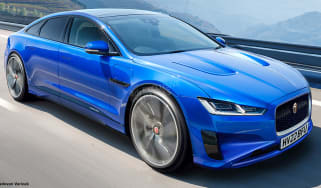
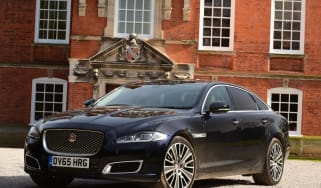
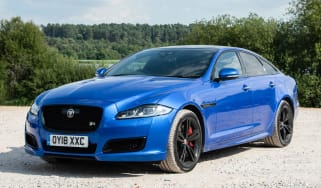
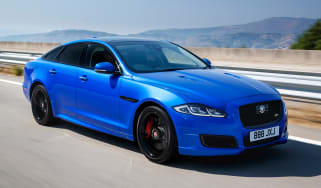
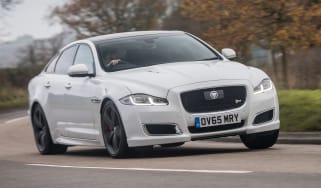
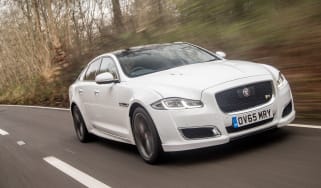
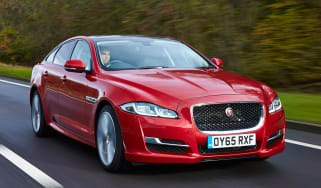
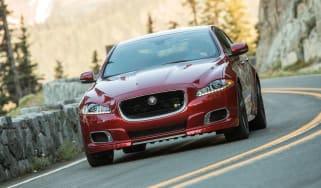
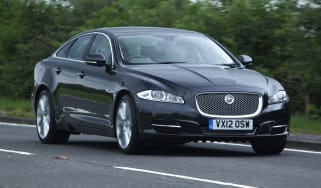
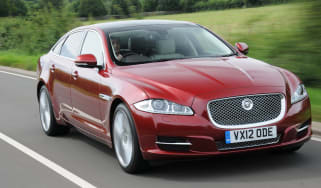
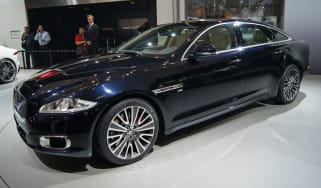
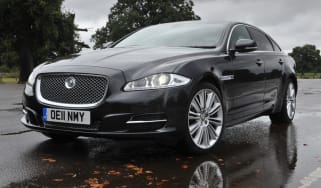
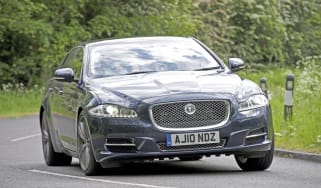
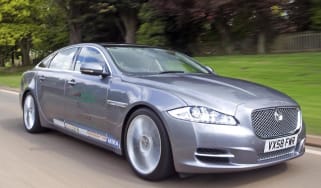
With this car Jaguar ditched the old classic styling of the XJ that had changed little since the 1970s. While it won't please traditionalists, we think the XJ is a great move away from the old design; the front end, with its slim lights and imposing grille, looks the business, while the sweeping profile is gorgeous. It's only the Jaguar XJ’s slightly curious blacked-out C-pillars and fussy tail-lights that let down an otherwise stylish luxury saloon, although the former can be mitigated if you go for black paint.
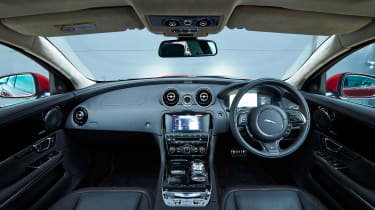
The hand-crafted Jaguar XJ interior mixes traditional woods and leathers with the latest technology – and it mostly works. Some may think the digital dashboard – borrowed from the Range Rover - is a bit gimmicky, but we like the way it moves the rev counter to the centre in Sport mode. For 2015-facelift models, the screen can also become a full-width sat-nav much like Audi's Virtual Cockpit; unfortunately it's not as detailed as the Audi's and can look a little Fisher Price at times, but overall it's a good addition.
Rear visibility in the Jaguar XJ is not as good as some rivals though and while most of the interior feels well made, some of the switchgear is flimsy and dated - in particularly the audio controls mounted on the large deep-dish steering wheel.
The model range is quite simple but also surprisingly varied. The Luxury, Premium Luxury, Portfolio and R-Sport models can be ordered as a standard wheelbase XJ, while the long wheelbase version is available in Luxury, Premium Luxury, Portfolio and Autobiography form.
Sat-nav, stereo and infotainment
From 2015-onwards all XJs come with the 12.3-inch configurable TFT instrument cluster and InControl Touch Pro infotainment. The latter is a massive step-on from the previous, clunky system and joins the InControl Touch systems in lesser Jag models like the XE.
InControl Touch Pro uses an eight-inch touchscreen in the fascia and is Jag's in-house developed version of BMW's iDrive and Mercedes' Comand systems. There's a variety of different functions and app available, but the most important is the sat-nav. It has door-to-door route planning and guidance, including public transport options. A companion smartphone app allows you to plan your route offline and then load it into the system at the start of the journey.
For the 2018 model year, the updated range added a 10-inch touchscreen infotainment display with pinch and zoom functionality, along with a 4G Wi-Fi hotspot that supports up to eight devices at once. Frustratingly, the XJ still doesn’t support Apple CarPlay or Android Auto.
The system also offers a Commute Mode, which learns your daily drive and can automatically offer alternative routes to avoid congestion. The system can also direct you to a parking space when you're near to your destination.
Practicality, comfort and boot space
Inside the Jaguar XJ, both the driver and passenger get loads of space in the front, as well as plenty of adjustability in the seating position, including full electric adjustment on all models.
There's a large glovebox, cubbies in the centre console and deep door bins, and while the dashboard feels a little sportier and cosseting that other big limos, it still feels very spacious up front.
Leg room, head room & passenger space
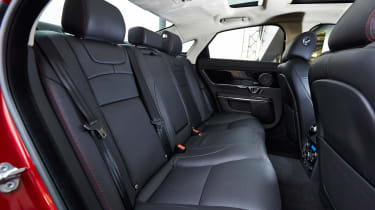
Rear space in the back is a little tight on short wheelbase models – kneeroom isn't the best and the sloping roofline eats into headroom. The short wheelbase cars are more like large sports saloons than limos.
If you aim to spend most of your time in the back of your XJ or carry passengers who value a limo experience, the long wheelbase versions are a must. They are available in all trim levels apart from the R-Sport and add around £3,000 to the list price of the XJ.
The LWB cars offer an extra 12cm of legroom, but head room is still tighter than on the XJ's rivals. For the ultimate XJ limo, you'll have to go for the Autobiography version which has quilted semi-aniline leather seats with contrasting stitching, a leather headliner, rich oak inlay veneers, and illuminated stainless steel treadplates and air vents. There are just two rear seats with seat back movement and massage function, and a rear seat entertainment system with two folding 10.2-inch HD screens. This model does have slightly less legroom than other models thanks to the bigger seats.
If you intend to carry lots of luggage, the XJ will impress, as it has a larger boot (520 litres) than the Audi A8 or BMW 7 Series. It has a large opening which is a bonus, but if you need more room then the Mercedes S-Class is a better choice.
Reliability and Safety
The Jaguar XJ is one of the safest cars around thanks to standard stability and traction control, a pop-up bonnet to protect pedestrians, eight airbags and the latest security features.
For post-2015 models a suite of extra safety kit is available including All-Surface Progress Control – helps the car to pull away smoothly on slippery surfaces – traffic sign recognition, park assist, reverse traffic detection and cruise control with queue assist.
In 2017, Jaguar unveiled new safety tech for the 2018 model year XJ, which includes forward traffic detection, lane keep assist, driver condition monitor and autonomous emergency braking, which now incorporates pedestrian detection.
The XJ hasn’t been tested by Euro NCAP because it's a niche model that won't sell in big numbers. However the XF, XE, F-Pace and E-Pace have all received a five-star rating, and you shouldn’t have any concerns about the flagship saloon, given the list of safety equipment which is shared with these models. Indeed, the XJ and XF are closely related under the skin, which will further boost confidence in the limo.
As for the mechanicals, all engines are well tried and tested and the eight-speed auto is durable too, according to respondent to past Driver Power surveys. As a manufacturer, Jaguar usually finishes higher than its German rivals for general owner satisfaction. The only real worry would be with some of the electrical systems, which can play up in Range Rovers and a large proportion of the technology is shared.
If you do need to visit a dealer, then according to Jaguar owners who participated in the survey, you can expect a better level of service at a Jaguar dealer than the equivalent Mercedes, BMW or Audi franchise.
Warranty
All XJ's come with a three-year warranty which can be upgraded to an extended warranty to cover paint and bodywork. The extended warranty also includes roadside assistance.
Servicing
There are various service plans available and Jaguar now offers an online service so owners can remotely check their car's service history.
Jaguar XJ history
It's been more than 50 years since the original Jaguar XJ was launched. The Series 1 went on to be produced for 24 years in total, with major updates in 1973 and 1979 giving it an extended life. Originally it came with a straight-six engine that had originally been seen in the XK120 and E-Type sports cars, while Jaguar's famous V12 was fitted from 1972 onwards in the Series 2. Further refinements were made for the Series 3 that arrived in 1979, and this version remained on sale until 1992.
This overlapped with its replacement, the XJ40, which arrived in 1986, and this six-cylinder car and the older V12 model were sold side-by-side for a few years. In 1994 the X300-generation arrived, and along with it came the first XJR super saloon, which was also Jag's first supercharged road car. The X300 made way for the V8-powered X308 in 1997, which again featured a supercharged XJR variant. The all-new X350 version of the XJ arrived 2003 with aluminium construction, but it still retained the retro looks inspired by the original Series 1. These disappeared when the X350 was replaced by the current car in 2010.