Fiat Panda (2012-2024) review
The long-serving Panda still offers plenty of character, as well as a temptingly low price

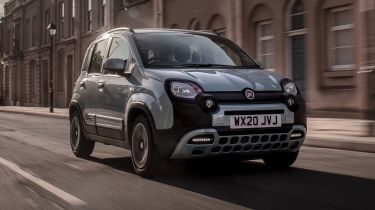

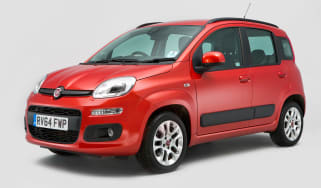
The Fiat Panda is a small city car that specialises in no-frills motoring on a budget while maintaining plenty of personality.
It’s also fair to say that it is getting on a bit, with numerous competitors having come and gone in just this third-generation Panda’s lifetime. Still, despite its age, the Panda continues to be a terrific town car, with a decent ride, spirited handling, and excellent all-round visibility.
More modern competitors to the Panda do show it up for refinement, especially when you take it on longer motorway trips, plus its interior isn’t quite up there with the class best. However, an affordable price helps to keep it competitive against rivals.
About the Fiat Panda
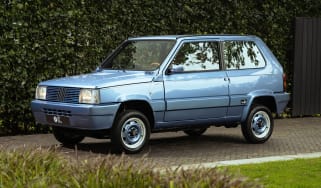
The Fiat Panda is part of an illustrious bloodline of small cars that has been part of Fiat’s lineup for over thirty years. The current car arrived in 2011, so it’s one of the oldest new cars on sale in the UK. Many city car competitors have come and gone within the Panda’s lifetime, though, so it’s clear that the little Fiat can still attract buyers.
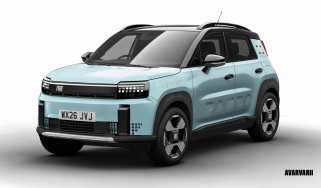
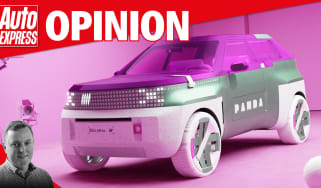
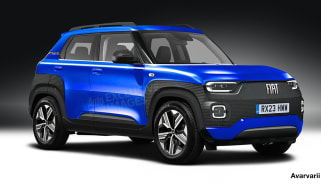
A brand-new Panda is expected to arrive soon, but for now, the current model still appeals due to its quirky shape, low running costs, and relatively simple mechanical underpinnings.
Used - available now

2022 Mercedes
GLC
75,544 milesAutomaticDiesel2.0L
Cash £20,097
2018 Vauxhall
Grandland X
41,400 milesAutomaticPetrol1.2L
Cash £11,100
2021 Vauxhall
Mokka
33,983 milesManualPetrol1.2L
Cash £13,100
2021 SEAT
Arona
21,085 milesManualPetrol1.0L
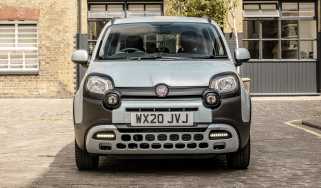
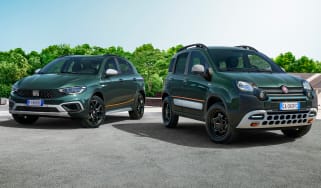
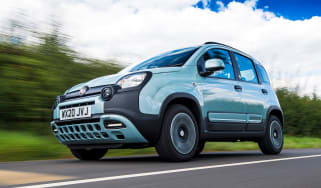
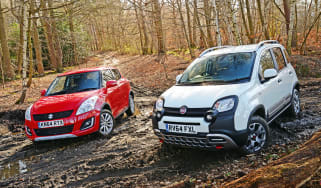
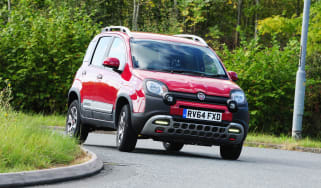
Cash £12,500Today, there are two versions of the Panda to choose from: the standard model and a more rugged-looking Panda Cross with pseudo-SUV exterior styling tweaks. Both cars are mechanically identical, but the Cross offers improved standard equipment. Although it’s designed to look like an off-roader, the Cross is strictly front-wheel drive only. A four-wheel drive Panda was previously available, but this has since been discontinued.
Just like its rivals, engines have also come and gone throughout the Panda’s long life, and now the sole powertrain for the entire line-up is a 1.0-litre petrol engine with mild-hybrid tech and a six-speed manual gearbox.
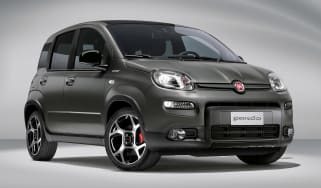
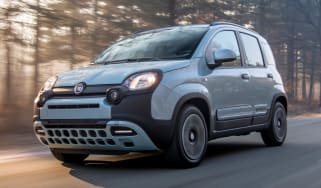
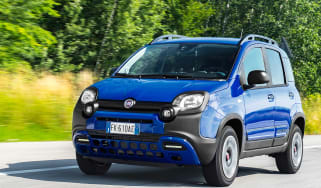
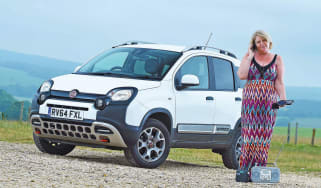
The current line-up consists of two models: the Panda and Panda Cross. The standard car acts as the entry-level spec, and this includes air-conditioning, 15-inch steel wheels and a USB/Bluetooth compatible radio. The Panda Cross has a beefed-up, off-roader inspired exterior look featuring front fog lamps, roof rails, a revised bumper and side skirts. On the inside there’s also a helping of additional kit such as a seven-inch touchscreen with Apple CarPlay and Android Auto connectivity, as well as automatic climate control.
No matter which Panda you choose, you'll get fun handling, with fast steering and a nippy character. All cars feature City steering that boosts the power assistance to finger-light levels at the touch of a button, making parking a doddle.
How much does the Fiat Panda cost?
The Fiat Panda is one of the cheapest cars to buy in the UK. Prices for the regular model start from under £15,000, while the Cross starts from around £16,500. The range-topping Garmin trim will set you back almost £18,000.
Engines, performance and drive
Around town, the Fiat Panda really shines thanks to its high driving position, excellent visibility and light controls. The soft suspension also means it soaks up bumps in the road.
The City button on the dash is also handy as it lightens up the steering – so much so that you can make adjustments with one finger – making squeezing in and out of tight gaps in town much easier. It feels rather remote, though, so it's best avoided in normal driving and saved for parking manoeuvres.
The Panda handles well on the open road, but sadly, the 69bhp engine struggles at high speeds. It’s a shame, because this lack of refinement means rivals like the Hyundai i10 and Kia Picanto have a distinct advantage on longer motorway journeys.
Engines
Quite a few engines have powered the little Panda throughout its lifetime, but today, the only powertrain available is a 1.0-litre petrol engine with mild-hybrid tech. This unit produces 69bhp and 90Nm of torque. As these figures suggest, the Panda is far from being a speed machine, but that’s not really what this car is about. The 0-62mph dash is dealt with in 13.9 seconds, and the top speed is 102mph.
MPG, CO2 and running costs
The tiny and lightweight Fiat Panda could never be classed as a thirsty car, but the mild-hybrid powertrain has boosted its efficiency figures to some pretty impressive levels.
The standard Panda can achieve up to 58.9mpg on the WLTP combined cycle, while opting for the Panda Cross will drop this figure ever so slightly to 57.6mpg.
However, the 1.0-litre mild-hybrid engine isn't the strongest in everyday driving; it only develops 69bhp, and you must exploit every bit of its power when pressing on. In doing so, you may struggle to match these claimed economy figures.
Insurance groups
Both the Fiat Panda and Panda Cross mild-hybrids are in insurance group 8, so buyers should have no trouble getting cheap cover. This, along with the low purchase price, makes the Panda an ideal car for young and inexperienced drivers.
Depreciation
Fiat has never been one of the strongest performers for used values. That said, considering the low initial purchase price, the Panda’s depreciation isn’t too dreadful. Our experts predict the Fiat will retain 48 to 50 per cent of its initial value after three years and 36,000 miles, with the Cross sitting at the upper end of this range.
To get an accurate valuation on a specific model check out our free car valuation tool...
Interior, design and technology
The Fiat Panda is a cute-looking choice in the dwindling city car market, and it has a bit more flair than lower-spec versions of the Hyundai i10 and Kia Picanto. The Panda’s design will be the deciding factor for many owners; with its upright stance, bold details, and an eye-catching blend of straight lines and curves, it still manages to stand out.
The interior of the Fiat Panda continues this sense of fun, and there are plenty of trademark 'squircle' design cues – think square shapes with rounded corners. Chunky Tonka toy-style switchgear and bright fabrics contribute to the personality of the car.
While the interior is a vast improvement over past models, some of the materials feel low-rent, and it can't match its newer rivals in terms of quality.
Sat-nav, stereo and infotainment
Entry-level Pandas get a relatively basic radio system with a five-inch screen, along with Bluetooth, USB and aux connectivity. Moving up to the Panda Cross brings in a much more modern seven-inch touchscreen infotainment system, complete with Apple CarPlay and Android Auto. Both systems feature DAB tuning.
Practicality, comfort and boot space
With its upright stance and boxy dimensions, the Fiat Panda feels bigger than it actually is. It’s certainly a world away from the tight packaging of its predecessor.
The high roofline means this little Fiat feels airy from the driving seat, and visibility is excellent all-round. While there’s a decent amount of space up front, the steering wheel adjusts for height only – there’s no reach movement.
On the plus side, the interior is packed with handy storage, including a large tray ahead of the front seat passenger and several cup-holders.
Dimensions and size
Being 3,653mm long and 1,882mm wide, the Panda is similar in size to the Hyundai i10, which measures 3,670mm long and 1,680mm wide. The Fiat is also slightly bigger than the Kia Picanto, which is 3,595mm long and 1,595mm wide.
The Panda Cross is slightly longer than the standard car, at 3,705mm.
Leg room, head room & passenger space
The boxy shape of the Fiat Panda also means there’s plenty of headroom for passengers, although you do sit quite upright in the rear. Four adults can squeeze into the car in reasonable comfort, but three on the back row will be an uncomfortable squash – as in any small city car. Rear legroom will also be an issue for taller adults.
Boot space
While the Panda’s cabin feels airy, the boot will only take 225 litres of luggage. However, it is usefully square in shape to help when loading, plus it has a wide-opening tailgate, and only a small lip to hump luggage over.
Reliability and safety
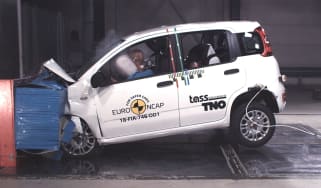
Back in 2011, when the Fiat Panda was launched, safety experts Euro NCAP awarded it four stars out of five. Unfortunately for Fiat, Euro NCAP revisited the Panda in 2018 to show how far crash test safety had come, both in terms of vehicle tech and the requirements of the body's test procedure. This time, the Panda scored no stars at all, while adult and pedestrian scores were in the 40-50 per cent range, while child safety was 16 per cent and safety tech rated at just 7 per cent — although this wasn't a scoring category back in 2011.
In comparison, the Hyundai i10 achieved a three-star rating when tested in 2020.
Over the years, Fiat has struggled to shed its reputation for making cars with lacklustre build quality and reliability, and the Panda doesn't feel as durable as its immediate rivals. However, as the car is relatively simple from a technical point of view, there isn’t too much to go wrong.
The Panda hasn’t featured in our Driver Power customer satisfaction survey for quite a long time, but when it last appeared in 2019, it placed 67th out of 100 cars. Drivers were particularly impressed with the running costs, handling and overall looks. Less positive responses concerned the engines, along with woeful scores for the stereo and connectivity.
In our latest best car manufacturer rankings, Fiat finished in a very poor 31st place out of 32 brands. There’s clearly still plenty of work needed before this reputation will improve.
Warranty
Fiat supplies the Panda with a three-year/60,000-mile warranty, which is pretty average. However, the Kia Picanto and Hyundai i10 leave it in the shade, offering seven-year/100,000-mile and five-year/unlimited-mile packages respectively.
Servicing
Fiat offers fixed-price maintenance on the Panda, allowing owners to spread the cost of servicing monthly. Prices vary according to mileage and usage.
The Panda requires servicing every 12 months or 9,000 miles, whichever comes soonest.
Fiat Panda Alternatives
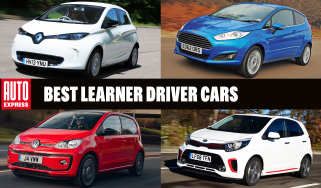
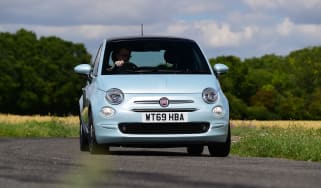
Many city cars have been consigned to the history books, such as the Volkswagen up!, Peugeot 108, Citroen C1 and Toyota Aygo, but the Panda can still count the Hyundai i10 and Kia Picanto among its opponents, as well as the closely-related Fiat 500 Hybrid.
Frequently Asked Questions
More reviews
Car group tests
In-depth reviews
Long-term tests
Used car tests