Kia Picanto review
The little Kia Picanto boasts plenty of kit and offers a grown-up drive to go with its sporty looks

Our opinion on the Kia Picanto
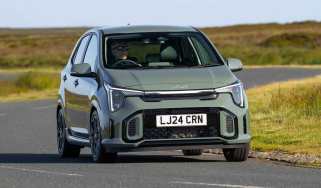
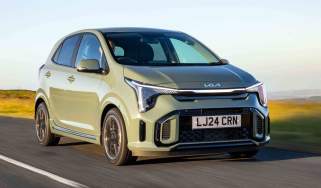
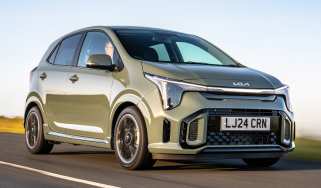
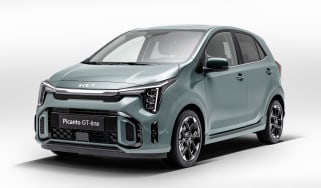
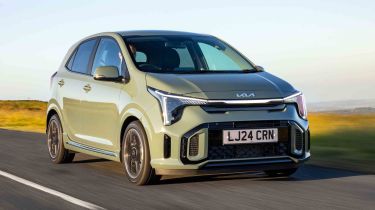
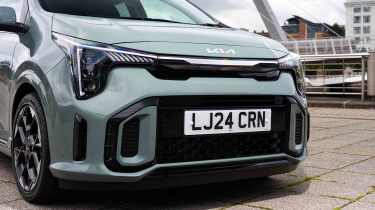
The latest Kia Picanto has gone through a significant glow-up, transformed from the drab and sparse first-generation car to this far more stylish Mk3 model. The latest Picanto is better equipped, has impressive interior space, and a grown-up driving experience.
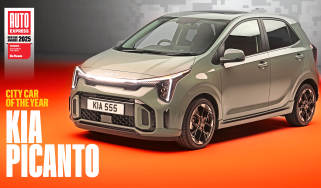
The standard 1.0-litre petrol engine needs to be worked hard once out of the city, but that’s typical for a city car. All in all, the Picanto is an enticing, likeable and easy-to-drive offering that should be on any small car buyer's shortlist. In fact, it’s such an appealing little car that we declared it our City Car of the Year in 2025.
About the Kia Picanto
Launched in 2017, the third-generation Picanto is the smallest car for sale in the Kia line-up. It's a strong contender in the city car class, thanks to impressive interior dimensions for its small exterior size, a competitive price list and low insurance and everyday running costs.
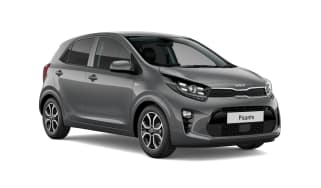
Kia no longer offers a three-door Picanto, so your sole body option is a five-door hatchback. The Picanto comes in Pure, GT-Line and top-of-the-range GT-Line S models. All versions of Picanto come with a five-speed manual gearbox as standard, with a five-speed automatic available as an option.
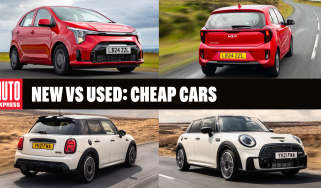
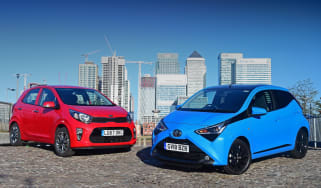
To see whether the modestly-priced Picanto offers true value for money, we tested it against a MINI Cooper in a new vs used cheap cars test.
Kia Picanto prices and latest deals
Prices have crept up since the launch of the latest model, starting from around £17,000 for the entry-level Pure trim with a manual gearbox. Venturing to the top of the range will see you paying around £20,000 for a GT-Line S. Fitting an automatic transmission to any Picanto adds another £700 to the equation.
Used - available now

2020 KIA
Picanto
40,000 milesAutomaticPetrol1.2L
Cash £9,847
2023 KIA
Picanto
34,677 milesManualPetrol1.0L
Cash £9,600
2023 KIA
Picanto
11,649 milesAutomaticPetrol1.0L
Cash £12,553
2020 KIA
Picanto
23,044 milesManualPetrol1.0L
Cash £9,333You can save on the list price by building your perfect Kia Picanto via the Auto Express Buy A Car service. We also have plenty of new Picantos ready to be driven away, as well as some very attractive used Kia Picanto deals.
Performance & driving experience
Pros |
|
Cons |
|
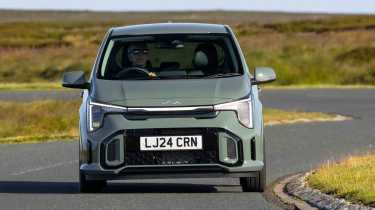
While it’s no longer than the previous version, the latest Kia Picanto has an extended wheelbase and shorter overhangs, giving it a more dynamic appearance and a tighter turning circle. The well-weighted and quick steering also contributes to the Picanto being a genuinely fun little car to drive.
We found the Picanto 61bhp 1.0 to be a willing engine that’s flexible enough to keep up with busy traffic, and is allied to a slick five-speed gearbox that allows you to keep it on the boil. The manual car’s gearing is fairly short, so you’ll find yourself changing gears regularly. If you fancy a less strenuous experience, you can opt for a five-speed automatic instead for a roughly £700 premium over the manual.
| Model | Power | 0-62mph | Top speed |
| Picanto 1.0 Pure | 68bhp | 14.6 seconds | 100mph |
| Picanto 1.0 GT-Line automatic | 68bhp | 17.2 seconds | 100mph |
| Picanto 1.0 GT- Line S | 68bhp | 14.6 seconds | 100mph |
Performance, 0-60mph acceleration and top speed
The 1.0-litre Kia Picanto does 0-62mph in 15.4 seconds, rising to 18.2 seconds for the automatic. No version of the Picanto can quite breach the 100mph mark, but they will reach and sit at the national speed limit in the UK.
Town driving, visibility and parking
Being a city car, the Picanto feels very much at home on tight urban streets. At a smidge over three and a half metres long and with its 9.4-metre turning circle, the little Kia is very easy to nip around parked cars, narrow roads, mini roundabouts and all the things city driving requires you to navigate.
The upright windscreen means the A-pillar doesn’t block much of your view out, and tiny overhangs front and rear make the Picanto a doddle to place on the road. This is all helped by light and responsive steering. The five-speed manual is rather short-geared, so you do find yourself changing gear more than you’d expect.
Lengthening the wheelbase has improved the ride, so the Picanto feels relatively relaxed for its size while rolling over bumps at speed, although sharper ridges in the road can highlight a tendency for the rear suspension to pogo up and down. Around town, the Picanto copes reasonably well with ripped-up and rucked urban roads.
Country road driving and handling
The three-cylinder engines are very well-suited to the Picanto because even with their minuscule output, there’s only 950kg of Korean city car to shove about. On paper, the acceleration times look exceptionally lethargic, but at low speeds where the initial punch is most important, the Picanto does okay.
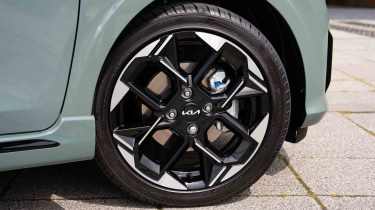
There’s genuine fun to be had in the Picanto on a back road, especially with the manual version. Momentum is the key due to the lack of power, and while the wheels and tyres are small, you’d have to be very aggressive with your inputs to upset the Picanto.
Motorway driving and long-distance comfort
Overtakes at speed require a lot of planning with the less powerful motor, but once you’re up to cruising speed, there isn’t too much noise from the thrummy three-cylinder.
As for ride comfort, the Picanto does a great job of transforming into a car that feels bigger than it is when cruising on the motorway. The steering weight gets more reassuring, and the suspension settles down. Wind and road noise remain ever-present, though.
MPG & running costs
Pros |
|
Cons |
|
Whichever way you look at it, the Kia Picanto is one of the most affordable cars money can buy. That goes for everything from its list price to fuel and other consumables.
The official WLTP combined fuel economy for the 1.0-litre Picanto is 52.3mpg, regardless of whether you go for the automatic or manual.
Likewise, the less powerful petrol engine is better when it comes to CO2 emissions, emitting from 120g/km in manual form or 123g/km with the automatic.
| Model | MPG | CO2 | Insurance group |
| Picanto 1.0 Pure | 52.3mpg | 120g/km | 3 |
| Picanto 1.0 GT-Line automatic | 52.3mpg | 123g/km | 4 |
| Picanto 1.0 GT- Line S | 49.6mpg | 135g/km | 4 |
Insurance groups
There’s some particularly good news here, especially for new drivers, because the entry-level Kia Picanto Pure with the 1.0-litre engine and manual gearbox is one of the cheapest cars to insure, residing in group three. The rest of the line-up doesn’t go any higher than group seven, either, so premiums should be kept well in check.
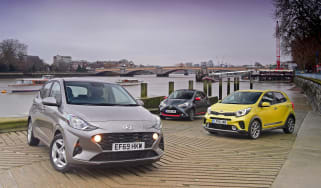
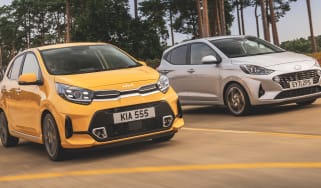
The closely-related Hyundai i10, meanwhile, is even cheaper because it starts in group two. More powerful variants of it reside in group ten, though.
Tax
All Kia Picantos are subject to the standard rate of VED road tax. Due to there being no hybrid, plug-in or electric variants, there’s no Benefit-in-Kind (BiK) company car tax discount to be found here. If you’re a business buyer in need of a city car, we’d suggest looking towards the fully electric BYD Dolphin Surf, Dacia Spring, Fiat 500e or Leapmotor T03 instead.
Depreciation
The Picanto is expected to retain around 50 to 51 per cent of its value after three years or 36,000 miles, according to our market data. Elsewhere in the city car sector, the electric Leapmotor T03 and Dacia Spring only manage 38 to 39 per cent after the same period.
To get an accurate valuation for a specific model, check out our valuation tool...
Interior, design & technology
Pros |
|
Cons |
|
Kia says only 10 per cent of buyers in this sector opt for three-door models, so the company has sensibly decided to stop producing the less practical version of its entry-level car. The Picanto is focused on refinement and maturity, so the more practical five-door bodystyle is fitting.
Underneath, the Picanto uses MacPherson strut suspension at the front and a torsion beam at the rear, while its platform has also grown in size with a 15mm-longer wheelbase, helping to create more room inside.
Interior and dashboard design
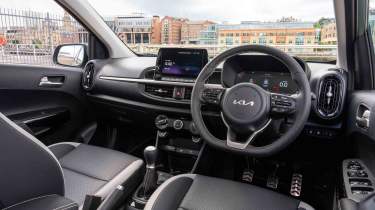
As is the case with a huge number of cars on today’s market, the Kia Picanto has bid farewell to traditional, analogue dashboard dials in favour of a 4.2-inch driver’s display. There’s a certain retro charm to this display’s appearance thanks to its LCD-style numbering, but it’s all easy enough to read and free from clutter.
The rest of the dashboard follows a pretty uninspiring design, but it gets the job done. Ergonomically, everything is where it should be, and there’s a decent helping of good old-fashioned buttons, switches and knobs.
Materials and build quality
The latest Picanto’s cabin is adorned with higher-quality materials than its predecessor. While there still aren’t any soft-touch materials on the dashboard, as you’ll find in some variants of the Dacia Sandero, it’s still an overall improvement over the old model.
Infotainment, sat-nav and stereo
All versions of the Kia Picanto come with an eight-inch touchscreen as standard, matching the similarly priced mid-range Dacia Sandero Expression, which also gets an 8-inch screen. Sat-nav is also included, and you can also connect your smartphone via Apple CarPlay or Android Auto, but wireless phone charging is only available in the GT-Line S.
The infotainment system is simple and easy to use, with a logical layout that makes changing the radio station or making a call straightforward while out on the move. It’s not a byword for innovation, nor is it anything like the tech you’ll find in Kia’s electric cars, but this lack of complexity goes well with the generally straightforward appeal of the Picanto.
Audio wise, you’ll get a four-speaker stereo connected to a DAB radio with Bluetooth. The sound quality is OK, although you will be increasing the volume at higher speeds in order to contend with the road noise.
“The integrated sat-nav across all trims is a nice touch, but the black background makes it slightly difficult to read at a glance.” - Alastair Crooks, senior news reporter.
Boot space & practicality
Pros |
|
Cons |
|
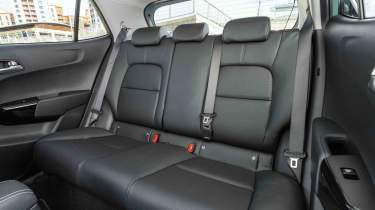
Few people buy a city car for outright practicality, but for those interested in a tiny car with generous interior dimensions, the Kia Picanto impresses. Its five-door bodystyle means getting in and out of the back seats is infinitely easier than in the previous three-door model. While the Picanto range comes with five seats, it’s much more comfortable as a four-seater, given that three across the back seat is a real squeeze.
Thanks to the thin pillars and upright rear screen, visibility is good, and all versions come with a reversing camera and rear parking sensors as standard. Other practical features include a small central armrest, some usable door bins and a decent glovebox. You’ll also find a couple of cupholders ahead of the gear lever.
Dimensions and size
The Mk3 Picanto is no longer than the car it replaced, but by extending the distance between the front and rear wheels, the engineers increased cabin space for all passengers.
At 3,595mm long, the Picanto is among the smallest cars on sale, and beats the closely related Hyundai i10 for dinky dimensions. At a narrow 1,595mm in width, it’s easy to park, too.
| Dimensions comparison | |||
| Model | Kia Picanto | Hyundai i10 | Leapmotor T03 |
| Length | 3,605mm | 3,670mm | 3,620mm |
| Width | 1,595mm | 1,680mm | 1,652mm |
| Height | 1,485mm | 1,480mm | 1,577mm |
| Wheelbase | 2,400mm | 2,425mm | 2,400mm |
| Boot space | 255 to 1,010 litres | 252 to 1,050 litres | 210 to 880 litres |
Seats & passenger space
The longer wheelbase has freed up more knee room in the rear compared with the previous Picanto, and decent sized door openings mean it’s easy to get into the back. Storage and ergonomics are fine, although seat comfort could be better for longer journeys.
If you need to put child seats in the Picanto, you will find a pair of Isofix mounting points on the rear bench's outer positions.
For anyone looking to carry adults more often in the back of their car, it might be worthwhile considering the Dacia Sandero, a larger supermini that undercuts the Picanto’s price.
Boot space
The Kia Picanto actually boasts best-in-class boot space. Enlarging the Picanto’s platform has created more luggage room and cabin space. The boot is 255 litres with the seats up (bigger than the MINI Cooper), and rises to 1,010 litres with them folded down.
Few people buy a city car to carry really big loads, but on the odd occasion when space is a priority, the Picanto can deliver. In comparison, a Hyundai i10 is a few litres behind, at 252 litres. However, the larger Dacia Sandero has a bigger 328-litre boot and would be more useful if you regularly carry a child’s pushchair.
“Kia pushed the wheels to the corners of the Picanto to maximise interior space with the third-generation, resulting in rear passenger space that’ll fit a pair of six-foot-tall adults.” - Alastair Crooks, senior news reporter.
Reliability & safety
Pros |
|
Cons |
|
Kia has built a hard-earned reputation for reliability over recent decades, cemented by a bold seven-year/100,000-mile warranty. The Picanto didn’t appear in the most Driver Power best cars to own result, but the brand has dropped down the manufacturer leaderboard according to the latest results. In the 2025 Driver Power best manufacturer rankings, Kia placed 18th out of 31 brands, down from 2nd place in 2024.
The third-generation Picanto was crash tested by safety experts Euro NCAP in 2017, and the car received a three-star out of five score for cars without Automatic Emergency Braking (AEB), and a four-star result for cars with the safety pack fitted. Since then, the test has become much tougher, which means the original scores have expired.
This is a shame because the Picanto now comes with more safety assistance features as standard, including active lane keep assistance to keep you within your lane, and a speed limit recognition system. Some safety technology is reserved for higher trim levels, such as blind-spot monitoring. It’s only available on the top-of-the-range GT-Line S trim, and is there to warn you of cars alongside when you indicate to change lanes on the motorway.
Buying and owning
- Best buy: Kia Picanto GT-Line S
Unless you’re in desperate need of the very cheapest insurance, the Picanto’s low price means forking out for the range-topper is a pretty sound investment. You’ll get all of the additional kit (and a subsequent safety boost) with the GT-Line S, although we’d only opt for the pricier automatic if you’re unable to drive a manual.
Kia Picanto alternatives
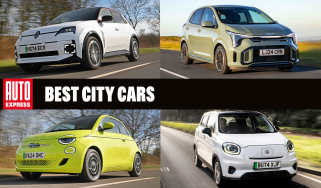
Many of the Picanto’s similarly sized city car rivals are fully electric cars, and come in the form of the BYD Dolphin Surf, Dacia Spring, Leapmotor T03 and Fiat 500e.
The Fiat 500 hybrid is the closest rival in terms of size to the Picanto, or you could go for the slightly bigger Citroen C3 or the Fiat Grande Panda. Both have starting prices well under £20,000 and offer greater practicality than the Picanto. If price really is an issue, then the Dacia Sandero undercuts the Picanto significantly, and is much bigger to boot.
If you’re using your city car purely to pootle to the local shops and back, you could even consider the Citroen Ami quadricycle.
Key updates of the Kia Picanto review
4 June 2026: Inclusion of latest pricing and depreciation data.
Frequently Asked Questions
All Kias come with a seven-year/100,000-mile warranty. While most people won’t keep their car that long, it does give the Picanto extra appeal when you come to sell it because it’ll still have a bit of warranty cover left.
Deals on the Kia Picanto and alternatives