What is ISOFIX?
ISOFIX is a system that makes it easy and safe to fit child car seats securely


When navigating the often confusing tasks of buying a new family car or choosing a child car seat, you will probably encounter a range of technical terms describing different features. One term that appears frequently is ISOFIX.
So what is ISOFIX and how does it work? Essentially it’s a universal way of safely fitting child seats in vehicles, making life easier and safer for consumers and their young children.

ISOFIX fittings consist of two metal hoops, found at the bottom of the seat, which compatible child car seats can securely clip onto. This ISOFIX system has been designed to meet high standards for strength and safety, so you can be reassured that the seat is fastened securely in the vehicle, and locked in position to avoid it moving in an accident.
What does ISOFIX mean?
ISOFIX is the conjoining of the regulation body: the International Organisation for Standardisation (ISO) and ‘FIX’, which refers to the system for fixing the child seat in place.
Is my car fitted with ISOFIX?
If your car was built after 2014, you can be fairly confident that it is equipped with ISOFIX. From that year, European law required all cars with rear seats to include at least two ISOFIX mounting points. Volkswagen first introduced the system in the Golf in 1997, and other manufacturers gradually adopted it. By 2006, ISOFIX had already become widely established across the industry.
ISOFIX has largely phased out the older style of child seats which were secured using the car’s seatbelts.
ISOFIX is a major upgrade because not only are the anchor points built directly into the car’s structure, it’s also much easier to tell if you’ve fitted an ISOFIX child seat securely.
The old system of using the car’s seatbelts to fasten the car seat in place was much more fiddly, took longer and was far easier to get wrong, potentially leaving children at risk from improper use.
How does ISOFIX work?
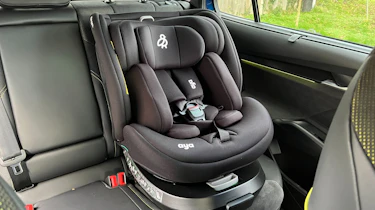
First, take a look at the rear of the seat squab, where it meets the upright backrest. On older models you should find two metal hoops located 28cm apart. A lot of newer cars clearly mark these with the ISOFIX logo, and some conceal the hoop under a neat plastic flap, which can be flipped up or removed altogether and stored in a safe place.
You’ll then need to check the metal anchors on your ISOFIX compatible child seat are extended, and place it on the seat, before pushing them back into the ISOFIX loops.
It should be easy to tell when they make a good connection, and most child seats then require pushing back until they feel fully secured. If the seat has safety indicators, these should turn green to show it’s safely connected.
Some child seats also require extra support, and either have a foot which extends to the floor of the footwell (and can be extended or retracted for a secure fit), or a strap which clips to a top tether mounting point.
A lot of ISOFIX seats form part of a system, with a base and a seat that clips into it and can be removed. This can make it easier to remove just the seat portion, and allow the same base to be used for different seats as a child gets older. Here, just the base is held by the ISOFIX mounting system, with the seat itself locked into the base.
Can I retrofit ISOFIX to an older car?

In most cases, ISOFIX cannot be retrofitted to an older car because the mounting points are built into the vehicle’s structure and designed to meet strict safety standards. While a small number of manufacturers have offered approved retrofit kits for specific models, these are rare and must be installed exactly to factory specifications.
Aftermarket ISOFIX kits are sometimes available, but they are not generally recommended as they may not meet the same safety standards. If your car doesn’t have ISOFIX, a correctly fitted seatbelt-installed child seat still provides a high level of protection. Some child car seats can be secured either with ISOFIX or a seatbelt.
Can I use ISOFIX in the front or middle seat?
ISOFIX is most commonly fitted to the outer rear seats, and this is typically the safest and most practical place to install a child seat. Some cars do offer ISOFIX points in the front passenger seat or middle rear seat, but this is far less common and varies by model.
If you do plan to use the front seat for your child car seat, always follow the car manufacturer’s guidance and ensure the passenger airbag is switched off before fitting a rear-facing child seat. Checking both the car’s handbook and the child seat instructions will confirm which seating positions are approved.
Did you know you can sell your car through Auto Express? We’ll help you get a great price and find a great deal on a new car, too.