Dacia Sandero review
A spacious interior and refined driving manners show there’s more to the Dacia Sandero than just its price

Our opinion on the Dacia Sandero
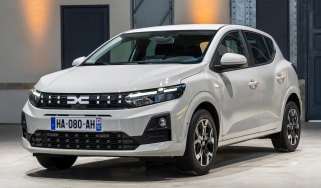
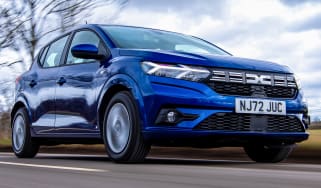
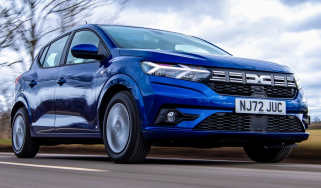
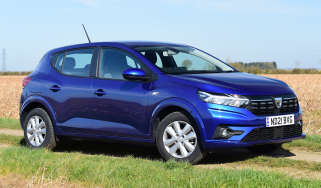
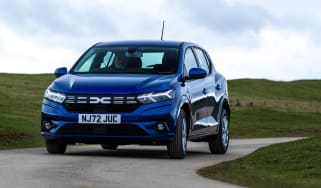
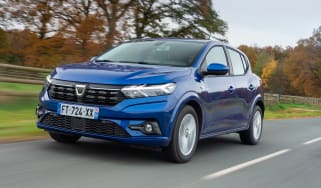
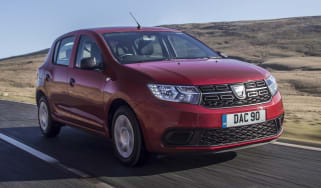
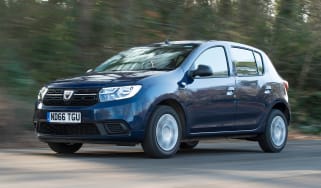
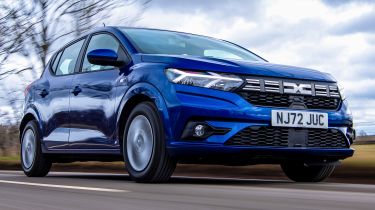
Dacia claims its focus is on making quality new cars affordable, and the latest Sandero is the epitome of that mission. This value-focused supermini remains one of the UK’s cheapest cars, even after subtle refinements to the Sandero’s styling, cabin, running gear, and specification.
The Dacia Sandero continues to offer great practicality for cost-conscious buyers. It even makes sense for those choosing the higher specification versions, because its low running costs shouldn’t leave them out of pocket. They say the simplest ideas are often the best, and despite not being one of those trendy small SUVs (there is a pseudo-SUV version called the Stepway, if you want), Dacia’s well-judged, great-value supermini is right up there with the best in the class.
About the Dacia Sandero
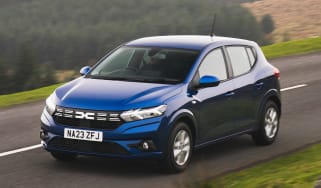
With a fresh look and a little extra finesse, the latest Dacia Sandero poses serious questions for buyers looking towards pricier rivals. The only superminis that come close to the Sandero’s value package are the MG3 and Citroen C3, but it still undercuts these rivals significantly.
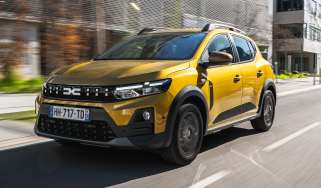
If you're after a little extra SUV style, there’s also the Dacia Sandero Stepway to consider, and we have a dedicated in-depth review for this model, too.
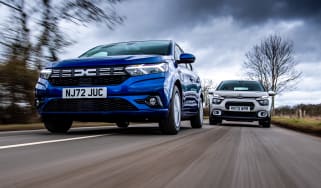
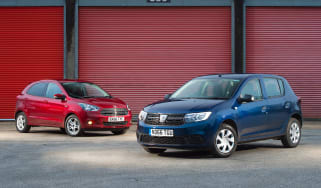
We’ve tested the Dacia Sandero alongside the previous-generation Citroen C3 in a real-world twin test. The Sandero came out on top because we were impressed by its value for money, in-car tech, boot space, and low running costs.
Dacia Sandero prices and latest deals
A base Dacia Sandero Essential starts from under £15,000, which makes it one of the cheapest brand-new cars you can buy in the UK by quite some margin. There are no nasty surprises if you move up to the mid-range (and better-equipped) Expression trim, because this only adds £1,000 to the price. The range-topping Journey trim is available for a fraction over £17,000, undercutting several of its entry-level rivals.
Used - available now

2022 Dacia
Sandero
17,454 milesAutomaticPetrol1.0L
Cash £10,420
2022 Dacia
Sandero
13,304 milesManualPetrol1.0L
Cash £10,151
2024 Dacia
Sandero
9,604 milesManualPetrol1.0L
Cash £11,455
2024 Dacia
Sandero
30,755 milesManualPetrol1.0L
Cash £9,699There’s no reason why you can’t save even more, though, and you can do just that by building your perfect Dacia Sandero with the Auto Express Buy a Car service. We also have plenty of used Sanderos in stock and ready to go, along with a selection of great Dacia Sandero leasing deals. We can also help you to sell your car.
Performance & driving experience
Pros |
|
Cons |
|
The third-generation Dacia Sandero is wider than the previous model and utilises the CMF platform from the Renault Clio, which is lighter and stiffer than the old car’s. It by no means transforms the Sandero into a car designed for driving enthusiasts, but the underpinnings bring improved ride comfort that makes the Sandero decent to drive around town, as well as a reasonably competent motorway cruiser. Following revisions to the line-up, the Sandero’s engine and transmission line-up has been reduced to a single petrol engine with a six-speed manual gearbox.
Ultimately, if you take the Sandero as an affordable supermini and are more interested in getting from A to B fuss-free, it’ll suit you just fine.
| Model | Power | 0-62mph | Top speed |
| Sandero TCe 100 Essential | 100bhp | 9.7 seconds | 111mph |
| Sandero TCe 100 Expression | 100bhp | 9.7 seconds | 111mph |
| Sandero TCe 100 Journey | 100bhp | 9.7 seconds | 111mph |
Performance, 0-60mph acceleration and top speed
The turbocharged TCe 100 petrol engine produces 100bhp and 200Nm of torque in total, and this is capable of 0-62mph in a leisurely 9.7 seconds.
It’s worth noting that the Sandero Stepway is powered by a slightly more potent TCe 110 engine with 110bhp, yet it has a slightly slower 10-second 0-62mph time due to its greater kerbweight.
Town driving, visibility and parking
As you might have already suspected, the Sandero is a very easy car to bumble around town in. While the suspension can get a little bouncy at lower speeds, this car offers generally good all-around visibility and light controls. The 10.5-metre turning circle makes slotting the Sandero into tight parking spaces a nice and straightforward process, too.
Every model comes with parking sensors as standard, but you’ll need to choose the Expression trim or above if you’d like a camera to go with them. If we have one criticism, it’s that the manual car’s clutch is a bit vague, so you may experience the occasional unceremonious jolt (or worse, an engine stall) if you aren’t too careful.
Country road driving and handling
The sole engine option is the 1.0-litre, three-cylinder TCe 100 engine, which offers enough power and torque to keep up with traffic on faster A- and B-roads. It isn’t overly noisy, unless you decide to explore the upper end of the rev range, at which point it sounds particularly strained. There’s also quite a noticeable surge of acceleration once the turbo comes on boost, so the power delivery isn’t as smooth as that of similarly powered rivals like the Skoda Fabia and SEAT Ibiza.
The steering is light, but it suits the Sandero well, and its chassis (which is also the basis for the Renault Clio) provides good handling with a decent amount of grip and limited body roll.
We found the five-speed manual gearbox in the pre-facelift Sandero a little imprecise and awkward to use at times, so we hope the six-speed gearbox fitted to the revised Sandero will be an improvement.
Motorway driving and long-distance comfort
Along with the aforementioned engine noise, reaching higher speeds also brings its share of wind noise and tyre roar. That sort of din would be unpardonable in a six-figure luxury limo, but we’re willing to cut the Sandero some slack since it’s supposed to be an affordable car, so it’s going to have less sound insulation than its pricier rivals.
Aside from the noise, the Sandero handles well enough when cruising on the motorway. The suspension copes well with bigger bumps and imperfections in the tarmac, and the steering doesn’t require constant corrections.
“While the performance figures aren’t anything special, the turbocharged engine pulls cleanly from low revs. There’s a little bit of fuss if you try to make the most of all of the performance, but the car’s acceleration is consistent from any revs.” - Dean Gibson, senior road test editor.
MPG & running costs
Pros |
|
Cons |
|
Rising car prices are on the tip of everyone’s tongue in this day and age, but the Sandero is holding on to its reputation of being an affordable choice. A low list price is only part of the equation, because costly insurance premiums and thirsty engines can soon outweigh any initial savings.
The good news is that you shouldn’t have to break the bank in order to keep your Sandero on the road. Dacia claims a WLTP combined fuel economy figure of up to 52.3mpg from the TCe 100 powertrain.
It’s a shame that we’re still waiting on a full-hybrid option, as you get with the closely-related Renault Clio. While Dacia is no stranger to hybridisation with the Dacia Jogger and Dacia Duster models, the planned Sandero Hybrid is yet to make an appearance, even though this model first arrived way back in 2020.
Due to its current lack of electrification, the Sandero’s CO2 emissions are better described as okay rather than exceptional. with the TCe 100 churning out 122g/km.
| Model | MPG | CO2 | Insurance group |
| Sandero TCe 100 Essential | 52.3mpg | 122g/km | 12 |
| Sandero TCe 100 Expression | 52.3mpg | 122g/km | 14 |
| Sandero TCe 100 Journey | 52.3mpg | 122g/km | 14 |
Insurance groups
Insurance groups for the Sandero range start from insurance group 12 (out of 50) for the base Essential spec, while the rest of the line-up gets a group 14 rating. These numbers should mean that premiums are pretty reasonable.
However, the base versions of the Volkswagen Polo and Skoda Fabia should be even cheaper, in groups 3 and 4, respectively.
Check any car's MoT history in a few easy clicks with our MoT checker tool...
Tax
Every Dacia Sandero is liable for the standard rate of VED road tax, while the lack of any hybrid or electric variants means company car drivers won’t see any great tax savings. Instead, business buyers will be far better off looking towards an electric supermini like the Renault 5 or BYD Dolphin, because these offer much lower Benefit-in-Kind company car tax rates.
Depreciation
It may be a cheap car, but the Sandero does a reasonably good job of standing up to the menace that is depreciation. Our market data shows that after a period of 36,000 miles or three years, Dacia’s supermini will retain between 45 and 49 per cent of its original value. The costlier Renault Clio fares even better here at 49 to 57 per cent, but the combustion-powered Vauxhall Corsa languishes behind at 39 to 49 per cent.
To get an accurate valuation on a specific model check out our free car valuation tool...
Interior, design & technology
Pros |
|
Cons |
|
There’s no question that the interior of the latest Sandero is a big improvement over the previous models.
Following a set of mid-life revisions, the entry-level Dacia Sandero Essential has, erm, all of the essentials, such as air-conditioning, remote central locking, cruise control, DAB radio, Bluetooth connectivity, USB socket and a smartphone cradle fixed to the dashboard. It rolls on 15-inch steel wheels with trims rather than alloy wheels.
While this certainly isn’t a bad list for a sub-£15,000 car, moving up through the trim levels upgrades the Sandero’s cabin from decent to rather pleasant.
Interior and dashboard design
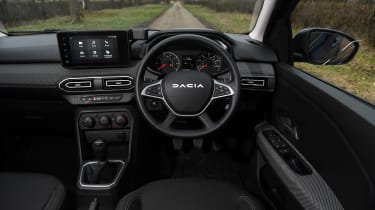
Dacia’s latest upgrades have brought the Sandero’s interior more in line with newer models, such as the fully electric Dacia Spring, but functionality remains firmly at the top of the agenda. We’re always pleased to see that proper physical switchgear remains in the Sandero, while there’s also a decent helping of useful technology – even if it isn’t quite as impressive as the kit you’ll find in a Clio.
Materials and build quality
While a plethora of hard plastics remind you of the Sandero’s budget-friendly price, it does all feel well put together. Going for Expression trim or above adds softer cabin materials into the mix, including tasteful cloth sections across the dash, cushioned armrests, and a soft-touch, leather-look steering wheel cover. All of these help create a more sophisticated atmosphere.
Infotainment, sat-nav and stereo
Entry-level Essential and mid-range Expression Sandero models come with analogue dials for the driver’s instrument cluster, while the range-topping Journey gets a digital driver’s display that’s similar to the one you’ll find in a Duster. The latter sounds fancy, but this display is one of the more simplistic units on the market, with all the essential data and is easy enough to read, but customisation is limited.
While the entry-level Essential only makes do with a smartphone holder and a dedicated app, the Expression and Journey trims are fitted with a 10-inch central touchscreen. This runs the same software as you’ll find in several other Dacia models, and we’ve found this to be a bit hit-and-miss during our testing. While it’s reasonably stylish and colourful, the system’s functionality is nowhere near as slick as the Google-based software that’s fitted to the Renault line-up. Apple CarPlay and Android Auto are included, but you’ll need a cable.
“We’re not sure about the white plastic finishes to the air vents; while they match the white exterior add-ons, they look a little unfinished.” - Dean Gibson, senior road test editor.
Boot space & practicality
Pros |
|
Cons |
|
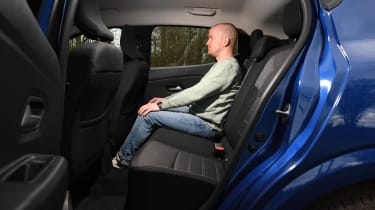
If you have a city car budget but need supermini space, the Dacia Sandero could well be the answer to your motoring needs. There’s plenty of room up front, while passengers in the rear won’t feel short-changed with increased leg room compared to its predecessor. The door bins feel a little flimsy, but are nicely shaped. However, the two cup holders between the front seats are very shallow.
Dimensions and size
The Sandero is a little bit longer than a Renault Clio, but just a touch shorter than a Skoda Fabia. It is wider than both and a bit taller, too. The pseudo-SUV Sandero Stepway has the same footprint as the regular Sandero, but is 39mm taller owning to its raised ride height.
| Dimensions comparison | |||
| Model | Dacia Sandero | Renault Clio | Skoda Fabia |
| Length | 4,102mm | 4,053mm | 4,108mm |
| Width | 1,853mm (2,012mm inc mirrors) | 1,798mm | 1,780mm |
| Height | 1,496mm | 1,440mm | 1,459mm |
| Wheelbase | 2,604mm | 2,583mm | 2,564mm |
| Boot space | 410-1,455 litres | 391-1,069 litres (301-1,006 litres E-Tech) | 380-1,190 litres |
Seats & passenger space
There's a good amount of head and legroom for both passengers up front, while the height and reach-adjustable steering wheel helps the driver find a comfortable position, as does the height-adjustable driver’s seat.
There’s plenty of room for passengers in the rear seats of the latest Sandero, while head and legroom shouldn’t be an issue even for adult occupants. The doors open up wide, which makes entry and egress easier, and will help when securing a child seat.
We measured the rear seat area ourselves when we pitted the Dacia Sandero against the previous-generation Citroen C3 in our twin test. We found that the Sandero just about excelled in terms of knee, head, and elbow room, although not by an amount too noticeable to the naked eye.
Boot space
Boot capacity for the Sandero stands at 410 litres in this latest version. That means it offers an extra 19 litres of cargo space compared to the 391-litre Renault Clio (301-litres in E-Tech hybrid form).
Folding down the Sandero’s 40:60 split rear seats leaves a noticeable step in the load space, but opens up a practical 1,455 litres of luggage space.
“The Sandero’s central seat is soft, but is fairly narrow and perched quite high, so it’s only going to be acceptable for short trips.” - Dean Gibson, senior road test editor.
Reliability & safety
Pros |
|
Cons |
|
Customer feedback from our Driver Power owner satisfaction survey hasn’t always shown Dacia in the best light, and unfortunately, this story continues with the latest best manufacturer rankings. Dacia landed a rather poor 29th-place finish out of 31 brands here, meaning it fell a long way short of nearly every single rival except BYD (30th) and MG (31st).
There’s more grim reading from Euro NCAP, too, with the latest Sandero only scoring two stars (out of five) when tested in 2021.
The crash test body awarded decent marks for both adult and child occupant safety, with 70 and 72 per cent, respectively, which would have led to a four-star overall rating. However, the organisation criticised the Sandero’s autonomous emergency braking (AEB) system, which isn’t able to detect cyclists and pedestrians to help avoid a potential collision, while a lack of a lane-keeping assist function and Active Bonnet technology also counted against it.
Dacia has been working to improve safety with a series of updates. Every Sandero now gets a more advanced AEB system, a lane-keeping assist function, a traffic sign recognition system to pick up speed limit changes, and a driver attention monitoring system. All of these alterations will hopefully benefit its safety score if retested.
| Euro NCAP safety ratings | |
| Euro NCAP safety rating | Two stars (2021) |
| Adult occupant protection | 70% |
| Child occupant protection | 72% |
| Vulnerable road user protection | 41% |
| Safety assist | 42% |
Buying and owning
- Best buy: Dacia Sandero TCe 100 Expression
Considering the Sandero’s incredibly affordable starting price, upgrading to the mid-level Expression trim really doesn’t add too much to the overall cost, yet it brings a number of benefits (key of which is the touchscreen infotainment system). While the priciest Journey trim adds even more goodies into the mix, we feel the Expression should meet the needs of most supermini buyers and is the best value for money trim level in the Sanero range.
Dacia Sandero alternatives
It’s really only the smaller Kia Picanto that comes close to the Dacia Sandero in terms of starting price, because the MG3 and Citroen C3 are both significantly more expensive. If budget constraints aren’t a major concern, you could always consider the stylish Renault Clio, with which the Sandero shares its underpinnings. Elsewhere, the Vauxhall Corsa, Peugeot 208 and Toyota Yaris are worth considering, with the Toyota also having an identical twin, the Mazda 2 Hybrid.
If you’d rather go down the electric car route, the Renault 5, BYD Dolphin, Peugeot E-208, Vauxhall Corsa Electric and Citroen e-C3 are all appealing candidates. There’s also the Dacia Spring, which is the band’s only EV offering at the moment in the UK, but is a smaller city car rather than a supermini like the Sandero.
Frequently Asked Questions
The Dacia Sandero offers almost unbeatable value for money thanks to its thrifty engine, low servicing costs, decent tech and roomy boot. It’s certainly not the plushest supermini on the market, nor is it the quickest, but virtually no rival can beat it on price
Deals on the Sandero and alternatives