SEAT Ibiza review
It’s pretty old now but the SEAT Ibiza is still a solid competitor in the supermini class


Our opinion on the SEAT Ibiza
SEAT’s brand image has long been a mix of Volkswagen-like build quality and technology with some Spanish flair. In 2025, to help set it apart from its Volkswagen parent and sister firm Skoda, SEAT took on a more entry-level role within the group.
Being SEAT’s smallest and cheapest car, the Ibiza is probably the best model in the range at exemplifying the brand’s new position.
It’s feeling its age in some areas, but given the way the market has shifted, its lack of technology actually helps give it some ergonomic appeal. But we'd like to see mild-hybrid technology introduced to the Ibiza to improve its already decent efficiency and the (admittedly less likely) chances of a return of a hot hatch.
About the SEAT Ibiza
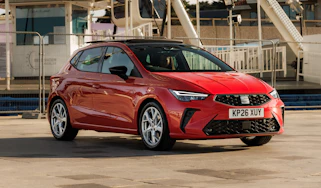
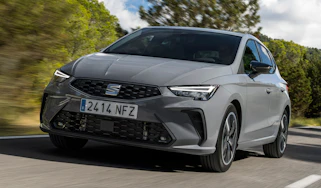
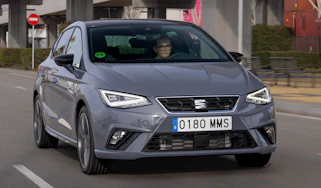
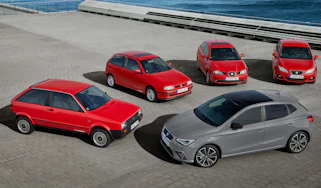
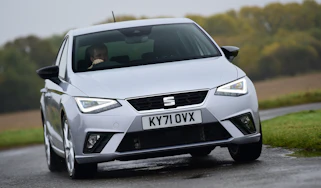
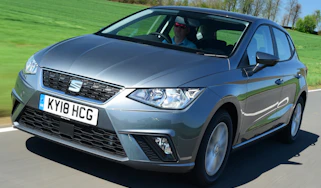
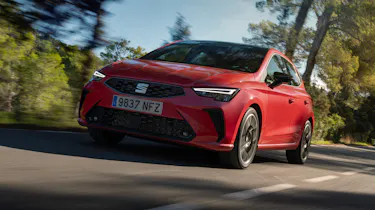
The current, fifth-generation Ibiza has been around since 2017 before getting what was thought to be a mid-life facelift in 2021. However SEAT decided to prolong the life of the Ibiza by giving it a second facelift in 2025 with a slightly revised exterior look and a shuffle of trim levels and equipment.
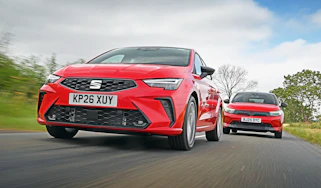
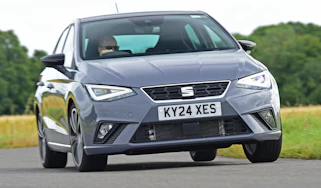
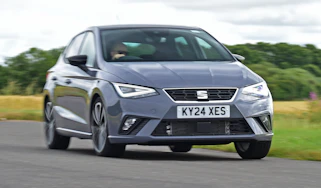
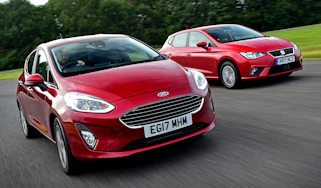
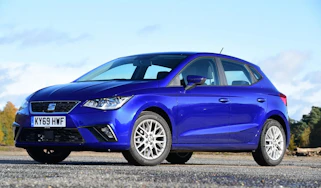
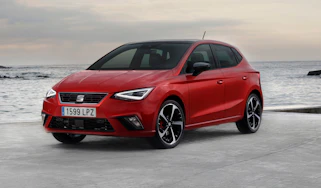
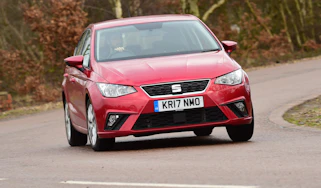
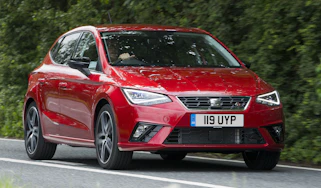
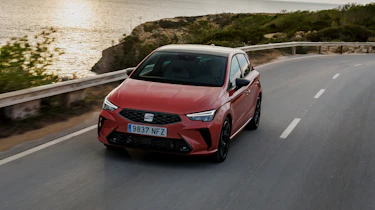
As with past models, the Ibiza is a sporty choice in the supermini class, even if you don't choose the racy FR or FR Sport models. The handling is sharp, but not at the expense of comfort, while the car’s dimensions help it to be one of the more spacious cars in its class, too.
SEAT Ibiza prices and latest deals
All SEAT Ibizas are five-door hatchbacks, with prices starting from a shade over £20,000 – around the same as its Skoda Fabia sibling but roughly £1,000 less than the Volkswagen Polo.
Used - available now

2015 Seat
Ibiza
85,868 milesManualPetrol1.2L
Cash £3,950
2023 Seat
Ibiza
38,154 milesManualPetrol1.0L
Cash £12,197
2024 Seat
Ibiza
18,538 milesManualPetrol1.0L
Cash £14,799
2024 Seat
Ibiza
18,508 milesManualPetrol1.0L
Cash £13,695SE trim is the entry point to the Ibiza range, while SE Technology costs an extra £1,000. The sportier-looking FR First Edition comes in at just over £24,000 and the range-topping FR Sport just over £25,000.
Tempted by the SEAT Ibiza? Our Find a Car service is here to help to configure your ideal SEAT Ibiza and get top deals from our dealership network. You can also take a look at the best Ibiza leasing deals or browse loads of excellent used Ibiza models. Need to sell your car? Be sure to visit the Sell My Car page too.
Performance & driving experience
Pros |
|
Cons |
|
SEAT decided not to include a rapid Cupra Ibiza hot hatchback with the current-generation model, and while a punchy 1.5 TSI turbo petrol engine was offered at launch, the current range now consists only of a 1.0-litre three-cylinder TSI petrol engine with either 94bhp or 114bhp – the latter rising from the 108bhp offered in earlier models. The sluggish, non-turbocharged 79bhp 1.0 MPI is no longer available from new.
All cars are front-wheel drive, with the lower-powered model featuring a five-speed manual gearbox. The more powerful TSI has a slick-shifting seven-speed DSG automatic and the option of a six-speed 'box on FR models.
| Model | Power | 0-62mph | Top speed |
| Ibiza 1.0 TSI 95PS | 94bhp | 11 seconds | 118mph |
| Ibiza 1.0 TSI 115PS | 114bhp | 9.9 seconds | 124mph |
| Ibiza 1.0 TSI DSG 115PS | 114bhp | 9.9 seconds | 124mph |
Performance, 0-60mph acceleration and top speed
Whichever Ibiza you choose, you'll notice a characteristic three-cylinder thrum under acceleration, although at cruising speeds the engine is almost entirely inaudible and smooth. The 114bhp TSI is a great all-rounder, helped by its 200Nm of torque available from 2,000rpm; it feels grown up (especially with the DSG) and best suited to motorway driving. Being only a second slower to 62mph, you don’t pay that much of a penalty for the less powerful engine and in day-to-day driving you won't notice the difference.
Town driving, visibility and parking
A wheelbase of 2,564mm results in a turning circle of 10.6 metres, which is relatively large for a supermini, though we had no issue guiding the around narrow streets in town – thanks in part to the quick steering. The steering wheel itself is also nicely tactile with a thin rim wrapped in perforated leather.
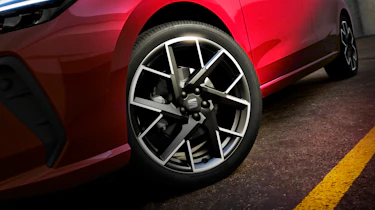
We noticed that the largest (18-inch) wheels have a tendency to crash into potholes thanks to their low-profile tyres, although speed bumps are better dealt with. You sit fairly upright in the Ibiza with the front window not too far away, resulting in decent visibility to the front. The raised belt line that gives the Ibiza a sporty exterior look means over-the-shoulder visibility is a little restricted at junctions.
Country road driving and handling
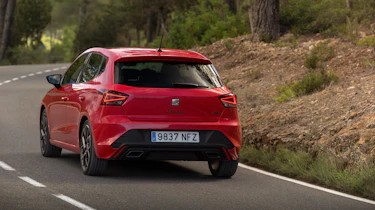
Handling is one of the Ibiza’s strong points. The steering doesn’t provide a tremendous amount of feedback, but you do get plenty of front-end grip, and there's also very little body roll, helped somewhat by the car’s relatively light 1,144kg kerbweight. FR models get a re-tuned suspension with a slightly lowered ride height and stiffer springs, and while this doesn’t exactly result in hot (or even warm) hatch levels of engagement, there is a noticeable difference compared with lower Ibiza trim levels.
The brakes are strong enough and the well calibrated pedal feel inspires confidence. If you want a choice of drive modes, you have to opt for the FR trim; this offers ‘Sport’, ‘Normal’ and ‘Eco’, but we only found slight differences in steering weight and throttle response between them. While the Ibiza retains the option of a manual gearbox, its shift is fairly notchy and it’s not one of our favourites.
Motorway driving and long-distance comfort
Despite its image as a sportier sibling of the Volkswagen Polo, the Ibiza isn't uncomfortable, although models with bigger wheels do suffer from a touch more road noise and vibration. The firmer suspension of FR cars didn’t particularly upset the ride quality of our test car, but the wheel size does change the level of comfort. They range in size from 16 to 18 inches, and the big wheels look great, but if you prioritise comfort go for an edition with smaller rims; sadly, there’s no choice of wheels for each trim level.
High-speed refinement is about on a par with the Polo or any other supermini for that matter, especially so in the seven-speed DSG car. Wind and road noise is dampened pretty effectively, too.
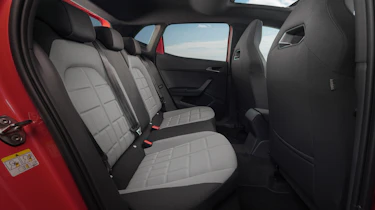
“For the 2026 Ibiza, bucket seats now come standard on FR cars and they’re superbly supportive, though the thick shoulder area does block some visibility for rear passengers, making it feel a little more cramped back there.” - Alastair Crooks, senior news reporter.
MPG & running costs
Pros |
|
Cons |
|
The SEAT Ibiza 1.0 TSI petrol engine offers respectable fuel economy in all of its forms thanks to a standard-fit stop-start system and a range of other efficiency measures.
Maximum economy (on the combined cycle) for the TSI 94bhp version is quoted at 56.5mpg, with the most powerful 114bhp car returning 52.3mpg in manual form and 51.4mpg when paired with the seven-speed DSG auto. However, all of these figures will be dependent on spec, because fitting larger wheels and accessories, or going for a higher trim with more kit (thus adding weight), will have a negative impact on economy.
Unlike the Renault Clio, Toyota Yaris, Honda Jazz, MG3 and Suzuki Swift ranges, the SEAT Ibiza line-up includes no hybrid or even mild-hybrid version. While that doesn’t result in high fuel consumption for the lightweight Ibiza, its CO2 emissions are less impressive. The Ibiza ranges from 115g/km for the 1.0-litre TSI SE version, to 126g/km for the 114bhp TSI variant in FR Sport guise.
| Model | MPG | CO2 | Insurance group |
| Ibiza 1.0 TSI 95PS | 56.5mpg | 115g/km | 11 |
| Ibiza 1.0 TSI DSG 115PS FR Sport | 50.4mpg | 126g/km | 16 |
| Ibiza 1.0 TSI 115PS DSG SE Technology | 53.3mpg | 120g/km | 14 |
Insurance groups
The SEAT Ibiza is on par with the Renault Clio and starts in insurance group 11, going up to group 15 for the more powerful 1.0-litre engine. Despite the Ibiza being the cheapest of the three, the Volkswagen Polo and Skoda Fabia are also available with the lesser-powered 1.0-litre non-turbo engine, which lowers their respective insurance groups to three and four.
Tax
Despite not being a heavy emitter of CO2, the SEAT Ibiza is the best option in the supermini class for those looking for VED road tax or Benefit-in-Kind company car tax breaks. No matter which version of the Ibiza you get, the first tax payment when you register the car will be £440. This is followed by annual VED of £195.
Depreciation
Residual values for the latest, facelifted SEAT Ibiza are between 50 to 53 per cent after three years and 36,000 miles, while the figures for the previous Ibiza were between 46 and 51 per cent. The Ibiza that holds its value best is also the cheapest: the 1.0-litre TSI SE.
In comparison, the Skoda Fabia has similar expected resale values between 46 to 54 per cent, while the Toyota Yaris is expected to maintain between 47 to 54 per cent over the same period.
Interior, design & technology
Pros |
|
Cons |
|
With SE being the entry point to the range, there is no really basic model in the line-up. All SEAT Ibizas come with:
- Alloy wheels
- Touchscreen DAB radio with smartphone connectivity
- Metallic paint
- 8.25-inch touchscreen
- 8-inch driver’s display
Interior and dashboard design
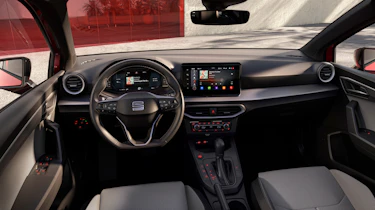
The neat exterior styling continues inside with more sharp lines around the dash and a decent amount of shoulder and headroom in the front and back for a supermini.
It’s a little bland up front and we found the multi-function steering wheel (controlling audio and cruise control) a little fiddly to use, but the Ibiza’s relatively aged interior means there are physical dials for the air-con system rather than annoying touch-sensitive sliders you get on more modern VW Group cars.
Materials and build quality
The facelifted Ibiza brings a revised interior and new levels of tech to help lift its appeal. In the driver's seat, you'll notice new soft-touch materials across the dash and extra chrome trim, which is just as well because the Ibiza previously had far too much hard scratchy plastic. A leather-covered steering wheel and black headlining also feature on higher-spec cars.
Infotainment, sat-nav and stereo
In our opinion, the middle-rung trim levels with the larger touchscreen and smaller driver’s display are the easiest to use. The smaller driver’s screen always has a rev counter and speedometer in clear view and the extra space of the touchscreen results in a broader sat-nav layout.
The smaller touchscreen gets physical dials for the volume and shortcuts next to the unit, but the larger screen features a couple of touch-sensitive shortcuts running down the left-hand side of the display. These include the volume controls, but there is also a physical wheel on the steering wheel itself. Boot-up times are slow, but once it’s loaded, the system responds to commands quickly. Some areas, like the car’s set-up menu, aren't particularly intuitive, though.
If you found old wireless smartphone chargers slow to top up your phone, then the latest Ibiza’s unit (three times more powerful than before with an integrated cooling fan) will be good news.
Boot space & practicality
Pros |
|
Cons |
|
The SEAT Ibiza’s dinky dimensions mean it's easy to park in town, but it’s also one of the more practical and versatile cars in the supermini class.
Dimensions and size
Unlike the fourth-generation car, the current Ibiza is available only as a five-door. Despite this, it’s actually a fraction (2mm) shorter than the old model. However the newer MQB A0 platform means the wheelbase has grown by 95mm, so there's much more space inside – SEAT says rear legroom is improved by 35mm. More importantly, the car has got much wider – by 85mm – and it sits ever-so-slightly lower, giving it a sportier look on the road.
Dimensions comparison | |||
| Model | SEAT Ibiza | Volkswagen Polo | Honda Jazz |
| Length | 4,059mm | 4,074mm | 4,089mm |
| Width | 1,780mm | 1,751mm | 1,694mm |
| Height | 1,447mm | 1,451mm | 1,526mm |
| Wheelbase | 2,564mm | 2,560mm | 2,517mm |
| Boot space | 335-1,165 litres | 351-1,125 litres | 304-1,205 litres |
Seats & passenger space
Three adults across the back will be tight, but children will be fine. Access to the rear seats is good, and the view out is decent enough, too; even without a panoramic roof, the car feels light and airy. While its Polo sibling gets three Isofix mounting points, the Ibiza makes do with just two on the outer rear seats.
Boot space
To open the boot, you have to flip the SEAT badge on the tailgate, which helps keep the rear neat and tidy. With a 355-litre boot capacity, the Ibiza is one of the more spacious superminis. The Skoda Fabia offers 380 litres, while the pure-petrol version of the Renault Clio boasts 391 litres, but the SEAT will take more luggage than the Volkswagen Polo (351 litres), Toyota Yaris (286 litres) and MG3 (293 litres)
The rear seats will also split and fold 60:40 to increase the luggage space to 823 litres. A two-position boot floor is offered, and this can either set the floor level with the sill for loading, or drop lower for maximum capacity. There are no complaints about access to the luggage space, either – the tailgate swings high up out of the way.
Reliability & safety
Pros |
|
Cons |
|
SEAT has had a mixed time in our Driver Power customer satisfaction survey. Over the years, the maker has never been out of the bottom half of the manufacturer ranking, although a 15th-place finish out of 30 brands in the 2021 Driver Power poll of best car manufacturers was more encouraging. However, results in 2022 saw SEAT slip back to 17th spot, with a lowly 23rd position achieved in 2023 before back-to-back 24th-place finishes in 2024 and 2025. Still, that’s higher than Volkswagen and Cupra managed in 2025.
The SEAT Ibiza is a safe place to be, with every model featuring an autonomous emergency braking function, lane-keeping assist and a tiredness-recognition system. SEAT used to offer two individual safety packs at extra cost, but now adaptive cruise control, high-beam assist, a road-sign display and lane-keeping system with traffic-jam assist are included as part of the various trim levels.
Euro NCAP awarded the Ibiza a five-star safety rating in 2022. This included an 83 per cent score for adult occupant protection and 82 per cent for child passenger safety.
As with rivals and other members of the VW Group, any new SEAT is covered by a three-year manufacturer warranty with a 60,000-mile limit. This is very average for the class, and well behind the five and seven-year warranties offered by the likes of Hyundai and Kia. SEAT does offer the option of an extended warranty, however.
| Euro NCAP safety ratings | |
| Euro NCAP safety rating | Five stars (2022) |
| Adult occupant protection | 83% |
| Child occupant protection | 82% |
| Vulnerable road user protection | 66% |
| Safety assist | 70% |
Buying and owning
- Best buy: SEAT Ibiza First Edition 1.0 TSI 115PS DSG
The First Edition makes the Ibiza look the part and comes with a generous and useful array of kit including heated sport front seats, a rear-view camera and larger touchscreen. It costs around £1,000 more for the DSG automatic with the more powerful engine, but that’s worth it because it’s a very smooth transmission that gives the Ibiza another layer of appeal.
SEAT Ibiza alternatives
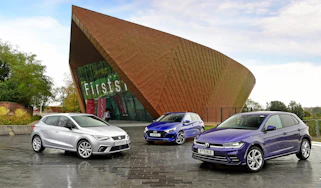
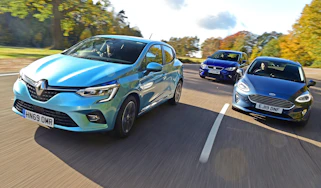
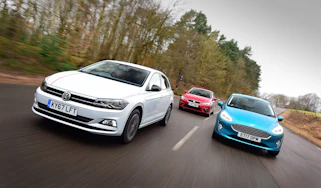
Within the VW Group there’s the Volkswagen Polo and Skoda Fabia to consider, while the Stellantis group can offer the Vauxhall Corsa and Peugeot 208. All are very worthy opponents, although if you need something fuel-efficient, then the hybrid Honda Jazz and Toyota Yaris are your best options.
Frequently Asked Questions
Yes, they are closely related - not only are they built on the same basic platform, they also have the same engines and can even include identical interior trim. And, don't forget about the Skoda Fabia which is also part of the same family.
Deals on the Ibiza and alternatives