Vauxhall Mokka X (2012-2019) review
High spec and eye-catching looks mean the Vauxhall Mokka X is only let down by a dull drive

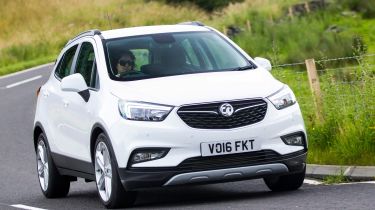

The Vauxhall Mokka X is an update of one of the popular Mokka crossover, and it builds on that car's strong points. What counts in favour of the Vauxhall is that it looks really good and has a good-quality interior that is packed with even more equipment in the update. Unlike many other cars in the class, it’s also available with four-wheel drive.
At launch, the Mokka X was let down by a range of old engines, yet things improved greatly with the arrival of a 1.4-litre turbo petrol unit and Vauxhall’s 1.6-litre CDTi ‘Whisper’ diesel.
All Mokka Xs come generously equipped, although we’d be tempted to splash out on the top-spec Elite model. We’d opt for one of the standard front-wheel drive models, too, because the 4x4 versions increase running costs without any real off-road benefit.
Sadly, while the Mokka X is perfectly fine to cruise around in – with a comfortable ride, strong economy and quiet new engines – the handling is lacklustre and the performance is middling at best. And to top it off, the newer Vauxhall Crossland X is nearly as big as the Mokka X, is more efficient and better to drive.
The Vauxhall Mokka X was the company's first small SUV, but now it's for sale in an expanded SUV range alongside the Crossland X and the larger Grandland X. It used to be called the Mokka, but the X was added when Vauxhall added the other two models to the range.
Used - available now

2025 Land Rover
Defender 110
15,848 milesAutomaticDiesel3.0L
Cash £55,800
2020 BMW
X2
72,213 milesAutomaticPetrol1.5L
Cash £12,956
2024 Toyota
RAV4
55,000 milesAutomaticPetrol2.5L
Cash £21,722
2020 Mercedes
AMG E 53 Saloon
55,300 milesAutomaticPetrol3.0L
Cash £28,250In terms of dimensions, the Mokka X is slightly longer and wider than the Crossland X, although its higher roof makes it look taller and narrower than its sibling. While they're similar in size, they couldn't be any more different under the skin, because the Mokka X is based on the platform of the Vauxhall Corsa, while the Crossland X shares running gear with the Peugeot 2008.
Vauxhall Mokka X alternatives
Rivals for the Mokka X include the Crossland X itself (although it does costs slightly less), plus the 2008, Renault Captur and Nissan Juke. These are the more established models in the class, but newer models such as the Citroen C3 Aircross, SEAT Arona, Kia Stonic and Hyundai Kona offer a more modern experience than the Mokka X delivers. That's because the Mokka X uses relatively old running gear, as it was first launched in 2012, with an update in 2016.
The Mokka X was offered in a variety of trims with a number of different engines. However, as of 2019, the model range had been pared down to Design Nav, Active and Elite trims. All cars are pretty well equipped, with cruise control, parking sensors, electric windows, folding mirrors, cruise control, high beam assist and a touchscreen infotainment system all included.
On top of that, Design Nav uses Vauxhall’s Intellilink sat nav and infotainment system, while top-spec Elite models add a heated steering wheel, privacy glass, sports seats and some upgraded trim. Vauxhall added Android Auto and Apple CarPlay as part of a 2016 facelift.
The engine range has also been pared down, with a single petrol and one diesel engine on offer. A 1.4T 140PS petrol is available, which is the perfromance model of the range, while the 1.6 CDTi Whisper Diesel is a 136PS unit. All cars are front-wheel drive with a six-speed manual gearbox, but unlike many small SUVs - Crossland X included - Vauxhall offers a 4x4 transmission on Elite models.
How much does the Vauxhall Mokka X cost?
Prices for the Mokka X start from just under £21,000 and rise to nearly £30,000, so it falls squarely between the Crossland X and Grandland X in terms of price.
Engines, performance and drive
The Mokka X’s relaxed nature is most evident when cornering. While the electrically assisted steering is quick and precise, there’s very little feedback through the wheel to make you feel connected with the road. Where a SEAT Arona grips hard, the Vauxhall’s tyres slip and the car starts to slide wide. That’s not our only criticism, either, because the Mokka X also suffers from a lot of body roll.
On the plus side, the soft suspension set-up delivers a supple ride, which combines with the refined engine and low levels of wind and road noise to make the car a decent long-distance cruiser.
Unfortunately, the Mokka X is less accomplished around town. While its controls are light and progressive, the thick A-pillars create large blind spots at junctions and roundabouts. The small rear window also limits visibility when reversing. At least standard front and rear parking sensors take some of the guesswork out of the parking process.
Traction and stability control are fitted as standard to the Vauxhall, as is Hill Start Assist – which prevents the car from rolling backwards on a slope – and Hill Descent Control – which allows it to drive down steep slopes at a controlled speed. You can have the car with four-wheel drive, but it’s not a proper off-roader.
Engines
A range of petrol and diesel engines were offered in the Mokka X, but this was pared down to just two motors by 2019, the 1.6 CDTi ‘Whisper’ diesel is a particular highlight. It offers plenty of torque, so overtaking on the motorway is easy, while the petrol engines are nice and quiet around town.
Even so, we’d only recommend looking at the 1.4 Turbo petrol model if you’ll be sticking to short trips. It comes with 138bhp at 4,900rpm and 200Nm from just 1,850rpm. That makes for a 0-62mph time of 9.3 seconds as a front-wheel-drive six-speed manual. Add the auto gearbox, and this grows to 10.1 seconds, but adding the 4x4 system doesn't affect the car's acceleration.
The 1.6 CDTi Whisper Diesel has 134bhp, and can accelerate from 0-62mph in 10.3 seconds.
MPG, CO2 and Running Costs
In the past, ther have been ecoFLEX versions of the Mokka X, but with changes to emissions testing and the latest WLTP test regime, these are no longer available. The most economical Vauxhall Mokka X is the 1.6 CDTi Whisper Diesel in front-wheel drive form with a manual gearbox. It returns 50.4mpg and 127g/km emissions.
Opting for four-wheel drive on the 1.6 CDTi pushes emissions up to 142g/km, while choosing the automatic bumps this up to 143g/km. Fuel economy for both is rated at 47.1mpg, so they will cost more to run on a daily basis.
The 1.4 Turbo returns 39.2mpg and emitting 147g/km in front-wheel drive guise. Add an auto box, and emissions rise to 157g/km, while adding the 4x4 system raises emissions to 162g/km. Fuel economy for these two is 37.2mpg and 36.7mpg respectively.
Insurance groups
There’s good news here, as all Mokka Xs sit in insurance groups 14. This means any version should prove to be cheap to insure compared to the alternatives.
Depreciation
The main concern for private buyers will be the Mokka X’s weak residuals. Our experts predict it will retain less than 40 per cent of its value after three years. Vauxhall hopes that the growing desirability of the crossover, and the reasonably strong sales of the Mokka X in the UK, will boost this figure in years to come, although the Crossland X could well have an impact on these values as well.
To get an accurate valuation on a specific model check out our free car valuation tool...
Interior, design and technology
The Mokka X’s eye-catching bodywork looks a lot like a pumped-up Corsa, which isn't much of a surprise considering they use the same basic running gear. As you’d expect, there’s tough-looking plastic body cladding and underbody skid plates, while the raised ride height completes the off-roader look.
Elsewhere, there's a bold chrome front grille that was updated in 2016 to look more like the latest Corsa and new Astra, large swept-back headlamps and muscular, pumped-up wheelarches. All models get at least 17-inch alloy wheels (with 18 and 19-inch rims available as options depending on which engine you choose), electrically folding door mirrors and all-round parking sensors.
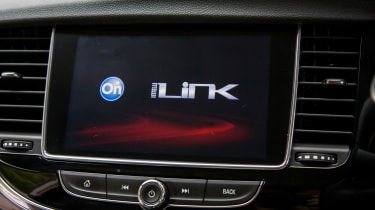
The Mokka X aims to rival premium-brand crossovers for quality and upmarket appeal inside, and does a decent job. There are plenty of soft-touch plastics and the finish is excellent. While the IntelliLink infotainment system may appear confusing at first, it all quickly becomes second nature. A slight problem is that the satin-finished switches soon show up finger marks.
Neat touches include the chrome on the instrument surrounds and the gloss-grey panel running across the attractively designed dash and into the door trims. There’s plenty of equipment, too, with Exclusiv models getting dual-zone climate control, LED headlights, an auto-dimming rear-view mirror and a tyre-pressure monitoring system.
Sat-nav, stereo and infotainment
All models come with a digital radio, Bluetooth, steering wheel audio controls and at least a CD 450 six-speaker sound system as standard. Even that base stereo is compatible with MP3 files.
Vauxhall’s neat IntelliLink system adds a seven-inch colour touchscreen monitor built into the dash. The even more impressive Navi 950 IntelliLink package, with street-level mapping, is an option on most cars, but it’s a standard fit on the Elite – which is why this is our preferred trim in the Mokka X range. It represents fantastic value for money.
Practicality, comfort and boot space
Up against family-sized rivals like the Qashqai, the Vauxhall manages to just about stand its ground in terms of interior space and practicality. Its exterior dimensions are smaller, but the Mokka X is larger than most of its supermini crossover rivals. There are plenty of cabin cubby holes and storage bins to hold the associated clobber of a family of four – both the Design Nav and Elite cars come with a front passenger’s under-seat storage tray – while the optional integrated bike carrier that pops out of the rear bumper is a nice touch.
There’s also a 230V three-pin power socket behind the front seats, which shows some thought from the designers for children, who can simply plug in a device and stay entertained on long journeys.
Dimensions and size
Considering it’s a crossover, the Mokka X is reasonably compact in terms of exterior dimensions. It is slightly under 4.3 metres long and 1.8 metres wide, while the kerbweight is acceptable, at around 1,500kg for 2WD models. That’s not bad for a car that is in excess of 1.6 metres tall.
Leg room, head room & passenger space
Although the Mokka X is based on a platform shared with the Corsa hatchback, it does offer a lot more interior space than most supermini-based crossovers. The Vauxhall is almost comparable in size to a Qashqai, and there’s just about enough room to seat five adults, and there are no complaints about headroom. Legroom is a little tighter if taller people sit in the rear, but overall passenger space is far better than in the likes of the Juke.
Boot space
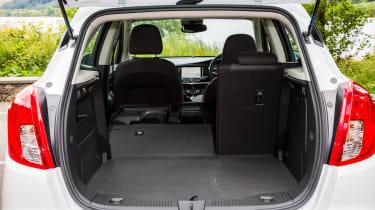
The Mokka X’s boot is one of the biggest in its class. Its 356-litre luggage area beats the Juke and MINI Countryman, which hold 251 and 350 litres respectively.
Larger rivals like the Qashqai, however, are priced comparatively with the Mokka X and offer 416 and 410 litres respectively. At least you can expand the Mokka X’s boot to 1,372 litres by folding the rear seats down. The wide and low opening makes loading luggage simple, and flipping the seat bases over is easy, too, thanks to some handy nylon tabs.
Towing
The Vauxhall Mokka X has a maximum braked trailer towing capacity of 1,200kg, whether you choose the petrol or diesel engine, pick the manual or auto gearbox, or even choose between front or 4x4 models.
Reliability and Safety
Euro NCAP gave the Mokka crossover a five-star crash test rating back in 2012, which included a 100 per cent safety assist score. However, it's worth noting that the Euro NCAP test has been made a lot tougher in the intervening years, so the Mokka's score isn't comparable with newer rivals.
Still, six airbags, stability control and adaptive brake lights are standard, while the cruise control system features a speed limiter function. For £around 750, buyers can add the Forward Camera Pack, which brings lane departure warning, a forward collision warning system and traffic sign recognition.
Vauxhall doesn’t have the best reputation for reliability and quality, but in recent years, its cars have clawed their way up the results tables in our Driver Power satisfaction surveys. The Mk1 Mokka X, for example, finished 25th out of the 75 cars ranked in our 2018 Driver Power survey, above that of the Audi Q2 but below the Nissan Juke.
Vauxhall itself did not fare so well, as it came 22nd out of 26 manufacturers, with only Fiat, Renault, Citroen and Dacia coming in below it.
Warranty
Vauxhall briefly supplied a ‘lifetime’ warranty on UK cars, which was actually limited to 100,000 miles, but it has since rescinded that offer and now provides a standard 60,000-mile/three-year warranty. That can, for varying fees, be extended on cars less than seven years old and with fewer than 70,000 miles on the clock, but it is still limited to 100,000 miles overall.
The Vauxhall warranty can be transferred as part of a private sale of the car, for a fee of around £25.
Servicing
A range of fixed-price servicing packages is offered on the Mokka X. There are also service clubs available through Vauxhall, which see a reduction of up to 25 per cent in the costs of labour and parts as well as 50 per cent off MoTs. The brand recommends a service interval mileage of 20,000 or 12 months on the Mokka X.