Toyota Verso (2009-2018) review
The Toyota Verso isn’t the most exciting MPV, but it’s a practical and trustworthy alternative to the Ford C-Max



The Toyota Verso isn’t the newest kid on the people carrier block, and is all too easily overlooked by family-focused buyers looking for something a bit more exciting than practical and reliable transport. There’s no doubt there are plenty of more eye-catching options that have arrived since Toyota first offered the Verso for sale back in 2009, and the model’s last significant updates were a facelift in 2012, and the introduction of a new 1.6-litre diesel option – sourced from BMW – in 2014. In other words, the Verso is getting long in the tooth.
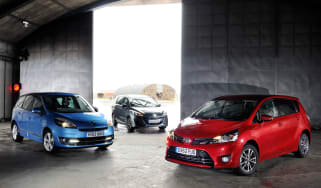
Still, the Toyota Verso dimensions put it bang in the middle of the compact people carrier sector, and like many of its rivals it comes with the choice of five or seven seats. The roster of rivals includes models like the BMW 2 Series Gran Tourer, Citroen C4 Picasso, Ford C-MAX, Kia Carens and Renault Scenic – or ‘Grand’ versions of many of the above if seven seaters are your thing.
While the latest Verso updates were some time ago, they’ve done a reasonable job of keeping the model competitive. The mid-life facelift saw the adoption of the new family front end from the Auris hatchback, as well as tweaks to steering and suspension. Aside from the diesel, you can choose 1.6 and 1.8-litre petrol engines, although the latter is only available with automatic transmission.
Used - available now

2020 BMW
2 Series Gran Tourer
59,121 milesAutomaticPetrol1.5L
Cash £12,880
2022 MG
HS
42,916 milesManualPetrol1.5L
Cash £12,880
2020 Volkswagen
Golf
61,778 milesManualDiesel1.6L
Cash £12,490
2022 Mercedes
GLA
32,179 milesAutomaticPetrol1.3L
Cash £24,490Nowadays the Toyota Verso is available in only two model grades, called the Icon and the Design. The Icon entry model is attractively specified with 16-inch alloys, reversing camera, Smart Entry and push-button start, a 7-inch touchscreen with DAB and Bluetooth, cruise control, and dual-zone aircon. The Design looks even better value with 17-inch alloys, partial leather seats, panoramic sunroof and sat-nav for less than a £1500 premium over the Icon.
Recent price reductions reflect the model’s age, but residuals remain relatively strong and as a result Toyota Verso lease options look pretty attractive to fleet buyers, while the five-year warranty and good safety scores are reassuring for families.
It's easy to forget about the trusty Toyota Verso nowadays, with the increasingly newer and shinier competition in the MPV sector. It's available in five or seven-seat layout, and goes up against cars such as the Citroen C4 Spacetourer, Renault Scenic and Ford C-Max.
The Verso was given a mid-life makeover in 2012, and a new BMW-sourced 1.6-litre diesel engine in 2014, both aimed at keeping up with the best in the class. The changes saw the front-end design from the current Auris grafted on, as well as suspension, steering and engine revisions, while buyers can also get more kit for less money.
The range is limited to two naturally aspirated petrols (a 1.6-litre unit and an auto-only 1.8) and the diesel, capable of 62.8mpg and 119g/km of CO2. Rivals such as the Ford C-Max offer more in terms of choice in that regard.
Strong residual values across the range and low company car tax make the Verso an attractive choice for fleet buyers, as well as growing families and like all Toyotas it comes with a competitive 100,000 mile five-year manufacturer warranty as standard.
Engines, performance and drive
You wouldn’t expect a spacious MPV to deliver a particularly entertaining drive and predictably this is the case with the Verso. The new 1.6-litre diesel is the pick of the range for overall drivability, thanks to its relatively smooth power delivery. It comes with a precise six-speed manual gearbox, but the 1.8-litre petrol is hampered by a CVT transmission and feels quite slow and strained as a result.
The 1.6-litre petrol requires revs and feels gutless, and makes up a very small slice of sales as a result, even if it is the cheapest. If you go for the 1.6-litre BMW diesel engine, Toyota has also fitted new springs and tweak the engine mounts to help deliver a smoother ride. By making the Verso stiffer than its predecessor, Toyota has struck a better balance between comfort and dynamic ability. Yet even with the updates, the Verso still doesn't handle particularly well, the handling is devoid of any feel and is too light at higher speeds.
The Verso is still no match for the C-MAX when it comes to handling, but if ease of driving is a priority it should suffice, and it's acceptable enough for a family wagon. Plus, the high driving position and good visibility are big plus points. The new diesel engine is not as refined or smooth as the Vauxhall Zafira Tourer or new C4 Grand Picasso, and both cars are cleaner too.
MPG, CO2 and Running Costs
The 1.6-litre diesel is also the most efficient engine in the range, with Toyota claiming it'll return 62.8mpg and emit 119g/km. While the figures are an improvement over the 2.0-litre diesel which it replaced, the smaller and cleaner diesel engine still can't match rivals like the 1.6 TDCi Ford Grand C-MAX and is way off the Zafira Tourer - which dips below 100g/km on some models, and has more power.
The two petrol Verso models are equally average, with the 1.6-litre managing 42.8mpg and 154g/km of CO2. This stacks up well against the 1.4-litre VW Touran’s 41.5mpg and 159g/km, but not the 1.0-litre three-cylinder EcoBoost engine from Ford. Also in the Verso’s favour are its low company car tax ratings and strong residual values - it should hold onto around 42 per cent of its list price after three years - which is considerably better than MPV rivals like the Renault Grand Scenic. Buyers can also choose the Toyota Access system, which offers a guaranteed buyback price and fixed-price servicing deals.
Interior, design and technology
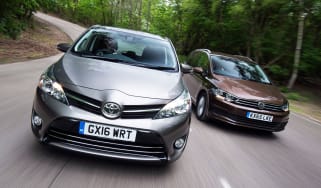
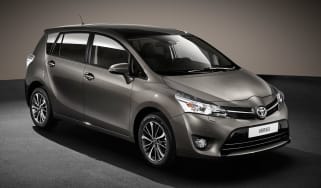
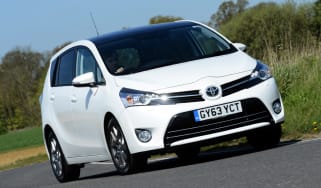
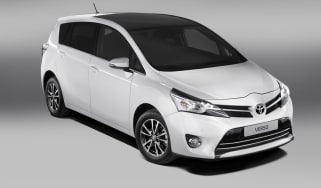
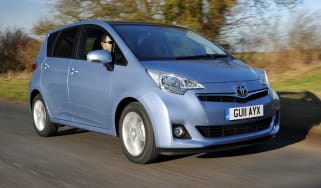
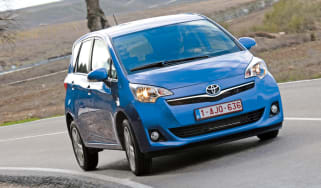
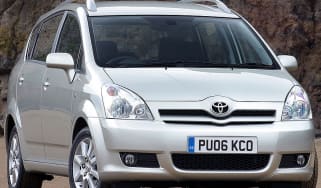
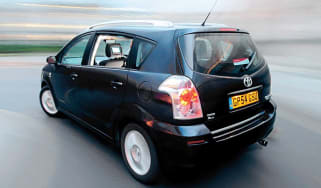
The Toyota Verso was facelifted in 2013 with Toyota’s ‘Keen Look’ design language that debuted on the new Auris. The uninspiring grille and headlights of the old car were replaced by an all-new front-end design, with LED headlamps, a smart new grille and front bumper. The only changes from the side are the smaller, more aerodynamic mirrors that help to improve fuel economy, while at the rear there’s a new bumper. However, it's stil a pretty uninspiring design, particularly when compared to the C4 Picasso
Interior changes are limited with a new gearknob and updated infotainment systemm but Toyota hasn't taken any steps to making the cabin feel a bit more upmarket. A lot of the materials feel a bit downmarket and the dash design is quite bare. Next to several rivals the Verso looks and feels rather low-rent. However, the switchgear is sturdy and should stand up to the rough and tumble of family life without any trouble.
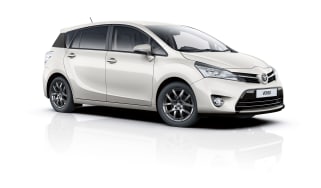
At the start of 2014 Toyota added a new 'Trend' trim level, which includes striking grey 17-inch alloy wheels, a clearer, easier to use touchscreen and new seat trims across the line-up. in 2015 a top-spec 'Trend Plus' trim was added which brought along niceteis such as a rear seat DVD entertainment system to keep the kids happy.
Practicality, comfort and boot space
The entry-level Verso Active model is available with a choice of five or seven seats, but all other versions come with seven seats as standard. Thanks to Toyota’s Easy Flat system, there are a total of 32 configurations possible. The second row of three individual seats is built to slide back and forwards, allowing for a larger boot or more legroom, while the rearmost pair of seats can be lowered with a pull of a lever and fold flat into the floor.
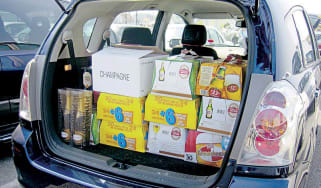
The Verso is one of the smallest seven-seat MPVs on the market and while that makes it easier to drive around town, it means passenger space inside is significantly reduced. With all the seats in place there's 155 litres of luggage space and only 440 litres with the two rearmost seats folded. The Citroen Grand C4 Picasso dwarfs the Toyota’s offering with a 632-litre boot. The wheelarches on the Verso also intrude into the boot space slightly, but the seats fold easily and leave a completely flat floor. While the Verso’s third row seats are only suitable for children, the legroom in the second row is much better.
There’s reasonable storage up front, too, with a pair of gloveboxes and a large centre console bin. However the door pockets are really narrow, and although the double level glovebox is a nice idea in theory, in practice it's only big enough to carry really small items - and the same it true of the small slots either side of the gearknob.
Reliability and Safety
Toyota performs consistently well in the Driver Power reliability survey and it finished an impressive ninth overall in the 2013 results. The Verso shares its engine range with the Auris, although you have to go for the Prius+ if you want a hybrid, but the standard units have been tried and tested for many years. Plus, every Toyota comes with a five-year warranty, which should cover you in the event that anything goes wrong.
The pre-facelift car received a full five-star crash test rating from Euro NCAP when it was first tested in 2010, with a score of 89 per cent for adult occupant protection and 86 per cent for safety assist. This puts it on a par with newer rivals like the Vauxhall Zafira Tourer, although the NCAP testing is now more stringent which should mean . Electronic stability control and ABS are fitted as standard, along with driver, passenger and curtain airbags.