Best automatic cars to buy 2026
The best automatic cars are slick-shifting, relaxing to drive and often surprisingly fun

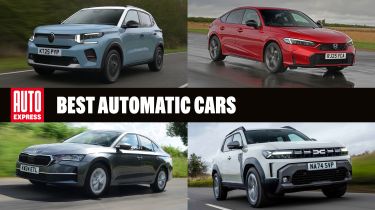
The number of new cars with manual gearboxes has been in sharp decline for a while. It’s reached the point where the vast majority of new cars on sale are automatics of one form or another. This level of choice makes compiling a list of the best automatic cars a challenge but it’s one our expert road testers are happy to accept.
We’ve driven and tested every automatic car currently on sale in the UK and evaluated each gearbox on crucial criteria such as fuel economy, refinement, usability and performance. Because electric cars are all automatic by default but don’t have a gearbox in the traditional sense, this list focuses on combustion-powered cars with automatic gearboxes - be they torque converters, dual-clutch transmissions or CVTs. If you’re interested in an EV, be sure to also give our best electric cars page a read for our top electric recommendations.
Compare the best automatic cars to buy
| Rank | Car | Prices from |
| 1 | BMW 3 Series | £42,000 |
| 2 | Porsche 911 | £103,700 |
| 3 | Citroen C3 Hybrid | £19,000 |
| 4 | Skoda Octavia | £28,500 |
| 5 | Mercedes E-Class | £57,200 |
| 6 | MG3 Hybrid+ | £17,500 |
| 7 | Dacia Duster Hybrid | £25,100 |
| 8 | Renault Clio E-Tech Hybrid | £21,800 |
| 9 | Honda Civic | £34,300 |
| 10 | Toyota C-HR | £31,700 |
Keep reading to find the top 10 best automatic cars you can buy in the UK right now. You can also click the links in the table above to jump to a specific model. Let’s get started
1. BMW 3 Series
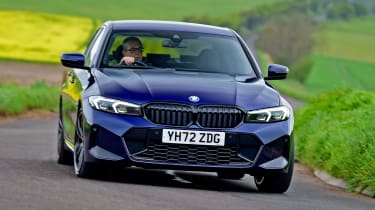
This long-standing compact executive car favourite is still a superb all-rounder
- Price from £42,000
Pros |
Cons |
|
|
BMW appears to be trading on wacky, controversial styling as of late, but the latest BMW 3 Series remains resolutely sensible – and brilliant.
Automatic is now standard in the 3 Series, but it doesn’t take away from the level of driver engagement on offer in this compact executive saloon. The eight-speed transmission is refined and preempts your driving exceptionally well, smoothly shifting into the right gear when you need it to. Punchy six-cylinder engines sit at the top of the range – their hushed, unstressed character is a great match for the gearbox, but even the four-cylinder diesel engine in the 320d is relatively quiet and potent enough.
The 3 Series can be impressively frugal too, from the 320d with its near-60mpg combined economy figure, to the 330e plug-in hybrid with up to 63 miles of claimed EV range. During our own testing of the 330e we saw a respectable average of 44.2mpg even though we’d completely drained the battery pack, which essentially acts as additional dead weight. This bodes well for the car’s efficiency when it’s fully charged.
Modern BMWs go a little too heavy on the touchscreen-based controls, but the 3 Series is still better than most and it’s hard to fault the cabin’s quality or design. As the 3’s evolved into quite a big car over the decades, passenger accommodation is now pretty good, too, and the 480-litre boot is competitive. There’s always the BMW 3 Series Touring estate if you need more space, though.
“The latest 3 Series retains its driver appeal, punchy performance and impressive frugality, but has added a more luxurious driving experience” – Shane Wilkinson, senior content editor.
- Who will like it: Driving enthusiasts with a taste for the finer things.
- Who won’t like it: Buyers on a restricted budget.
2. Porsche 911
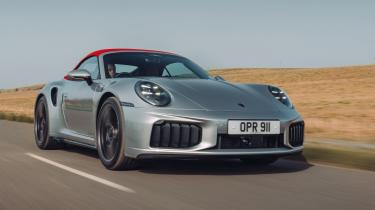
If any car proves that automatics can be engaging, it’s the Porsche 911
- Price from £103,700
- Best automatic car for driving experience
Pros |
Cons |
|
|
The last three generations of Porsche 911 have moved the goalposts for automatic sports cars. Where ‘Tiptronic’ automatic Porsches used to be something you’d only buy if you had to, an automatic 911 is now pretty much the default.
The latest PDK automatic gearbox is one of the best you’ll find in any car, feeling better calibrated at low speed than a lot of dual-clutch automatics, but also being lightning fast when flicking through the gears – pulling a paddle provides a seamless upshift or a perfectly blipped downshift to keep the turbocharged flat-six motor in its sweet spot. It’s a bigger car than any previous 911, but it does a brilliant job of keying into the road and carrying huge speed.
While a 911 will never be a cheap car to run, you might be surprised how efficient they can be too. Officially a Carrera will do 28.1mpg and the hybrid GTS up to 27.2mpg, and both are entirely realistic figures on a motorway cruise.
Not only that, the car is comfortable too, with a beautifully finished cabin and plenty of storage space for a weekend away. Road noise can get a little tiring, but otherwise the 911 makes a great grand tourer.
“Cars fitted with the manual transmissions are all between 0.4-0.5 of a second slower due to the slower shift speeds and longer gearing.” – Jordan Katsianis, senior staff writer.
- Who will like it: Those after maximum thrills without having to use their left foot.
- Who won’t like it: Buyers with a limited budget or more than one passenger.
3. Citroen C3 Hybrid
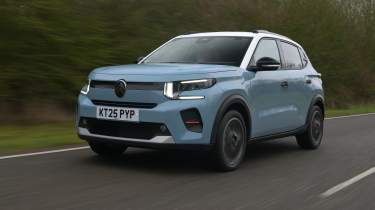
Funky, French and frugal, the Citroen C3 is a charmingly simple supermini
- Price from £21,100
Pros |
Cons |
|
|
The Citroen C3 stands out in the supermini class for its focus on comfort and practicality, and its low price only sweetens the deal.
If you want an automatic C3, you’ll need to opt for the hybrid model (unless you look towards the fully electric Citroen e-C3 instead). This powertrain combines a 1.2-litre petrol engine with an electric motor to deliver a smooth and effortless driving experience via its six-speed transmission.
A natural result of hybrid power is sensible fuel economy, and Citroen’s supermini is capable of up to 56.5mpg on the WLTP cycle. In the real world, we saw an average of 43mpg when we tested this car against the Toyota Aygo X on a variety of UK roads. While this was some way short of the official claim, the C3’s competitive pricing quickly makes up for it.
Although it’s one of the smaller cars on this list, the C3’s boot still offers a generous 315-litre capacity, providing ample space for shopping trips or weekend getaways. The cabin is also thoughtfully designed, with clear, user-friendly controls and a spacious feel that ensures comfort for both the driver and passengers.
“The hybrid system manages to cut engine use fairly frequently at low speeds. That gives plenty of scope to save fuel in town.” - Dean Gibson, senior test editor.
- Who will like it: Those in the market for a likeable but affordable car.
- Who won’t like it: Drivers in search of the fun factor.
4. Skoda Octavia
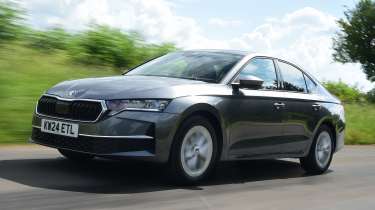
The Octavia prioritises sensible practicality, and yet it still manages to be genuinely desirable
- Price from £28,500
- Best automatic car for families
Pros |
Cons |
|
|
The Volkswagen Group played an enormous role in bringing dual-clutch gearboxes to the mainstream, and now its DSG transmission can be found across its sports cars, SUVs and commercial vehicles. It's also found a home in the Skoda Octavia, which has long been one of its most compelling products.
The DSG works as effectively here as it does in other VW Group vehicles, and matches well with both the Octavia’s diesel and petrol engines. It’s almost as smooth as a torque-converter auto when ambling around yet snaps between gears quickly when you need it to. This intuitive feel is matched by the Octavia’s driving characteristics as a whole: from the 1.5 TSI to the 2.0 TDI, and to the way it steers, rides, and handles, it’s an easy car to get on with.
Octavias don’t typically cost much to run either. Some of that is down to their seemingly long-lasting reliability, but a range of frugal engines helps, too. While there’s no plug-in model (which may rule it out as a company car), 53mpg economy for the TSI and up to 60mpg with the TDI will keep fuel bills low.
With an enormous 600-litre boot and impressive rear cabin space, the Octavia is one of the most versatile hatchbacks available, too, and it feels built to last over many years of family duties. However, if you need even more space, you can always opt for the Skoda Octavia Estate.
“On the move, comfort is the name of the game for this Czech hatchback. There’s not much driver involvement to be found because the steering doesn’t offer much feedback, but the soft suspension set-up delivers great ride comfort.” - Shane Wilkinson, senior content editor.
- Who will like it: Families with plenty of luggage.
- Who won’t like it: People who suffer from car badge snobbery.
5. Mercedes E-Class
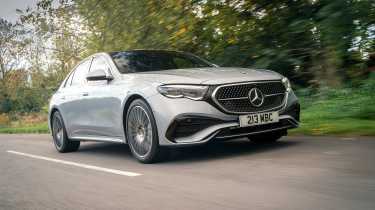
The Mercedes E-Class isn’t a flagship car, but it’ll have you fooled into believing that it is
- Price from £57,200
Pros |
Cons |
|
|
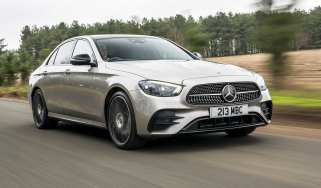
The Mercedes S-Class might get all the glory by being the firm’s top-shelf luxury car, but the more sensibly priced Mercedes E-Class really isn’t too far behind in the prestige and luxury stakes.
Mercedes’ torque converter gearbox switches between ratios almost imperceptibly, and the brand’s engineers have honed its software calibration to impressive effect. Unless you’re pushing hard – which, let’s face it, isn’t really the intended way to drive a big Merc – the gearbox doesn’t allow the engine to stray into noisy territory. That’s a good thing, because the E-Class cuts out tyre roar and harshness from the road beautifully, and any rough edges would emerge very quickly.
The diesel-powered E 220 d offers some of the most attractive economy figures at up to 58.9mpg on the WLTP combined cycle. However, if you’re looking to cut down your emissions, the plug-in hybrid models are capable of covering up to 70 miles on pure electric power. Either way, running costs shouldn’t be too alarming.
In-keeping with the luxury theme, the E-Class’s interior looks more spectacular than ever, thanks in part to Mercedes’ latest MBUX infotainment touchscreen. It feels modern and intuitive, although the cabin quality falls slightly short of its predecessors in some places. Rear passengers can really luxuriate in space, though, and there’s up to 540 litres of boot space at your disposal.
“The E 220 d is a better fit for this type of car as it’s excellent for keeping fuel economy high while taking long motorway trips. It’s only a little less powerful than the petrol but it has more torque.” - Dean Gibson, senior test editor.
- Who will like it: Buyers who value luxury and comfort.
- Who won’t like it: Drivers who prioritise sportiness over a comfy ride.
6. MG3 Hybrid+
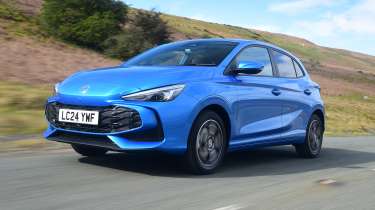
The hybrid-powered MG3 combines a low price with surprisingly high performance
- Price from £19,500
- Best value for money
Pros |
Cons |
|
|
The MG3 has just received a radical redesign, and it’s safe to say the supermini is not only a significant improvement over the previous generation, but it is now one of the best examples in its class.
If you want an automatic gearbox, you’ll need to invest a little bit more cash into the hybrid-powered model. However, this comes with benefits like improved refinement and decreased running costs. This powertrain uses a 1.5-litre four-cylinder petrol engine and an electric motor. Unusually, though, it only uses a three-speed transmission. This might sound a bit 1960s, but since the MG3 drives predominantly using its electric motor, and the engine is called upon both as a generator and for extra performance, it’s pretty smooth.
In town is where the efficient hybrid system can really work its magic, with well over 60mpg possible (officially, MG claims 64.2mpg). Not only will it cost you pennies to run, but the MG3 is also one of the cheapest hybrid cars currently on the market, one of the cheapest automatics, and easily one of the most powerful new cars under £20k, with 192bhp.
The interior feels much like other recent MGs, which means it’s easy on the eye and quality is generally good, but finding cheaper-feeling plastics isn’t difficult. The infotainment system isn’t the best in this class either, though it’s easy enough to bypass with phone mirroring. It lacks a split-folding rear seat too, but passenger space, and the 293-litre boot, are both decent.
“The MG3 Hybrid+ behaves more like an electric car, accelerating off the mark with the same instantaneous response as an EV, while the Toyota Yaris and Renault Clio hybrids feel much less powerful and lethargic off the mark.” - Shane Wilkinson, senior content editor.
- Who will like it: Buyers who simply want an affordable all-rounder.
- Who won’t like it: Anyone who isn’t keen on obvious cost-saving measures.
7. Dacia Duster Hybrid
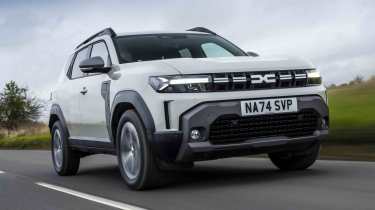
Virtually no budget cars are as capable both on and off the road as the Duster
- Price from £25,100
Pros |
Cons |
|
|
As ever, the latest Dacia Duster is a straightforward, no-frills SUV that gets the essentials right. This time, though, hybrid power adds an efficiency boost into the mix.
Although cheaper Duster variants are available with a manual transmission, the automatic hybrid remains the ideal choice for those seeking maximum convenience and minimal running costs. It’s a pretty clever system, using a 1.6-litre engine in conjunction with both a propulsion motor and a regeneration/starter motor, though the way the engine kicks in and out isn’t as smooth as some hybrids. The ride is comfortable and stable, offering a solid option for both city commuting and longer motorway trips.
The Duster focuses on efficiency rather than performance, too, producing a quoted 56.5mpg (WLTP) and delivering steady acceleration (0-62mph in 10.1 seconds) that’s more than enough for everyday driving. Our own testing backs up Dacia’s claims, too, as we saw an average of 52.3mpg over a wide variety of speeds and roads.
Inside, the Duster’s cabin is simple but functional. While it might not feature luxurious materials, it is designed with durability and ease of use in mind, offering plenty of room for passengers and cargo. The boot is a generous 594 litres in size, and the seats are comfortable enough for longer journeys.
“The squared-off bonnet edges give a distinctive appearance from behind the wheel, but also help the driver to place the front of the car in tight spots.” - Shane Wilkinson, senior content editor.
- Who will like it: Adventurous types who enjoy a spot of off-roading.
- Who won’t like it: Those who’d prefer some extra creature comforts.
8. Renault Clio E-Tech Hybrid
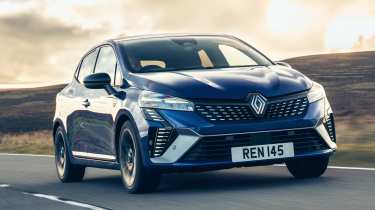
The Renault Clio is still a fashionable car to own, not to mention a cost-effective automatic one.
- Price from £21,800
Pros |
Cons |
|
|
It’s safe to say that the Renault Clio is one of the best superminis you can buy, and it’s even more of an Auto Express favourite in E-Tech Hybrid form.
The E-Tech uses a 1.6-litre four-cylinder petrol engine, which is supplemented by two electric motors and drives through an innovative clutchless automatic gearbox. It sounds awfully complex, but in reality, the set-up feels familiar for anyone who has driven a hybrid-powered hatch before. Electric drive helps it feel peppy, backed up by direct steering, a composed ride, and agile handling.
This Clio’s fuel economy is very good, too. When we pitted this model against the Toyota Yaris in a twin test, we managed to achieve 58.5mpg after a mixture of driving. If you’re predominantly driving around town, though, you could see a return of well over 60mpg.
Inside, the cabin is neatly designed and well-built. Renault’s infotainment is easy to get your head around, too, and the brand makes it easy to turn off unwanted driver assistance features. Space front and rear is decent for this class, and its 391-litre boot is one of the biggest that you’ll find in a supermini.
“A high-quality and well-equipped item despite its competitive pricing, the Clio feels as refined as much larger hatchbacks.” – Ellis Hyde, news reporter.
- Who will like it: Style-conscious buyers who want to save the pennies.
- Who won’t like it: Anyone who’s drawn away by the MG3’s lower price.
9. Honda Civic
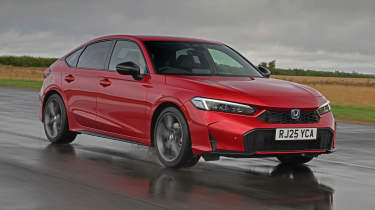
It’s not as cheap as it once was, but the Civic is still a highly appealing hatchback
- Price from £34,300
Pros |
Cons |
|
|
While some of its key rivals, like the Ford Focus, have been retired, the Honda Civic soldiers on as a household name in the hatchback world. The Japanese brand’s powertrain tech means it's a pretty sophisticated machine, too.
While the Civic certainly isn’t the only hybrid car on this list, it is rather unique in how it utilises its 2.0-litre petrol engine. For the vast majority of the time, this car uses its electric motors to power the wheels. When the engine does kick in, it’s primarily used for charging the on-board battery. In other words, the Civic drives smoothly and quickly, just like an electric car.
Predictably, there’s another upside to this electric prioritisation, too, and that is an official WLTP Combined figure of 56.5mpg. We had no issue staying above the 50mpg during testing, and we certainly pushed our Civic hard whenever we could.
Unlike some of its competitors, the Civic’s cabin follows a pretty traditional design. There’s still a decent smattering of modern tech, but this is accompanied by plenty of good old-fashioned buttons, which is always a welcome sight. This iteration of the Civic is a particularly long one, too, so there’s a decent amount of space inside for the whole family, just as long as you reserve the rear seats for smaller passengers.
“The Civic is one of those rare cars which takes only a few yards to communicate to the driver that it’s very well engineered throughout.” - Dean Gibson, senior test editor.
- Who will like it: Drivers who appreciate a sense of familiarity from their cars.
- Who won’t like it: Tech enthusiasts who desire the very latest gadgetry.
10. Toyota C-HR
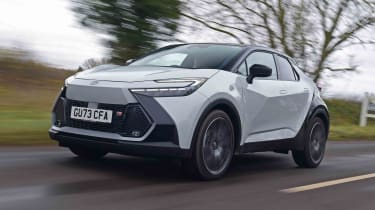
The C-HR is a distinctive looking SUV, but it’s reassuringly sensible underneath
- Price from £31,700
Pros |
Cons |
|
|
The Toyota C-HR is one of Toyota’s funkier designs, but it still offers the usual quality and fuel-sipping hybrid efficiency that the brand is known for.
Toyota’s hybrids use an ‘e-CVT’ transmission. Mechanically, this is rather different from a traditional CVT gearbox, but the droning, noisy acceleration was a problem when this system was first introduced. Toyota has fixed this in recent years, however, and the result is a much crisper throttle response, with revs that don’t flare up as quickly in normal driving. The C-HR also copes with bumps and imperfections nicely, and in typical Toyota fashion, there’s a sense of solidity throughout the car.
Toyota claims that over 60mpg is possible, too, provided you opt for the smaller 1.8-litre hybrid. That being said, the more powerful 2.0-litre can still manage over 55mpg. Long-term costs shouldn’t be too horrifying, either, as Toyota’s standard warranty can be extended up to ten years if your car is maintained in an approved workshop.
Unfortunately, Toyota trails the competition with its infotainment technology. The C-HR’s system has received an upgrade over the car’s lifetime, but it’s still a bit sluggish compared to the best in class. The good news, though, is that this SUV’s unusual design doesn't eat into passenger headroom, although we did struggle to fit a child seat due to the angle of the rear pillar.
“C-HR drivers get the slightly raised position that many SUV buyers seem to crave, and both front seat occupants have a decent amount of room to stretch out.” - Shane Wilkinson, senior content editor.
- Who will like it: Buyers who want a stylish car that should stand up to the test of time.
- Who won’t like it: Families who need to fit a child seat in the back.
More automatic car recommendations
Don’t forget, we also have a range of other pages with our recommendations if the cars above don’t suit.
How we choose the best automatic cars
Automatic cars are quickly becoming the go-to option for UK buyers, with many of the nation’s best-selling cars doing away with the option of a manual gearbox altogether.
Of course, the crucial qualities that car buyers look for haven’t changed. Running costs, purchase price, practicality and on-board features are as important as ever, so these are areas of the areas that our expert road testers focus on when delivering their in-depth verdict.
On top of all this, the best automatic cars also need a smooth and responsive transmission in order to make the grade. Regardless of its type, a modern automatic gearbox should provide smooth yet responsive gearchanges. Of course, this is especially important in performance-oriented models such as the aforementioned Porsche 911, but there’s no reason why more modest cars shouldn’t also provide a smooth, frustration-free experience for their drivers.
Frequently Asked Questions
If you’re parking your car, leaving it unattended or planning to be stationary for a longer period of time, you should place it in park as this locks the wheels and prevents it from potentially rolling away. If you’re towing or pushing the car, though, it should be in neutral in order to let the wheels roll freely.