New Skoda Fabia facelift to transform sensible supermini with more style and hybrid tech
Skoda’s sensible hatch was due to be axed by 2027, but now it’s here to say and is due to be updated as the brand works to keep its petrol-powered cars feeling fresh

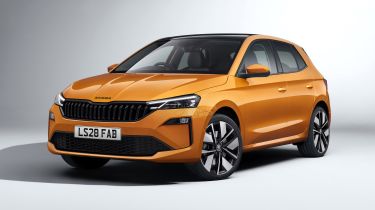
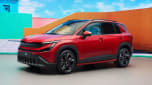
Not too long ago it looked like the end was nigh for the Skoda Fabia because of incoming Euro 7 emissions standards. But not only is it sticking around, we’re expecting a facelifted version of the humble supermini featuring hybrid power, and our exclusive image shows you what it could look like.
Back in 2024, Skoda confirmed it was no longer planning to end production of the Fabia – or its other small petrol-powered cars, the Kamiq compact SUV and Scala family hatchback.
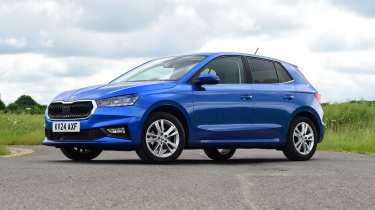
That year was also the last time the Renault Clio and Vauxhall Corsa rival was updated, though, and given that it’s going to remain in showrooms beyond 2030, it deserves some updates to look and feel fresh. Especially when all-new generations of its key competitors are on the way.
Skoda CEO Klaus Zellmer told us as much. “You can’t just extend the lifecycle and think nobody will realise the age,” he said. “They're making good money and they’re a vital part of our line-up.” How vital? Last year, the trio accounted for nearly a third of the brand’s sales worldwide.
What will the new Skoda Fabia look like?
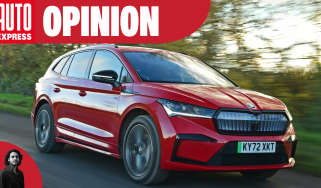
We’re not expecting major design changes on the facelifted Fabia, but it should adopt some elements of the brand’s new ‘Modern Solid’ design language. We saw this done last year with the updated Enyaq SUV, and Skoda’s chief designer Oliver Stefani told Auto Express that “the strategy and solutions we found there give enough flex to incorporate [Modern Solid] on the whole Skoda line-up.”
The Fabia is likely to receive similar styling tweaks to the Enyaq, such as a slimmer grille and more muscular bumpers. Plus, we think it will get a sharp set of daytime running lights, and Skoda lettering on the bonnet in place of the traditional ‘winged arrow’ badge.
Specifications, driver-assistance systems and other onboard tech will be upgraded as well, but the most important change will be under the bonnet. The Fabia is set to receive a new mild-hybrid powertrain, which is the result of Skoda taking responsibility for the Volkswagen Group’s MQB-A0 platform.
This is the architecture that underpins not only the Fabia, Kamiq and Scala, but also the Volkswagen Polo and SEAT Ibiza that we know will receive the same electrified set-up. Skoda’s technical development boss Johannes Neft revealed to Auto Express that it will be introduced by the end of next year.
“We are working very hard on our ICE fleet in order to keep it competitive and we are working on hybridisation,” Neft told us.
Mild-hybrids are the simplest form of electrification for combustion cars. The technology doesn’t allow for pure-electric driving, like the full-hybrid systems offered in the Clio and Corsa, but it does help improve fuel efficiency and can create a smoother driving experience thanks to a small power boost from an electric motor.
Being less complex naturally makes a mild-hybrid less expensive, too, which was one of key reasons Skoda chose this type of powertrain for its entry-level models.
“The mild-hybrid gives us the possibility on the lower end to make a step into this technology,” according to Neft. “It's also very much demanded in southern European countries like Italy and Spain, where you sometimes even need it in order to be able to drive into cities and so on.”
He added that while there might not be a huge increase in the Fabia’s official fuel economy, with the supermini already able to return well over 50mpg without any hybrid help, drivers should notice the difference on their daily commute and when driving in cities.
How much time does the Fabia have?
We asked the development boss how many extra years this new hybrid tech and other upgrades could give the Fabia and its cousins. While he couldn’t give us an exact figure, he was very clear that Skoda will continue to update those cars and their MQB-A0 platform for as long as possible. Their future really depends on upcoming legislation.
“We try to keep each door open,” Neft said when talking about how the uncertainty over emissions regulations in Europe is hampering some brands’ ability to make decisions on the future of their combustion cars.
Skoda’s sales and marketing chief, Martin Jahn, gave us a similar answer earlier this year: “With some design uplifts and with some technological improvements, such as hybridisation, we can keep the MQB going for quite some time.
“We are still waiting for [the EU’s] new rules for CO2 and what happens after 2035, and that will basically determine how much we will invest into the combustion-engine cars,” he said. “But they are still very very popular and we are quite happy about the volume.
“So we will run them as long as the customers want them, as long as it's legally possible and as long as it's financially viable for us.”
Even though the current fourth-generation Skoda Fabia was launched in 2021 and hasn’t been updated in some time, we’re not expecting the new version to arrive imminently.
As Neft said, the new hybrid system isn’t being introduced until late next year, so that’s the earliest it could land. The same goes for facelifted versions of the Kamiq and Scala, which are in line for a similar series of upgrades.
Besides, Skoda already has plenty on its plate in 2026, because it’s about to launch the all-new Epiq. The all-electric alternative to the Kamiq will rival the Renault 4 and is set to start from around £25,000 – about the same as a mid-range Corsa Hybrid.
Did you know you can sell your car through Auto Express? We’ll help you get a great price and find a great deal on a new car, too.