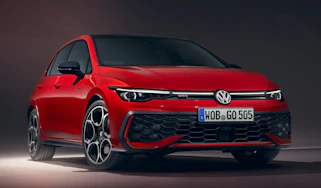
Volkswagen Golf GTI review
Genre-defining hot hatch delivers a fantastic all-round performance car experience
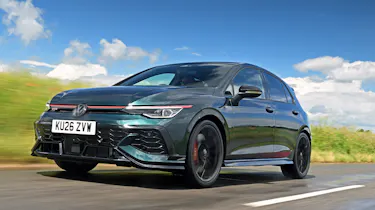

Our opinion on the Volkswagen Golf GTI
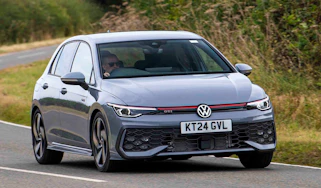
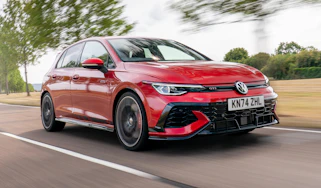
The Volkswagen Golf GTI created the template of accessible performance that sounded the death knell for the affordable sports car in the seventies, and 50 years later it still fits that brief. Power has increased beyond recognition when compared with the original GTI, but while there has been the odd mis-step with previous generations, the current car is a fantastic all-rounder.
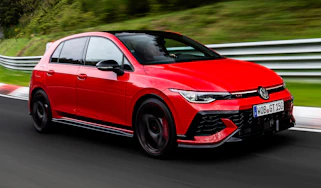
It delivers driving thrills when you want them, and respectable comfort when you don’t, and it’s arguably a more involving driver’s car than the faster Volkswagen Golf R, thanks to its front-wheel-drive set-up. The Edition 50 enhances the basic GTI for an even sharper drive, although the additional badges and decals feel a little try-hard, in our opinion. It doesn’t detract from the Golf GTI’s all-round talents, though.
About the Volkswagen Golf GTI
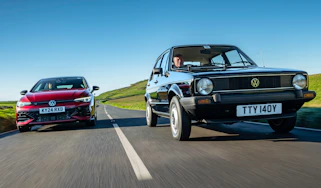
The evolution of the hot hatchback has seen plenty of contenders come and go, but the Volkswagen Golf GTI has spent five decades near the front of the pack. It’s the car that invented the hot-hatch genre, when a group of VW engineers wanted to see what would happen if you put a fuel-injected Audi engine under the bonnet of the humdrum Golf hatch. The results were convincing, and VW hasn’t looked back since.
Used - available now

2024 BMW
X3
34,305 milesAutomaticPetrol2.0L
Cash £26,704
2023 Polestar
2
19,506 milesAutomaticElectric
Cash £20,468
2023 Tesla
Model Y
63,788 milesAutomaticElectric
Cash £19,868
2024 Vauxhall
Mokka
40,305 milesAutomaticPetrol1.2L
Cash £13,449The Golf GTI hasn’t strayed far from the original template in the past 50 years; it’s sold exclusively as a hatchback, it still has a four-cylinder engine under the bonnet that drives the front wheels, while a few choice mechanical and cosmetic upgrades help to distance it from the rest of the Golf line-up.
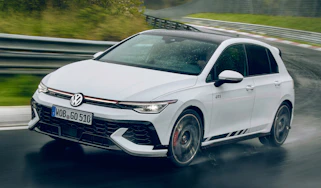
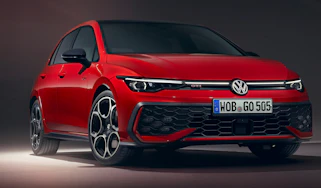
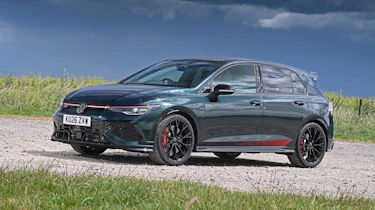
Most versions of Golf GTI have delivered on expectations, and the current eighth generation is a car that can cut it with the best in an admittedly shrinking hot-hatch sector. It now only comes with a five-door body and there’s no manual gearbox option, while the standard GTI and faster GTI Clubsport cars are joined by the even more powerful Edition 50. This continues a lineage of Edition models that have been released to mark each decade of production that the GTI has completed.
Performance & driving experience
Pros |
|
Cons |
|
All versions of the Golf GTI are powered by the VW Group’s EA888 2.0-litre four-cylinder turbocharged petrol engine, with front-wheel drive and a seven-speed DSG twin-clutch gearbox. The base GTI has 261bhp and 370Nm of torque, while the Clubsport bumps this up to 296bhp and 400Nm, and the Edition 50 has 321bhp and 420Nm – that power output is nearly triple that of the original Golf GTI.
One of the GTI’s key traits has always been its ability to offer a balanced set-up. There’s enough compliance in the suspension so it’s not too hardcore to drive on a daily basis, but it’s not so soft that it becomes uninspiring on the open road. Adding adaptive dampers expands the breadth of the GTI’s ability, and is a spec upgrade (£755) that we’d strongly recommend.
Moving up to the GTI Clubsport not only adds more power, but there are also larger brakes, exterior design tweaks and the option of the £3,445 Performance Pack, which adds 19-inch alloys, an Akrapovic titanium exhaust system and a 168mph top speed.
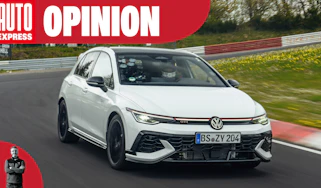
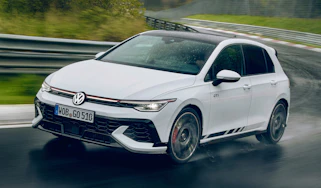
The flagship GTI Edition 50 goes even further, not only with unique visual upgrades, but also its own specially developed Nürburgring drive mode and S+ and M+ settings for the gearbox. It also has its own Performance Package (£3,675) that adds lightweight wheels and even lower suspension, while track-biased tyres can be added for £880. Putting all of these pieces together means it’s easily the most engaging eighth-generation Golf yet.
| Model | Power | 0-62mph | Top speed |
| Golf GTI | 261bhp | 5.9 seconds | 155mph |
| Golf GTI Clubsport | 296bhp | 5.6 seconds | 155mph |
| Golf GTI Edition 50 | 321bhp | 5.3 seconds | 168mph |
Performance, 0-60mph acceleration and top speed
The regular GTI had an increase from 242bhp to 261bhp as part of the Golf Mk8.5 facelift, and that means its 0-62mph time is now 5.9 seconds, which is 0.4 seconds faster than the old car. The more powerful GTI Clubsport manages a 0-62mph time of 5.6 seconds, while the Edition 50 completes the same sprint in 5.3 seconds.
With so much power going to the front wheels, you might expect torque steer to come into effect. However, grippy tyres and a well judged suspension set-up mean that you’ll only likely experience this in wet conditions.
The GTI’s top speed is electronically limited to 155mph, except for the Edition 50, which has a derestricted maximum of 168mph, making it the fastest Golf GTI ever.
Town driving, visibility and parking
The Golf GTI is a doddle to drive, making it ideal everyday transport. The brakes are easy to modulate at low speeds, and the steering is light enough when parking to make slotting into tight spaces easier than it would be in a Honda Civic Type R.
The DSG twin-clutch automatic also helps, although there is an occasional jerkiness to its responses in stop-start traffic, something that is made even more pronounced if you turn on the auto-hold function. It’s not the biggest frustration, but some rivals offer a smoother experience.
As standard, the Golf GTI has a more composed ride than the closest competition, although we’d recommend spending an extra £755 for DCC adaptive chassis control for an even wider range of ability.
While the Clubsport and Edition 50 have more power, they offer a ride that’s just as settled as the regular GTI’s around town.
Country road driving and handling
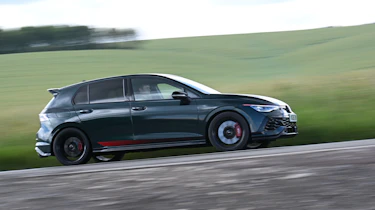
While the optional adaptive dampers are a great addition, we’d suggest avoiding the firmest settings because they can make the GTI feel a touch harsh on bumpy B-roads.
Overall, grip is superb on the front axle, which gives the driver huge confidence to lean heavily on the driven tyres into a corner. Yet with that agility comes a great deal of security, too. Even with a little trail braking towards an apex, the back end doesn’t feel particularly wayward – maybe more so at higher speeds on a race track – and a mid-corner lift of the throttle causes the nose to gently tuck in rather than upset the car’s balance.
If you want a more playful experience, then the Clubsport and Edition 50 versions deliver. But even the standard car offers plenty of fun for experienced drivers, while remaining accessible to more general buyers.
Some drivers will mourn the fact the Golf GTI is no longer offered with a manual gearbox, but the twin-clutch DSG transmission is a sharp and responsive unit, and it can be configured to deliver varying shift responses. It’s true that it can’t match the feeling of interaction that you get from three pedals and a gearlever, but it’s one of the better semi-automatic systems on the market.
Motorway driving and long-distance comfort
As you’d expect of such a versatile hot hatch, the Golf GTI is an excellent motorway cruiser. Long distances can be covered without the smallest hint of stress, and aside from a little more road noise from the low-profile tyres, the GTI is no less refined than an entry-level Golf. In cars fitted with adaptive suspension, the softest settings largely dial out the familiar fidget that is common in firmer rivals.
"The big trump card that the Golf GTI has always had over its rivals is the accessibility of its performance, and that’s something that’s maintained with the current car. It’s just as happy on the school run as it is on a track day, and the arrival of the Edition 50 gives the GTI the additional firepower that it needs to remain competitive in the class.
That sector is looking thinner than ever with the departure of the Ford Focus ST and Honda Civic Type R, but even if these two models were still available, the GTI would give them a run for their money with its everyday usability." - Dean Gibson, senior test editor.
MPG & running costs
Pros |
|
Cons |
|
Running a powerful hot hatchback such as the Golf GTI won’t deliver low running costs, per se. But when you look at the performance that’s on offer, the official economy figures are pretty reasonable, especially when you compare it with some rival hot hatches.
An official combined fuel economy figure of 39.8mpg for the standard GTI should mean a range of more than 400 miles is possible, as long as you’re not tempted to use any of the performance that’s on offer. The more powerful Clubsport has claimed economy of 37.2mpg, while the Edition 50 returns 35.8mpg in the official tests. On longer motorway runs, you’re likely to exceed these claimed figures, courtesy of the unstressed nature of motorway driving and the reserves of power that the GTI has to fall back on.
| Model | MPG | CO2 | Insurance group |
| Golf GTI | 39.8mpg | 160g/km | 31 |
| Golf GTI Clubsport | 38.7mpg | 167g/km | 31 |
| Golf GTI Edition 50 | 37.2mpg | 173g/km | 36 |
Insurance groups
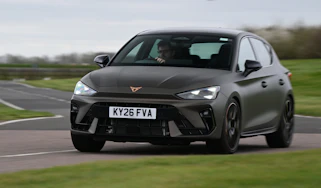
The Golf GTI is a desirable performance hatchback, but group 31 insurance (group 36 for the Edition 50) is a lower rating than for some mainstream EVs of a similar size or price. If you want cheaper cover, the Cupra Leon 300 (which has the same engine as the GTI Clubsport) will likely cost a little bit less than the Golf because it sits in group 30.
Tax
All versions of the Golf GTI break the £40,000 luxury car-tax threshold, so road tax for years two to six is £640.
The GTI isn’t great as a company car, either, with high emissions hitting Benefit-in-Kind (BiK) costs. If you want a hot-hatch company car, then the Golf GTE has some of the GTI’s styling cues and a 268bhp plug-in hybrid powertrain, but lacks the ultimate driving thrills that the GTI delivers. For some the looks alone will be enough to justify running one, but an electric performance car is going to be a better option for business users.
Depreciation
Our market data predicts that the Mk8.5 GTI should hold on to around 46 per cent of its original value after three years and 36,000 miles, with the Clubsport version matching that. The Edition 50 is slightly poorer, at 45 per cent, but it might make for a better long-term purchase, because its special-edition status will mean it’s more desirable to GTI enthusiasts in the future. In comparison, the all-wheel-drive Golf R retains around 48 per cent of its value after the same amount of time.
Other cars that use the same running gear as the Golf GTI don’t perform quite as well. The Skoda Octavia vRS is predicted to be worth 43 per cent over the same period, while the Cupra Leon VZ sits in the 40 to 44 per cent range.
To get an accurate valuation for a specific model, check out our free car valuation tool...
Interior, design & technology
Pros |
|
Cons |
|
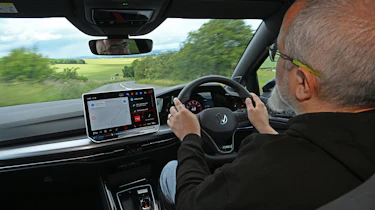
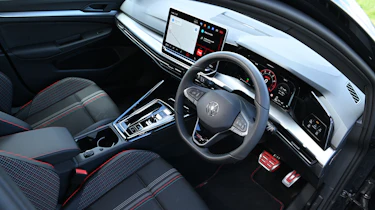
When the Golf Mk8 first arrived, there was plenty of criticism of the car’s cabin, especially the fiddly touch-sensitive controls, but VW has addressed most issues with the Mk8.5 version. The most significant change is the return of buttons to the multifunction steering wheel, which are far more intuitive to use than the previous touch-sensitive set-up.
Some touch controls are still present, though, including the main volume control slider below the infotainment touchscreen. At least it’s now backlit, so it can be used in the dark. It’s a little more responsive than before, but as with the temperature controls on either side, it’s still positioned where you are likely to rest your hand when using the central touchscreen.
If your budget stretches to the GTI Edition 50, you’ll get special GTI 50 branding throughout the cabin, including a plaque on the end of the dashboard, red seatbelts and red pedals. There’s a new take on the famous GTI tartan, too, with the side bolsters finished in the pattern, and a race-style suede-wrapped steering wheel available as an option.
Interior and dashboard design
It was the cabin that came under the most fire when the Mk8 arrived, and it’s here that Volkswagen has tried to do what it can to improve things for the Mk8.5. Many found the touch-sensitive controls fiddly to use, so some have been ditched altogether for the refresh. For example, the steering wheel has reverted to physical buttons on its spokes, and they’re far more intuitive to use than the previous touch-sensitive set-up.
Some haven’t disappeared, however. The main volume control is still an awkward slider below the touchscreen, but at least it’s now backlit, so it can be used in the dark. It’s a little more responsive than before, and now that the driver has access to proper volume-control buttons on the steering wheel, it’s less of a negative than it was previously. However, this slider, along with the ones on either side for the dual-zone temperature controls, is still positioned where you are likely to rest your hand when using the central touchscreen.
If your budget stretches to the GTI Edition 50, you’ll get special GTI 50 branding, red seatbelts and red pedals, which won’t be to everyone's taste. There’s a new take on the famous GTI tartan, and there’s a lovely suede-like steering wheel available as an option.
Materials and build quality
While the interior of the Golf GTI is less cluttered than before, we’re still not entirely sold on the quality of the finish, despite the refresh. There are enough subtle red highlights that are unique to the GTI, along with the ambient interior lighting and bespoke GTI graphics in the digital instrument cluster, to let you know you’re in something special.
Infotainment, sat-nav and stereo
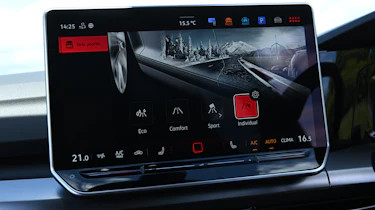
The GTI’s infotainment system is largely the same as the regular Golf’s, which means you get the larger 12.9-inch Discover touchscreen set-up that takes up prominent residence on top of the dashboard. There’s also a 10.25-inch digital instrument cluster called Virtual Cockpit. It’s the same as used on the regular Golf, but with bespoke GTI graphics.
Compared with what went before, the revised infotainment panel has faster loading times, a simpler menu layout, plus the additional screen real estate allows for some functions to be on permanent display – such as the climate controls across the bottom of the display, plus large, easily selectable shortcuts at the top of the screen for other functions. We’d still prefer to have some physical controls, but it’s a big improvement over what went before and allows quick adjustments without delving into menus.
If you don’t fancy using the on-board navigation system, there’s always Apple CarPlay and Android Auto connectivity that’ll enable you to run navigation and music-streaming apps from your phone. A six-speaker sound system is standard, but this can be upgraded to a 480-watt, nine-speaker Harman Kardon set-up for a reasonable £630.
"It’s great that VW has tapped into the GTI heritage with some of the features on board the latest model. We’d choose the standard tartan upholstery every time just to get that retro feel, and the different trim used in the Edition 50 helps it to stand out. We’re not so sure about its red seatbelts and pedals, while the abundance of Edition 50 stickers seems excessive; they’re on the rear spoiler, the door sills, steering wheel and inside the door mirrors." - Dean Gibson, senior test editor
Boot space & practicality
Pros |
|
Cons |
|
The Golf GTI offers an appealing blend of performance and practicality in a sophisticated package. While the Golf Mk7 had the option of a three-door body, the Mk8 has only ever been sold as a five-door, although that does mean back-seat access is straightforward. On top of that, the GTI remains exclusively a hatchback; unlike the diesel GTD or faster Golf R, there has never been a Golf GTI Estate.
Dimensions and size
The Mk8.5 Golf GTI measures 4,289mm in length, is 1,789mm wide and 1,471mm tall. However, the Clubsport and Edition 50 versions are 3mm longer courtesy of restyled bumpers, while lowered suspension reduces their overall height to 1,456 and 1,463mm respectively. All three cars share the same width and wheelbase.
It is possible to squeeze three people in the back of the Golf GTI, but if you’re after even more rear legroom and extra space in general, the Skoda Octavia vRS will be a better option, especially because it also comes as an estate.
Dimensions comparison | |||
| Model | VW Golf GTI | Skoda Octavia vRS | Cupra Leon |
| Length | 4,289mm | 4,709mm | 4,398mm |
| Width | 1,789mm | 1,890mm | 1,799mm |
| Height | 1,471mm | 1,455mm | 1,444mm |
| Wheelbase | 2,627mm | 2,681mm | 2,683mm |
| Boot space | 374 litres | 600 litres | 380 litres |
Seats & passenger space
Much like the regular Golf, the GTI has a broad range of seat adjustment, while the standard sports seats are trimmed in Tornado Red cloth and feature larger side bolsters for more support during cornering. If you want electric front seats with driver’s side memory, you can get that as part of the Vienna leather option for just shy of £2,200. The Edition 50 features a unique upholstery pattern and more red stitching than you’ll find in the standard GTI.
Whichever version you choose, there’s a large glovebox and sizable front door bins that are capable of handling a big water bottle. The latter is also carpeted to prevent items from rattling around while you’re driving. A wireless charging spot for your phone is provided as standard, and it’s angled forward to stop your phone from sliding out.
As far as space in the back goes, the Golf GTI has a bit less room than a regular Golf because of the sports seats, but it’s nothing to complain about. There are small storage pockets on the back of the front seats for placing small items, such as a smartphone, and two USB connections, while back-seat passengers also have their own separate climate controls as part of the three-zone system that’s standard on all GTIs.
For anyone transporting children in car seats, there are three Isofix child seat mounts – two in the rear and one on the front seat – with plastic covers making them easy to access.
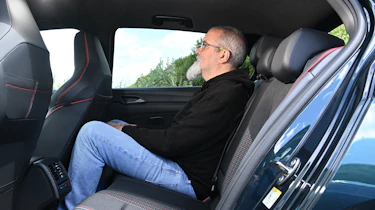
Boot space
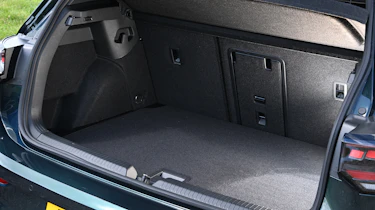
The Golf GTI offers reasonable load space, with 374 litres available with the rear seats up, and 1,237 litres with the standard 60:40-split rear seats folded. If you need more room, then once again the Skoda Octavia vRS is available, which has a 600-litre boot.
Towing
Surprisingly, the Golf GTI is rated to tow a maximum of 1,600kg, and a towbar can be fitted for just shy of £800.
"While SUVs are the go-to choice for family car buyers, I’d still pick a hot hatch over a fast SUV if I was looking for a practical performance car. There’s enough room in the back of a Golf GTI for passengers and luggage, and besides, I’d prefer a car that’s fun to drive when flying solo than having to wrestle with a roly-poly SUV in corners." - Dean Gibson, senior test editor.
Reliability & safety
Pros |
|
Cons |
|
According to the latest Driver Power customer satisfaction survey, the VW Golf has improved slightly, going from 49th out of 50 in 2025 to 41st place in 2026. Infotainment remains a point of contention, although that will likely improve as more Mk8.5 models appear in the survey. High running costs, including servicing, will be areas of concern that the GTI is unlikely to improve upon.
Euro NCAP reassessed the Golf in 2025 and its maximum five-star rating applies to the GTI, too. Its score was helped by the excellent level of on-board kit.
Driver-assistance features include driver fatigue detection and lane-keeping assist with Road Edge Recognition, along with a Travel Assist system, which utilises camera and radar sensors to allow partially assisted driving, as long as the driver keeps their hands in contact with the steering wheel. The Side Assist and Rear Traffic Alert use radar technology to monitor approaching vehicles.
| Euro NCAP safety ratings | |
| Euro NCAP safety rating | Five stars (2025) |
| Adult occupant protection | 80 per cent |
| Child occupant protection | 86 per cent |
| Vulnerable road user protection | 85 per cent |
| Safety assist | 79 per cent |
Buying and owning
Best buy: Volkswagen Golf GTI Clubsport +Performance Pack
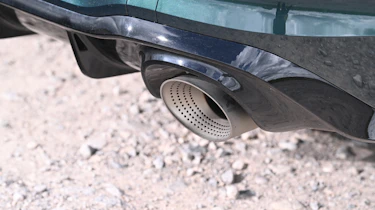
The extra power of the Clubsport and its bigger brakes mean it’s the one we’d choose, while upgrading to the Performance Pack adds the fruitier sounding Akrapovic exhaust, too.
There are plenty of hot deals to be had if you spec your perfect Volkswagen Golf GTI via the Auto Express Buy a Car service. We also have a selection of used Golf GTI deals, and can even help you to sell your car.
Volkswagen Golf GTI alternatives
While hot hatches such as the Ford Focus ST and Honda Civic Type R have disappeared from price lists, you can still find a respectable representation of fast metal that doesn’t compromise on practicality. The Cupra Leon and Skoda Octavia vRS are closely related to the Golf GTI, or there’s the riotous Toyota GR Yaris - although this is a car that’s designed to deliver thrills more than everyday practicality.
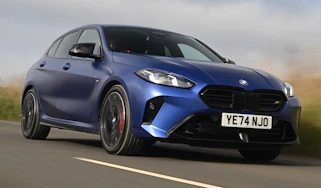
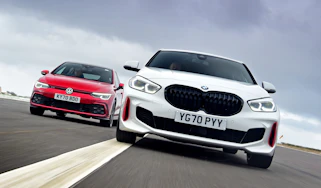
The more potent GTI Clubsport and Edition 50 versions sit more in line with quicker hot hatches such as the Audi S3 and BMW M135, although as with the Volkswagen Golf R, these models have the added complexity of four-wheel drive that affects their driving character.
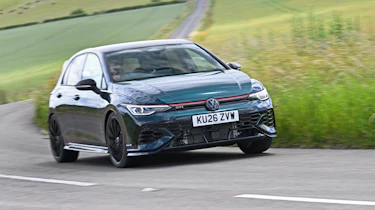
Volkswagen Golf GTI pictures
Key updates to the Volkswagen Golf GTI review
10 July 2026: Comprehensive update following road test of the Golf GTI Edition 50 in the UK.
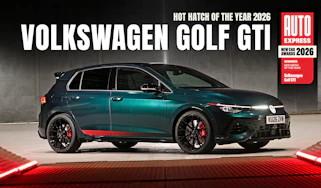
3 July 2026: General update to include mention of its 2026 Hot Hatch of the Year award
29 April 2026: General update, including impressions of the Golf GTI Edition 50.
Frequently Asked Questions
We awarded the Golf GTI our hot hatchback of the year award at the 2026 New Car Awards, so yes, we’d say it’s a good car. There is the slight caveat that if the Honda Civic Type R was still on the new car price lists, then that would likely have edged ahead of the Golf, but the GTI is still a fantastic option.
Deals on the Golf GTI and alternatives