Volkswagen Tiguan review
The Volkswagen Tiguan is a practical and good-to-drive family SUV, but it comes at a premium price


Our opinion on the Volkswagen Tiguan
If you’re looking for a practical, nicely finished, efficient and refined mid-sized SUV, then the Volkswagen Tiguan ticks all of those boxes. And if you require low company car tax costs, but an EV doesn’t suit your lifestyle, then the excellent eHybrid PHEV model ticks yet another box.
Do you get what you pay for? We think so, but we’d be wary of going too high up the range when you could consider genuinely premium alternatives for the same price. However, the Tiguan still offers a compelling combination of space, efficiency and practicality, with plenty of modern tech and a high-quality cabin.
About the Volkswagen Tiguan
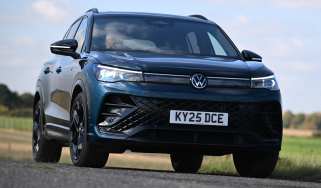
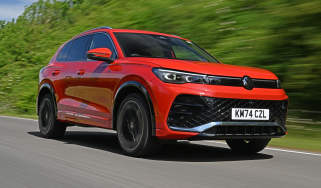
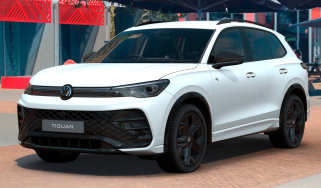
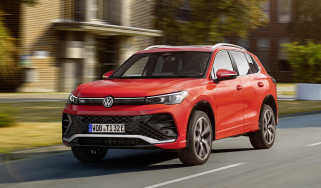
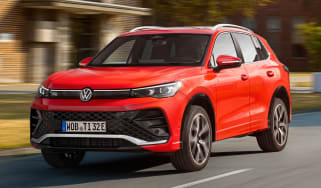
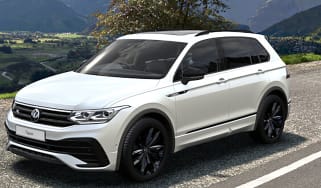
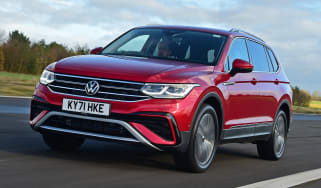
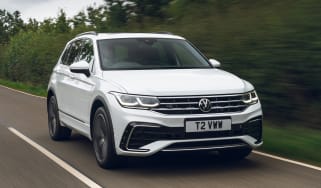
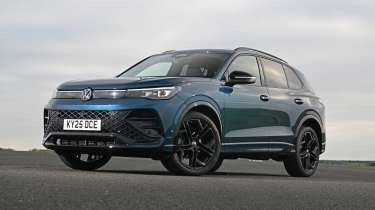
Volkswagen has adopted a softer, less angular shape for its latest Tiguan, but like its sharper-suited predecessor, the rest of the overall package is just as well rounded. Practicality is one of the third-generation model’s biggest plus-points – it really is vast inside and in the boot – but the driving experience is spot on, too.
Most reassuringly, the interior quality and ergonomics are getting closer to the standards that we expect from VW. That’s important, given that the price reflects the brand’s perception as a more premium offering than much of its competition.
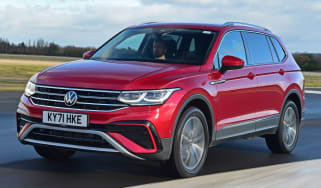
There’s just one bodystyle available, while a five-seat layout is the only configuration that’s offered with this generation, because the seven-seat Tiguan Allspace has been superseded by the Tayron. On a side note, the US gets a slightly different line-up of SUVs, because the Tiguan that’s sold there is actually the Tayron, while the smaller Euro-spec Tiguan we get in the UK isn’t available in the US at all.
Used - available now

2018 Volkswagen
Tiguan
22,698 milesManualPetrol1.4L
Cash £14,599
2023 Volkswagen
Tiguan
29,984 milesAutomaticPetrol1.5L
Cash £20,000
2024 Volkswagen
Tiguan
30,258 milesAutomaticDiesel2.0L
Cash £23,200
2023 Volkswagen
Tiguan
38,803 milesAutomaticPetrol1.5L
Cash £23,699Back to the UK line-up, and you’ll find that every version of the Tiguan comes with a DSG automatic gearbox, while there are petrol, diesel and plug-in hybrid options in 1.5 and 2.0-litre capacities, and 4MOTION four-wheel drive is offered on higher-spec versions.
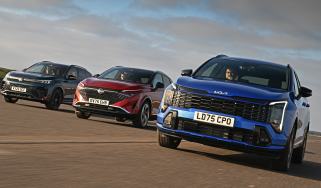
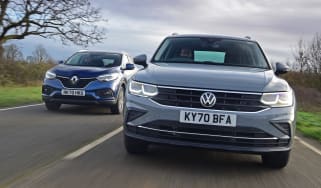
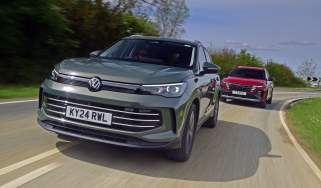
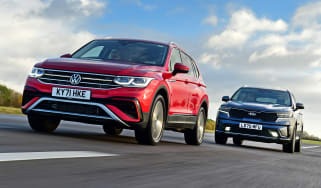
There’s no shortage of mid-size SUVs for the Tiguan to face, so we’ve tested it against a number of key rivals over the years. In a group test against the Nissan Qashqai and Kia Sportage, the Tiguan unfortunately found itself in third place, but it was only by a slim margin. While the VW’s practicality and driving experience impressed our experts, its considerable starting price dulled its appeal compared to the similarly capable Nissan and Kia, the latter of which was the winner.
Volkswagen Tiguan prices and latest deals
With a starting price of around £39,000, the Tiguan is one of the pricier medium SUVs you can buy. This price gets you behind the wheel of a car in Life spec with VW’s 1.5 eTSi mild-hybrid four-cylinder petrol engine.
However, for less than £300 more you can upgrade to the Tiguan Match, which comes with more standard kit for what is a pretty modest outlay. Next up is the plushest Style variant which starts from around £42,500, while the Black Edition is similarly priced from at least £43,600.
Currently there’s no high-performance Tiguan R offered like the last generation, but the performance car-inspired Tiguan R-Line starts from £42,400.
Of course there are plenty of discounts to be found when you build your perfect Volkswagen Tiguan via the Auto Express Buy a Car service. We also have a number of Tiguan leasing deals to choose from, as well as used Tiguan models in stock.
Performance & driving experience
Pros |
|
Cons |
|
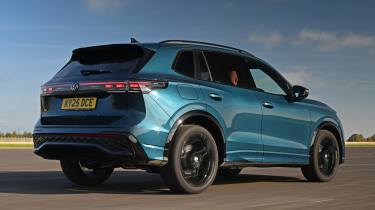
While it’s not going to put a big grin on your face when you’re driving on a twisty road, the Tiguan is nevertheless one of the most competent vehicles in its segment in terms of its chassis set-up.
| Model | Power | 0-62mph | Top speed |
| Volkswagen Tiguan 1.5 eTSI 150 DSG | 148bhp | 10.6 seconds | 123mph |
| Volkswagen Tiguan 2.0 TSI 265 DSG 4MOTION | 261bhp | 5.9 seconds | 150mph |
| Volkswagen Tiguan 2.0 TDI 150 DSG | 148bhp | 9.4 seconds | 129mph |
| Volkswagen Tiguan 1.5 TSI eHybrid 272 DSG | 268bhp | 7.2 seconds | 134mph |
Performance, 0-60mph acceleration and top speed
If there’s one thing that’s never lacking in a Volkswagen, it’s choice. Whether it’s the fact that there are five trim levels to choose from, or the lengthy options list, buyers can select almost any combination of spec that they want. This choice extends to the engines, too, with petrol, mild and plug-in hybrid powertrains sitting alongside diesel options.
The range kicks off with a 1.5-litre turbocharged petrol engine with mild-hybrid tech. It’s available in two power outputs – either 128bhp and 220Nm, or 148bhp and 250Nm – and in both cases is combined with a seven-speed dual-clutch automatic gearbox.
Further up the petrol range, there is a pair of 2.0-litre options available; one produces 201bhp, while the other unit is borrowed from the Golf GTI hot hatch, offering up 261bhp. Both versions have four-wheel drive. Diesel power comes in the form of a 2.0-litre turbocharged engine with 148bhp and backed up with a healthy 360Nm of torque. Finally, the plug-in hybrids are available in two outputs; combining a petrol engine with an electric motor, they produce either 201bhp or 268bhp.
For the vast majority of buyers, the 1.5-litre petrol and the diesel model will offer the best balance between price and performance. The petrol engine makes strong use of the mild-hybrid tech, cutting in and out of operation very smoothly when shuffling around town.
The gearbox responds quickly when using the paddles behind the steering wheel, and operates without fuss in automatic mode. Officially, the 1.5-litre petrol model will cover the benchmark 0-62mph dash in a reasonable, if not outstanding, 9.1 seconds. When pushed hard, it makes less fuss than the turbocharged options in the Kia Sportage and Hyundai Tucson.
Town driving, visibility and parking
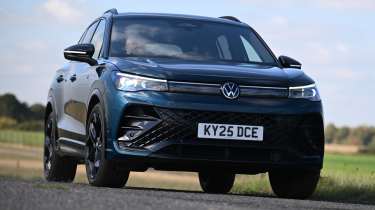
Light, precise steering and a surprising feeling of agility mean that the Tiguan rarely feels like a bulky SUV on the road. The high driving position gives a great view out, which really helps when driving at low speeds. Overall refinement is very good, with only one minor exception. At lower speeds, the noise from the suspension as it knocks over larger drain covers and potholes is more noticeable than it is in some rivals.
The eHybrid offers quiet and refined running when the hybrid system’s battery is fully charged, and it’s responsive to inputs without resorting to petrol power if there’s enough capacity left in the battery. But once the engine does cut in, the experience isn’t quite so smooth. The transition between electric and combustion drive is jerky, and at low speeds (when exiting a junction, for example) the VW can hesitate as it decides which power source to use.
The auto-hold handbrake adds to the jerkiness, because it needs a firm prod of the accelerator to disengage, which causes the Tiguan to lurch forward as the power comes in. We’d recommend leaving the system off for a smoother drive.
Country road driving and handling
Handling is neat and composed, thanks in part to Volkswagen’s Vehicle Dynamics Manager, which can nip the brakes of individual wheels to help stabilise or tighten a car’s line when tracking through a corner. Body roll is fairly well contained, too, while the overall ride comfort is better than in rivals from Peugeot, Hyundai and Kia, and similar to that of the Nissan Qashqai.
The eHybrid favours electric drive as often as possible, but when the engine does cut in, it’s by no means harsh. The extra weight of the hybrid system doesn’t have much of a detrimental effect on the car’s handling, either.
With a fairly even split in power delivery from the electric motor and engine, the Tiguan will favour electric drive even at higher speeds. It’s only when accelerating on slip roads that the engine is at its most vocal, but even then, it’s far from being harsh.
Motorway driving and long-distance comfort
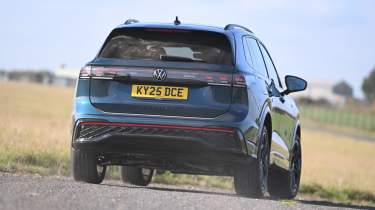
High-speed stability is one of the Tiguan’s biggest strengths, although there’s an ever-present busyness to the ride on cars without the adaptive dampers – and especially those with larger wheel options. Big wheels also transmit a bit of road noise into the cabin, too, although it’s not loud enough to make conversation with passengers difficult.
“As with much of the Volkswagen range, the Tiguan drives at its best when equipped with the optional adaptive dampers. These greatly broaden the spread of the Tiguan’s abilities, increasing body control through tighter turns, and ride comfort on more open roads.” - Alex Ingram, former chief reviewer.
MPG & running costs
Pros |
|
Cons |
|
From a driving point of view, everything looks rosy for the Tiguan, but it’s when it comes down to value for money that the Tiguan’s stumbling blocks arrive. Premium aspirations mean that Volkswagen Tiguan prices are steeper than they are for some mainstream rivals, although they’re still below those of the likes of the BMW X3 and Mercedes GLC.
For similar cash to a mid-spec Kia Sportage or Nissan Qashqai with a full-hybrid powertrain, the Tiguan is available with a 1.5-litre turbocharged mild-hybrid engine and in the more lowly Match trim. In order to bring equipment levels on a par with the Sportage and Qashqai, you’ll need to dip into the options list – at which point you’ll be comfortably breaching the £40,000 mark.
Still, this is an approach that is working for Volkswagen – the strong sales figures are very clear proof of that – but look beyond the badge and it doesn’t quite feel like it’s offering the same value for money as the competition.
That feeling is compounded by the fact those similarly priced hybrids will cost less to run, too. We averaged 39.5mpg in the Tiguan eTSI mild-hybrid, while in the same conditions the Nissan Qashqai e-Power was returning almost 53mpg. Based on a fuel price of 135.8p a litre, that works out at an extra £387 over the course of 10,000 miles.
The larger 2.0 TSI petrol is thirstier and has the added drain of 4MOTION four-wheel drive. The 201bhp version manages 36.4mpg, while the more powerful model has a combined figure of only 33.7mpg. The 148bhp 2.0 TDI diesel is the most efficient non-plug-in Tiguan, returning up to 52.1mpg combined. As with all the other engines, the precise figures vary depending on trim level and wheel size.
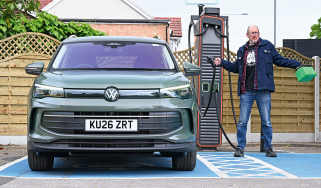
The eHybrid version costs more because of its plug-in technology, but everyday running costs should be decent if you keep the battery charged. Run it down, and once the pack is below 15 per cent capacity, the PHEV’s electronics will favour petrol power to save the charge. Driving the Tiguan eHybrid like this, we found it achieved fuel economy of around 35mpg. A small 45-litre fuel tank means the range using petrol power is short, which further emphasises the need to charge the battery on a regular basis.
| Model | MPG | CO2 | Insurance group |
| Volkswagen Tiguan 1.5 eTSI 150 DSG | 47.7mpg | 135g/km | 18 |
| Volkswagen Tiguan 2.0 TSI 265 DSG 4MOTION | 33.7mpg | 191g/km | 32 |
| Volkswagen Tiguan 2.0 TDI 150 DSG | 52.1mpg | 142g/km | 22 |
| Volkswagen Tiguan 1.5 TSI eHybrid 272 DSG | 174.7mpg | 37g/km | 31 |
Electric range, battery life and charge time
The Tiguan eHybrid has a 25.7kWh battery (of which 19.7kWh is used to power the electric motor) and according to VW you should see an all-electric range of 77 miles from the 201bhp model, or 75 miles for the faster 268bhp car. When we tested the more powerful model in cold conditions, we saw a maximum range of 55 miles from the car’s trip computer, although this will change according to the type of driving that you do. That’s quite a lot further than the maximum of 42 miles you can get out of a 2.5 PHEV plug-in Ford Kuga.
Volkswagen equips its eHybrid powertrain with fast DC charging of up to 50kW, and from a powerful enough source the battery can go from 10-80 per cent capacity in 26 minutes. The latest-generation PHEV system also has 11kW AC charging (up from 3.7kW before), which can take the battery from flat to full in two and a half hours.
Exclusively rapid charging your plug-in hybrid would be costly in the long run, so most people will likely utilise a 7.4kW wallbox charger at home. There’s no official charging time for such a source, although the eHybrid version of the Volkswagen Passat, which uses the same battery, takes around four hours to fully charge.
The pack in the eHybrid model is covered by a separate warranty, which guarantees that the battery will maintain above 70 per cent capacity over five years or 100,000 miles. However, it only applies to the first owner of the car and is non-transferable to subsequent owners.
| Model | Battery size | Range | Insurance group |
| Volkswagen Tiguan 1.5 eHybrid 204 DSG | 25.7kWh | 77 miles | 27 |
| Volkswagen Tiguan 1.5 eHybrid 272 DSG | 25.7kWh | 75 miles | 31 |
Insurance groups
Depending on trim and engine choice, the Tiguan’s car insurance groups vary from 18 for the base mild-hybrid up to 32 for the 265 4MOTION.
Adding a complex hybrid powertrain to the Tiguan sees insurance groups for the eHybrid variant rise to the 27-31 bracket, which is six or seven groups higher than the less powerful petrol and diesel models. The highest-ranked model is the most powerful 2.0 TSI, in Group 32.
For comparison, a Ford Kuga starts in group 16, and goes up to 26, while the Hyundai Tucson starts in group 18, going up to group 24 for a top-of-the-range Ultimate PHEV with four-wheel drive.
Tax
Most of the Tiguan’s rivals sit underneath the £40,000 mark, largely dodging the luxury car tax levy that is added to combustion-powered cars that sit above that threshold. Only the sparsely equipped Tiguan Life and the next step up, the Match, dip below the £40k limit, but even then you’ll need to be careful with optional extras. Fall foul of this surcharge, and your combined annual VED road tax bill will be £625 between years two and six after the car is initially registered.
Company car users will be better off looking towards the emissions figures of 37g/km for the Tiguan eHybrid, as this means it sits in a more competitive Benefit-in-Kind (BiK) band. However, no combustion-powered car can come close to fully electric cars when it comes to incurring the very lowest company car tax rates.
Depreciation
While it costs more than some rivals to buy initially, the Tiguan does a solid job of holding onto that value. According to our market data, it’s expected to retain between 48 and 53 per cent of its original price after three years or 36,000 miles, which are reasonable figures in this class.
The Kia Sportage faces a similar outcome at 47 to 51 per cent. However, this car’s closely-related sibling, the Hyundai Tucson is a stronger performer at 52 to 55 per cent.
To get an accurate valuation of a specific model, check out our free car valuation tool...
Interior, design & technology
Pros |
|
Cons |
|
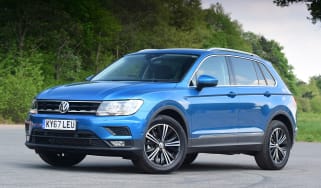
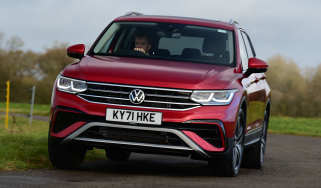
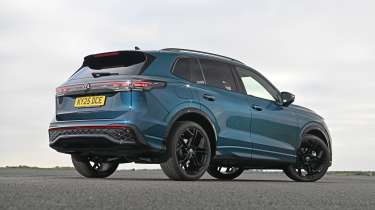
The latest Volkswagen Tiguan doesn’t exactly push the envelope in terms of looks – at first glance, you might even mistake it for the outgoing model. But playing it safe with the Tiguan’s styling makes a bit more sense when you factor in that this is VW’s best-selling model globally.
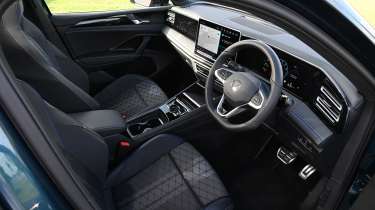
Volkswagen had a bit of a wobble around 2020 in terms of its interior design and quality. While it hasn’t quite fully got its mojo back when it comes to the flawless ergonomics of its earlier cars, the Tiguan’s build quality is getting back to the brand’s best work.
Interior and dashboard design
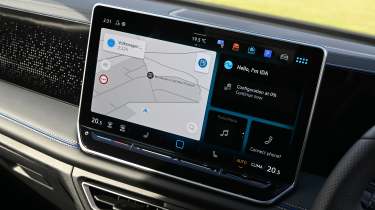
Previously, VW stood out from the crowd with its neatly designed, beautifully damped switchgear, but that’s much harder to do when so much is now confined to a touchscreen. Still, the layout is neat and logical, but climate controls are restricted to the 12.9-inch (or optional 15-inch) display. A multifunction rotary dial sits beside the start button and parking brake on the centre console; this can adjust the audio volume and switch between drive modes.
The now-discontinued entry-level ‘Tiguan’ trim looked a little dull inside, but Life has a 10-colour ambient lighting system, while mid-range Match trim has laminated rear privacy glass. The plush Elegance trim has a 30-colour ambient lighting system as well as heated and massaging front seats and a 360-degree camera set-up. Finally, R-Line gains more heavily contoured sports seats, and some sportier-looking exterior and interior styling tweaks.
Materials and build quality
All of the main touchpoints are made from soft materials, while the likes of carpeted door bins add a little clue that Volkswagen has put a little extra effort into the car’s fit and finish compared with many of its big-selling competitors.
The door pulls feel solid, the vents are slick to adjust manually, and proper buttons can be found on the steering wheel, in place of the fiddly touch-sensitive keys that VW dabbled with on the likes of the Mk8 Golf and ID.3.
Infotainment, sat-nav and stereo
Volkswagen has refined its touchscreen tech over the past few years, and it’s resulted in a set-up that largely impresses overall. A bank of shortcut keys along the top of the screen provide easy access to drive modes and driver-assist functions, while the home screen offers widgets of various sizes for the navigation, media and general shortcuts. The larger screen also comes with a helpful head-up display, which projects important information, such as speed onto the windscreen within the driver’s line of sight.
The climate controls are touchscreen only, though, and adjusting the fan speed or direction requires a sub-menu to be opened up, which is a little annoying. On the plus side, the display’s graphics are sharp and the colours are bright and bold.
The sliding temperature and volume controls still need a knack to get them to work properly, though, while VW’s always-listening “Hey Ida” voice control prompt is too easy to activate accidentally when in conversation with passengers – you could be talking just for the car’s voice system to butt in and ask what you want when you’ve done nothing of the sort.
Wireless Apple CarPlay and Android Auto phone connectivity are standard, but you’ll need the Infotainment package to get wireless charging pad on the entry-level trim, or step up to Life trim. An eight-speaker audio setup is standard, but for around £1,400 you can add a 700-watt, 10-speaker Harman Kardon system.
The Tiguan’s cabin isn’t going to win any design awards, but it’s a practical and well built space to spend a lot of time. We love the soft-touch plastics and added physical controls, but there’s still too much gloss-black trim that attracts dust and fingerprints. - Jordan Katsianis, Senior staff writer
Boot space & practicality
Pros |
|
Cons |
|
The Tiguan is one of the most spacious cars in its class, for both passengers and their belongings. A pair of adults should find plenty of space up front in the Tiguan, while visibility is better than the class average thanks to a relatively straight bonnet, which gives a decent clue about where the front end stops, and large side windows mean respectable over-the-shoulder visibility. A blind-spot monitoring system is standard to warn you of vehicles lurking where you can’t see them.
Dimensions and size
The Tiguan is somewhere between the Hyundai Tucson and Ford Kuga in terms of size, which means it’s slightly larger all round than the likes of the Kia Sportage and Nissan Qashqai.
Dimensions comparison | |||
| Model | Volkswagen Tiguan | Hyundai Tucson | Ford Kuga |
| Length | 4,539mm | 4,525mm | 4,604mm |
| Width | 1,842mm | 1,865mm | 1,882mm |
| Height | 1,660mm | 1,650mm | 1,680mm |
| Wheelbase | 2,676mm | 2,680mm | 2,710mm |
| Boot space | 652-1,650 litres (eTSI, TDI) 490-1,486 litres (eHybrid) | 620-1,799 litres | 645-1,534 litres |
Seats & passenger space
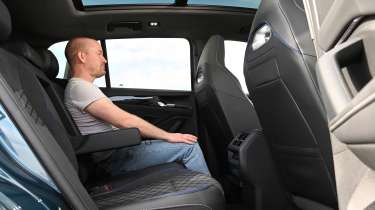
Adjustment of the driving position is as good as it gets in this class, with plenty of range for moving both the seat itself and the steering wheel. R Line models get a set of sporty-looking seats with a fixed headrest; they’re superbly comfortable and hold the front occupants in place without squeezing them unnecessarily tightly.
Unlike either the Kia Sportage or Nissan Qashqai, the Tiguan offers an Isofix mounting point on the front passenger seat, meaning that families can securely fit their child seat in one of three seats inside the Volkswagen, instead of just two as in its rivals.
Passengers are well catered for in the back of the Tiguan. Knee room is slightly ahead of that in the already spacious Sportage, and it’s made even better by the fact that there’s loads of foot space available between the front seats. Compared with the Kia, the hump in the middle of the floor is a little larger, but the centre seat itself is a touch softer, and therefore more comfortable to sit on.
Boot space
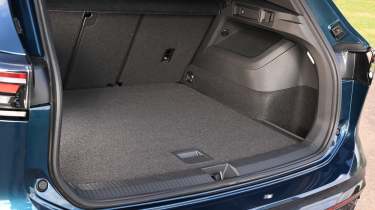
Few rivals can compete with the Tiguan’s boot space; there’s a superb 652 litres on offer with the rear seats in place. The load space is deep, while models fitted with a false floor can create a near-level load area from the load lip right through to the rear-seat backs once they’re folded down. Thanks to levers in the boot, dropping the back seats out of the way is very easy, too.
The Tiguan has a sliding and reclining rear seat, and a three-way split seat back means there’s flexibility when carrying people and longer items. A selection of side cubbies can hold smaller items, and there’s plenty of under-floor storage in the petrol and diesel variants.
Compromises have been made to fit the eHybrid system into the Tiguan, and it’s the boot that bears the brunt of this. A cargo capacity of 490 litres is well down on the 652 litres offered in the standard model, but that’s still one of the better figures among its PHEV rivals – for example, the PHEV-only BYD Seal U has a capacity of only 425 litres. The VW’s floor is level with the low load lip, too, which improves access. A maximum capacity of 1,486 litres with the back seats folded isn’t bad, but is 164 litres down on the non-hybrid Tiguan.
Towing
The best Tiguan for towing is the 2.0 TSI petrol with 4MOTION, which can haul a braked trailer or caravan of up to 2,200kg, irrespective of which power output you choose. Both the 2.0 TDI and 272 eHybrid have the next highest towing capacity of 2,000kg. The 1.5 eTSI 150 and 204 eHybrid can pull a braked trailer or caravan of up to 1,800kg, while the 1.5 eTSI 130 is the least capable at 1,600kg, but that’s still enough for a decent-sized caravan.
In comparison, the revised Ford Kuga can manage up to 2,100kg in 2.5 PHEV plug-in hybrid form, or in the four-wheel drive version of the 2.5 FHEV. Fitting a tow bar to the Tiguan costs more than £1,000.
A full-size spare wheel is available for £350.
The Tiguan hits all the right notes when it comes to the interior storage solutions that you’d expect, but there’s not much in the way of surprises as you’ll find in some Japanese or Korean alternatives. - Jordan Katsianis, Senior staff writer
Reliability & safety
Pros |
|
Cons |
|
The Tiguan bagged a very impressive score in the 2024 round of Euro NCAP safety tests on its way to a maximum five-star rating. It was particularly strong in the vulnerable road users category; only the Toyota C-HR and a pair of Subarus narrowly beat its score of 84 per cent. Every model gets adaptive cruise control, parking sensors all round and a reversing camera as standard.
Volkswagen’s performance in the most recent Driver Power customer satisfaction survey was less impressive, however, with a final position of 27th out of 31 manufacturers. Only Cupra fared worse out of the Volkswagen Group brands, while the other three falling below it were Dacia, BYD and MG.
| Euro NCAP safety ratings | |
| Euro NCAP safety rating | Five stars (2024) |
| Adult occupant protection | 83% |
| Child occupant protection | 88% |
| Vulnerable road user protection | 84% |
| Safety assist | 78% |
All Volkswagen cars come with a three-year, 60,000-mile warranty, which is about as basic a warranty as you can get on a new car these days. There’s also 12 months of roadside assistance included, but again that’s just about the bare minimum provided by any volume manufacturer these days.
Volkswagen recommends a two-year service interval for mild-hybrid versions of the Tiguan. A service plan is available to cover either two years (one service) or four years (two services), but it’s relatively expensive compared with the three-year maintenance packages of many rivals.
Buying and owning
- Best buy: Volkswagen Tiguan 1.5 eTSI 150 Match
The beauty of having so many different variants across the one model type means it’s easy to find a combination of trim and powertrain that suits your specific needs. If you’re a private buyer and don’t do huge mileage, one of the mild-hybrid petrols in a mid-range spec balances great tech, good space and fine handling without straying too high up the pricing spectrum.
If you’re buying through a company, or have to take CO2 into consideration, the eHybrid models offer excellent cost-saving measures alongside good efficiency – if you plug them in. We’re not sure R-Line models really add much to the package, but if you’re willing to pay the extra, there’s no reason not to splurge.
Volkswagen Tiguan alternatives
The Tiguan is Volkswagen’s best-selling model, but it’s far from a dominant force in the compact SUV sector, because there are scores of rivals to choose from. The latest Tiguan is priced towards the upper end of the sector, if not quite on a par with the likes of the BMW X3 and Mercedes GLC.
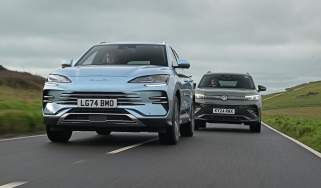
Rivals include staples of the class such as the Ford Kuga, Honda CR-V and Toyota RAV4, while slightly cheaper options such as the Hyundai Tucson, Kia Sportage, Nissan Qashqai, Renault Austral and Vauxhall Grandland offer better value for money. Some of these rivals offer plug-in hybrid or all-electric options, while a newcomer to the class is the BYD Seal U, which is purely a plug-in hybrid.
Frequently Asked Questions
It’s not a class leader, but it’s certainly a strong contender. It treads a middle ground between the mainstream and more premium parts of the compact SUV market, so you could see it as a pricier option than the former, or a relative bargain when compared with the latter. It offers plenty of space and it’s a good car to drive at least, which isn’t something you can say about a lot of rival compact SUVs.