Mercedes GLC review
The Mercedes GLC provides a variety of plug-in hybrid power and some decent tech, but isn’t the best to drive


Our opinion on the Mercedes GLC
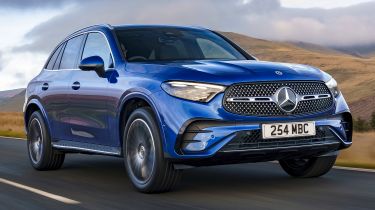
If you’re looking for a luxurious family SUV, then the Mercedes GLC is worth considering. The plug-in hybrid models have impressive electric range and low CO2 emissions, which make them particularly appealing to company car buyers
However, the Mercedes GLC simply isn’t as good to drive as rivals from BMW, and its standard suspension can be quite harsh over bumps. The GLC is more expensive than its closest rivals, too.
About the Mercedes GLC
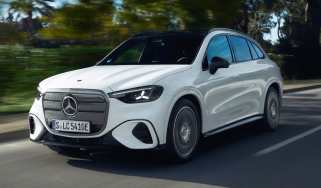
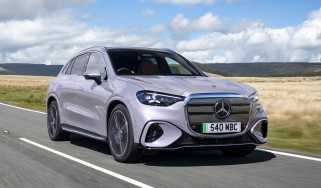
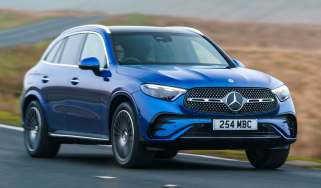
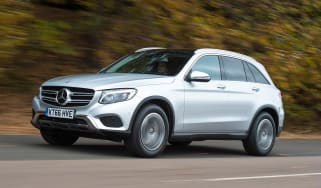
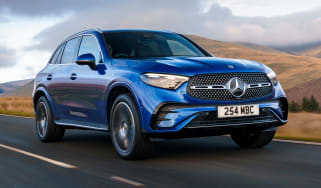
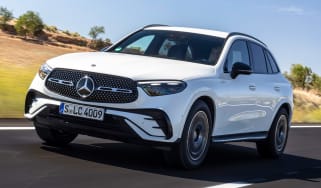
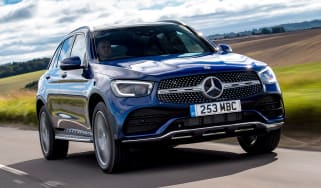
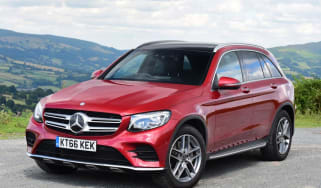
The Mercedes GLC is now in its third generation, although this is the second version available in the UK. It remains in the same spot in the Mercedes range – above the Mercedes GLB but below the Mercedes GLE. The letters in the name also hint at its link to the Mercedes C-Class saloon and estate.
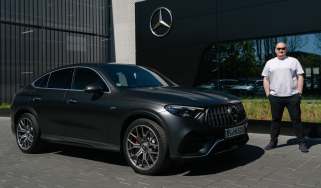
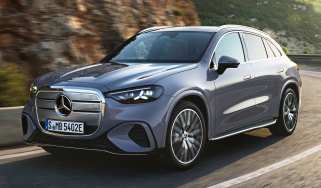
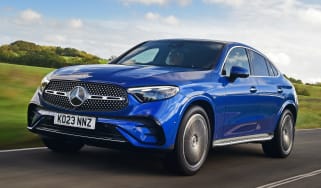
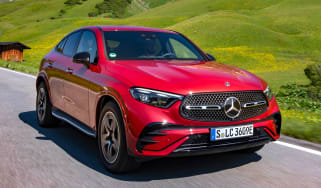
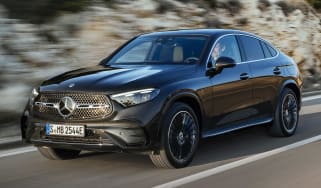
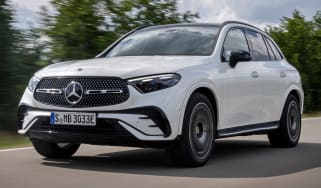
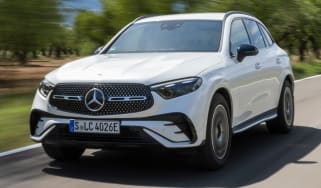
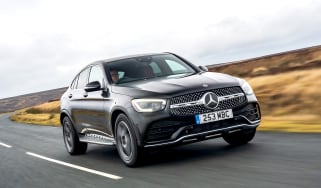
We’ve driven various versions of the current GLC since it came out, including the sleek-looking Mercedes GLC Coupe. It features pretty much all the same equipment but with a slightly different roofline for a sportier look.
Performance & driving experience
Pros |
|
Cons |
|
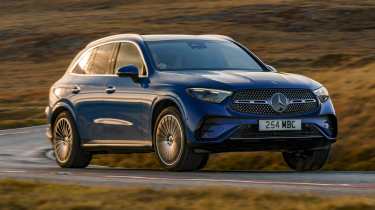
The Mercedes GLC uses the same platform as the Mercedes C-Class saloon and estate, and so it shares engines with that model as well. Unlike the C-Class, the GLC uses four-wheel drive as standard – all models come with Mercedes’ 4MATIC set-up and a nine-speed automatic gearbox.
Used - available now


The gearbox is smooth and shifts quickly enough once on the move, but it could be more responsive when pulling away from a stop. We found turning the start/stop system off can help when you’re trying to merge into traffic.
| Model | Power | 0-62mph | Top speed |
| GLC 220 d | 194bhp | 8.0 seconds | 136mph |
| GLC 300 | 308bhp | 6.2 seconds | 149mph |
| Mercedes-AMG GLC 53 | 443bhp | 4.2 seconds | 155mph (170mph with Pro Performance pack) |
Performance, 0-60mph acceleration and top speed
The 255bhp 300 is the quickest version in the regular GLC range, hitting 62mph in 6.2 seconds and topping out at 149mph. Other versions are very close behind: the 266bhp 300d takes 6.3 seconds to do the same benchmark sprint and gets to 151mph, while the 329bhp plug-in hybrid GLC 300de takes 6.4 seconds to get to 62mph and can reach the same top speed (135mph) as its 308bhp petrol 300 e equivalent, which completes the same 0-62mph sprint in 6.7 seconds.
The slowest model in the range is the 194bhp GLC 220d, which takes eight seconds to reach 62mph and hits a top speed of 136mph. This is still more than good enough for any family car, though.
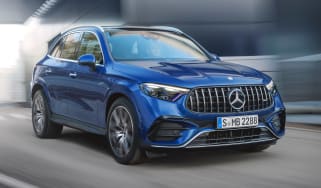
If you want a more potent version of the Merc's mid-size premium SUV, the 443bhp Mercedes-AMG GLC 53 should fit the bill. It’ll crack 0-62mph in a mere 4.2 seconds and romp on to a limited top speed of 155mph, or 170mph if you specify the £7,500 Pro Performance Package. Its 3.0-litre six-cylinder turbocharged petrol engine is much more characterful than the plug-in hybrid models the 53 replaces, although it still isn’t quite as brawny as the older 4.0-litre V8 in the older 63.
Town driving, visibility and parking
Light steering makes the GLC relatively easy to drive around town, although we would suggest turning off the start/stop system to make the GLC more responsive away from the lights.
Plug-in hybrid models are better in this regard when you’re tooling around in electric mode. We did find that occasionally its overzealous forward collision avoidance system prevents the car from moving forward if it thinks you’re going to collide with the vehicle in front, which can be awkward when trying to make gaps in traffic.
Large alloy wheels combined with the standard sport suspension lead to a crashy ride over bumps, which isn’t fitting for a family car, let alone a Mercedes SUV. We’d stick to the smaller wheel options and consider the refinement pack available on AMG Line Premium trim, which adds adaptive air suspension for a more compliant ride. It also adds four-wheel steering, which makes the GLC more manoeuvrable when parking and navigating tight city streets.
Visibility isn’t great, but that’s the same case in pretty much all similar SUVs – you sit high up and with shallow windows and a lot of bodywork in between you and the ground, it can be a bit daunting to drive until you get used to the size. A reversing camera is standard, and our preferred AMG Line Premium trim includes a 360-degree parking camera with a novel function that lets you see ‘through’ the bonnet with a camera feed on the display.
Country road driving and handling
Sadly, the GLC’s ride and handling remain underwhelming even when you leave the city limits. While the engine and transmission in the versions we’ve tried so far have been impressive, we find there’s too much body lean in corners and an inconsistent brake pedal feel that robs you of confidence when bringing the GLC to heel.
Compared with the BMW X3, the GLC feels heavy and a little wayward when tackling a twisty road. The adaptive air-suspension option can improve things by tightening body control.
Of course, you could go even further with the high-performance Mercedes-AMG GLC 53, which has its own chassis tuning, adaptive suspension, dedicated drive modes, and four-wheel steering. These all combine to make a mighty fast cross-country machine, but it’s still a very heavy SUV, and the ride in its sport+ setting is a bit too crashy for our crumbling Tarmac. We do also wonder if the Porsche Macan Electric, especially in 510bhp GTS form, wouldn’t be an even better performance SUV with even sharper handling and some of the best brakes we’ve tried on an EV, with a seamless blend between regenerative braking and the car's own six-pot calipers and enormous disc brakes.
Motorway driving and long-distance comfort
The GLC feels most at home on the motorway, where its low levels of wind and road noise help make it a relaxing mile-muncher. It can still feel a touch too floaty over undulations (again, the adaptive air suspension can help control that body movement), but the ride feels more settled than it does around town or over bumps on a B road.
All cars get various safety aids, such as lane keep assistance and blind spot warning, to alert you to vehicles alongside you when you change lanes. Oddly, you need to specify the £1,700 driving assistance pack plus to get the brand’s DISTRONIC adaptive cruise control, which helps keep you at a set distance behind the vehicle in front. A number of rivals, including the Volvo XC60, get that sort of technology as standard across the range.
MPG & running costs
Pros |
|
Cons |
|
At 53.3mpg, the Mercedes GLC 220d is an excellent choice for private buyers, especially as it’s also the cheapest model in the range. The engine uses mild-hybrid assistance, and while it can’t power the car on electric power alone, it improves efficiency by seamlessly stopping and starting the engine in stop-and-go traffic and boosts performance when accelerating.
The GLC 300d is a bit less economical than the 220d, returning 50.4 mpg according to official figures. This is still decent for a large, heavy family SUV with impressive performance. The GLC 300 petrol is rather thirsty, returning just 38.7mpg, but isn’t as hungry for fuel as the high-performance AMG GLC 53, which manages 29.4mpg. On the plus side, we easily achieved that figure in regular driving, although it will plummet if you drive it as intended.
Both plug-in hybrid models have better fuel economy, with the petrol 300 e at an official 128.4mpg and the diesel 300 de slightly better at 166.2mpg. Based on our experience, you’re unlikely to achieve those figures, even with regular charging. We drove a loop in a 300 e after having drained the battery, and achieved 35.2mpg, which is somewhat shy of the 41mpg we achieved in the BMW X3 30e on the same test loop.
You’ll want to make sure the PHEV versions are regularly charged because they have a smaller 49 litre fuel tank, whereas the regular petrol and diesel models have a 62 litre tank.
| Model | MPG | CO2 | Insurance group |
| GLC 220 d | 53.3mpg | 140g/km | 40 |
| GLC 300 d | 50.4mpg | 148g/km | 44 |
| GLC 300 | 38.7mpg | 165g/km | 42 |
Electric range, battery life and charge time
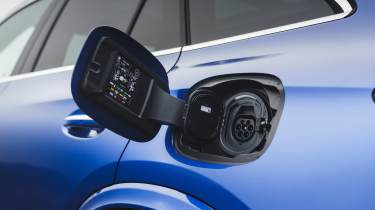
Both the GLC 300 e and 300 de have a range of over 70 miles on electric power only, which is an excellent result compared with the 65-mile figure of the Audi Q5 eHybrid, or the BMW X3 30e, which only manages 55 miles.
We tested the 300 e during our plug-in hybrid megatest, and achieved an all-electric range of 64 miles on a test loop including a mix of some urban, B road and motorway work.
You can charge the Merc's 25.3kWh battery in two hours and 45 minutes using an 11kW home wallbox or public charging point (it’ll take longer on a typical 7kW charger).
| Model | Battery size | Range | Insurance group |
| GLC 300 e | 25.3kWh | 76 miles | 46 |
| GLC 300 de | 25.3kWh | 74 miles | 48 |
Insurance groups
Insurance group ratings for the latest GLC start at group 40 for the 220 d, followed by the petrol 300 in group 42. The most potent, non-plug-in diesel, the 300 d, falls in between this at around group 44. The petrol plug-in hybrid 300 e is in group 46, while the top-spec plug-in hybrid 300 de is in group 48.
Oddly, the high-performance Mercedes-AMG GLC 53 is one insurance group lower than the diesel plug-in hybrid, in group 47.
For those looking for a premium SUV with lower insurance group ratings, the Volvo XC60 starts in group 34, and goes up to group 42 for the quickest T8 plug-in hybrid.
Check if your car needs an MoT and view its complete history with our MoT History Checker...
Tax
No version of the Mercedes GLC costs less than £40,000, so on top of the standard annual rate of vehicle excise duty (VED), you’ll need to pay an additional £440 surcharge from the second time the vehicle is taxed until it is five years old.
Another thing to consider is that plug-in hybrid vehicles, much like EVs, will be subject to a eVED pay-per-mile charge when it is introduced from April 2028.
Company car drivers will want either of the plug-in hybrid models to benefit from lower benefit-in-kind (BiK) fees. Both the petrol and diesel plug-in hybrids are in the seven per cent bracket, which is significantly lower than the 34 per cent bracket of the 220 d or the 35 per cent bracket of the 300 d. All other versions are in the highest 37 per cent bracket.
Depreciation
The Mercedes GLC should retain between 47 and 54 per cent of its list price over three years and 36,000 miles of ownership, which is on par with its main rivals, the Audi Q5 and BMW X3
To get an accurate valuation on a specific model check out our free car valuation tool...
Interior, design & technology
Pros |
|
Cons |
|
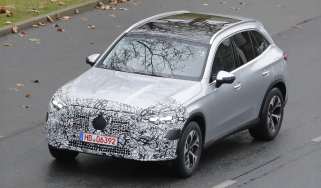
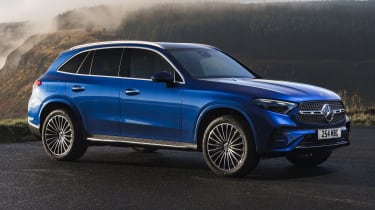
Mercedes has reworked the Modular Rear Architecture (MRA) platform, and while the GLC features design cues from the latest C-Class saloon, its looks aren’t all that different from its predecessor. That’s no bad thing considering it’s always been a handsome SUV, but it’s now looking a little old compared with newer designs, such as the Audi Q5 and BMW X3.
There are four trim levels to choose from with the regular GLC. Company car drivers will be well catered for with the Urban Edition trim, which is only available with 300 e or 300 de plug-in hybrid power, and misses out on some of the sportier design elements of the AMG Line cars. However, it still comes with 20-inch wheels, the black exterior trim ‘Night Package’, privacy glass, an electric tailgate, a reversing camera, an 11.9-inch infotainment system with sat-nav, and ambient interior lighting.
AMG Line features smaller 19-inch alloys, but has sportier exterior design elements like a rear diffuser. It has an electric front seat memory package, traffic sign recognition, and extra USB charging points.
Our preferred AMG Line Premium trim has a few more extras we think are worth paying for, such as:
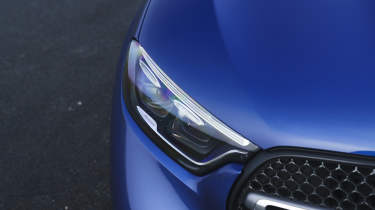
- Adaptive LED headlights
- An opening panoramic glass roof
- A heated steering wheel
- A 360-deg camera system
- Augmented reality sat-nav
This trim level also allows you to specify the near £2,500 Refinement Pack with adaptive air suspension and four-wheel steering. While it is expensive, it sorts out the disappointing ride of the standard sport suspension, plus the four-wheel steering makes the car more nimble when it comes to parking.
High-end AMG Line Premium Plus gets you ventilated front seats with a massage function for improved long-distance comfort, a 13-speaker, 590-watt Burmester surround sound system, and a head-up display.
If you happen to be choosing the AMG 53, it comes in Premium, Premium Plus and Edition trims. Premium and Premium Plus contain a number of features from the equivalent AMG Line Premium and AMG Line Premium Plus trims of the standard GLC, but contain many AMG-specific items like 21-inch AMG wheels, performance brakes, four-wheel steering, AMG adaptive suspension, plus AMG styling elements - including a silver chrome fuel cap (presumably because you’ll be filling it up a lot over the course of your ownership).
You can add the £7,500 Pro Performance Pack to Premium and Premium Plus if you want a higher 170mph top speed, more carbon fibre exterior and interior trim details, composite brakes, and the AMG Dynamic Plus pack with extra driving modes and dynamic engine mounts. None of these is strictly necessary, even on a performance SUV, and we find the standard AMG 53 is fine without them.
Of course, the Edition trim includes many of these items, along with some exterior decals that may not suit everyone’s taste.
Interior and dashboard design
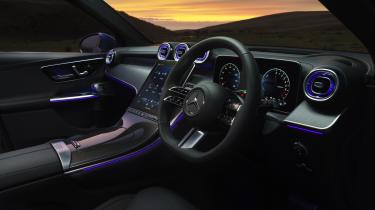
While the dashboard of the GLC is adorned with some snazzy-looking illuminated air vents and is covered in tasteful stitched upholstery, it is dominated by two large screens. While they aren’t the hyperscreens found in the E-Class, S-Class, EQE and EQS models, they’re still vast.
The main one in the middle is an 11.9-inch infotainment screen for sat-nav, menu functions, radio and displaying your chosen smartphone interface. Next to it, behind the steering wheel, is a 12.3-inch digital instrument display.
Our main point of contention is the touch-sensitive controls on the steering wheel, which are very sensitive and awkward to use, often leaving us not on the desired readout on the driver’s instrument cluster or with the volume not quite where we want it. Often, it was much easier to use the shortcuts on the bar on the main infotainment screen instead. The newer CLA and GLB models have more physical controls on their steering wheels, and we hope Mercedes adds these to the GLC.
Materials and build quality
The GLC uses plenty of soft-touch materials inside and shares a similar design to models higher up the Mercedes pecking order, so with its sharp screen clarity and eye-catching ambient interior lighting, it looks like an expensive car. However, our test car had a number of rattles that undermine the feeling of quality
Infotainment, sat-nav and stereo
Mercedes calls its latest infotainment system ‘MBUX’ and it uses an 11.9-inch portrait display along with a 12.3-inch screen instead of dials behind the wheel. We ranked it second out of the 10 best car infotainment systems included in our test, finding it to be quick to respond and having crystal-clear screen resolution. The GLC benefits from having bigger climate controls left on permanent display at the bottom of the screen compared with the newer Mercedes E-Class Estate included in the group test, so you don’t need to delve into a menu to do a simple task like adjusting the temperature.
The menu layout is intuitive, and you can flick through options like on a tablet computer. There’s a large on-screen keyboard for the sat-nav to make inputting a destination easier, or you can use voice commands instead. The augmented reality sat-nav instructions are rather good, putting arrows on a live camera feed so you can see exactly which direction you need to go. However, that feed appears only on the main infotainment screen, which is not where you should be looking while driving. We’d like to see it mirrored in the driver’s instrument cluster (only basic direction arrows are used) or in the underutilised head-up display fitted to AMG Line Premium Plus trim and above.
Android Auto and Apple CarPlay are standard in all models, and it works very well on the large screen. Wireless smartphone charging is provided as standard on all models.
Boot space & practicality

Pros |
|
Cons |
|
The Mercedes GLC comes in two body styles, and the standard model offers the most practicality. The GLC Coupe has a lower roofline that eats into rear head room slightly, and reduces the boot capacity from 620-1,680 litres to 545-1,490 litres.
Dimensions and size
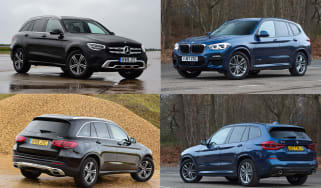
The current GLC has been around for a while, and both its main rivals have since launched new generations of their cars. While the GLC still boasts a longer wheelbase than the Audi Q5 and BMW X3, its competitors have overtaken it in all other measurements, including overall length, height, and width.
The closely related GLC Coupe retains the same width as the regular GLC, but its roofline is a little lower at 1,605mm and it is longer at 4,764mm.
| Dimensions comparison | |||
| Model | Mercedes GLC | Audi Q5 | BMW X3 |
| Length | 4,716mm | 4,717mm | 4,755mm |
| Width |
1,890mm (2,075mm inc mirrors) | 2,155mm inc mirrors |
1,920mm (2,132mm inc mirrors) |
| Height | 1,640mm inc roof rails | 1,662mm inc roof rails | 1,660mm |
| Wheelbase | 2,888mm | 2,828mm | 2,865mm |
| Boot space |
620-1,680 litres (470-1,530 litres PHEV) |
520-1,473 litres (433-1,300 litres PHEV) |
570-1,700 litres (460-1,600 litres PHEV) |
Seats & passenger space
Since all versions of the Mercedes GLC come with electric front seat adjustment (AMG Line and above get memory settings), you’re sure to find a comfortable driving position. Four-way electric lumbar adjustment is also standard, but we didn’t find the seat to be quite as plush as what you’ll find in a Volvo XC60. The high-end AMG Line Premium Plus adds front-seat ventilation and a massage function.
There are plenty of storage spots in the cabin, including a large central bin with a second in front of it that incorporates cupholders – thanks to the gear selector being a stalk behind the wheel instead of a lever on the centre console.
There’s more legroom and headroom inside the GLC than before, and it was already a spacious family car. Kids and adults alike will have no issues sitting in the back seats, and the GLC’s upright shape and roofline mean there’s a good amount of headroom too. We also found plenty of space under the front seats so rear passengers could stretch out their feet.
The outer rear seat positions have Isofix child seat mounting points accessible behind easily removable plastic covers.
Boot space
Normal petrol and diesel versions of the GLC have a healthy 620 litres of boot space, which is more than the 570 litres you get in a BMW X3 petrol. This expands to 1,680 litres with the rear seats folded, which is significantly better than the 1,473 litres you’ll find in an Audi Q5 with the seats down, but slightly down on the 1,700 litres you get in the BMW (1,700 litres).
However, the plug-in hybrid versions have a battery pack under the boot floor, which reduces the available luggage space to 470 litres (seats up) or 1,530 litres (seats down). A like-for-like BMW X3 plug-in has 460 to 1,600 litres of space, while an Audi Q5 eHybrid has 433 to 1,300 litres of boot space.
Towing
The GLC 220d and GLC 300d diesel models are best for towing, with a capacity of 2,500kg with a braked trailer. The GLC 300 petrol is also a good option, at 2,400kg, but it’ll be rather expensive to run with a trailer or caravan attached. The plug-in models are less ideal if you tow often: their maximum towing capacity is 2,000kg. This is still impressive for a plug-in car, though, and should be more than enough for most people.
Reliability & safety
Pros |
|
Cons |
|
The Mercedes GLC was tested by top safety body Euro NCAP in 2022, where it received a full five-star rating like its Land Rover Discovery Sport and Lexus NX rivals. The Tesla Model Y also received a five-star rating, but scored higher than the GLC in the adult occupant, vulnerable road user, and safety assistance categories.
All versions come with an active bonnet for pedestrian safety, autonomous emergency braking, tiredness detection, blind spot monitoring, and lane departure warning. Higher-spec AMG Line Premium Plus can be ordered with a £1,700 Driving Assistance Pack Plus with the brand’s DISTRONIC adaptive cruise control, lane change assistance, and PRE-SAFE. The latter flashes the hazard warning lights during heavy braking to alert other drivers and tightens the seatbelts to keep occupants safe. If stationary, it’ll maintain braking pressure to help prevent you from hitting the vehicle ahead in the case of a rear end collision.
After a strong second-place finish in 2025, the Mercedes brand topped the best manufacturers list in our 2026 Driver Power customer satisfaction survey. While running costs were deemed a touch too high, owners told us they liked the interior design, fit and finish, driver enjoyment, and front-seat comfort most of all.
| Euro NCAP safety ratings | |
| Euro NCAP safety rating | Five-stars (NCAP, 2022) |
| Adult occupant protection | 92% |
| Child occupant protection | 90% |
| Vulnerable road user protection | 74% |
| Safety assist | 84% |
Buying and owning
Best buy: Mercedes GLC 220d AMG Line Premium
Aside from the company car-centric Urban Edition trim designed to make the plug-in hybrid 300 e petrol and 300 de a little more affordable with a starting price of around £61,000, the least expensive Mercedes GLC is actually the 220 d AMG Line, which starts at just under £55,000. Our preferred AMG Line Premium trim starts at just over £60,000, while the high-end AMG Line Premium Plus comes in at just over £65,000. Anyone hankering after the Mercedes-AMG 53 will need to hand over around £79,500, with the top Edition version costing nearly £92,500.
We’d recommend sticking with the 220 d because it’s potent enough for most needs and with its mild-hybrid assistance, it’s smooth and really rather economical for a sizable SUV. Our preferred AMG Line Premium trim gets many features SUV buyers want, such as a panoramic glass roof, but it also opens up the option to get the refinement pack with AIRMATIC air suspension, which brings a much more composed ride.
If you're interested in purchasing a Mercedes GLC, we can help. Configure your ideal Mercedes GLC now to get top offers from local dealers, and check out the latest Mercedes GLC leasing deals with our Buy A Car service. You can even sell your existing car for a great price with Auto Express Sell My Car.
Mercedes GLC alternatives
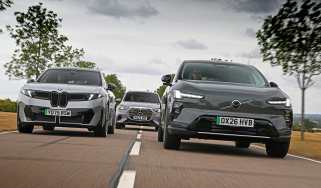
Rivals for the GLC include the usual suspects, such as the Audi Q5, BMW X3 and Volvo XC60. These models all have their strong points – the BMW being better to drive than the Mercedes, while the Volvo and Audi are a bit more comfortable. The Audi and BMW are much newer, but the GLC still has enough high-end technology to enable it to remain competitive.
Of course there are a number of electric alternatives to consider now, with the Tesla Model Y offering similar passenger space, but a lot more luggage space thanks to a vast cavern under its boot floor, plus a ‘frunk’ under the bonnet. But the BMW iX3 is a much better all-rounder, and it promises up to 500 miles to a charge, along with the brand’s next generation of iDrive infotainment.
The three-pointed star also has it’s own premium mid-size electric SUV in the Mercedes GLC Electric, which isn’t as good to drive nor does its EV tech allow it to go as far, but it is a highly refined and comfortable electric SUV that’ll appeal to those who don’t want something sporty. There’s also the Volvo EX60, another electric SUV, though some versions outperform the Mercedes in range and charging speed, and it has the brand’s latest safety features, which should make it one of the safest new cars around.
Mercedes GLC pictures
Key updates of the Mercedes GLC review
14 September 2026: Latest driving impressions and model information.
Frequently Asked Questions
Mercedes provides a three-year, unlimited mileage warranty as standard, and you can extend that by 12 or 24 months if you want – for a fee. That’s the same as BMW, and more generous than Audi.
Deals on the GLC and alternatives