Company car tax guide 2026: everything you need to know about Benefit-in-Kind
Company car tax is worked out using a vehicle’s emissions, its value, and your salary, with electric cars no longer getting quite the same special treatment as before

While a generous holiday allowance or health insurance are great workplace perks, nothing can quite beat the company car. Opting for a company car could help negate the need for private finance or maintenance on a vehicle, but there are tax implications to be considered. Company car tax, also known as Benefit in Kind is the means by which the Government taxes you for taking advantage of this benefit.
Understanding how company car tax works will help you make an informed decision when it comes to choosing your next car, but for many the whole issue can become a confusing minefield.

With that in mind, we’ve covered everything you need to know when it comes to Benefit-In-Kind (BIK) company car tax – from how to calculate your company car tax and how much you’re likely to pay, to the company car tax bands for the 2026/27 and 2027/28 financial tax year.
How much company car tax will I pay?
To calculate the amount of company car tax you’ll pay on a vehicle, you’ll need to know three things:
1. Income tax band
This is determined by your salary
| Tax band | Income | Tax rate (England/Wales) |
| Basic rate | Up to £50,270 | 20% |
| Higher rate | £50,271 to £125,140 | 40% |
| Additional rate | Over £125,140 | 45% |
2. P11D value of your car
The officially-recognised list price of your company car is known as its P11D value.
It includes a car’s quoted list price, plus all options and extras as well as delivery charges. It doesn’t include road tax or first registration fees – or any dealer price discounting.
3. BiK percentage rate
The taxable percentage of the P11D value for your particular make and model. Percentage rates depend on the level of its CO2 emissions and (where applicable) its electric-only range. The tables below are published by HMRC…
Company car tax bands
Like most tax systems, Benefit-in-Kind rates are subject to change with Budget announcements although we do know the company car tax bands for 2026/27 and 2027/28 tax years. They are listed below.
Petrol, diesel (RDE2 compliant) and hybrid powered cars for tax years 2026/27
| CO2 emissions (grams per km) | Electric mileage range | BiK % |
| 0 | — | 4 |
| 1 to 50 | 130 and above | 4 |
| 1 to 50 | 70 to 129 | 7 |
| 1 to 50 | 40 to 69 | 10 |
| 1 to 50 | 30 to 39 | 14 |
| 1 to 50 | less than 30 | 16 |
| 51 to 54 | — | 17 |
| 55 to 59 | — | 18 |
| 60 to 64 | — | 19 |
| 65 to 69 | — | 20 |
| 70 to 74 | — | 21 |
| 75 to 79 | — | 21 |
| 80 to 84 | — | 22 |
| 85 to 89 | — | 23 |
| 90 to 94 | — | 24 |
| 95 to 99 | — | 25 |
| 100 to 104 | — | 26 |
| 105 to 109 | — | 27 |
| 110 to 114 | — | 28 |
| 115 to 119 | — | 29 |
| 120 to 124 | — | 30 |
| 125 to 129 | — | 31 |
| 130 to 134 | — | 32 |
| 135 to 139 | — | 33 |
| 140 to 144 | — | 34 |
| 145 to 149 | — | 35 |
| 150 to 154 | — | 36 |
| 155 to 159 | — | 37 |
| 160 and above | — | 37 |
Petrol, diesel (RDE2 compliant) and hybrid powered cars for tax years 2027/28
| CO2 emissions (grams per km) | Electric mileage range | BiK % |
| 0 | — | 5 |
| 1 to 50 | 130 and above | 5 |
| 1 to 50 | 70 to 129 | 8 |
| 1 to 50 | 40 to 69 | 11 |
| 1 to 50 | 30 to 39 | 15 |
| 1 to 50 | less than 30 | 17 |
| 51 to 54 | — | 18 |
| 55 to 59 | — | 19 |
| 60 to 64 | — | 20 |
| 65 to 69 | — | 21 |
| 70 to 74 | — | 20 |
| 75 to 79 | — | 21 |
| 80 to 84 | — | 22 |
| 85 to 89 | — | 23 |
| 90 to 94 | — | 24 |
| 95 to 99 | — | 25 |
| 100 to 104 | — | 26 |
| 105 to 109 | — | 27 |
| 110 to 114 | — | 28 |
| 115 to 119 | — | 29 |
| 120 to 124 | — | 30 |
| 125 to 129 | — | 31 |
| 130 to 134 | — | 32 |
| 135 to 139 | — | 33 |
| 140 to 144 | — | 34 |
| 145 to 149 | — | 35 |
| 150 to 154 | — | 36 |
| 155 to 159 | — | 37 |
| 160 to 164 | — | 37 |
| 165 to 169 | — | 37 |
| 170 and above | — | 37 |
Example company car tax calculation:
Once you know how to do the maths, it’s quite easy to calculate your company car tax. Let’s have a look at an example.
- First work out the taxable BiK value of your car, which you do by multiplying your chosen company car’s P11D value by its BiK percentage rate.
- Then work out the tax you’ll pay annually, by multiplying the BiK value by your personal tax rate.
For a Basic rate taxpayer driving a car emitting 100g/km of CO2, with a P11D value of £30,000, the sums look like this:
- Step one: £30,000 (P11D) x 26% (BiK rate) = £7,800 (BiK value)
- Step two: £7,800 (BiK value) x 20% (Personal tax rate) = £1,560 (Your annual company car tax bill)
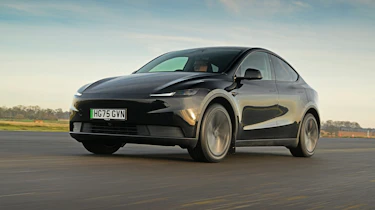
Company car tax for electric cars
Up until 2021, electric cars attracted zero Benefit in Kind tax, making them an incredibly appealing choice for financially savvy company car drivers.

From then on, EVs slotted into the lowest two per cent BiK slot, meaning, while electric fleet drivers did have to pay some tax, it wasn’t anywhere near what those cruising around in petrol and diesel models had to fork out.
However, from the 2026/27 tax year onwards, the BiK rate for EVs will continue to rise by one per cent annually.
The same goes for petrol and diesel cars, with the most polluting vehicles slowly trickling into the top 37 per cent tax bracket.
So is now the time to choose a pure-electric or plug-in hybrid company car?
Yes, if you can. EVs still have the most attractive BiK rates, but plug-in hybrids (PHEVs) also attract less tax, even if it is on the rise.
That’s not to say an EV is a bad choice, especially if you can charge at home or at work, as running an electric car is vastly cheaper than the internal-combustion equivalent.
Just keep in mind that if you’re frequently doing long business trips up and down the country, you may need to use public charging infrastructure which is, for the moment, relatively expensive.
There’s also the forthcoming eVED pay-per-mile tax for EV and plug-in hybrid drivers to consider, although this isn’t due to come into effect until 2028.
What about the diesel surcharge?
Diesel cars not meeting the RDE2 standard of WLTP emissions tests are theoretically subject to a four per cent higher BiK percentage rate than petrol cars. All new diesels are RDE2-compliant now, though.
What about road tax? Isn’t that increasing as well?
Vehicle Excise Duty (VED), more commonly known as road tax, is also designed to encourage greener driving, although in this case only the first year of road tax is linked to CO2 emissions, with a flat rate for following years.
For the 2026/27 tax year VED rates stand at £200 per year – a figure that was based on rises in the Retail Price Index (RPI) (in other words, the annual inflation rate). EVs are now also liable to this increased rate, so click here to check out the new VED rates in full.
Other company car benefits
Because company drivers typically benefit from a brand new car delivered every two or three years, fully insured and with servicing taken care of, they’re saved from most of the hassle and financial planning that running a car means for private drivers.
It’s significant too, that although company cars are not cost-free for employees, it can often feel like a free ride as BiK taxes are deducted from salaries before they hit your bank account. This may sound similar in concept to a salary sacrifice scheme, given both involve a pre-tax deduction from your salary. However, it’s worth noting that salary sacrifice also requires you to pay for the car’s finance and upkeep, unlike with a company car where it’s just a case of paying BiK and adding fuel – or much more commonly nowadays, electricity.
When all that’s taken into consideration, it’s no surprise that employees eagerly take up the offer of a ‘perk car’ from their company, even when they don’t need company wheels for the work they’re employed to perform. Indeed, it’s critical for company car tax purposes that you are allowed to use your company vehicle for personal mileage, which includes commuting. If you are only allowed to drive work mileage, there’s no benefit in kind, so of course you won’t be liable for tax.
Guide to company car tax terms
- BiK (Benefit-in-Kind): the tax on a non-salary perk such as a company car, provided by an employer to an employee.
- CO2 (carbon dioxide): pollutant produced by cars with a petrol or diesel engine, measured in grams per kilometre (g/km), and used to set tax.
- BiK rate: the percentage of a company car’s value that is taxed. The more CO2 a car emits, the higher its BiK rate.
- NEDC (New European Driving Cycle): the old test procedure for measuring car emissions and fuel economy.
- WLTP (Worldwide harmonised Light vehicle Test Procedure): the new economy and emissions test procedure; all new cars registered from September 2019 are assessed under WLTP.
- RDE2 (Real Driving Emissions, Step 2): RDE emission tests take place on the road as an element accompanying the lab-based WLTP assessments. RDE2 sets stricter emission limits than the previous RDE1 standard.
- Diesel surcharge: diesel company cars not complying with the RDE2 element of WLTP tests are automatically hit with a four per cent BiK increase compared with their petrol-engined equivalents.
Thinking about making the switch to an EV? These are the best electric cars to buy...