Dacia Duster review
The Dacia Duster is a well-priced SUV that offers rugged looks and plenty of space for the money

Our opinion on the Dacia Duster
The Dacia Duster is a very appealing, no-nonsense small SUV, and the revised 1.8 Hybrid adds greater versatility than ever. It’s a shame budget-minded buyers can no longer get the low-cost Essential model, but the rest of the range taps into Dacia’s ambitions to be an outdoor adventure brand.
The Duster is a rugged-looking SUV that has plenty of practical touches, while the Hybrid model offers a tempting blend of decent performance and excellent 50mpg-plus fuel economy. In Extreme trim, it’s a well-equipped model, especially when you factor in the budget price. That also makes the low Euro NCAP score more palatable.
About the Dacia Duster
The simple, no-nonsense Dacia Duster arrived in Europe in 2010 and was the lead vehicle used to launch the brand in the UK in 2013. Since then, more than 2.4 million Dusters have been sold worldwide, with thousands finding homes here in Britain.
Dacia has found success with customers who prioritise value above all else, but the latest Duster branches into outdoor adventure as the Romanian company tries to expand beyond its budget branding. The Duster still offers value, which is especially good when you’ll pay more than £27,000 for a basic Ford Puma and the Renault Captur starts at £22,500; the latest Duster starts at less than £22,000.
Used - available now

2023 Dacia
Duster
14,500 milesAutomaticPetrol1.3L
Cash £15,495
2022 Dacia
Duster
10,658 milesManualPetrol1.0L
Cash £10,699
2022 Dacia
Duster
46,677 milesManualPetrol1.0L
Cash £9,299
2022 Dacia
Duster
13,109 milesManualPetrol1.0L
Cash £12,499We’ve tested the budget-friendly family car extensively so far in petrol, hybrid, and petrol 4x4 guise, although line-up changes mean a four-wheel-drive option has been updated to use a hybrid powerplant. Diesel has never featured as part of the third-generation UK line-up.
We have pitted the earlier 1.6 Hybrid Dacia Duster Journey against the MG ZS, and we've also run a Dacia Duster Hybrid Journey (again with the 1.6 Hybrid) as part of our long-term.
Performance & driving experience
Pros |
|
Cons |
|
The Duster focuses on comfort over performance, which sets it apart from many similarly sized SUV rivals. Slightly wallowy handling is a compromise we’re happy to accept, given the good ride quality and low price point, but in some ways it feels like refinement has taken a slight step back when compared with its predecessor.
Most versions of the Duster are front-wheel drive, but you can also get it with four-wheel drive. Initially, the latter was only available with the TCe 130 powertrain, but it now uses hybrid technology for better efficiency.
The Duster's raised ride height and decent ground clearance mean even two-wheel drive models can handle a muddy farm track or boggy festival car park with ease. If you need extra traction, go for the four-wheel drive model. It has five drive modes, including a dedicated one for snowy conditions.
Performance, 0-60mph acceleration and top speed
The Duster range kicks off with the 1.2 TCe 140 three-cylinder turbocharged petrol engine with mild-hybrid assistance. It makes 138bhp, and gets from 0-62mph in 9.8 seconds. It only comes with a six-speed manual gearbox, so if you want an auto, you have to opt for one of the Hybrid models. It provides a nice, linear power delivery thanks to its conventional set-up.
Next up is the 1.8 Hybrid 155, which produces 153bhp from the combined efforts of its petrol engine and electric motor. It's a little heavier, so the extra power it has only shaves a little off the 0-62mph time, which is 9.7 seconds.
The quickest Duster is the 1.2 Hybrid 150 4x4, which puts out 148bhp and gets from 0-62mph in 9.2 seconds.
| Model | Power | 0-62mph | Top speed |
| Duster 1.2 TCe 140 | 138bhp | 9.8 seconds | 112mph |
| Duster 1.8 Hybrid 155 | 154bhp | 9.7 seconds | 112mph |
| Duster 1.2 TCe 150 | 148bhp | 9.2 seconds | 112mph |
Town driving, visibility and parking
A soft ride helps the Duster deliver a pleasant driving experience at lower speeds. Many rivals try to create a sense of sportiness, when in fact all they get is a hard suspension setup, and the way the Duster gently wallows from one bump to the next is both refreshing and calming.
The smoothness of the hybrid system’s power delivery helps here. At low speeds and with gentle throttle openings, it feels slick and switches between petrol and electric modes almost seamlessly – the one small exception being an occasional grabbiness from the motor regeneration when slowing.
The manual gearbox in the mild-hybrid petrol is fine, but would be improved by a less spongy response from the clutch pedal.
All models have rear parking sensors and a reversing camera, while Journey and Extreme versions add front and side sensors, plus a multi-angle camera system.
Country road driving and handling
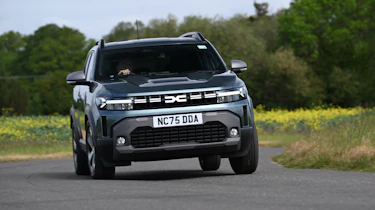
The soft ride means that the Duster isn’t particularly engaging in corners. In fact, it feels a touch more nose-heavy than the last Duster, so it’s not a choice for the keen driver. Driven at a gentler pace, it’s capable enough and still grips the road well. The steering is quite light and vague around the straight-ahead, but becomes heavier and more precise as extra lock is applied.
The uprated Hybrid 155 helps the Duster to feel more responsive than before. The multi-mode gearbox doesn’t offer the option for manual shifts, but given that the Duster doesn’t encourage enthusiastic driving, it’s best to leave the gearbox to its own devices. Hard acceleration can result in plenty of noise from the 1.8-litre petrol engine, but because there’s more power on offer, it’s less of an issue than it was with the old 1.6 Hybrid.
Motorway driving and long-distance comfort
The soft ride makes motorway cruising a relaxing experience. It’s a shame, then, that you can hear a lot of wind noise at speed from around the Duster’s bonnet and A-pillars, to the point where it’s more noticeable than in the previous version. It’s a gripe that’s particularly apparent because road noise is more muted than before, and once the hybrid system settles down, it’s not very intrusive either. The mild-hybrid petrol model is quieter still.
“The light steering made manoeuvring easy, and the various cameras were a great help when parking. I love the Dacia’s chunky styling, but it makes it very hard to judge where the extremities are without hi-tech help. As it stands, it can only show one camera’s view at a time.” - Andy Pringle, chief sub-editor.
MPG & running costs
Pros |
|
Cons |
|
Surprisingly, the 1.8 Hybrid powertrain has better claimed fuel economy than the system that it replaced. While the 1.6 Hybrid had WLTP-tested fuel economy of 55mpg, Dacia quotes up to 61.4mpg for the new set-up.
We ran a Duster 1.6 Hybrid for six months and averaged 52.3mpg, not far shy of the official figure. In comparison, the 1.8 Hybrid returned 55.6mpg during a week of driving, which included a varied mix of urban, country and motorway work. While the two figures are not directly comparable, it’s good to see the uprated powertrain improving on the efficiency of the old one in the real world.
The older TCe 130 has also been given a bit more power and an improvement in efficiency, going from 51.0mpg to a claimed figure of 52.3mpg.
| Model | MPG | CO2 | Insurance group |
| Duster TCe 140 Expression | 52.3mpg | 123g/km | 25 |
| Duster Hybrid 155 Expression | 61.4mpg | 106g/km | 25 |
| Duster Hybrid 150 4x4 Extreme | 50.4mpg | 130g/km | 28 |
Insurance groups
Ratings for the Duster start in group 25 for the 1.2 TCe and 1.8 Hybrid versions, while the 1.2 Hybrid 4x4 goes up to group 28. For comparison, the Ford Puma starts in group 12, and goes up to group 21 for the hotter ST version.
Tax
With no fully electric option or plug-in hybrid powertrain, the Duster doesn’t offer particularly tempting rates for company-car drivers. Clearly, Dacia sees greater benefit in offering low list prices to private buyers than in catering for fleet sales. The affordable prices mean even the most expensive Duster costs much less than the £40,000 limit that would require an additional luxury car tax surcharge.
Depreciation
A competitive starting price has resulted in strong residual values for the Duster, with residuals after three years and 36,000 miles in the region of 55-63 per cent. For comparison, the Renault Captur holds on to 43-47 per cent of its original value over the same period, while the petrol Ford Puma manages 44 to 52 per cent.
To get an accurate valuation for a specific model, check out our free car valuation tool...
Interior, design & technology
Pros |
|
Cons |
|
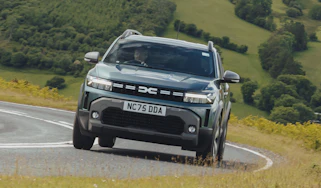
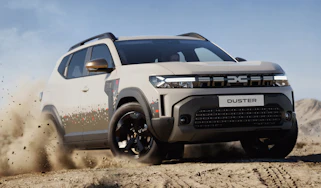
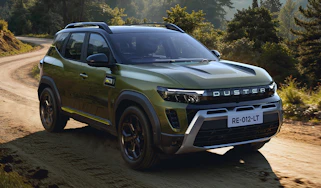
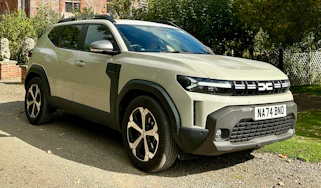
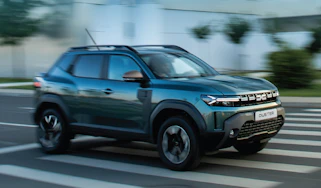
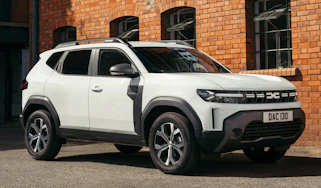
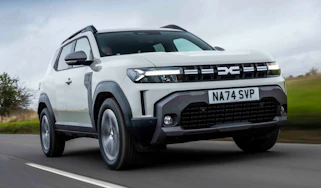
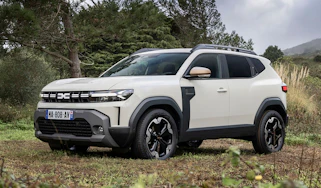
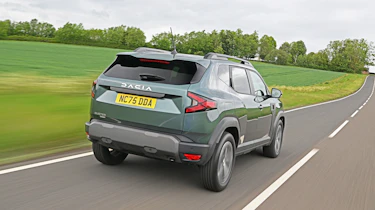
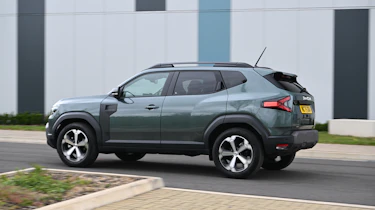
The third-generation Duster has adopted a tough new look, with more thought being put into not only its overall shape, but many of the finer details, too. The squared-off bonnet gives a distinctive appearance from behind the wheel, but also helps the driver to place the front of the Dacia in tight spots. Chunky plastic cladding featuring recycled materials surrounds the lower portions of the car, too.
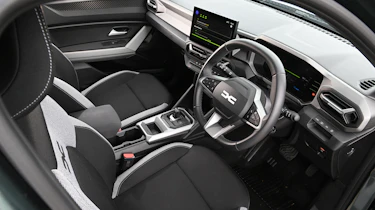
The Duster has always been known for its no-nonsense cabin designs that border on the old-fashioned, but this model has maintained its predecessor’s honest feel while adding some style and one or two useful features.
Interior and dashboard design
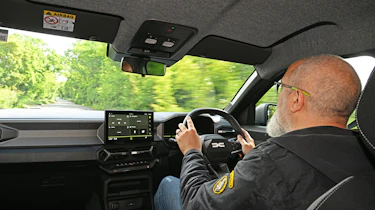
Much more effort has been put into the cabin’s look. There are still Renault-sourced parts, but they’re well integrated; the bank of physical toggle switches for the climate controls is a great touch, and Renault’s familiar media-control stalk behind the steering wheel is still among the most usable designs of its type. Oddly, though, the main volume controls are partly hidden across the top of the display’s frame.
Driver-assist functions can irritate some users, but Dacia has made turning them off easy with a ‘Perso’ setting. This lets you choose the features that you want and don’t want via the touchscreen, which can then be stored as a preset. This can then be accessed with a double press of a button to the right of the steering wheel.
Materials and build quality
Subtly coloured and textured finishes do a decent job of distracting from the fact that everything inside is finished in hard plastics. In a car that pitches itself as a bit rugged, this seems like an appropriate way to save some cash. The centre console doesn’t feel that sturdy, though, while one particular bugbear we have is with Dacia’s optional phone cradle. It’s a clever way of mounting your device on the dash, but it rattles when it’s not carrying a smartphone.
Infotainment, sat-nav and stereo
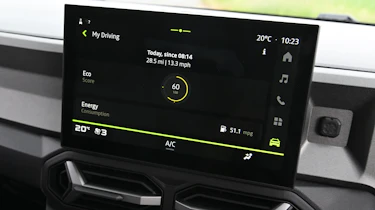
A digital dashboard is quite a novel addition to the Dacia family. Its layout is fairly simple, but it works well. The graphics are very sharp, and the green colour scheme continues the outdoor theme, while large buttons on the steering wheel make it easy to scroll through modes.
The Essential model is no more, so all Dusters have a 10.1-inch infotainment touchscreen. It has a simple yet bright colour palette that is easy to read and looks contemporary. Sadly, the same can’t be said about the camera system’s very low-resolution images. That aside, it’s a decent set-up for the money.
Top-spec cars get the Media Nav Live system that has eight years of connected services. Loading times are okay, and programming a navigation route is fairly straightforward, thanks to a decent on-screen keyboard size.
"While Dacia’s intentions are to be applauded, the obvious clue to Starkle content is via small pale flecks within the plastic that make it look as if the wheel arches and lower door trims have been the victim of overspray or an attack of road salt." - Dean Gibson, senior test editor
Boot space & practicality
Pros |
|
Cons |
|
Interior space and boot capacity are Duster strong points, especially given its relatively modest exterior dimensions and low price. A lofty driving position and low window line improve visibility, but the view to the rear isn’t as good as we’d like. The bonnet extends quite far out in front, but you can get a feel for the car’s edges, helping you to place it on the road.
Dacia has also introduced what it calls the YouClip attachment system, which allows a variety of accessories to be secured in various places around the cabin, including beside the main infotainment display, on the back of the front seats and at the base of the centre console in the rear. Available kit includes a three-in-one cup-holder, bag hook and LED torch. You can also find phone and tablet holders, storage bags and hooks to choose from, all ranging from around £10 to £40.
Dimensions and size
The Duster uses a platform that’s shared with a supermini, but it feels spacious inside. The current generation is slightly longer and wider than the previous model, at 4,343mm long, 1,921mm wide and 1,656mm tall. It isn’t quite as lofty as that old version, but it still has a height advantage over the likes of the Skoda Kamiq.
Dimensions comparison | |||
| Model | Dacia Duster | Nissan Qashqai | Dacia Bigster |
| Length | 4,343mm | 4,425mm | 4,570mm |
| Width | 1,813mm | 1,835mm | 1,812mm |
| Height | 1,656mm | 1,625mm | 1,711mm |
| Wheelbase | 2,657mm | 2,665mm | 2,702mm |
| Boot space | 349-1,545 litres | 504-1,447 litres | 677-1,977 litres |
Seats & passenger space
A wide range of seat and steering wheel adjustment makes it easy for drivers of all sizes to find a comfy seating position. But if you’re tall, you might find the position of the left-foot rest a little awkward to sit comfortably for a longer drive.
You will need Extreme trim to get adjustable lumbar support for the driver, but all cars have a sliding armrest that improves comfort on long trips and offers extra storage. The small rear and side windows limit over-the-shoulder visibility, but the door mirrors are large.
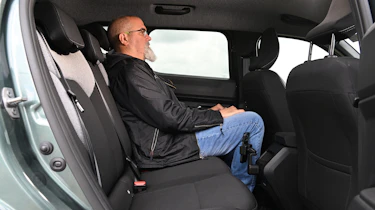
While the Duster doesn’t feel any posher in the back, space is a strong point. Headroom is very impressive in particular, with our measurements putting it ahead of the similarly priced MG ZS and very close to larger family SUVs such as the Kia Sportage. Kneeroom is competitive, too, while the soft seats feel comfortable – even for a third passenger in the fairly wide, flat middle seat. There’s loads of foot room beneath the front seats, and only a small centre hump in the floor. There are Isofix points, but they are only accessible behind zipped covers, which makes them a little more fiddly to get to than in rival cars. The door bins in the back are tiny, too.
If you do need more space, the Bigster uses the same running gear and has the same trim levels for around £3,500 more than the Duster.
Boot space
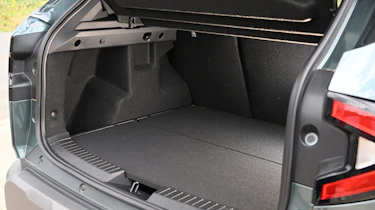
Cargo capacity changes with the powertrain. Fitting the 1.4kWh battery in the Hybrid’s boot cuts the volume from 474 litres in TCe cars to 349 litres. But most of this capacity is lost beneath a false floor, so there’s still a reasonably large cube-shaped space to make use of. A high boot lip makes it a little tricky to load heavy items on board, but the rear seat backs drop almost completely level with the floor, so larger items slide in easily.
"Everything we wanted to take fitted in the car – that’s the three of us, a few soft toys, several bags and what looked like our own body weight in snacks. Above all, most of it went in the boot, and thanks to the square shape of the load area and the adjustable floor being set level with the load lip, it was child’s play to pack and unpack." - Andy Pringle, chief sub-editor.
Reliability & safety
Pros |
|
Cons |
|
A 45th-place finish out of 50 cars in the 2026 Driver Power rankings doesn’t paint a great picture for the Duster. Owners were unsurprisingly thrilled with the value for money on offer, while practicality and fuel economy were also positive attributes. They were less impressed with build quality and reliability, powertrain performance (the 1.8 Hybrid could improve that score), visibility and the infotainment.
A three-star Euro NCAP safety rating is rather underwhelming and is a result of a shortfall of advanced driver-assistance systems, and only an adequate score for Adult Occupant Protection. There are more safety features on this third-generation Duster than on any previous model, though, including automatic emergency braking, traffic-sign recognition, a speed-limit alert, rear-parking assist, lane-departure and lane-keep assist, and driver-attention alert.
The standard three-year/60,000-mile Dacia warranty package is par for the course, but you do get roadside assistance for the same period. There are two options when it comes to an extended warranty, with up to four years and 100,000 miles of cover available for just under £1,000, or a service-activated warranty that offers 12 months of cover with every qualifying service. This cover lasts for up to seven years or 75,000 miles, whichever comes first.
| Euro NCAP safety ratings | |
| Euro NCAP safety rating | Three stars (2024) |
| Adult occupant protection | 70 per cent |
| Child occupant protection | 84 per cent |
| Vulnerable road user protection | 60 per cent |
| Safety assist | 57 per cent |
Buying, prices and deals
Best buy: Dacia Duster 1.8 Hybrid Journey
Regardless of your chosen spec, there are very few competitors that can beat the Duster on price. The range starts at just under £22,000 in Expression trim with the petrol engine. The mid-range Journey (also in petrol form) costs from around £23,500, while the high-end Extreme costs £24,500. The cheapest 1.8 Hybrid 155 is just under £23,500, while the 1.2 Hybrid 4x4 Extreme tops out at around £27,000.
If you can live with a manual gearbox, then the TCe petrol offers significant savings over the Hybrid. However, we like the extra performance of the Hybrid model, and it offers excellent fuel economy with much lower running costs. And given that the Duster is such great value, you can afford to upgrade to a higher-spec Duster.
If you want to see the best deals, we have plenty on the Auto Express Buy a Car service, whether you’re buying or leasing, and we can offer a great-value trade-in for your current car, too.
Dacia Duster alternatives
The Dacia Duster is in a relatively unique position because it’s larger than most SUVs at the same price point. There’s no end of small SUVs to choose from, with the Citroen C3 Aircross and MG ZS being two of this Dacia’s closest competitors on price.
If you’re prepared to spend a bit more, the Hyundai Kona is a former Auto Express Car of the Year, and it’s available in petrol, hybrid and fully electric forms. If you prefer the rugged look, you may instead be charmed by the Jeep Avenger, or, if you want to enjoy some driving fun, we’d point you towards the Ford Puma or SEAT Arona.
While the Duster can be specced as an efficient hybrid, the Toyota Yaris Cross has a significant edge in terms of efficiency, but is a lot smaller inside. It’s one of the few small SUVs, alongside the Duster, that’s available with four-wheel drive.
Key updates of the Dacia Duster review
20 October 2026: Update to include more information on the Hybrid 4x4 version.
Frequently Asked Questions
Some potential buyers might balk at the three-star Euro NCAP rating, but look beyond that and the Duster is a decent family SUV that offers good value for money and a decent amount of kit.
Deals on the Dacia Duster and alternatives