Citroen C3 review
Citroen C3 is a comfortable, spacious small car that offers great value for money

Our opinion on the Citroen C3
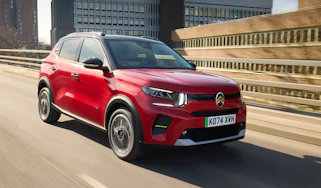
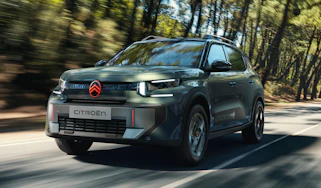
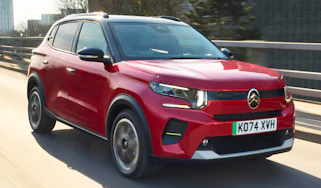
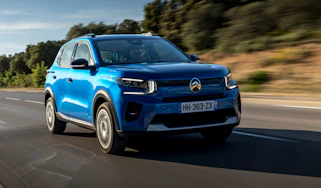
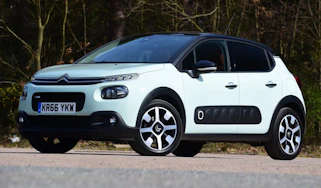
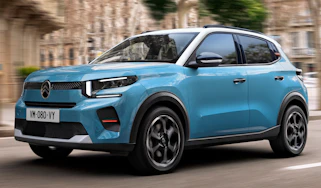
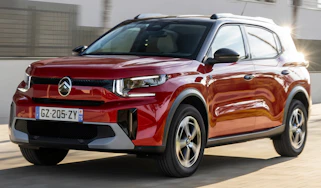
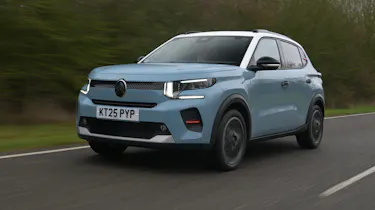
There was a change of approach with the arrival of the fourth-generation Citroen C3, with a ground-up redesign that incorporated Citroen’s new-found pursuit of driving comfort. Combined with SUV-inspired styling, it means the C3 has been given a new lease of life, while attractive pricing means it offers great value for money, too. It’s not perfect, with an uninspiring driving experience and a range of low-powered drivetrains pegging it back a little, but these shortcomings are easy to forgive when there’s a spacious supermini cabin and a decent range of standard kit. Keen prices and enticing finance deals help to make the C3 attractive, while the option of petrol, hybrid or fully electric powertrains offers more choice than in some rivals.
About the Citroen C3
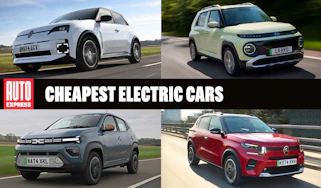
Citroen has always stood for comfort, but it also scores big on value nowadays. That really hits home with the Citroen C3 supermini, and particularly with the all-electric Citroen e-C3 version. Of course, there are rivals such as the electric Dacia Spring and petrol-hybrid MG3 that are positioned to try and steal sales at the budget end of the market, but both the C3 and e-C3 are far more sophisticated propositions, offering the flexibility of either a regular petrol powertrain or a zero-emissions set-up.
Used - available now


While the Citroen e-C3 offers so much for the money that it was worthy of our Car of the Year prize in 2024, the internal-combustion-engined versions can’t quite live up to the EV’s heights courtesy of a shortage of power.
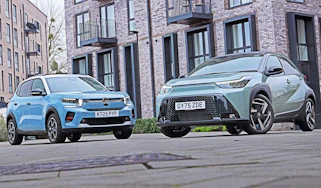
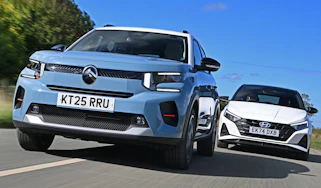
We've tested both the electric e-C3 and the hybrid versions of the Citroen C3, pitting a Citroen C3 1.2 Hybrid Max against the Toyota Aygo X in a twin test.
Performance & driving experience
Pros |
|
Cons |
|
The entry point of the Citroen C3 range is the 1.2-litre PureTech petrol version. Equipped with a six-speed manual gearbox, it does without any electrical assistance and has 99bhp on tap.
For those who want reduced emissions, the C3 is also offered in 108bhp Hybrid form; this uses the same engine but pairs it with a 28bhp electric motor integrated into the six-speed automatic transmission. Finally, the Citroen e-C3 has a 111bhp electric motor and two battery options: Urban Range or Standard Range.
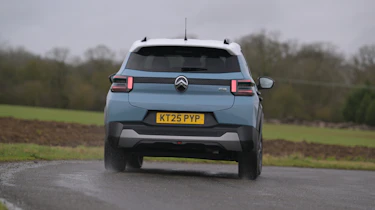
More than what drives the C3 along, it’s the clever suspension that helps it stand out from other small cars. Citroen’s Advanced Comfort suspension uses hydraulic bump stops to absorb energy from the wheels, and this keeps the cabin and occupants isolated from potholes and bigger bumps. It works, too, because the C3 is seriously comfortable for the class.
| Model | Power | 0-62mph | Top speed |
| C3 1.2 100 Turbo | 99bhp | 10.6 seconds | 99mph |
| C3 1.2 110 Hybrid | 108bhp | 9.8 seconds | 99mph |
Performance, 0-60mph acceleration and top speed
Citroen’s 1.2-litre three-cylinder turbo petrol is available in two forms: either with 99bhp and a six-speed manual gearbox, or with a supplemental electric motor for hybrid drive, an output of 109bhp and a six-speed dual-clutch automatic gearbox. This model is the fastest in the line-up, with a 0-62mph time just under the 10-second mark.
The C3 hybrid moves away smoothly in electric mode, with only a pedestrian-warning noise and whizzy sounds from the e-motor itself interrupting the silence. Squeeze the accelerator pedal a little harder, and the engine judders into life – it’s not quite as smooth as the systems you’ll find in pricer supermini hybrids such as the Toyota Yaris.
There’s a slight vibration in the cabin from the thrummy three-cylinder engine, but it’s not coarse or noisy when accelerating hard. Performance is fine, too, with the C3’s acceleration feeling lively enough, even up to motorway speeds. The automatic gearbox can feel a little lazy, though, with a slow kickdown.
Town driving, visibility and parking
Superminis need to be easy to drive, and the large glass area and light steering make the C3 a breeze to move around at low speeds. While the ride is soft overall, there’s just a little fidgeting over rough road surfaces.
Sound insulation around the suspension joints and bushings seems to be less comprehensive than in some other superminis; even though many of those bumps are smothered by the soft set-up, travelling over them is louder than in rivals.
Country road driving and handling
It’s clear that comfort was Citroen’s aim for the C3, and we have no problem with that at all – especially because the car delivers on its promise. It’s not much fun to drive, but that isn’t really because of the soft suspension set-up and the body roll that it brings; it’s down to the light steering that’s short on feedback. The petrol-powered C3 feels more agile than the electric e-C3, although small hybrid models such as the Yaris and Renault Clio – and even the Fiat Panda that it is related to under the skin – are more entertaining on a twisty road.
Grip is adequate, and the C3’s nose-heavy balance at least feels predictable for drivers of any ability. On very bumpy country roads, that soft suspension can struggle with containing the car’s mass, meaning that some slightly firmer rivals can be more comfortable in these rare situations.
Motorway driving and long-distance comfort
The C3’s smooth ride is at its best at high speeds, where the car is composed and comfortable by supermini standards. There’s quite a bit of wind noise from around the screen and door mirrors, but the engine is subdued, so overall refinement is acceptable.
The experience of shifting up or down isn’t exactly helped by a preposterously large and awkwardly shaped gearknob, and a typical, slightly baggy Stellantis shift. But the rest of the control weights are consistent enough, so it’s certainly possible to drive the petrol C3 smoothly.
"Citroen’s Advanced Comfort suspension system offers a plusher ride than you’ll find in many other small cars. While it’s no substitute for the hydropneumatic systems found on classic Citroens, it’s a far less complex and more cost-effective way for the firm to deliver on its comfort mantra." - Dean Gibson, senior road test editor.
MPG & running costs
Pros |
|
Cons |
|
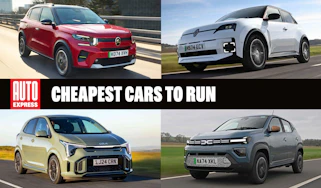
Citroen’s efficient PureTech petrol motor combined with a relatively light kerbweight means the C3 delivers decent overall economy of around 52mpg on the WLTP combined cycle. Even if most of your time is spent on more stop-start urban journeys, you should still see an average of more than 40mpg, while a standard-fit gearshift indicator will help you to time your changes and maximise your efficiency.
The hybrid version is better still, with a claimed figure of up to 59.2mpg. The system manages to cut engine use fairly frequently at low speeds – especially if you’re not constantly using the power-sapping air-conditioning. That gives plenty of scope to save fuel in town, although a return of 42.8mpg during our time with the car on a mix of urban roads and country lanes isn’t an amazing figure when you consider that Toyota’s hybrid models can easily hit the 50-55mpg mark in similar driving.
| Model | MPG | CO2 | Insurance group |
| C3 1.2 PureTech | 52.0mpg | 128g/km | 24 |
| C3 1.2 Hybrid | 59.2mpg | 114g/km | 24 |
Electric range, battery life and charge time
There’s a choice of two battery sizes in the electric e-C3, and you can read more about what range you can expect from them and how long they take to charge in our sperate, dedicated Citroen e-C3 review by following the link provided.
Insurance groups
A group rating of 23 is standard across the entire range, whether you choose petrol or hybrid. That’s a little on the high side for a small car such as this, considering the Skoda Fabia is only in group 22 in its highest spec.
Tax
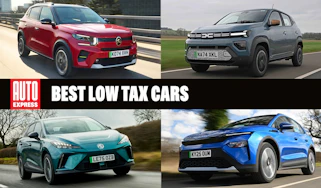
Company car users will be best served by the e-C3 courtesy of its low Benefit-in-Kind tax rating. The petrol car sits in the 31 per cent bracket, while the hybrid faces the 28 per cent rate. As a result, BiK costs are similar between the two, in spite of the hybrid’s higher P11D values.
Depreciation
You’re looking at residual values after three years or 36,000 miles in the 43 to 46 per cent range for the petrol and hybrid versions of the C3. For comparison, the Toyota Aygo X maintains between 44 to 47 per cent over the same period.
Interior, design & technology
Pros |
|
Cons |
|
The cabin is functional, smart, and well organised, but the real draw is the equipment you get at this price point. Crucially, Citroen hasn't achieved the C3’s competitive pricing by offering a stripped-out version that leaves you feeling cheated.
Interior and dashboard design
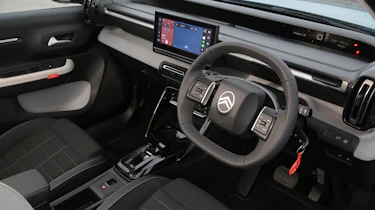
The C3’s cabin is on the basic side, but there’s a little more design flair on show here than in many other cars at this end of the market. Some lighter grey finishes give the cabin a lift, while the higher-spec Max model adds light-coloured fabric to the upper section of the seats. We’re not big fans of the little red fabric tags on the door trims with messages such as ‘Be Cool’ and ‘Have Fun’, because they seem to be trying a little too hard to inject some fun into the car.
The steering wheel is oddly shaped and nearly oblong in its design. The reason for this is the standard-fit head-up display (HUD) that sits high on the dashboard. As in Peugeots, a small wheel is fitted to help make the HUD visible, while the display is projected onto a mirror set into the top of the dashboard, rather than the windscreen or a clear panel higher up.
Materials and build quality
It’s clear that the C3 is built down to a price, although there are plenty of neat textures that help to give the cabin a lift. There are interesting shapes and a mix of materials, while small Easter Eggs include a relief on the inside of the glovebox that has the outlines of three classic models (and the Citroen Ami quadricycle).
There’s some piano-black plastic in places, but it’s used sparingly. The main issue is that the trim at the bottom of the centre console is likely to be easily scratched.
Infotainment, sat-nav and stereo
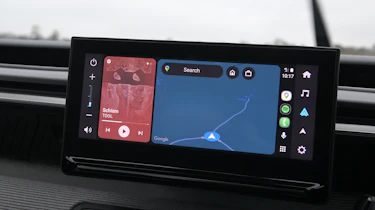
There’s a 10.25-inch central infotainment system fitted to all models, and while it dominates the fascia, it’s positioned low enough that you never feel that it encroaches on your field of vision.
The interface is simple and clean, with reasonably large buttons for key functions; on the whole, the set-up is better to use than the glorified Android tablets that feature in many of the C3’s Chinese rivals. In a victory for usability, it’s worth remembering that this piece of tech only has to worry about entertainment and navigation, because Citroen has kept physical switches beneath it for heating and ventilation control - a welcome move in our view.
"It's a bit of a challenge to find the trip computer in the Citroen C3. It’s found via a button on the end of the right-hand column stalk, although you’d be forgiven for thinking that it’s the wiper control because there’s a logo for those functions right next to it." - Dean Gibson, senior road test editor.
Boot space & practicality
Pros |
|
Cons |
|
The C3 is as strong on practicality as it is on comfort. There’s good cabin space, and the Advanced Comfort seats are better padded than the ones you’ll find in most small cars, without sacrificing too much support.
There are two cup-holders up front, along with a good selection of cubbies and storage options for various oddments. You should find the C3 a pleasant place in which to travel, whether you’re in the front or the back.
Dimensions and size
At just 4,015mm long, the C3 is short for the class, with the likes of even the compact Vauxhall Corsa stretching a full 45mm longer. Considering those modest external dimensions, interior space is excellent compared with the competition, especially when it comes to seating passengers.
| Dimensions comparison | |||
| Model | Citroen C3 | MG3 | Dacia Spring |
| Length | 4,015mm | 4,113mm | 3,701mm |
| Width | 1,813mm | 1,797mm | 1,583mm |
| Height | 1,577mm | 1,502mm | 1,519mm |
| Wheelbase | 2,540mm | 2,570mm | 2,423mm |
| Boot space | 310 litres | 293 litres | 308 litres |
Seats & passenger space
The C3 has a very upright driving position that’s almost SUV in style, and the square edges of the bonnet make it easy to judge where the corners of the car are. At the back, the high window line restricts the view out of the back a little. The small steering wheel will take some getting used to for those coming from a car with a more traditional-shaped wheel, and you might need to adjust your driving position slightly to ensure you can see the dials.
There’s some neat storage on offer. The front door bins are wide, and the white finish on Max models will make finding items in the dark easier. Between the front seats is a deep but narrow cubby under the adjustable central armrest, although this is hard to open when the armrest is moved all the way forward. The glovebox is, in effect, half-sized due to the fuses located behind it, but the cup-holders are deep, as is the smartphone shelf in the centre console. There are two USB-C ports up front: one in that centre console, and a second high on the left of the dash.
We’ve already mentioned the red tags on the doors, which in the rear encourage you to ‘Feel Good’ and ‘Be Happy’. And the back seats give plenty of reason to be cheerful, because the seats are very soft and all-round space is excellent; there’s loads of room for knees and feet, while that upright profile offers lots of headroom, too. The front seatbacks on the top-spec Max have smartphone holders, while the door pockets can easily hold a 500ml drinks bottle.
It’s not all good news in the back, because if you need to fit child seats, the Isofix points are hard to access. They’re behind zipped slots in the fabric, which is a little more fiddly than in some rivals.

Boot space
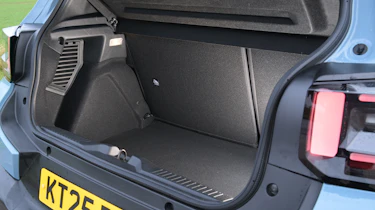
At 310 litres, boot capacity is on the money for a supermini; it’s a little bigger than in a Toyota Yaris, but smaller than in a Renault Clio. The space is deep, but a high load lip makes hauling heavy items across the opening a bit tricky. There’s no false floor, so when the seats are folded (via nylon straps on the shoulders of the split-folding backs), they leave a pronounced step in the load area. However, the 1,188-litre capacity available in two-seat form is still generous.
"We quite like the light-coloured fabric in Max models, and because it’s only used on the top section of the seats, it should stay relatively clean in everyday use, while the dark seat cushions hide the worst of the grime." - Dean Gibson, senior road test editor.
Reliability & safety
Pros |
|
Cons |
|
Euro NCAP hasn’t tested the C3, and because it uses a platform that has been built to a cost, a full five-star result may not be forthcoming. Citroen has fitted a reasonable amount of active safety kit, though, such as active safety brake, driver-attention alert, lane-departure warning and speed-limit warning.
The last two can be switched off easily by holding down dedicated buttons that are located to the right of the steering wheel. Confusingly, when the lane-keeping assist switches off, an orange warning light remains on the dash – but a long press of the speed warning simply causes the light to flash a few times before disappearing. It’s an odd lack of consistency when operating two very similar functions.
Citroen’s reputation for reliability has much improved in recent times. It finished 16th out of 31 brands in the most recent Driver Power survey. Online research might raise questions about the dependability of the C3’s PureTech petrol engine, but that will be referring to earlier versions of this engine with a ‘wet belt’ cambelt. The current car features a chain drive instead, so it should be a better performer.
Buying and owning
Best buy: Citroen C3 Hybrid Max
The petrol C3 with a manual transmission kicks off the range at around £19,500 in Collection trim, while upgrading to Max spec will cost you around £20,500. If you want an automatic gearbox, then your only option is the 108bhp petrol hybrid, which starts at around £22,000 for the Collection version, with the Max model costing around £23,000.
With low prices across the board, we reckon the top-spec model with the Hybrid powertrain is a decent buy, with lots of kit, a smart look and low running costs. However, if you’re a company car buyer, then the e-C3 in the same trim is a better option.
You can spec your ideal Citroen C3 now on the Auto Express Buy a Car service and choose the best offer from dealers around the UK. There are used cars and leasing deals, too, and we can even help you to sell your car.
Citroen C3 alternatives
Although more of a city car, the all-electric Dacia Spring might tempt some buyers with its budget price tag, although it's clear this is a car built to a tight budget. The MG3 has won our Affordable Hybrid Car of the Year award twice, and is surprisingly fun to drive, with strong refinement. More expensive options include the Peugeot 208 or Vauxhall Corsa, available with petrol or all-electric powertrains.
If you don’t need back seats very often and want a city car that can put a smile on your face, then the Toyota Aygo X with hybrid drive is worth considering. The Aygo X's hybrid system is far more efficient and responsive than Citroen’s hybrid set-up.
Citroen C3 pictures
Key updates of the Citroen C3 review
3 June 2026: General update with the latest resale valuation information.
Frequently Asked Questions
Both the regular petrol and hybrid versions of the Citroen C3 require servicing every 12 months or 16,000 miles.
Deals on the C3 and alternatives