Nissan Leaf review
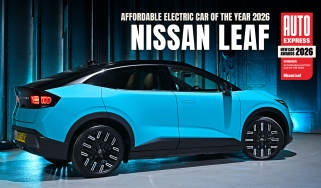
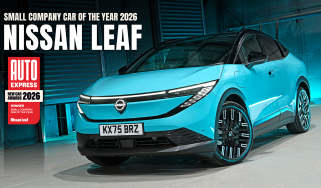
The Nissan Leaf is a very good reimagining of its iconic EV, and it’s our 2026 Car of the Year

Our opinion on the Nissan Leaf
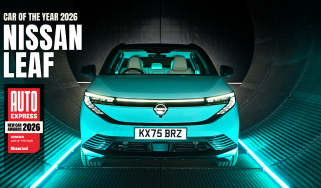
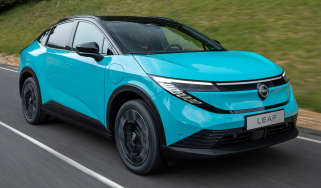
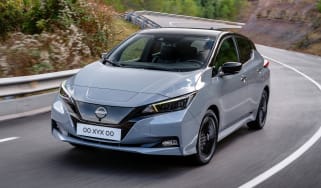
The all-new third-generation Nissan Leaf is just as revolutionary as the original, only now it faces the added pressure of a mature marketplace full of rivals – which makes this adage even more impressive. This is a remarkable package perfectly suited to British drivers, with brilliant electric range and efficiency, great interior tech, a well-judged drive, and perhaps most importantly, a price that makes it extraordinary value for money. It’s so good, in fact, that we’ve named it our 2026 Auto Express Car of the Year.
About the Nissan Leaf
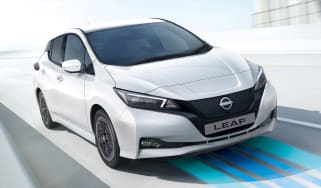
The all-new third-generation Nissan Leaf is the latest edition of the Japanese company’s trail-blazing all-electric hatchback. Launched in 2026, this new variant sits squarely in the family hatchback class and competes with cars such as the Volkswagen ID.3, Cupra Born, Kia EV3, and Renault Megane E-Tech.
This puts it in a tough position with lots of worthy rivals all vying for a share of the rapidly growing market. To tackle this, Nissan started from scratch on this all-new generation – and its investment appears to have paid off.
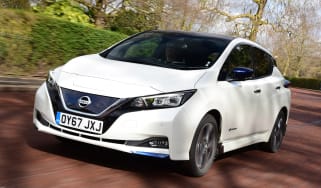
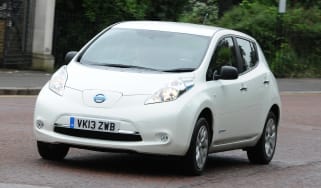
That’s because the Mk3 Leaf is a totally different proposition to the one that came before. It rides on a bespoke BEV platform, and rather than taking the shape of a traditional Volkswagen Golf-like hatchback, it features a crossover-like fastback body. The Nissan also offers a far more impressive range figure, plenty of space inside and cutting-edge technology.
Used - available now


We've tested various versions of the Nissan Leaf both abroad and in the UK, and conducted a long-range road trip in a 75kWh Evolve version from its Sunderland factory.
Performance & driving experience
| Pros |
|
| Cons |
|
It’s clear Nissan didn't set out to build a high-performance or fun-to-drive EV, but the Leaf feels much more in tune with its key buying demographic: those looking for a calm, comfortable, confidence-inspiring electric-car driving experience.
Electric motors, 0-60mph acceleration and top speed
Nissan quotes a 0-62mph time of 7.6 seconds for the 75kWh model, and that feels about right in the real world. With 215bhp and a hefty battery pack, the Leaf wasn’t likely to be a surprise hot-rod, but it gives the model enough performance to never feel like it’s struggling to keep up with traffic. Top speed is limited to 100mph.
Outright performance from the 75kWh model is more than enough in day-to-day driving, but more impressive is the throttle calibration and smoothness. There’s nothing jerky or too urgent about the front-mounted e-motor’s acceleration, which will cleanly apply power without a chirp from the tyres, even in Sports mode.
The 52kWh variant is a little more sluggish, at 8.6 seconds due to its 41bhp power deficit, but its smaller and therefore lighter battery makes it feel a touch more agile in the bends.
| Model | Power | 0-62mph | Top speed |
| Leaf 52kWh Engage | 174bhp | 8.6 seconds | 100mph |
| Leaf 75kWh Engage+ | 215bhp | 7.6 seconds | 100mph |
Town driving, visibility and parking
Ultimately, we think Nissan has managed to find a very good balance between comfort and handling, making the Leaf ideally suited for the pick’n’mix variety of roads we 'enjoy' here in the UK. The low-speed ride is on the firmer side of things, which can cause a bit of jiggliness over more uneven roads, and if you’re going too fast over a speed bump, the car feels like it’s bucking.
Given the Leaf’s sweeping roofline, you might think that rear visibility would be like trying to peer through a letterbox. But that’s not the case, and in fact visibility is very good for the most part, and you get a standard 360-degree camera system to help spot obstacles when parking – although we would like a better quality camera view because the rear-view camera has the sort of ‘clarity’ you only used to see from CCTV footage on Crimewatch. The short nose and bonnet cowls make it easy to place the car on the road, though.
Country road driving and handling
On a twistier country B road, there’s a natural, predictable amount of body roll, plus the direct steering makes the car feel quite eager to turn in.
Motorway driving and long-distance comfort
It’s a refined and relaxing cruiser on the motorway, feeling very stable and confidence-inspiring. There's a good amount of sound deadening to help quell road roar, and we experienced very little wind noise, with the exception of the wing mirror’s tendency to whip up a bit of a racket.
All versions come with adaptive cruise control and lane keep assistance, plus blind spot monitoring to alert you to any vehicles that are either approaching or alongside you when you go to change lanes.
“Over cobbled streets, the body remained free of creaks and rattles, making the whole car feel solid and strong” – Jordan Katsianis, senior staff writer.
Range, charging & running costs
| Pros |
|
| Cons |
|
Nissan offers two battery pack sizes with the Leaf, both of which feel nicely rationalised to give customers different electric car propositions depending on their needs.
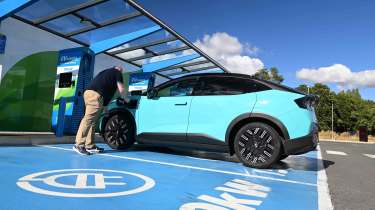
The first option is the base 52kWh setup, with a good range of around 271 miles on the WLTP cycle. Nissan says this model has been created to offer customers in more urban environments a good balance between range and cost, while also being more efficient thanks to its lighter battery pack.
The long-range variant has a slightly different mandate, with high motorway mileage being the key aim. As such, its battery pack is enlarged to 75kWh, giving this relatively small EV a comparatively big range of up to 386 miles in Engage trim. Larger wheels can have an effect, with the range-topping Evolve trim only getting a WLTP figure of 361 miles.
Nissan has also gone to great lengths to extensively test the car’s high-speed efficiency, giving us a self-verified high-speed range of nearly 270 miles at an average speed of 70mph. We tried a 75kWh Evolve model and achieved 4.2 miles per kWh efficiency and almost 330 miles between charges over a mix of mostly motorway work, plus some driving through small villages and a quick trip along the Yorkshire Moors for photos.
| Model | Battery size | Range | Insurance group |
| Leaf 52kWh Engage | 52kWh | 271 miles | 27 |
| Leaf 75kWh Engage | 75kWh | 386 miles | 30 |
| Leaf 75kWh Evolve | 75kWh | 361 miles | 31 |
Electric range, battery life and charge time
Nissan quotes a peak DC charging rate of 105kW for the 52kWh battery and 150kW for the 75kWh battery, although this does depend upon additional factors such as whether there are a lot of other people charging at the same time or whether battery preconditioning has been used en route to a charger (it happens automatically when using the car's onboard navigation system). These different speeds mean that both models are able to charge from around 10 to 80 per cent in around 35 minutes, which is average for this class.
On the plus side, our 75kWh test car achieved its claimed 150kW peak for a few minutes, and it also managed to top up its battery from 10 to 80 per cent state of charge in the allotted 35 minutes.
To get an accurate valuation on a Nissan Leaf check out our free car valuation tool...
Insurance groups
Insurance group ratings for the Nissan Leaf are competitive, but not class leading. Starting in group 27 for the entry-level 52kWh Engage and going up to group 31 for the range-topping 75kWh Evolve, the Leaf has lower insurance group rankings than the Kia EV3 (which starts in group 33), but the Skoda Elroq is ahead of the Nissan by starting in group 23.
Tax
Due to the no Leaf costing over £50,000 when new (even with options), you'll only need to pay the standard rate of vehicle excise duty (VED) because it avoids the higher rate of luxury car tax. Company car drivers will also benefit from the zero tailpipe emissions of the Leaf, because benefit-in-kind (BiK) starts in the four per cent bracket for the '26/'27 tax year, rising to five per cent in the '27/'28 tax year, and seven per cent in '28/'29.
One thing to be aware of is that electric cars will be subject to an eVED pay-per-mile fee from April 2028 onwards.
Depreciation
According to our resale valuation data, the Nissan Leaf isn't expected to hold on to its value over a typical ownership period of three years or 36,000 miles quite as well as its Kia EV3 and Skoda Elroq rivals. The Leaf is predicted to retain 44 per cent of its value over this period, whereas the EV3 will still be worth between 47 and 50 per cent of its original value, and the Elroq will maintain between 46 and 50 per cent of its value. The Leaf is also less expensive to buy in the first place, though.
Interior, design & technology
| Pros |
|
| Cons |
|
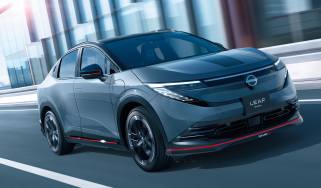
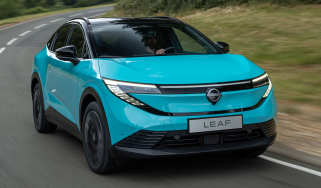
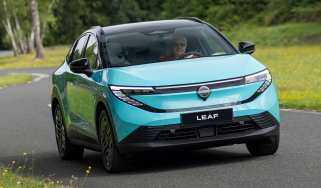
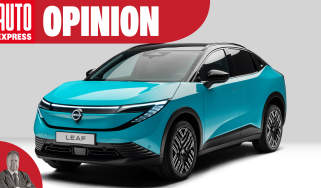
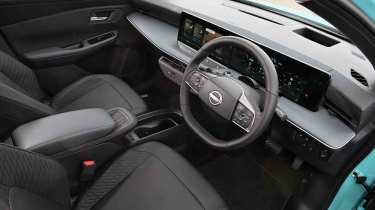
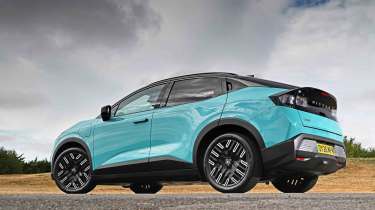
The Leaf has had quite the glow-up, transforming from an under-the-radar family hatchback to a sleek coupé-like fastback that looks like it’s burst from the pages of a Japanese manga comic.
You can get your Leaf in single- and dual-tone paint schemes, with Engage and Engage+ trims available in single Fuji sunset red for free, followed by pearl white, pearl black, and gun metallic costing £760 or £1,395 for dual-tone versions of pearl white, Fuji sunset, ceramic grey and gun metallic. Higher-end Advance and Evolve introduce extra colours such as dual-tone sukumo blue or luminous teal.
Entry-level Engage comes with 18-inch alloys, dual 12.3-inch screens, dual-zone climate control, and keyless entry.
Our preferred Engage+ trim ups the ante with all the equipment you need, including:
- Wireless phone charging
- Larger 14.3-inch screens
- Google built-in navigation
- Heated front seats and steering wheel
- Auto-folding door mirrors
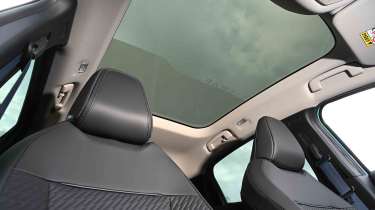
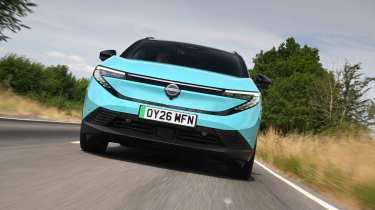
Above this, Advance trim adds a dimmable panoramic glass roof, a head-up display, synthetic leather seat trim, an electric tailgate, privacy glass, fancier 3D rear lights, and a front grille lightbar with an illuminated 'Nissan' logo. Finally, range-topping Evolve trim comes with 19-inch alloys, a 9-speaker BOSE sound system and 8-way electric front seats with driver's side massage function.
Interior and dashboard design
Nissan’s gone for a practical, efficient and tech-forward look for the Leaf, leaving superfluous design elements largely off the table. While it probably won’t win the Red Dot award for car interiors, but it is quick and easy to figure out, and definitely feels like a car designed around feedback on how consumers actually use their cars, rather than one that pushes drivers to use it in a certain way.
Crucially, there's a physical volume knob on the dashboard so you can easily mute the stereo, plus proper buttons on the steering wheel that let you control both screens. However, you have to operate the Leaf's climate controls through a touch-sensitive panel rather than simple dials, which some people may find annoying. During our testing, it proved responsive enough, and we'll take this compromise over having to use the central touchscreen to make minor temperature adjustments.
We like the easy shortcuts provided to select a personalised ADAS driver assistance setup.
Materials and build quality
While the interior isn’t particularly plush or luxurious, the plastics do feel hardy and robust. They should stand up to daily use without any issue. The light-coloured seats available in Advance trim and above models, together with the clever electrochromic glass roof, make the cabin feel light, airy and modern.
Infotainment, sat-nav and stereo
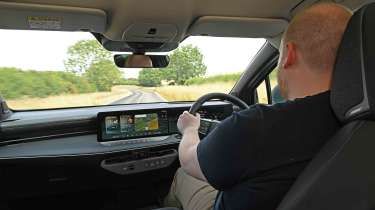
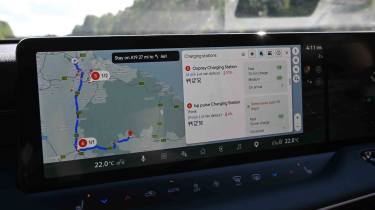
All Nissan Leafs, aside from the entry-level Engage model, feature a pair of 14-inch screens, both fitted with a substantially refreshed user interface underpinned by Google software. This is excellent news for users, as the embedded navigation system is founded on the huge dataset available through the tech giant’s Google Maps product. Traffic, parking and places of interest information is all featured.
Charging locations are also included and, thanks to over-the-air updates, this info is constantly improved over time to keep the system up to date with new infrastructure. The navigation tech is capable of intelligent route planning, taking into account things like the ambient temperature, inclines and even the efficiency of different public charging networks in different countries to estimate journey times. This will be especially useful for European road trips.
The system can update the route planner in real time based on traffic conditions, and will even re-route you to a different charging station if all the points are taken at the next planned stop. You can also view the maps on the driver’s display, leaving the main screen free for other uses, as you could do with the older version of Audi's Virtual Cockpit.
Functionality across the rest of the infotainment system is fine, with clear and simple menu structures, big icons and quick responses. The ‘home’ screen is configurable to show the information of your choice, and even comes with different themes, including one that adjusts to the time of day. Apple CarPlay and Android Auto are standard, while our preferred Engage+ adds wireless phone charging.
Boot space & practicality
| Pros |
|
| Cons |
|
This third generation of Nissan Leaf might look like it sits in a brand new market sector thanks to its sleek profile and high stance, but it still effectively operates in the same C-segment as its predecessors. This puts it up against rivals like the Kia EV3, Skoda Elroq and VW ID.3.
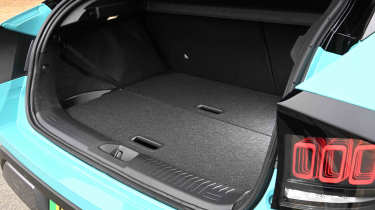
The difference to these alternatives is that rather than an upright, boxy silhouette, Nissan has gone for a sloping rear end for both aesthetic and practical reasons. The impact of this is arguably most obvious inside the cabin, or more specifically when you open the tailgate.
Dimensions and size
At just around 4.4m long, the Nissan Leaf is only just longer than rivals like the VW ID.3 and Kia EV3. In fact, the Leaf looks quite a bit bigger than it is in pictures – a rare thing for modern EVs, which usually create the opposite effect.
| Dimensions comparison | |||
| Model | Nissan Leaf | Kia EV3 | Skoda Elroq |
| Length | 4,350mm | 4,300mm | 4,488mm |
| Width | 1,810mm (2,098mm inc mirrors) | 1,850mm | 1,884mm (2,148mm inc mirrors) |
| Height | 1,550mm | 1,560mm | 1,625mm |
| Wheelbase | 2,690mm | 2,680mm | 2,765mm |
| Boot space | 437 - 1,052 litres | 460 - 1,250 litres (plus 25 litre front boot) | 470 - 1,580 litres |
Seats & passenger space
The driving position is higher than before, and ensures the top edge of the display screens doesn’t sit higher than the base of the windscreen. This is good for outward visibility, especially up front.
There’s enough space in the back for six-footers too, although taller passengers won’t get a lot of under-thigh support, so it might not be too comfortable for them on long journeys. Teenagers should have no issues, and if you have smaller children, there are two sets of easily accessible Isofix mounting points.

Boot space
The Nissan Leaf’s sloping roof is most evident in the boot. Although the space below the parcel shelf is a decent 437 litres, the tailgate glass can get in the way if you need to fit bulkier items, like a chest of drawers, and limits overall capacity to only 1,052 litres with the seats down. The squarer shape of the Skoda Elroq is evident with its bigger 470-litre boot, which increases to 1,580 litres with the rear seats folded.
Meanwhile, the Kia EV3 has a small secondary boot under the bonnet, which is perfect for storing the charging cables – a good idea if the cables are wet or dirty. The Elroq utilises a pouch under the parcel shelf, while the Leaf provides some storage below the boot floor.
Reliability & safety
| Pros |
|
| Cons |
|
The latest Nissan Leaf is too new to have been included in the 2026 Driver Power best cars to own list, but the Nissan brand generally did well, with above-average scores in 10 categories, with ride and handling being their highest-scoring area. Owners did feel that their servicing costs were a little high, though.
Euro NCAP are yet to test the Leaf, but it comes with a full ADAS suite of safety assistance features, so it should score well.
Buying and owning
Best buy: Nissan Leaf 75kWh Engage+ trim
The Nissan Leaf is among a growing number of electric cars to meet the criteria required for the full £3,750 discount as part of the Government's Electric Car Grant (ECG), announced in July 2025, thanks to part of its electric powertrain being manufactured in the UK.
The least expensive Leaf models come with the 52kWh battery in either Engage or Advance trims, starting at around £29,000 for the former and £31,000 for the latter. We'd recommend going for the long-range 75kWh battery, which comes in at just under £32,500 in Engage trim, or a little over £33,000 for our preferred Engage+ model. The 75kWh Advance is around £34,500, while the range-topping Evolve costs just over £36,000.
While the entry-level Engage model hits with its headline price points, the jump to Engage+ is affordable and adds the full Google-backed infotainment screen setup, heated seats and steering wheel, folding mirrors and wireless charging. We also think the long-range battery is good value compared with its rivals, and is worth having for trips further afield.
Alternatives
Model for model, the Leaf undercuts its key competitors, including the Cupra Born, Hyundai Kona Electric, Kia EV3, Mini Countryman, Renault Megane, Skoda Elroq, and Volkswagen ID.3.
Key updates of the Nissan Leaf review
16 September 2026: Updated to include the 2026 Driver Power manufacturer's results and efficiency figures from our range test
Great leasing deals on the Nissan Leaf's rivals
Skoda Elroq
KIA EV3
Nissan Leaf pictures
Frequently Asked Questions
Electric Nissan models, such as the Leaf, have a longer six-year or 100,000-mile manufacturer's warranty compared with the brand's petrol and hybrid models. It is a service-activated warranty similar to Toyota's 10-year policy, requiring you to have your Nissan car serviced at a franchised Nissan dealer in order to extend the standard three-year/60,000-mile warranty by 12 months at a time. RAC breakdown cover is included in this to sweeten the deal.