Faded road markings spell danger for motorists amid focus on pothole repairs
One in five drivers say the road markings in their area have worn away, prompting calls from the RAC for Government action

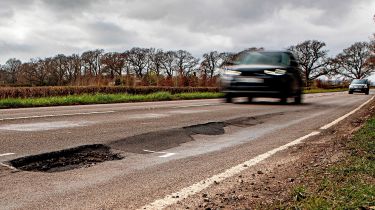
Britain’s streets are becoming a sea of grey as one in five drivers report that the majority of road markings in their local area have faded or disappeared.
A survey conducted by the RAC found that 21 per cent of the almost 1,700 drivers the organisation interviewed claimed that most road markings in their vicinity had deteriorated to the point they were difficult or impossible to read; seven-in-10 (71 per cent) said that “some” have, indicating an issue that’s further reaching than just a handful of hotspots.
Illegible road markings can be detrimental to driver safety, and half of drivers surveyed claim the central white lines dividing traffic in their area had faded, with two-in-five (38 per cent) admitting to having driven in the wrong lane because of it.
The RAC’s head of policy, Simon Williams, said: “Drivers are widely reporting that road markings have been left to fade into obscurity, making roads less safe as a result.”
“It’s frightening to think almost one-in-five of drivers have had a near-miss as a result of faded road markings and more than one-in-10 have overshot a junction,” Williams continued. “Leaving these most vital markings to just wear away makes no sense whatsoever. While there’s clearly a cost to maintaining them, the cost of letting them disappear doesn’t bear thinking about.”
Why are road markings fading?
With the RAC’s survey indicating that nearly three-quarters (72 per cent) of respondents felt that the problem has got worse over the past five years, what has gone wrong? Much of the attention when it comes to road maintenance has been focused on the ever-present issue of potholes; the Asphalt Industry Association estimates that the current backlog of repairs will cost almost £17billion to fix.
However, under the Road Traffic Act 1988, local highway authorities are required to keep roads safe – and that includes maintaining any necessary markings that could impede safety. Drivers caught stopping in a yellow box junction, for example, could potentially have a strong legal argument against any authority fining them for it if they can prove the marking was sufficiently illegible.
With this in mind and following on from the Government’s announcement of its new Road Safety Strategy, Williams said road markings “is one key area that shouldn’t be forgotten. We urge No.10 to work with councils to rectify this situation, as markings are painted onto the road for good reason: to keep drivers and other road users safe by clearly informing them of what they should and shouldn’t be doing”.
Did you know you can sell your car through Auto Express? We’ll help you get a great price and find a great deal on a new car, too.