What is limp mode? Why it happens to a car and how to fix it
Has your car gone into limp mode, or are you worried about it doing so? Here’s what you need to know
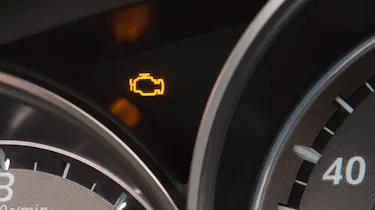
Seeing your engine management light make a surprise appearance on the dashboard is a horrible feeling, but it’s even worse if your car suddenly loses power along with it. Limp mode often engages when a car detects an engine fault, but what exactly is this system for?
The on-board computer systems in modern cars are very clever, and they’re rather good at detecting problems early on before they get worse. Engine issues are seldom cheap to fix, but minimising the impact early on could ultimately save your car (and your bank account).
Read on to learn more about limp mode, its most common causes and how these issues can be fixed.
What is limp mode?
A car goes into ‘limp mode’ when it deems there’s some kind of mechanical or electrical problem. Limp mode is essentially a ‘safe’ mode within the car’s electronic brain that will limit performance and some functions and features in order to protect the car from potential damage. Your top speed may be limited to just 50mph or less, you may only be able to use fairly low engine revs, and automatics might restrict your gear choice.
Limp mode will often accompany an engine management or ‘check engine’ warning light, since many of the factors that cause the check engine light to illuminate may require limp mode running.
What are the causes of limp mode?
The cause of limp mode can be anything the car’s electronic control unit (ECU, and there are often more than just one in modern cars) deems to be serious enough that it needs to reduce engine performance to avoid damage.
One example could be if the engine begins to overheat. In this case, the car would reduce performance to prevent higher revs, something that could make the engine overheat faster. Likewise, if the ECU detects low fluid levels, such as low engine oil or low transmission fluid, it may enter limp mode to minimise mechanical stresses until you can stop the car and get it fixed.
If the car detects mechanical issues it may also go into limp mode, while faulty wiring and brake system problems or malfunctions are other potential causes.
Sometimes, the cause may not be so serious. If an electronic sensor fails for example, the car may enter limp mode as it can no longer use that sensor to detect problems, or to adjust engine parameters for best running. In this instance, the ECU will again run the engine, transmission, or other parts in a predetermined ‘safe’ window of operation until the sensor is fixed or replaced. If the ECU itself has a problem, it will likewise put the car into a safe limp mode.
Which sensors can trigger a car’s limp mode?
An incorrect sensor reading is one of the more common reasons for a car’s limp mode to engage, and one of these might be the culprit.
- Mass Air Flow (MAF)
- Manifold Absolute Pressure (MAP)
- Oxygen (O2)
- Throttle position (TPS)
- Engine knock
- Coolant temperature
- Transmission speed
- Turbo boost
What should I do if my car enters limp mode?
For a start, you shouldn’t ignore it, even if you’re still able to drive around. It’s a sign there’s something wrong with the car, and no matter how small, it needs to be checked out.
Given that limp mode is typically accompanied by an engine management light, you should broadly follow the same procedure you would when that light illuminates for any reason. A steady amber is usually just a warning and it’s unlikely the car will go into any kind of limp mode in this state.
You may well see a flashing amber or even a red light if the car goes into limp mode though. If the light is flashing amber and the car is letting you continue on your journey then you should try to get to your destination, bearing in mind reduced performance might make that a little more difficult than usual, and get the issue rectified as soon as possible. Limp mode is, after all, designed to enable you to still drive the car, even if there’s a problem.
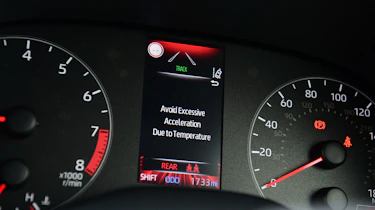
A red engine management light, however, is a sign you should stop as soon as possible, where it’s safe to do so, whether your car is in limp mode or not, and you should call for breakdown recovery.
How do I get my car out of limp mode?
Unless you’re mechanically skilled and own an OBD reader, you’ll need to consult a trusted mechanic to diagnose the cause of your car going into limp mode.
Not all issues that cause a car to go into limp mode are serious, but all need addressing. You shouldn’t, and probably wouldn’t want to, spend much time driving your car if it’s significantly reducing its performance or preventing features like air conditioning from working, just as you wouldn’t want to run your home computer in ‘safe mode’ all the time where most of the applications aren’t available.
Modern electronics mean it’s now pretty simple for a garage to diagnose most of the issues that might result in limp mode, or if you’re electrically or mechanically handy and have a code reader device, you may even be able to diagnose and fix a problem yourself – though if your car is still under warranty, we’d suggest a dealership or specialist be the first port of call.
As sensor issues are a common cause of cars going into limp mode, and sensors aren’t immune from throwing up random issues that don’t repeat, some fixes may be even simpler. If you’re lucky, stopping the car for a while and restarting it after a minute or two may be enough – literally a computer-style ‘turn it off and on again’. Plugging in a code reader and simply clearing all the error codes is also sometimes enough to ‘fix’ the problem. It won’t solve actual mechanical issues, of course, and the car could lapse straight back into limp mode, but it’s sometimes worth a try.
What is ‘turtle mode’?
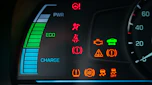
Turtle mode is a kind of limp mode specific to electric cars, and gets its name from the small turtle graphic used as a warning light – surely one of the best warning lights ever, though still not one you’ll be glad to see.
The warning light comes on if you’ve let your electric car’s battery run very low indeed and it’s in real danger of running out of charge. The car will go into a limp-home mode and drastically reduce power and performance, to hopefully extend your range just enough to make it to the right charger.
This limited-performance mode can potentially be quite dangerous depending on where you are – you wouldn’t want to be on a motorway with your top speed limited to only 30mph or so, for instance. But it’s better than being stranded entirely, and may allow you to reach a charger you might have fallen short of had the car not restricted performance.
Fixing turtle mode is easy: simply charge up your EV. Ideally though, you should try to avoid it altogether, and always charge well before you’re likely to run out of energy. Your car will give you plenty of warnings of low range before it resorts to turtle mode, just as a combustion car does when you’re low on fuel, so don’t ignore them.
Did you know you can sell your car through Auto Express? We’ll help you get a great price and find a great deal on a new car, too.