Nissan’s e-Pedal explained
How e-Pedal has revolutionised and simplified the electric-car driving experience
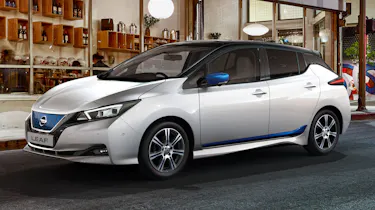

The original Nissan LEAF brought electric vehicles into the mainstream when it launched in 2010. And when the second-generation LEAF launched in 2018, it continued to revolutionise driving with a new system called e-Pedal, which allows the driver to control vehicle acceleration and deceleration through a single pedal. The upcoming all-new Nissan Qashqai e-POWER (launching in 2022) will also benefit from the innovative e-Pedal technology.
So what is the e-Pedal system? How does it work? And what are the advantages?
How does the e-Pedal work?
Small but mighty, the e-Pedal could completely change the way many of us drive, inspiring the design of a generation of electric vehicles. It enables the driver to accelerate, decelerate or stop the car using just one pedal, which helps maximise the car’s efficiency by reducing reliance on the traditional braking system.

Despite the name, the e-Pedal isn’t a separate pedal, it’s a system which transforms the accelerator with the flick of a switch on the centre console. Once activated, you can accelerate the car as you would normally by putting your foot down, but when you ease your foot off the pedal, the car will decelerate until you reach a standstill.
When you accelerate, the car uses the electric motor to turn the wheels. When you decelerate, the opposite happens – in what’s known as ‘regenerative braking’, the power from the momentum of the wheels turns the motor as the system goes into reverse, and this energy then gets stored in the battery. But even when e-Pedal is activated, the traditional brake pedal can be operated in the usual way to help to bring you to a swift halt if needed.
What are the advantages over other systems?
At first, you’ll notice a slight difference in the way the car drives when you ease off the accelerator pedal, but this is e-Pedal in action, and feels like very controlled braking. This is designed for comfort and ease and supports a smooth driving experience – all with the simplicity of using just one pedal. In a short space of time, e-Pedal becomes second nature to use, particularly in stop-start traffic. So, contrary to popular belief that electric vehicles are more complicated, the e-Pedal really simplifies the whole driving experience.
Another major benefit of the e-Pedal system is its efficiency and sustainability. Using e-Pedal to slow down means there’s less wear and tear on your traditional braking system, preserving the life of the pads for longer. Plus, with power being sent back to the battery and recharging your car, it can help to maximise range - a key concern for first-time EV buyers. But even without factoring in that additional opportunity to charge, the Nissan LEAF e+ boasts a range of 239 miles[1], which is more than enough for most buyers.
With an EV like the Nissan LEAF, your days of noisy, polluting engines are over with the almost silent electric motor, combined with the single e-Pedal, ensuring a more relaxing and serene drive. Electric vehicles are also cheaper to service than other vehicles. According to Nissan, electric vehicles are 40 per cent less expensive to maintain than equivalent combustion-engine vehicles. Plus, the UK Government offers grants and initiatives for owners of ultra low emissions vehicles, so you could save up to £2,500 on the cost of the vehicle, pay reduced congestion charges in major cities[2] and company car drivers are eligible for just one per cent BiK (Benefit-in-Kind)[3]. Once you’ve switched to easy, efficient and cost-effective e-Pedal driving with Nissan, you’ll never go back.
Find out more about e-Pedal and the Nissan LEAF at nissan.co.uk. Download a free guide for more on electrified vehicles.
[1] WLTP figures shown are for comparability purposes. Actual real-world driving results may vary depending on factors including the starting charge of the battery, accessories fitted after registration, weather conditions, driving styles and vehicle load.
[2] For more information visit TfL.gov.uk.
[3] Please seek independent tax advice.