New Peugeot 308 to get radical fastback looks
Peugeot knows buyers are moving from hatchbacks to SUVs, so it’s considering a very different look for the 308

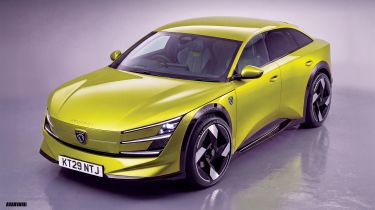
Peugeot plans to reinvent the 308 hatchback as a coupé-SUV fastback, as it seeks to spark car buyers’ imaginations with a new bodystyle pitched between traditional SUVs and five-door hatchbacks.
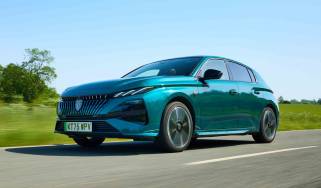
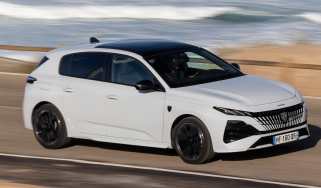
Models such as the 308, Volkswagen Golf and Vauxhall Astra have lost market share as punters have migrated from hatches to SUVs, with Ford giving up on the once-mighty Focus altogether. But Peugeot refuses to abandon the segment, vowing to explore a third way with a car that’s more efficient than an SUV, more practical than a hatchback and more stylish than either – a 308 Fastback.
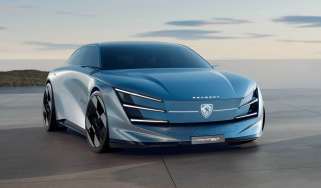
The inspiration is the 408 Fastback, the French brand’s near 4.7-metre-long flagship, a cross between an SUV and a saloon whose aggressive design resembles the Lamborghini Urus from some angles. This concept could be downsized to around 4.4 metres, slightly longer than today’s hatch, because an extended rear overhang will be needed to catch a swoopy, coupé-like roofline while ensuring sufficient boot space.

Peugeot has promised to introduce seven new cars by 2030, with the 208 supermini and 2008 small SUV first to the starting line. Then comes the task of revamping its three mid-sized family cars in the C-segment.
“We’re going to replace the three cars in the future and I’m confirming that we’ll explore different things rather than just renew the 308, 308 SW [estate] and the 408,” Peugeot CEO Alain Favey told Auto Express. “We’re trying to find other things that will contribute to these cars extending our territories.”
Parent company Stellantis has designated Peugeot as one of its four ‘global’ brands, asking it to grow its line-up to cover 60 per cent of the market (up 15 points on today). A dramatic-looking, higher-riding fastback could be ideal to boost sales in markets such as the Middle East, Africa and Turkey.
“We have the green light to develop three new C-segment models, so what’s the best way to do it – is it going in different directions?” Favey asked us during a meeting at the Le Mans 24 Hours race earlier this year. His preference is to use customer clinics to explore different bodystyles. “You need time to innovate and test them, to make sure you’re not going the wrong way.”
The boss admitted Peugeot was toying with a “compact SUV” as one of the test trio, which would have a knock-on effect on the 2008 and future 3008. Today’s smaller SUV is 4.3 metres long – big for its class – while the 4.54-metre 3008, although stylish, is arguably too close to a fastback, compromising its rear-seat space and cargo capacity. If its replacement is more upright, spacious and longer, it would create space in the line-up for another C-SUV – or a 308 Fastback. Is that a possibility, we asked?
“Another route could be something completely new, like we tried with the 408,” Favey agreed. “Everyone is trying to find the next thing after SUVs – and of course we are, too.”
It’s a concept Peugeot’s head of design, Matthias Hossann, is eager to explore. “We will have more and more creativity around this new kind of body type, which is exciting,” he explained. And he’s determined to boost the “emotional” connection with Peugeot design, to help its cars stand out amid new Chinese entrants.
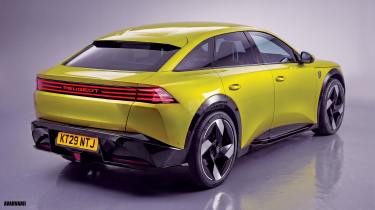
Hossann loves the 408 Fastback’s stance – the relationship between the car’s chunky body and glasshouse, big wheels helping raise the ride height and the sloping roofline. The bodystyle hides a battery slab better than a saloon, which would end up looking tall, and it harbours more space.
The 308 Fastback would also encapsulate Peugeot’s ‘Feline Future’ design language, with a posture resembling a cat poised to pounce, reckons Hossann. It will build on the design of 2025’s Polygon concept, which looks clean and modern with only a few well chosen lines, creating a visual simplicity that belies the way its curved bodysides juxtapose with an exaggerated, flat shoulder line. The head of design says he was inspired by the clean panels of Peugeot’s 205 and 405 cars from the eighties.
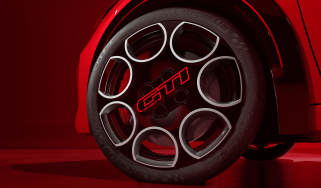
While Peugeot’s current range of models features vertical ‘claw light signatures’, these are being reconfigured horizontally, like the plastic strips across the 205 GTi’s tailgate. “But we want to project this light signature in the future with three horizontal stripes. It reflects our heritage without doing something which is purely retro.”
The 308 Fastback and its sister cars will be based on Stellantis’ new STLA One platform. Conceived electric first, the architecture is being developed to accommodate petrol/electric hybrid power, too. A big development is its ‘cell-to-body’ architecture, where the battery pack acts as the car’s floor. Pioneered by Tesla and BYD, this helps eliminate unnecessary structure to cut weight.
Such painstaking engineering, along with the 308 Fastback’s more raked windscreen and aerodynamic roofline compared with a boxy SUV, will maximise range for the electric variant. That should ensure the sleeker 308 eclipses the 435-mile range of today’s 3008 Long Range variant on the WLTP test cycle.
Set for its first application under next year’s 208 hatchback, STLA One also boasts steer-by-wire technology. This replaces the mechanical link between the steering wheel and the front axle with a digital connection; sophisticated software processes myriad data points then determines the necessary steering inputs. Steer-by-wire tech has two main benefits: variable steering maps, with super-fast responses to make parking a doddle, or greater stability on the road, for instance.
Eliminating the steering column also saves parts and cost, and allows the dashboard to be reconfigured, creating more space in the cabin. This could allow the next generation of both 208 and 2008 to feel more roomy without physically growing.

While Peugeot will take the lead in exploring the C-segment fastback concept, Vauxhall could also embrace the bodystyle. Opel-Vauxhall CEO Florian Huettl told us that while the next-generation Astra will be available as an estate, “it doesn’t necessarily mean that the new Astra is a traditional hatchback”.
Does the bodystyle need to be shared across multiple brands to justify the investment, we asked Favey? “Peugeot is free to do whatever we think is right for Peugeot,” he shot back. “There’s more to it than for other brands to take over what Peugeot’s done and do a reskin of it to fit their needs.
I don’t think someone would say, ‘Peugeot cannot do that because it doesn’t suit Opel’. We try to find common interests but different profit pools. And there’s no censorship for whatever Peugeot wants to do based on other brands’ desires.”
Development work is in full swing and Peugeot may use October’s Paris Motor Show to gauge some public reaction to a new concept: “You will have a nice surprise in the coming months,” design boss Hossann told us while we were in Le Mans.
But, if the 308 Fastback gets the green light, don’t expect a production car soon – even though Peugeot is moving to 24-month development cycles. “The first car will come at the end of 2029 and the others in 2030: it’s very early in their development,” said the CEO. Let’s hope the 308 Fastback makes the grade: it could be just the concept to reinvigorate the mid-size family-car market.
Did you know you can sell your car through Auto Express? We’ll help you get a great price and find a great deal on a new car, too.