Extreme fast electric charging battery tech adds 100 miles in five minutes
15 global automotive brands validate ‘100 miles in five minutes’ charging claim for new battery tech

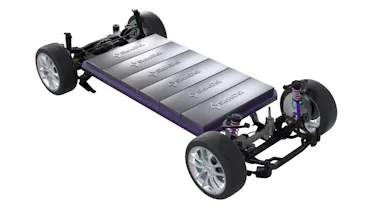
New electric car battery tech promising the ability to add 100 miles of charge in five minutes, or charge from 10-80 per cent in 10 minutes, will be production-ready by next year.
The XFC technology has been pioneered by Israeli firm StoreDot, which says the benchmark is the first step on a roadmap that will allow 100 miles of charge to be added to a battery in three minutes by 2028. By 2032, the firm reckons its technology will mean EV drivers will be able to top-up their batteries with 100 miles of range in only two minutes.
According to StoreDot, testing programmes were started this year with 15 leading global automotive brands from Europe, Asia and the US, and feedback shows the new battery cells exceeded expectations.

"Our partners are extremely pleased with the results of our battery cells, showcasing unprecedented energy density levels, and charging times that will prove to be a game-changer for the entire industry,” says Amir Tirosh, StoreDot COO. “The testing results confirm the value proposition that XFC is critical in eliminating range and charging anxiety, while at the same time empowering OEMs to design EVs with smaller pack sizes that can charge in minutes.”
StoreDot's strategic investors and partners include Daimler, bp, VinFast, Volvo Cars, Polestar, Ola Electric, Samsung, TDK, and its manufacturing partner EVE Energy.
The company claims to have revolutionised the conventional Li-ion battery by replacing the graphite in the cell’s anode with nano-size silicon particles, incorporating proprietary
synthesised organic and inorganic particles. Last year it demonstrated extreme 10-minute fast charging of an EV battery cell said to be capable of more than 1,000 consecutive cycles with no impact on battery power or life. The firm’s new battery technology is designed to utilise existing standard production lines with no changes to process or equipment.
While new fast charging battery tech may have the potential to address the range concerns of drivers, it could also mitigate the impact of a widening gap between the numbers of plug-in cars on the road and available public charge points. The Society of Motor Manufacturers and Traders recently reported that the number of plug-in cars on UK roads had increased by 359 per cent since 2019, while the number of public EV charge points increased by just 121 per cent.
Looking to make the switch? These are the best electric cars to buy right now...