No change for drivers in chancellor's Spring Statement: It's 'as you were' on tax, fuel and EVs
As expected, Rachel Reeves did not make any announcements that will impact drivers, although some changes are coming soon(ish)

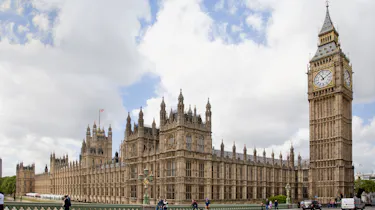
Drivers can let out a sigh of relief, because they have been spared any pain by Rachel Reeves in the Government’s Spring Statement on Tuesday.
Mind you, nothing much was expected to be announced in the Statement itself; the annual event is typically used by the Chancellor as a means to update the House of Commons on the Government’s spending progress following the Budget in the previous Autumn. It also gives the Government (as well as the opposition) a chance to react to reports published by the likes of the Office for Budget Responsibility (OBR).
There have been instances where more has been said at the Spring Statement: in 2025, for example, Labour announced a sweeping overhaul of the welfare system that it eventually backtracked on. However, this year, Reeves mainly focused on financial forecasts, although it’s worth pointing out that these do not take into account the recent spikes in oil and gas prices due to the conflict in Iran.
What’s coming up the road for drivers?
So what does all this mean for drivers? Well, the aforementioned rise in oil prices will undoubtedly be noticeable at the pumps – but not immediately. The RAC’s head of policy, Simon Williams, said drivers likely won’t be hit by a sudden “shock jump” in the price of petrol, indicating that “Even though the price of dated Brent crude rose by $5 a barrel [on Monday] to $78, the impact of this shouldn’t be felt for over a week.”
The price of oil isn’t the only factor set to make fill-ups more expensive; in its report published alongside the Government’s Spring Statement, the OBR confirmed Labour’s plans for the five pence cut in fuel duty to be “unwound in three stages, with the first reversal planned for September 2026”. This will be accompanied from April 2027 onwards by an annual rise in fuel duty in line with the Retail Price Index (RPI).
One positive change, however, is that the Government is currently consulting with the EV charging industry regarding the high cost of utilising public infrastructure. Many hope that this could result in the 20 per cent rate of VAT on public charging being slashed to match the five per cent rate applied to domestic electricity. This would bring down the cost of plugging in and hopefully make electric cars more attractive to a wider pool of consumers.
Bringing drivers back into unfortunate reality is Donald Trump, or specifically the tariffs the President recently put in place. In February the US Supreme Court ruled that Trump had overstepped his authority by introducing sweeping global tariffs when he retook the Presidency in 2025. Now, Trump has instead placed a blanket 10 per cent tariff on all nations – the same as the UK has previously negotiated under the previous deal – with the potential to rise to 15 per cent.
Any rise in tariffs could negatively impact the British automotive industry, particularly the likes of JLR, which counts the U.S as one of its biggest markets. To maintain profit margins, JLR and other British firms could pass the duty onto customers worldwide, thus pushing up prices. However, as is always the case with Donald Trump, the situation can always turn on a sixpence.
Did you know you can sell your car through Auto Express? We’ll help you get a great price and find a great deal on a new car, too.