Other tyre choices
How do specialist designs compare with the wide spread of abilities in all-season tyres?
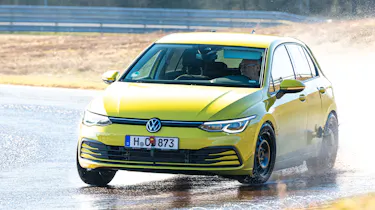

To add perspective, we also put a summer and a winter tyre through our suite of tests at the same time, to illustrate their relative strengths and weaknesses.
In parts of Europe that regularly see snow, for the coldest months it is mandatory to switch to an approved tyre: one with the 3PMSF symbol on its sidewall. In the UK we can use what in Europe are termed ‘summer’ tyres all year round, even though they are utterly unsuitable for snow – plus ice and slush and very low temperatures – as you can see from the results below.
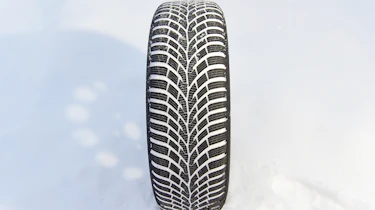
Winter: Continental WinterContact TS 870
- Score: 99.0%
- Price: £135
The compounds and tread patterns of winter tyres are designed specifically for the coldest months of the year with the expectation that summer tyres will be fitted instead for the warmest months. This means that winter tyres have a narrower range of capabilities than an all-season design. As you’d expect, the winter tyre delivers superior performance in the snow, although all-season tyres are remarkably close; the best winter tyre today is only marginally better than the best all-season.
In cold, wet conditions, the winter tyre is competitive in most of the tests and especially good in aquaplaning. However, in wet braking, the winter falls well short of the best all-season. It’s the same in dry braking, and these gaps would only grow in warmer conditions, with the compound of a winter tyre optimised for sub-7 deg C while an all-season tyre is designed for a broad range of temperatures.
Blackcircles.com says:
“Positively appraised as ‘fantastic tyres’, and rated 4.6/5 by customers, who say these tyres give confidence in cold, wet or snowy conditions.”
| Continental WinterContact TS870 | Score |
| Snow braking | 100.6 |
| Snow traction | 96.1 |
| Snow handling | 100 |
| Straight aquaplaning | 99.0 |
| Curved aquaplaning | 95.0 |
| Wet braking | 96.7 |
| Wet handling | 99.5 |
| Wet circle | 101.7 |
| Dry braking | 87.1 |
| Dry handling | 96.9 |
| Cabin noise | 100.5 |
| Rolling resistance | 91.5 |
Buy the Continental Winter Contact TS 870 from Blackcircles.com
Summer: Continental PremiumContact7
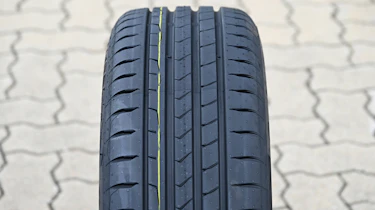
- Score: 95.2%
- Price: £113
Used - available now

2023 Mercedes
EQC
53,731 milesAutomaticElectric
Cash £22,888
2024 SEAT
Arona
34,237 milesManualPetrol1.0L
Cash £10,856
2023 Volkswagen
Tiguan
22,564 milesAutomaticPetrol1.5L
Cash £22,935
2027 BMW
i4
50,356 milesAutomaticElectric
Cash £26,554Summer tyres are very poor in the snow – and for two main reasons. Firstly, the tread of winter and all-season tyres is designed to hold snow, because nothing sticks better to snow than snow – imagine a snowball rolling down a hill. But a summer tyre is designed to clear water and generate lateral grip and traction on warm asphalt.
The second reason summer tyres struggle on snow is that their compound is designed to work at temperatures above 7 degrees C. The result is that a summer tyre finds less grip as temperatures near zero and very limited grip on snow; it was a struggle to simply get going and then just as hard to stop and turn with this tyre.
But for the wet and dry tests, temperatures hovered around 7 deg C and the summer tyre performed well. When temperatures go lower, winter and all-season tyres come into their own, coping easily with the slush and snow that are treacherous for a summer tyre.
Blackcircles.com says:
“Drivers rate this 4.7/5, calling out the quiet and comfortable ride, as well as good grip in wet and dry conditions.”
| Continental PremiumContact7 | Score |
| Snow braking | 43.1 |
| Snow traction | 32.3 |
| Snow handling | 64.8 |
| Straight aquaplaning | 91.5 |
| Curved aquaplaning | 94.2 |
| Wet braking | 116.8 |
| Wet handling | 102.3 |
| Wet circle | 104.7 |
| Dry braking | 109.1 |
| Dry handling | 101.0 |
| Cabin noise | 99.5 |
| Rolling resistance | 89.1 |