How to tell the DVLA you’ve sold your car
You must tell the DVLA if your car's off to a new owner, and here's how...

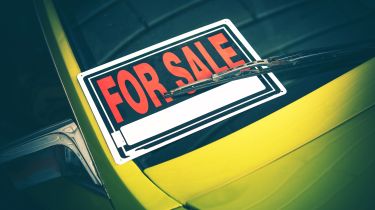
Selling your car can be a stressful process, and it’s easy to overlook a detail or two when dealing with potential buyers, handling test drives, sorting paperwork, negotiating prices and taking money.
One thing you shouldn’t ignore though is to inform the Driver and Vehicle Licensing Agency, or DVLA, that the car is no longer in your possession. It’s an important step in the process of selling a car and ensures you won’t be liable for the vehicle once it’s in the hands of a new owner, be that a private individual or a trader.
In this guide we explain how to tell the DVLA, either online and by post, when you sell your car, what to do when you sell it abroad, and what happens if you fail to inform the DVLA of a sale. It’s not a difficult process, though, so hopefully it shouldn’t add to the stress of selling a car.
Telling the DVLA I’ve sold my car: online
This is the most straightforward way of informing the DVLA that you’ve sold your car. There is a dedicated page on the GOV.UK website for informing the DVLA that you have sold, transferred, or bought another vehicle, and with a click of a button you can go through a step-by-step process with simple questions and checkboxes to tick.
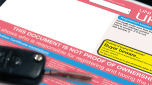
Provided you’ve filled out everything correctly, that’s all there is to it, and in a couple of weeks the DVLA will send you a letter with a simple declaration that you’re no longer the registered keeper of the vehicle.
Using the same website it’s possible also to indicate that you’ve sold or transferred the vehicle to a motor trader.
Telling the DVLA I’ve sold my car: by post
While informing the DVLA online that you’ve sold your car is easy – and if you’re reading this guide, only a few clicks away – you can also do so by post.
You may already be familiar with the process as it’s been around for several years now. When you sell your car, there are two sections of the V5C logbook that you can fill out to change ownership. Section 6, the ‘New keeper slip’ has the car’s details pre-filled, and has a blank space to fill out the date of sale, and a document reference number. You remove this section and give it to the buyer, so they can tax the car and receive a new V5C.
While dealing with the buyer, you both then fill out section 2, titled ‘Selling or transferring my vehicle to a new keeper’, with the new buyer’s name and address, as well as the date of sale and some optional information such as the vehicle mileage and the new keeper’s driving licence number.
You then send the V5C back to the DVLA – section 6 excepted, which stays with the buyer – and they will then use this to update their details. Just like the online transfer, you’ll then receive a letter a few weeks later confirming transfer of ownership.
As with the online method, you can use another section of the form, section 4 or ‘Selling, transferring or part exchanging this vehicle to a motor trader’, to inform the DVLA that you’ve sold it to a trader rather than a private individual. All correspondence to the DVLA goes to the following address:
DVLA
Swansea
SA99 1BA
How to tell the DVLA I’ve sold my car abroad
Unlike selling to a private individual or a trader, telling the DVLA that you’ve sold your car abroad can only be done via post.
For this, section 5 of the V5C - ‘Permanently exporting this vehicle for more than 12 months’ - must be filled out, and includes spaces for the date of export, and the name of the country to which the car is being exported.

If you’ve not sold your car but are instead going abroad with it, you’ll still need to keep the rest of the V5C, as it contains important information that will enable you to register your car in the new country. You may also be entitled to a car tax refund, if you’ve paid in advance and are exporting before the six months or year’s tax is up.
What happens if I don't tell the DVLA you’ve sold your car?
As a general rule it’s never a great idea not to inform the DVLA of significant changes to vehicle ownership. Not only will you be missing out on a potential tax refund, but the longer you leave it, the longer you’ll still be the car’s registered keeper in the eyes of the DVLA, and on any system connected to their database. This leaves you potentially liable for speeding fines, parking tickets and more, incurred by the new owner.
What should I do after telling the DVLA I’ve sold my car?
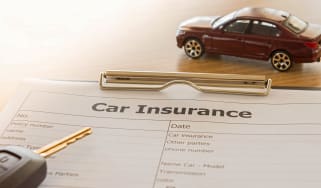
As well as informing the DVLA, you should also contact your insurance company as soon as possible to let them know you no longer need insurance on that vehicle, and it’s sensible to inform other relevant parties too, such as local authorities if you have a parking permit for the car.
Frequently Asked Questions
You can either declare your car sold via the GOV.UK website, or use section 2 of the V5C logbook to inform the DVLA of a new keeper.
Did you know you can sell your car with Auto Express? Get the highest bid from our network of over 5,500 dealers and we'll do the rest. Click here to try Auto Express Sell My Car now...