Stable charging costs make EVs look cheaper as petrol prices rise
The cost of EV charging has remained consistent in the last month, despite surging prices of petrol and diesel.

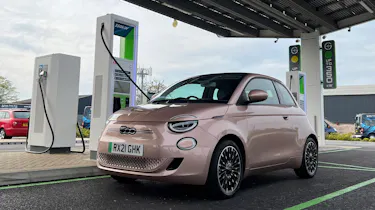
According to the AA’s monthly EV Recharge Report, the cost to charge an electric car didn’t change between the months of February and March, with the average flat rate to use a public rapid (up to 100kW) or ultra-rapid (over 100kW) charger at 74p and 77p per kilowatt-hour respectively.
Things remained steady for slower public chargers, too, with the cost to charge per kilowatt-hour standing firm at 60p for fast chargers (up to 22kW) and 52p for slow chargers (up to 8kW). Stable home energy prices also meant that the average cost to top-up an EV at home remained at just 29p per kilowatt-hour.

This all comes at a time that the cost of petrol has increased by eight pence per litre in the first quarter of 2024 alone. The AA’s head of road policy, Jack Cousens, celebrated the stability of electric car charging prices, saying: “The freeze in charging costs in March is much welcomed by EV drivers, and watched enviously by petrol and diesel drivers. With petrol heading towards 150 pence per litre in April, these drivers would give anything for some price stability.”
Much of this so-called stability has been linked to greater price transparency. Since 2021, EG Group has been installing signage at its EV charging stations displaying live pricing to give passersby an idea of the cost of charging before they go to plug in – just like the boards you find outside a traditional petrol station.
While other retailers have long been slow on the uptake in this regard, the UK government introduced new laws in November 2023 to ensure that chargepoint operators openly display the cost of charging “on the public charge point or through a separate device”, once again to increase pricing transparency.
Tesla has already introduced this concept on its latest V4 Supercharger, with Sainsbury’s’ new Smart Charge programme also incorporating chargers featuring live pricing data and contactless payment.
Cousens continued: “Prices that can be seen from the road will lead to good competition, and displaying them on price boards is great news. Not only will it show how cheap an EV is to run, it will raise the profile of chargepoints generally as drivers will notice there are more than they think.”
However, despite the AA’s calls for a slash in VAT from 20 to five per cent in order to make public EV charging even more affordable and enticing, the government claims such a tax cut “would impose additional pressure on the public finances to which VAT makes a significant contribution.
“We are disappointed that the Government has decided to rule out equalising VAT between domestic and public EV charging at this stage,” Cousens said. “However, The AA will be campaigning on behalf of all drivers ahead of a General Election to make this ambition happen.”
Looking to make the switch to an electric car? These are the best electric cars you can buy...