It’s time to stop disrupting the electric car transition
Editor Paul Barker thinks the Government needs to be clear and avoid mixed messaging when it comes to the electric car transition.

I promised myself I’d take a week off opining about electric vehicles, despite their seemingly permanent place at the top of the news cycle. Then stuff happened – both bad and almost good – in the EV positivity stakes.
First, the almost good news, in that the Government upped its charging point grant by £150, so you’ll now get £500 off installation (as long as you don’t own your own home with a driveway). That weird caveat is still in play, so the people who can transition to EVs most easily are the only ones not to get the incentive.
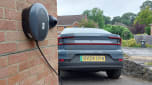
I know it’s harder for people without driveways, or those who rent, or live in a flat, to get a charger installed, so the grant is a handy way of encouraging them or their landlords to make that extra effort. However, excluding the roughly half of the population who can most easily make the switch just seems petty.
At this point, if the Government is actually serious about moving us into electric cars, the more people who do it the better. It’s been proven that the vast majority of EV drivers wouldn’t consider going back to petrol, so put the building blocks in place and many drivers become advocates within their networks.
It’s been another bad week, though, for anyone looking for green shoots in EV uptake. Yes, only a select few would have been considering Lamborghini’s electric ultra GT car, but even they won’t have the option for a while, now that the brand has rowed back on its first EV for the foreseeable future.
There’s also been a lot of noise about how much money the transition to EVs is costing firms that have gambled on it happening more rapidly. Stellantis was the latest in the headlines with a 20.1bn Euro (£17.6bn) write-down in its results, blamed largely on overestimating the rate of adoption in Europe and the US.
What’s obvious is that we need more clear signals and help from our lawmakers that the path to electric is a fixed one. If they really are serious about both the path and the timelines, that is.
There continue to be too many obstacles, mixed messages and negative news stories that give people reasons to postpone moving to cars that in many cases – although obviously not all – would serve them at least as well as petrol-fuelled ones.
Want the latest car news in your inbox? Sign up to the free Auto Express email newsletter...